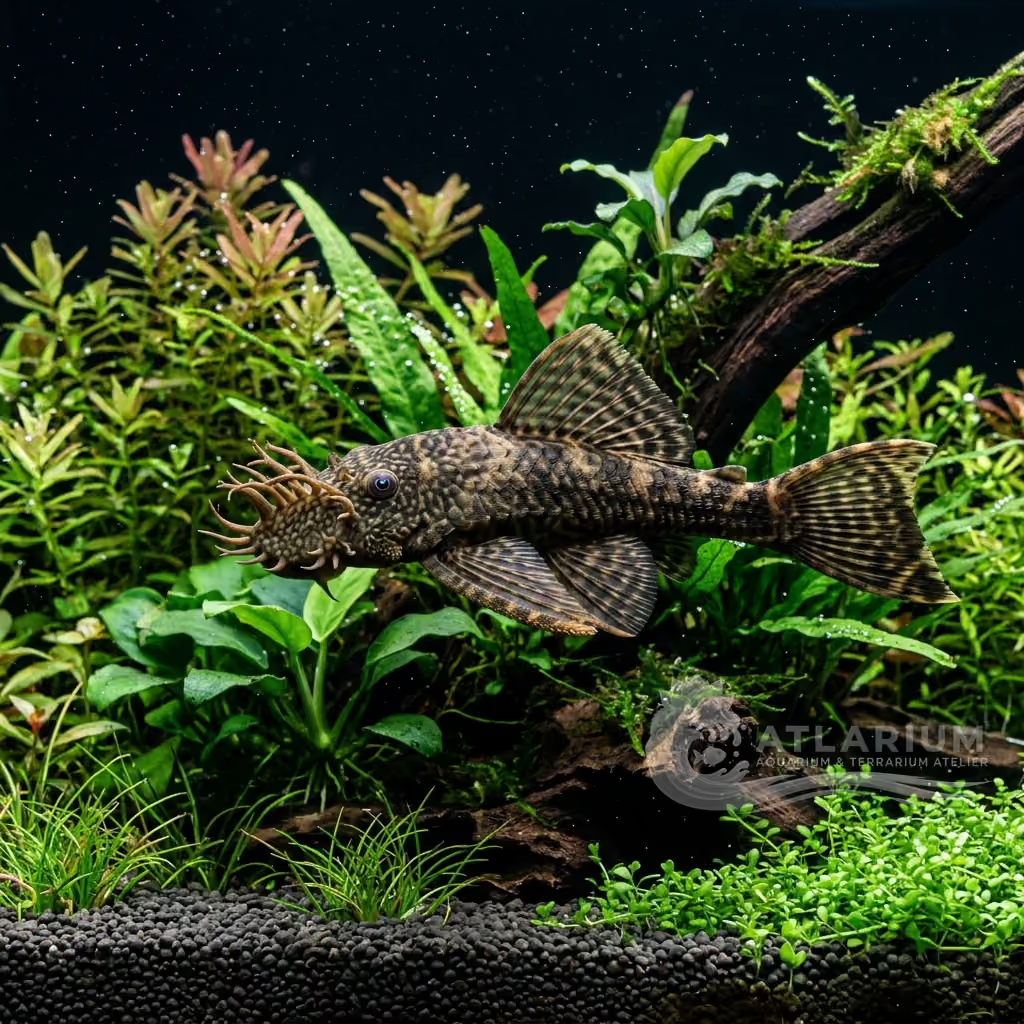
Chocolate Talking Catfish
Acanthodoras cataphractus
The chocolate talking catfish (Acanthodoras cataphractus) is a nocturnal, thorny catfish native to the Amazon basin. It features a squat, heavily ossified body equipped with sharp, serrated fin spines for defense. It is renowned for producing audible clicking or growling sounds by rubbing its pectoral spines against its shoulder girdle.
Temperatura da água
22 - 26 °C
Valor de pH
6 - 7.5
Tipo de água
Água doce
Nível do tanque
Parte inferior
Tamanho adulto
12 cm
Volume mínimo do tanque
>= 150 L
Grupo mínimo
>= 4
GH
2 - 15 dGH
KH
2 - 12 dKH
TDS
50 - 345 ppm
Condutividade
78 - 539 uS/cm

Descrição da espécie
Geographical Origin and Habitat: Widely distributed in the northern Amazon basin and Guyana. Stations in slow watercourses (igarapés), swamps and marginal zones invaded by branches and leaves, where the water is shallow and often turbid.
Taxonomy and Morphology: Painted Talking Catfish (Acanthodoras cataphractus). "Barrel" body covered with hooked bony plates that form lateral shields ("cataphractus"). Spiny pectoral fins and armored skull. Famous for the sounds it emits by rubbing its pectorals ("Talking Catfish").
Social Behavior: Peculiar peaceful but nature. It is a nocturnal squatter: takes over a cramped den among logs and stones or buries itself and never comes out during the day. Cautiously explores the bottom in the dark.
Coloration and Sexual Dimorphism: Chocolate brown background furrowed by cream-colored longitudinal stripes ("Painted"). Whitish belly mottled with dark. Adult females noticeably more "round" and heavier, almost spherical before spawning.

Cuidado, criação e companheiros de tanque
Aquarium Setup: Tank of at least 100 cm (40 inches). Create tangles of branches and PVC pipes covered with soft sand: needs darkness. Mandatory a soft substrate in which it can "dig" its support without injuring its short barbels.
Diet and Feeding: Omnivorous detritivore. Will swallow anything it encounters foraging on the bottom: frozen bloodworms, brine shrimp, vegetable tablets and large crumbling pellets. Feed it shortly before lights out.
Water Quality: Tolerates wide ranges of values, preferring neutral-acidic waters. It is not an active swimmer, so excessive water flow will stress it. Fundamental not to leave organic residues on the bottom.
Compatibility and Cohabitation: Excellent cleaner for community tanks or with placid medium-sized Cichlids (e.g. Geophagus, Severums). Will ignore any fish, unless it is so microscopic and (at night) that it ends up in its mouth by chance.
Aquarium Breeding: Very rare event. In nature they lay eggs in small sandy pits prepared by both parents, and are fiercely defended. Rearing fry is undermined by predation in the aquarium.
Risks and Diseases: Injures itself and severely injures hands: the hooked plates make it impossible to untangle from nets. Use exclusively plastic jars for transfers. Very resistant to common diseases.

Origem e distribuição geográfica
Widely distributed in the northern Amazon basin and Guyana. Stations in slow watercourses (igarapés), swamps and marginal zones invaded by branches and leaves, where the water is shallow and often turbid.
Origem
Amazônia, Orinoco e GuianasLeste Asiático

Perfil de peixe
- Temperamento
- Peaceful
- Acanthodoras cataphractus is an exceptionally peaceful and non-aggressive species, making it an excellent choice for a community aquarium. They are nocturnal and secretive, spending most of the daylight hours hidden away and showing no territorial behavior towards other species. When kept in groups of their own kind, they are highly social and will often share the same cave or hiding spot without conflict. Their unique defense mechanism includes producing audible croaking sounds and locking their sharp lateral spines when they feel threatened.
- Dieta
- Omnivore
- As omnivorous detritivores, Acanthodoras cataphractus naturally forage in the substrate for insects, worms, crustaceans, and organic matter. In the home aquarium, they are not picky feeders and will accept high-quality sinking pellets, tablets, and granules. Their diet should be supplemented with live or frozen foods such as bloodworms, tubifex, and brine shrimp to ensure optimal nutrition. Because they are nocturnal, it is highly recommended to feed them shortly after the aquarium lights are turned off to prevent other active fish from eating all the food.
- Expectativa de vida
- 8-12 years
- Tamanho adulto
- 12 cm
- Proporção sexual
- Group
- There are no obvious external differences between males and females of Acanthodoras cataphractus, though wishful females are usually wider and rounder when viewed from above. Because they are social and gregarious, they should not be kept individually or in simple pairs, but rather in a group of at least 4 to 6 specimens. Stocking them in groups helps reduce stress and encourages natural behaviors, including their interesting sounds. Since they are peaceful, a specific male-to-female ratio is not critical, and a mixed-sex group will thrive without aggressive territoriality.
- Frequência de alimentação
- Once daily
- Under normal aquarium conditions, Acanthodoras cataphractus should be fed once a day, preferably at night when the lights are turned off and they become active. Feeding them daily ensures they receive proper nutrition, as they may remain hidden and inactive during the day. Care should be taken not to overfeed, as they can gorge themselves, and uneaten food settling in caves can spoil the water quality. A weekly fasting day can be beneficial to maintain their digestive health and prevent obesity.
- Carga biológica
- Medium
- The Chocolate Talking Catfish (Acanthodoras cataphractus) has a medium biological waste production due to its growth potential, which can reach up to 12-15 cm, and its bottom-dwelling habits. Since these fish are highly gregarious and must be kept in groups of at least 4 to 6 individuals, their collective bioload can quickly build up. Efficient filtration with mechanical and biological media is necessary to maintain clean water, alongside regular substrate vacuuming to remove debris from the bottom. Regular water changes are also highly recommended to prevent the accumulation of nitrates, which can negatively affect their health.
- Fluxo
- Weak
- Acanthodoras cataphractus prefers weak to moderate water flow, reflecting their natural habitats in slow-moving forest streams, swamps, and flooded areas. While they require a good filtration system to keep the water clean and oxygenated, strong or turbulent currents should be avoided as they can stress the fish. Placing driftwood, rocks, and plants near the filter output can help diffuse the flow and create calm areas. A gentle current allows them to forage comfortably along the substrate without fighting strong waters.
- Risco de salto
- No
- Reprodução
- Oviparous
- Breeding Acanthodoras cataphractus in captivity is extremely rare and considered very difficult to achieve. In nature, they spawn in shallow waters, where the parent fish excavate a small depression in the soft substrate to deposit their eggs. Both parents guard the nest and the eggs until they hatch, which usually takes 4 to 5 days, showing parental care. In home aquariums, spontaneous spawning is uncommon, and successfully raising the fry past the initial post-hatching stages remains a significant challenge for aquarists.
- Compatibilidade e companheiros de tanque
- Peaceful
- Acanthodoras cataphractus is highly compatible with a wide variety of peaceful tankmates due to its non-aggressive temperament. Suitable companions include medium-sized tetras, rasboras, peaceful cichlids (like angelfish or discus), and other non-aggressive catfish such as Corydoras or other peaceful doradids. Very small fry or tiny shrimp might occasionally be eaten at night, so extremely small tankmates should be avoided. Due to their sharp spines, they should never be housed with aggressive fish that might try to bite or attack them, which could lead to severe injuries for both.
- Nível do tanque
- Bottom
- Acanthodoras cataphractus is strictly a bottom-dwelling species that spends almost all of its time on or near the substrate. During the day, they will remain hidden under caves, rock crevices, driftwood, or buried in fine sand. They only venture out of their hiding spots at night or during feeding times to forage along the aquarium floor. It is important to ensure the tank has a large footprint rather than height, allowing maximum swimming and foraging space at the bottom level.

Modelos e parâmetros científicos
FishBase
Acesso aos dados científicos oficiais da espécie
FishBase v25.04Dados sincronizados em: 15/06/2026
- Nível trófico
- 2 ± 0 se
- Resiliência
- Alta (menos de 15 meses)
- Unicidade filogenética (PD50)
- 0.625
- Relação bayesiana comprimento-peso
- a = 0.01072, b = 2.95
- VulnerabilidadeVulnerabilidade baixa (10 / 100)

Espécies relacionadas
Recomendações agrupadas por parentes próximos, escolhas de acompanhantes e cuidados semelhantes.