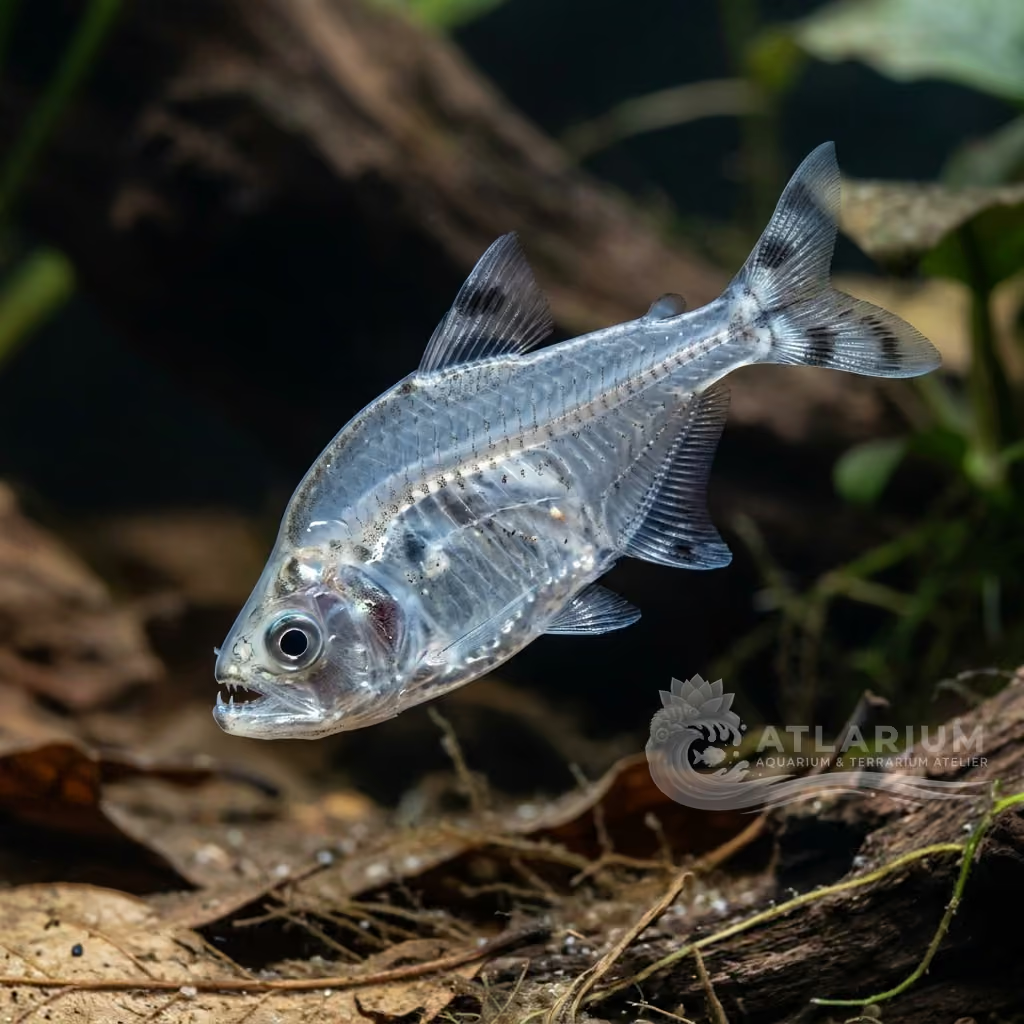
Dawn tetra
Aphyocharax nattereri
A small South American characin (Paraguay) with a translucent body and golden reflections at dawn — hence the name. Also called Panda Tetra for the dark patches. Active and lively but can be a fin-nipper with slow or long-finned fish — not a generic community tetra. Gregarious: in schools of 6–8+ aggression is distributed. Long tank preferred. Breeding possible with soft, acidic water. Lid mandatory: jumper.
Temperatura da água
22 - 28 °C
Valor de pH
5.5 - 7.5
Tipo de água
Água doce
Nível do tanque
Superfície e meio
Tamanho adulto
4 cm
Volume mínimo do tanque
>= 60 L
Grupo mínimo
>= 6
GH
2 - 15 dGH
KH
1 - 7 dKH
TDS
40 - 295 ppm
Condutividade
63 - 461 uS/cm

Descrição da espécie
Geographical Origin and Habitat: Endemic to the Paraguay River basin in South America. Found in secondary watercourses and lagoons with predominantly clear or amber waters, protected by dense submerged fronds.
Taxonomy and Morphology: Dawn Tetra (Aphyocharax paraguayensis). Tiny characin in the shape of a thin spindle. Adapts to moving nimbly among the thick vegetation in search of small insects.
Social Behavior: Peaceful and exuberant. Being a schooling species, it needs to live in flocks of at least 10-15 specimens. The interaction between males for courtship produces fascinating carousels but without harmful consequences.
Coloration and Sexual Dimorphism: The body is semi-transparent golden (evoking the colors of the dawn). The peculiarity is a distinct rhomboidal black spot at the base of the caudal fin, surmounted by a white spot. Females visibly rounder in the abdomen.

Cuidado, criação e companheiros de tanque
Aquarium Setup: Perfect for nano-aquariums (minimum 60 cm / 24 inches in length) planted in a "Jungle" or "Blackwater" style. The addition of catappa leaves to the bottom and the use of soft lights will enhance the delicate coloring of the fish.
Diet and Feeding: Mainly carnivorous/insectivorous. Endowed with a tiny mouth, it requires micro-pellets, brine shrimp nauplii, microworms and daphnia. It will ignore flakes that are too large or hard that fail to soften on the surface.
Water Quality: Loves soft and weakly acidic waters, but shows a tough temper adapting even to moderately hard tap values (up to pH 7.5). Intolerant to sudden temperature changes.
Compatibility and Cohabitation: An impeccable tankmate. Perfect together with Microrasboras, Pygmy Corydoras, Otocinclus and Neocaridina shrimp (only preys on the zoeae). Not to be inserted with Angelfish or fish capable of swallowing them whole.
Aquarium Breeding: Reproduces by scattering very small free eggs on Java moss or other fine supports. Without a specific nursery tank with a grid on the bottom, the eggs are regularly devoured by the parents themselves in a few hours.
Risks and Diseases: Subject to contracting "Neon Tetra Disease" (Pleistophora) if tank hygiene is neglected or introduced by new infected fish. The micro-size makes it an easy victim of the suction of powerful filters.

Origem e distribuição geográfica
Endemic to the Paraguay River basin in South America. Found in secondary watercourses and lagoons with predominantly clear or amber waters, protected by dense submerged fronds.
Origem
Oceanos tropicais e recifesExtra-Amazônica América do SulLeste Asiático

Perfil de peixe
- Temperamento
- Aggressive
- Unlike many other peaceful tetras, *Aphyocharax paraguayensis* is known to be quite active and can exhibit aggressive, territorial, or fin-nipping tendencies. They can be particularly boisterous if kept in too small a group or in cramped quarters, where they may bully smaller, slower tank mates. Keeping them in a large school of their own kind helps to disperse this aggression within the group. When housed appropriately, their lively nature makes them engaging display fish, but their temperament requires careful planning.
- Dieta
- Omnivore
- *Aphyocharax paraguayensis* is a classic omnivore that is not overly picky about its food. In captivity, they will readily accept high-quality dry foods such as flakes, micro-pellets, or freeze-dried options. However, to maintain their vibrant coloration and natural vigor, their diet should be supplemented regularly with live or frozen foods like Artemia, Daphnia, and mosquito larvae. Providing a varied diet is essential to ensure they receive all the necessary nutrients for their active lifestyle.
- Expectativa de vida
- 2-5 years
- Tamanho adulto
- 4 cm
- Proporção sexual
- Group
- In the home aquarium, *Aphyocharax paraguayensis* does not require a strict male-to-female sex ratio, as they are a schooling species. Instead of keeping them in pairs or harems, it is highly recommended to stock them in a group of at least 6 to 8 individuals, though a school of 10 or more is ideal. A larger group helps to distribute and minimize conspecific aggression, which is a known trait of this active tetra. Keeping them in a group also encourages natural shoaling behavior and brings out their best coloration.
- Frequência de alimentação
- Twice daily
- For optimal health, *Aphyocharax paraguayensis* should be fed two to three times daily in small portions that they can consume within a few minutes. Because of their fast metabolism and high activity levels, frequent small feedings are preferred over one large daily meal. It is important to avoid overfeeding, as excess food will decay and quickly degrade water quality. Observing the fish during feeding can also help monitor their health and verify that all individuals are getting their share.
- Carga biológica
- Low
- Due to its small size of only 3 to 4.5 centimeters, *Aphyocharax paraguayensis* has a low biological footprint. However, since it must be kept in schools to thrive and reduce stress, the overall bioload of the group must be factored into the aquarium's filtration capacity. A standard aquarium filter with mechanical and biological media is more than adequate to maintain pristine water conditions for a school. Regular partial water changes are still essential to control nitrate accumulation.
- Fluxo
- Strong
- *Aphyocharax paraguayensis* originates from flowing river basins and generally prefers a moderate water current in the aquarium. They enjoy swimming against a gentle flow, which mimics their natural environment and encourages active behavior. However, the current should not be excessively strong or turbulent, as this can exhaust the fish and prevent them from resting. A standard filter outlet or a small powerhead can easily generate the ideal current without causing stress.
- Risco de salto
- Yes
- Because *Aphyocharax paraguayensis* is a very active fish that frequents the upper water column, it poses a high risk of jumping. They can easily leap out of the water when startled by sudden movements, light changes, or aggressive tank mates. Therefore, a secure, tight-fitting lid or cover slide is absolutely necessary to prevent any accidental escapes. Additionally, incorporating floating vegetation can provide a physical barrier and make the fish feel more secure, reducing their urge to jump.
- Reprodução
- Oviparous
- Breeding *Aphyocharax paraguayensis* in captivity is considered moderately difficult and requires a dedicated spawning setup. The breeding tank should be filled with soft, slightly acidic water and furnished with fine-leaved plants or spawning mops to catch the non-adhesive eggs. Prior to spawning, the parents must be conditioned with high-quality live and frozen foods. Since they are egg-scatterers and will readily consume their own offspring, the adult fish must be removed immediately after the spawning process is complete.
- Compatibilidade e companheiros de tanque
- With caution
- Due to its active nature and potential for fin-nipping, *Aphyocharax paraguayensis* requires careful consideration regarding compatible tank mates. It is best housed with other robust, active species of similar size, such as larger tetras, danios, or active rasboras. Slow-moving fish with long, elaborate fins, such as guppies, bettas, or angelfish, should be avoided as they will likely become targets. Keeping them in a sufficiently large school is the best way to keep their focus internal and minimize conflict with other species.
- Nível do tanque
- Top/Middle
- *Aphyocharax paraguayensis* is an active, open-water swimmer that primarily occupies the middle and upper levels of the water column. They spend most of their time darting through open spaces, though they will occasionally dive to the bottom to search for food. The aquarium setup should offer a balance between a large, open central swimming area and dense perimeter planting for cover. Floating plants can also be beneficial as they mimic their natural habitat and diffuse bright lighting.

Modelos e parâmetros científicos
FishBase
Acesso aos dados científicos oficiais da espécie
FishBase v25.04Dados sincronizados em: 15/06/2026
- Nível trófico
- 3,2 ± 0,4 se
- Unicidade filogenética (PD50)
- 0.5005
- Relação bayesiana comprimento-peso
- a = 0.00692, b = 3.09
- VulnerabilidadeVulnerabilidade baixa (10 / 100)

Espécies relacionadas
Recomendações agrupadas por parentes próximos, escolhas de acompanhantes e cuidados semelhantes.