Crinum calamistratum
Crinum calamistratum
A highly robust, shade-tolerant bulb plant from West Africa with unique, dark green, heavily crinkled leaves. Extremely slow-growing, it anchors deeply and can endure low light or flourish under high light.
Temperatura da água
20 - 28 °C
Valor de pH
6 - 8
Tipo de água
Água doce
Luz
Média
CO2
Baixa
Altura esperada
50 cm
Largura esperada
20 cm
GH
4 - 20 dGH
KH
2 - 12 dKH

Descrição da espécie
Geographical Origin and Habitat: Endemic exclusively to the deeply shaded, fast-flowing jungle rivers and torrential rainforest streams of West Africa (specifically concentrated in Cameroon). Crinum calamistratum is a highly specialized, extremely robust aquatic bulb plant. It has evolved to firmly anchor its massive, deep root system into the dense mud and gravel riverbeds directly in the path of pounding water flow. It is a strict aquatic survivor, perfectly adapted to pristine, highly oxygenated blackwater that undergoes violent, massive monsoonal flooding.
Taxonomy & Genetics: Scientifically classified within the Amaryllidaceae family (which remarkably includes terrestrial daffodils and amaryllis), C. calamistratum is considered an absolute architectural masterpiece in the high-end aquascaping world. Taxonomically, it is entirely distinct from the broad-leaved C. natans. Its unique genetics force the production of incredibly narrow, deeply crinkled, tentacle-like leaves that grow directly from a large, fleshy, onion-like true bulb buried deep within the substrate.
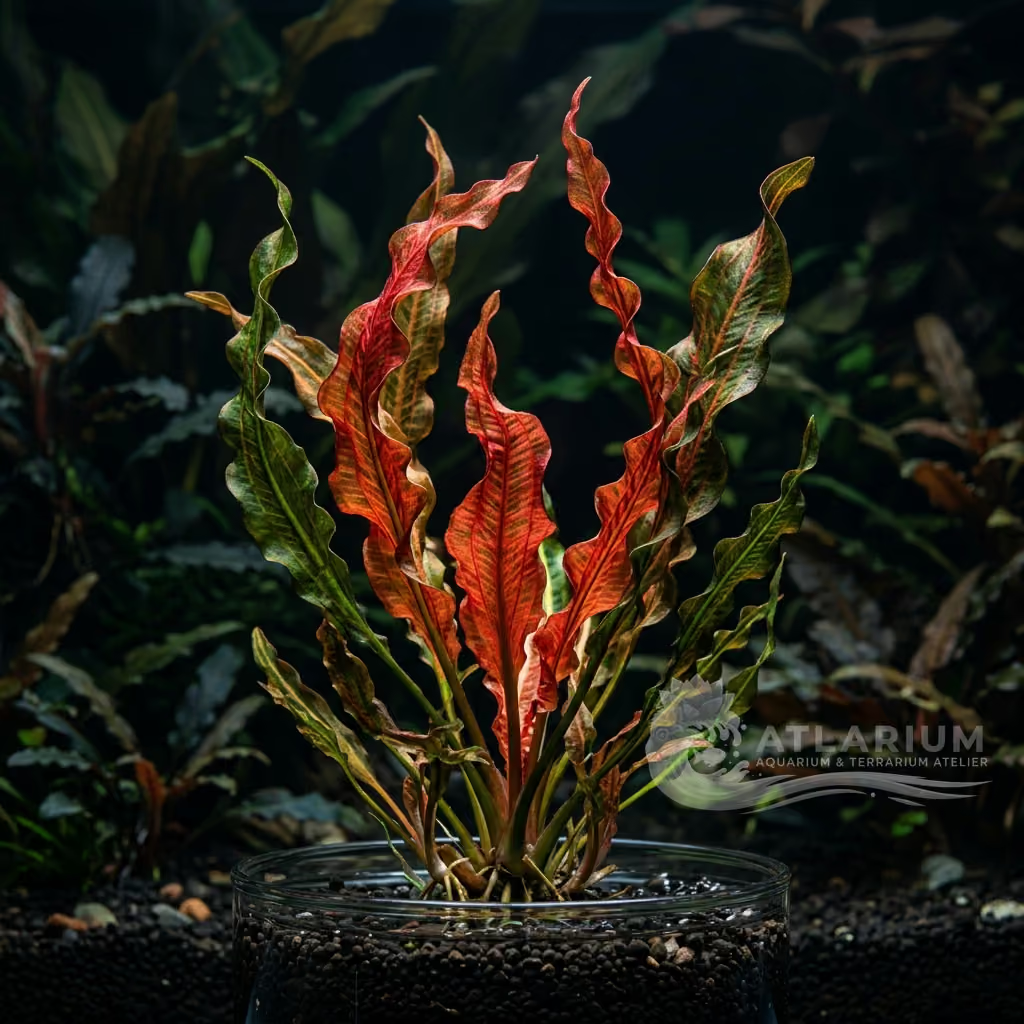
Physical Structure: The structural architecture of this legendary plant is bizarre, spectacular, and completely dominant. The foundation of the plant is a hard, thick bulb that deploys a massive, iron-grip root system. It produces absolutely no stems. Instead, the leaves erupt directly from the crown of the bulb. The leaves are incredibly long (capable of reaching 100 cm / 40 inches in length), extremely narrow, and intensely, heavily crinkled or wildly undulated along their entire length. It resembles a cluster of dark green, chaotic tentacles flowing violently in the current.
Color & Texture: The coloration is a profound, solid, extraordinarily dark emerald-green. It completely lacks the ability to produce red or purple pigments, remaining steadfastly dark regardless of lighting intensity. The texture is notoriously rigid, leathery, and incredibly tough, feeling almost like stiff, rippled plastic. Because the leaves are so rigid, thick, and heavily crinkled, they are virtually impervious to damage from aggressive, herbivorous fish (like large Cichlids or Plecos), making it a premium choice for monster fish tanks.

Cuidado, criação e companheiros de tanque
Lighting & CO2: It is a highly forgiving but incredibly slow-growing bulb plant. It will comfortably survive and slowly produce its crinkled leaves in deeply shaded, low-light aquariums. However, to force the bulb to rapidly deploy its massive, 100-cm-long tentacle leaves, medium to high-intensity LED lighting is recommended. While injected CO2 is not strictly required for its survival, pressurized CO2 drastically accelerates the plant's agonizingly slow metabolism, reducing the risk of algae colonizing its incredibly long, long-lived leaves.
Nutrition & Substrate: As a massive true bulb plant, C. calamistratum is an extremely aggressive root feeder. It MUST be planted in a deep (minimum 7 cm / 3 inches), nutrient-dense aquasoil or gravel bed enriched with heavy root tabs. CRITICAL: When planting, only the bottom half of the bulb and the roots should be buried. The upper half of the bulb (the crown) MUST remain exposed above the substrate; if the entire fleshy bulb is suffocated in soil, it will instantly rot and kill the plant. The water column should also be dosed with a comprehensive liquid fertilizer.
Water Chemistry: Originating from the torrential rivers of West Africa, it demands excellent water quality and highly oxygenated conditions. It thrives in standard heated tropical aquariums (22-28°C) and prefers slightly soft to moderately hard, slightly acidic water (pH 6.0 - 7.5). However, the absolute most critical environmental requirement is massive, relentless water flow. The plant must be placed directly in the path of a powerful filter output or wavemaker, allowing its crinkled, tentacle-like leaves to stream violently across the tank.
Space Management & Placement: Due to its massive 100-cm leaf length, completely indestructible nature, and dark alien aesthetic, C. calamistratum is the ultimate focal point or architectural centerpiece for large aquariums. It should be planted as a standalone specimen plant slightly off-center in the midground or background. Its long, crinkled leaves will gracefully drape across the water's surface, providing stunning overhead texture. It must never be crowded by other large plants, as its massive root system will violently choke out competitors.
Pruning: Pruning is a delicate and infrequent procedure due to its incredibly slow growth rate. Because the leaves emerge directly from the bulb, you cannot cut a leaf in half; a cut leaf will never regrow its tip and the severed edge will turn brown and rot. To prune, you must reach down to the base of the bulb and carefully peel or cleanly slice away the entire outermost, oldest leaf at the crown. Never prune more than 2-3 leaves at a time, as this will severely shock the slow-growing bulb.
Risks & Diseases: The absolute greatest threat to this indestructible plant is improper planting. If the bulb crown is buried entirely in the substrate, the entire massive plant will rot into a foul-smelling mush within weeks. The second major risk is Black Beard Algae (BBA). Because the crinkled leaves live for years and grow so slowly, they act as massive landing pads for devastating algae if water flow is inadequate or organic waste builds up in the aquarium. High flow and pristine water are mandatory.

Origem e distribuição geográfica
Endemic exclusively to the deeply shaded, fast-flowing jungle rivers and torrential rainforest streams of West Africa (specifically concentrated in Cameroon). Crinum calamistratum is a highly specialized, extremely robust aquatic bulb plant. It has evolved to firmly anchor its massive, deep root system into the dense mud and gravel riverbeds directly in the path of pounding water flow. It is a strict aquatic survivor, perfectly adapted to pristine, highly oxygenated blackwater that undergoes violent, massive monsoonal flooding.
Origem
África e Madagascar

Perfil da planta
- Posicionamento
- Fundo
- Given its unique, sprawling appearance, it is best placed as a striking centerpiece or focal point in the midground to background. Its long, wavy leaves can extend across the surface of the water, providing excellent flow dynamics and a dramatic look. It requires plenty of open space around it, as it does not compete well with dense, fast-growing plants. Ensure it is planted in an area with good water circulation.
- Forma botânica
- Roseta
- It features a distinctive fleshy bulb from which emerge dark green, incredibly narrow, and heavily crinkled or ruffled leaves. The leaves are very tough and leathery, making them highly resistant to herbivorous fish like cichlids. Its architectural form is unlike any other aquarium plant, resembling an aquatic spider or a cluster of dark ribbons. In ideal conditions, it may produce a beautiful, lily-like white flower above the water surface.
- Crescimento
- Lenta
- Crinum calamistratum is renowned for its very slow and steady growth rate, producing only a few new leaves per month. This slow pace makes it a low-maintenance choice, as it rarely requires pruning or manipulation. Once established, it is extremely resilient and long-lived, often outlasting many other plants in the aquascape. Patience is required, as it can take several months to fully acclimate to a new environment.
- Substrato
- Alta
- A deep, nutrient-rich substrate is absolutely essential for Crinum calamistratum to establish its massive root system. The bulb itself should not be completely buried; leave the top third exposed to prevent it from rotting. Soil-based substrates or gravel heavily supplemented with root tabs provide the ideal long-term feeding ground. A mature substrate is highly preferred over a newly set up aquarium.
- Fertilização de coluna
- Recomendada
- While it draws most of its required nutrition from its deep roots, light water column fertilization helps maintain leaf health. Occasional dosing of a comprehensive liquid fertilizer ensures that trace elements like iron and magnesium are available. Heavy column dosing is usually unnecessary and may only serve to fuel algae growth on its slow-growing leaves. Focus on maintaining pristine water quality to prevent black beard algae from attaching to the foliage.
- Fertilização radicular
- Nenhuma
- Root fertilization is the most critical aspect of feeding this species, as it is a classic heavy root feeder. High-quality root tabs should be placed deep into the substrate directly beneath and around the bulb. These tabs should be replenished every few months to support its slow but continuous metabolic needs. A robust root feeding regimen guarantees thicker, longer, and more deeply crinkled leaves.
- Corte
- Ocasional
- Trimming should be kept to an absolute minimum due to its slow growth. Only remove leaves that are completely dead, severely damaged, or covered in intractable algae by cutting them as close to the bulb as possible. Never cut healthy leaves midway, as the cut ends will simply turn brown and stop growing.
- Propagação
- Divisão
- Propagation is slow and occurs naturally through the development of daughter bulbs attached to the mother plant's base. These small offsets should be left attached until they have developed a few leaves and their own distinct root system. Once mature enough, they can be carefully separated with a sharp knife and replanted elsewhere. Forcing propagation is not recommended; it requires patience and a mature mother bulb.
- Sensibilidade
- Moderada
- Crinum calamistratum is very sensitive to being moved or transplanted, often experiencing transplant shock and leaf melt when its roots are disturbed. Once planted, it should be left completely undisturbed. However, its tough, leathery leaves make it highly resistant to herbivorous fish and large cichlids that would destroy more delicate plants.
- Função de layout
- Plano intermediário, Fundo
- It serves as a dramatic, architectural focal point in the aquarium, drawing the eye with its unique texture and flowing form. Its dark green, crinkled leaves provide a strong contrast to both fine-leaved stem plants and broad-leaved species like Echinodorus. It is an excellent choice for larger aquariums where its leaves can trail elegantly along the surface.

Galeria de imagens
Imagens licenciadas vinculadas à espécie ou, quando marcadas, ao táxon representativo mais próximo.

Espécies relacionadas
Recomendações agrupadas por parentes próximos, escolhas de acompanhantes e cuidados semelhantes.