Echinodorus 'Tricolor'
Echinodorus 'Tricolor'
A dynamic, classic commercial hybrid known for its striking tri-color leaf variations. Highly resilient, it reaches its full visual potential under intense lighting.
Temperatura da água
20 - 28 °C
Valor de pH
6 - 8
Tipo de água
Água doce
Luz
Média
CO2
Média
Altura esperada
30 cm
Largura esperada
20 cm
GH
4 - 20 dGH
KH
0 - 21 dKH

Descrição da espécie
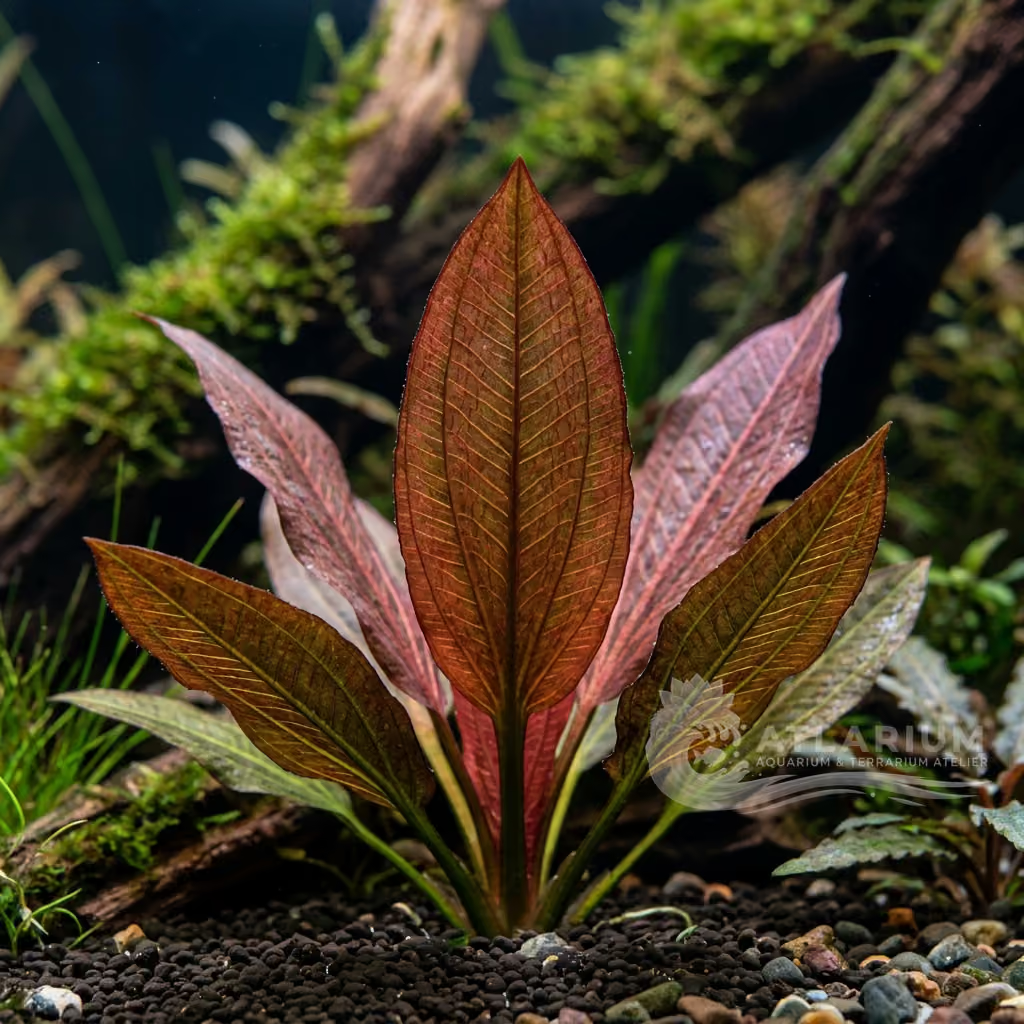
Geographical Origin and Habitat: This highly specific, stunningly dynamic botanical cultivar does not exist in nature. Echinodorus "Tricolor" is an elite, classic commercial hybrid created specifically for the global aquarium trade. It was meticulously bred from wild South American Amazon Sword stock to produce a heavily spotted, broad-leaved centerpiece that dramatically shifts colors as the leaves mature, displaying three distinct color phases simultaneously. In the aquarium, it behaves perfectly like a resilient, deeply rooted amphibious rosette plant.
Taxonomy & Genetics: Scientifically classified within the Alismataceae family, the "Tricolor" is a highly prized foundational patterned cultivar globally famous for its multi-colored rosette. Taxonomically, it is a complex hybrid. Genetically, it completely inherited the explosive, gigantism-like growth traits of the largest wild Amazon Swords. Its defining genetic feature is a timed, delayed suppression of red anthocyanin pigments; new leaves erupt pink/red, mature leaves turn light green, and oldest leaves fade to dark green, all heavily spotted.
Physical Structure: The architectural structure of the "Tricolor" sword is aggressively dominant, gracefully sprawling, and fiercely structural. It is a massive rosette plant completely lacking vertical stems. The foundation is an enormous, incredibly thick, tuberous subterranean rhizome that deploys an aggressive, deep-reaching white root system. The leaves erupt directly from the crown on distinct, incredibly stiff petioles. The foliage is strictly broadly ovate to elliptic, staying perfectly medium-to-large (30-40 cm), and beautifully ruffled.
Color & Texture: The coloration is absolutely striking, highly dynamic, and visually mesmerizing. Grown submerged under intense lighting, the massive rosette displays three colors: the newest inner leaves erupt as a vibrant, glowing translucent pinkish-red or pale bronze; the middle mature leaves transition to a bright, golden apple-green; the outermost oldest leaves settle into a dark olive-green. ALL three color phases are aggressively splattered with distinct dark-red/black spots. The texture is intensely rigid, leathery, and deeply "bullate" (dimpled).

Cuidado, criação e companheiros de tanque
Lighting & CO2: It is an incredibly resilient, heavily patterned hybrid perfectly suited for high-tech aquariums. While it will effortlessly survive in shaded environments, its spectacular genetics will completely fail; the striking dark-red spots will vanish, and the "tricolor" effect will be lost as all leaves fade to a dull, muddy solid green. To unlock its compact, gracefully sprawling rosette shape and force the extreme contrast of the three color phases and black spots, blasting, high-intensity LED lighting is absolutely mandatory.
Nutrition & Substrate: As a highly specialized, intensely patterned Amazon Sword hybrid, the "Tricolor" is a terrifyingly aggressive, obligate root feeder. Its massive root system strictly demands a very deep (minimum 7 cm / 3 inches), heavily nutrient-dense substrate. It absolutely demands premium aquasoil heavily enriched with iron and macro-nutrient root tabs directly beneath the massive tuber to fuel its intense spotted pigmentation across three color phases. If starved of root nutrients, the dense patterned leaves will quickly turn pale yellow and melt.
Water Chemistry: Originating from highly stabilized nursery conditions, it is practically invincible regarding standard water parameters. It thrives effortlessly in heated tropical aquariums (22-28°C) and is exceptionally adaptable, comfortably tolerating both soft, acidic blackwater and rock-hard, highly alkaline tap water (pH 6.0 - 8.0). The single most critical environmental requirement is absolute chemical stability. It drastically prefers stable, unchanging parameters over perfectly optimized ones. It demands strong water flow to clean its dimpled leaves.
Space Management & Placement: Due to its absolute monstrous size (capable of reaching 30-40 cm in height and diameter), massive, ruffled ovate leaves, and commanding, multi-colored spotted appearance, "Tricolor" is strictly a solitary, dominant centerpiece for large aquariums (minimum 200 liters). It MUST be planted singularly, completely isolated in the exact center midground. Because it grows as a massive, sprawling rosette, it provides a perfectly organized visual anchor that violently draws the eye to its heavily spotted, multi-colored center.
Pruning: Pruning is a simple, massive, and highly necessary procedure. Never attempt to trim the incredibly thick, dimpled leaves in half; the cut edge will instantly turn black, rot, and destroy the aesthetic. To prune dead, yellowing, or excessively massive older dark-green leaves that are shadowing the entire tank, you must reach down to the absolute base of the massive rosette and cleanly slice the incredibly thick petiole directly at the crown. It throws out massive runners covered in baby plants that must be aggressively severed.
Risks & Diseases: The absolute greatest threat to the "Tricolor" sword is Green Spot Algae (GSA) and nutrient starvation. Because the heavily dimpled, massive leaves live for years and grow relatively slowly, they act as massive landing pads for devastating Green Spot Algae if phosphate levels drop. Once GSA aggressively spots the bright green leaves, it blends into the natural spotting and is impossible to clean off, ruining the aesthetic. The second risk is nutrient starvation; if root tabs run out, the colossal plant will violently cannibalize itself.

Origem e distribuição geográfica
This highly specific, stunningly dynamic botanical cultivar does not exist in nature. Echinodorus "Tricolor" is an elite, classic commercial hybrid created specifically for the global aquarium trade. It was meticulously bred from wild South American Amazon Sword stock to produce a heavily spotted, broad-leaved centerpiece that dramatically shifts colors as the leaves mature, displaying three distinct color phases simultaneously. In the aquarium, it behaves perfectly like a resilient, deeply rooted amphibious rosette plant.
Origem
Melhoramento seletivo e cultivaresAmazônia, Orinoco e Guianas

Perfil da planta
- Posicionamento
- Plano intermediário
- Due to its medium to large size, it is best suited as a midground or background accent in standard-sized aquariums. It serves as an excellent focal point, breaking up monotony with its varied leaf coloration. It should not be shadowed by hardscape or taller stem plants, as good light brings out its best colors.
- Forma botânica
- Roseta
- It grows as a rosette with slightly ovate to lanceolate leaves on firm stalks. The name 'Tricolor' refers to the different colored zones visible as the leaf matures: young leaves are often red-bronze, transitioning to lighter and darker greens. The plant maintains a sturdy, upright posture.
- Crescimento
- Rápida
- It exhibits a moderate growth rate, producing about one to two leaves per week when well-fed and illuminated. The addition of CO2 significantly boosts its speed and the overall size of the leaves. Older, deteriorating leaves should be pruned at the base to encourage fresh, colorful growth.
- Substrato
- Alta
- It possesses a vigorous and extensive root system that demands a deep, nutrient-packed substrate. A soil-based substrate or the regular use of root tabs is necessary for optimal long-term health. The substrate should be loose enough to allow the thick roots to penetrate deeply and anchor the heavy plant.
- Fertilização de coluna
- Recomendada
- Liquid fertilizers containing a full spectrum of trace elements are highly beneficial to support the leaf coloration. While root feeding is primary, the large leaf surface area effectively absorbs nutrients directly from the water column. This ensures that micronutrient deficiencies, which quickly affect coloration, are avoided.
- Fertilização radicular
- Nenhuma
- Robust root fertilization is the key to successfully cultivating this demanding sword plant. Placing fertilizer capsules deep into the gravel near its roots provides the macronutrients it heavily consumes. It prevents the plant from exhausting the local substrate and gradually shrinking over time.
- Corte
- Ocasional
- Trimming should focus on carefully snipping off the oldest, outermost leaves as they begin to degrade or attract algae. This redirects the plant's energy into pushing out the brightly colored new growth at the center. Always cut close to the base of the crown to maintain a clean appearance.
- Propagação
- Rhizome division
- It reproduces by sending out tall inflorescences (runners) towards the water surface. Along these runners, small adventitious plantlets will form and eventually sprout roots. Once these daughter plants are large enough to handle, they can be clipped from the stalk and planted in the substrate.
- Sensibilidade
- Moderada
- It is a very hardy plant that tolerates a wide range of water parameters and temperatures. However, its broad leaves can become a magnet for spot algae if the lighting is too intense without adequate CO2. It may also be targeted by herbivorous fish if they are not well-fed.
- Função de layout
- Plano intermediário, Fundo
- It serves as an excellent focal point, breaking up the monotony of pure green aquascapes with its tricolor display. The visual transition from red to green draws the eye, making it perfect for the golden ratio placement. It contrasts beautifully against both fine-leaved stems and low carpeting plants.

Galeria de imagens
Imagens licenciadas vinculadas à espécie ou, quando marcadas, ao táxon representativo mais próximo.

Espécies relacionadas
Recomendações agrupadas por parentes próximos, escolhas de acompanhantes e cuidados semelhantes.