Hygrophila polysperma 'Big leaf'
Hygrophila polysperma
A highly vigorous, large-leaf mutation of H. polysperma. Extremely adaptable to various water parameters, it absorbs massive nutrients. Its imposing lime-green foliage requires frequent pruning.
Temperatura da água
18 - 28 °C
Valor de pH
6 - 8
Tipo de água
Água doce
Luz
Baixa
CO2
Baixa
Altura esperada
40 cm
Largura esperada
15 cm
GH
4 - 20 dGH
KH
2 - 21 dKH

Descrição da espécie
Geographical Origin and Habitat: Like other variants of the prolific *Hygrophila polysperma*, the ancestral origin is the swampy, monsoonal Southeast Asia (India and neighboring regions). However, the specific "Big Leaf" form (often combined commercially with the "Broad Leaf" cultivar) is not easily found in the wild, but is the tangible result of hybridization and massive greenhouse cultivation aimed at creating resilient plants with a greater visual impact for the aquarium hobby.
Taxonomy & Genetics: It is to all intents and purposes an enlarged and enhanced morphotype of the diploid (or polyploid) Acanthaceae *Hygrophila polysperma*. Genetically, it carries the same alleles as the base form that guarantee its proverbial immortality in the aquarium, but it expresses a phenotype with significantly superior tissue dimensions (leaf gigantism) and a more pronounced elongation of the internodes.
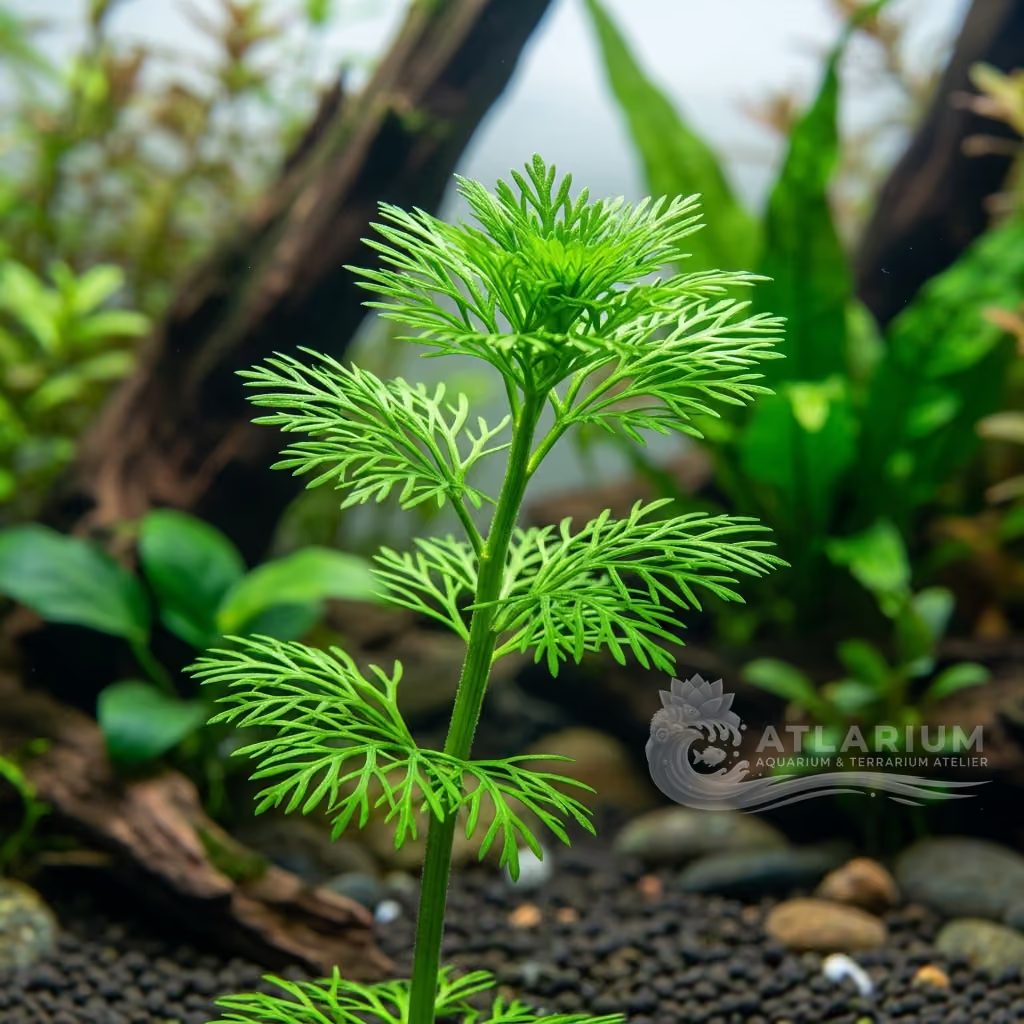
Physical Structure: Although the stems remain pale, fragile, and succulent, the total mass of the plant is much greater than that of normal *polysperma*. The leaves (decussate and opposite) can reach a staggering width for this species (up to 2.5 - 3 cm) and a length of over 8-10 cm. It also develops inextricable tangles of thick aquatic adventitious roots and highly vigorous basal runners, allowing it to sprint under the substrate for meters.
Color & Texture: It constantly maintains a flashy shade of lime green or pastel light green over the entire body of the plant. Compared to the standard Asian version or the "Rosanervig", it is much rarer for the topmost (apical) leaves to take on pinkish or golden reflections, stubbornly remaining green even under intense light radiation. The leaf blades appear flatter and slightly crinkled, offering a generous photosynthetic area.

Cuidado, criação e companheiros de tanque
Lighting & CO2: A plant for which death by lack of light is an abstract concept. Even with obsolete lighting or in deeply shaded Low-Tech tanks, it will continue to grow vertically, drastically elongating the space between one leaf and another (etiolation) just to reach the surface. Providing high levels of light and CO2 will transform it into an unstoppable nutrient-sucking machine, forcing the aquarist to make exasperating prunings every weekend.
Nutrition & Substrate: Massively extracts nutrients from the surrounding water and gravel, without preference. Its formidable epigeal and hypogeal apparatus means that the "Big Leaf" empties a water column loaded with pollutants (N and P) with a rapidity that humiliates the best commercial anti-nitrate resins. If introduced in the first month of the tank's maturation, it drains hair algae of all nourishment, winning the allelopathic and nutritional competition.
Water Chemistry: Invulnerable to measurements. Extreme adaptation index to pH from 5 to 9, soft rainwater like osmosis, or very hard calcareous waters (GH 25+). The standard tropical thermal range (24-26°C) favors lush growth, but it will withstand cold, unheated tanks (18-20°C) or heatwaves over 30°C.
Space Management & Placement: Compared to its narrower sister, the 'Big Leaf' physically occupies more space and produces more shade. It is categorically forbidden to plant it near or in front of small carpeting plants (e.g. *Hemianthus* or *Eleocharis*) because within ten days it will open its wide foliage covering them like an umbrella, killing them. The correct placement is in the back corners of the aquarium (background corner).
Pruning: Its bulky size makes management a race against time. Pruning is done literally by chopping the large bushes that have formed in half or a third of their height ("Topping" method). Cut below the large nodes. The operation will stimulate the explosion of new, wide, and powerful axillary heads. Remember to always dispose of the scraps in dry trash cans or freeze them to prevent them from establishing in the natural environment as an alien allochthonous species.
Risks & Diseases: It is the queen of Potassium deficiency. More than other Hygrophilas, the size of its leaves condemns it to show conspicuous circular necrotic holes (pin-holes) on the basal and median leaf blades as soon as K+ reserves in the water column approach zero. Continuous fertilization with a potassium-based product is the only vital prophylaxis.

Origem e distribuição geográfica
Like other variants of the prolific *Hygrophila polysperma*, the ancestral origin is the swampy, monsoonal Southeast Asia (India and neighboring regions). However, the specific "Big Leaf" form (often combined commercially with the "Broad Leaf" cultivar) is not easily found in the wild, but is the tangible result of hybridization and massive greenhouse cultivation aimed at creating resilient plants with a greater visual impact for the aquarium hobby.
Origem
Melhoramento seletivo e cultivares

Perfil da planta
- Posicionamento
- Fundo
- Ideally positioned in the background of medium to large aquariums due to its larger leaf size and fast growth. It can serve as a robust focal point in simpler setups or as a dense background screen. Care should be taken to prevent it from casting too much shade on smaller foreground plants.
- Forma botânica
- Caule
- Characterized by tall, sturdy stems carrying significantly larger and broader leaves than the standard variety. The foliage is typically a vibrant light green, which can take on warmer hues under intense lighting. Its larger structure provides a more imposing presence in the aquascape.
- Crescimento
- Rápida
- Grows rapidly, often necessitating regular maintenance to keep it in check. Its vigorous growth pattern makes it highly effective at absorbing excess nutrients and combating algae. Expect frequent pruning sessions to maintain the desired height and shape.
- Substrato
- Nenhuma
- The 'Big leaf' variety of Hygrophila polysperma shares the adaptable nature of the species, thriving in completely inert substrates like sand or gravel. It produces an extensive root system that ensures strong anchorage, supporting its robust stems and large foliage. A simple substrate depth of 4 to 6 cm is adequate, as the plant relies heavily on foliar feeding rather than substrate nutrients to sustain its rapid growth.
- Fertilização de coluna
- Recomendada
- Readily utilizes nutrients dissolved in the water column, making liquid fertilizers highly effective. A comprehensive fertilizer regimen ensures the large leaves remain healthy and free of deficiencies. It will develop numerous adventitious roots if water column nutrients are abundant.
- Fertilização radicular
- Nenhuma
- Benefits from a nutrient-rich substrate, which helps support its rapid growth and large leaf mass. Root tabs can provide a helpful boost in inert substrates, encouraging a strong and expansive root network. However, it can adapt well to various substrates if liquid feeding is adequate.
- Corte
- Regular
- Regular trimming is essential to control its height and encourage bushier, more compact growth. Cut the stems just above a node, and new branches will readily form. The robust cuttings are perfect for replanting to expand the thicket.
- Propagação
- Estacas
- Propagation is straightforward via stem cuttings; simply snip the top portion and replant it into the substrate. The original stem will quickly produce lateral shoots, creating a fuller appearance. Its ease of propagation makes it a cost-effective plant for filling large areas.
- Sensibilidade
- Moderada
- Very resilient and forgiving, making it an excellent choice for beginners and newly set up aquariums. It adapts well to different water parameters and is generally unaffected by minor changes. Rarely suffers from common aquatic plant ailments when basic care is provided.
- Função de layout
- Plano intermediário, Fundo
- Excellent for creating a dense, fast-growing background that provides substantial volume and color. Its large leaves offer great contrast against finer-leaved plants in the midground. It also serves as an excellent natural refuge for fish and invertebrates.

Galeria de imagens
Imagens licenciadas vinculadas à espécie ou, quando marcadas, ao táxon representativo mais próximo.

Espécies relacionadas
Recomendações agrupadas por parentes próximos, escolhas de acompanhantes e cuidados semelhantes.