Hygrophila balsamica
Hygrophila balsamica
Majestic and demanding marsh plant from South Asia. Requires powerful lighting and heavy CO2 injection to support its enormous, feathery submerged foliage.
Temperatura da água
20 - 28 °C
Valor de pH
6 - 7.5
Tipo de água
Água doce
Luz
Alta
CO2
Média
Altura esperada
60 cm
Largura esperada
20 cm
GH
4 - 8 dGH
KH
2 - 6 dKH

Descrição da espécie
Geographical Origin and Habitat: Hygrophila balsamica, the "Fragrant Hygrophila," is a majestic marsh plant endemic to India, Sri Lanka, and neighboring areas of South Asia. In its native ecosystem, it does not live perpetually submerged: it colonizes swampy grounds, slow-flowing riverbanks, and marshes that flood during the frightening monsoon season. During the dry season, it transforms into a massive emersed shrub, only to re-submerge under meters of murky water when the rains arrive.
Taxonomy & Genetics: A dicotyledon of the Acanthaceae family. It shares the genus with *polysperma*, but deviates radically in size and its extraordinary heterophylly (leaf mutation). Its distinctive genetic characteristic, from which the epithet *balsamica* derives, is the massive production of toxic terpenes and essential oils in its emersed tissues, a sophisticated defense mechanism against terrestrial herbivorous insects.
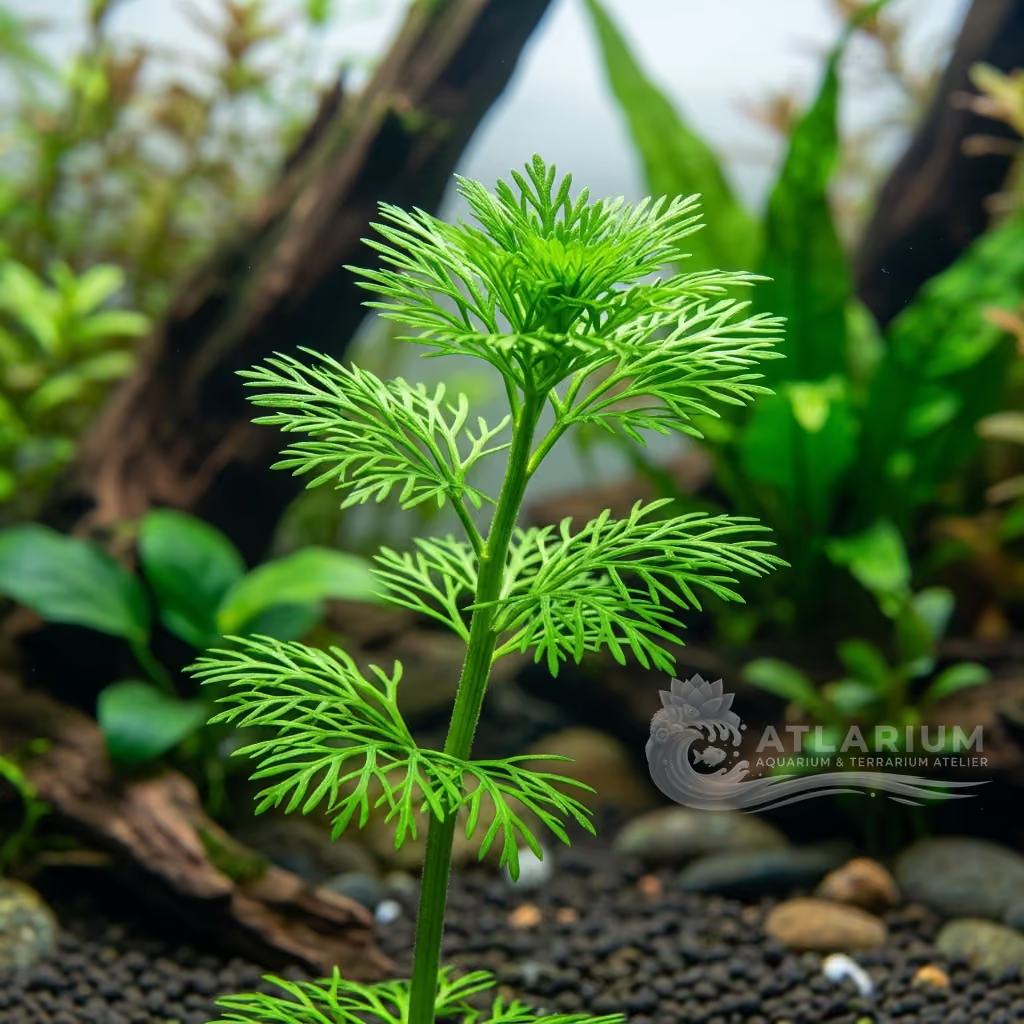
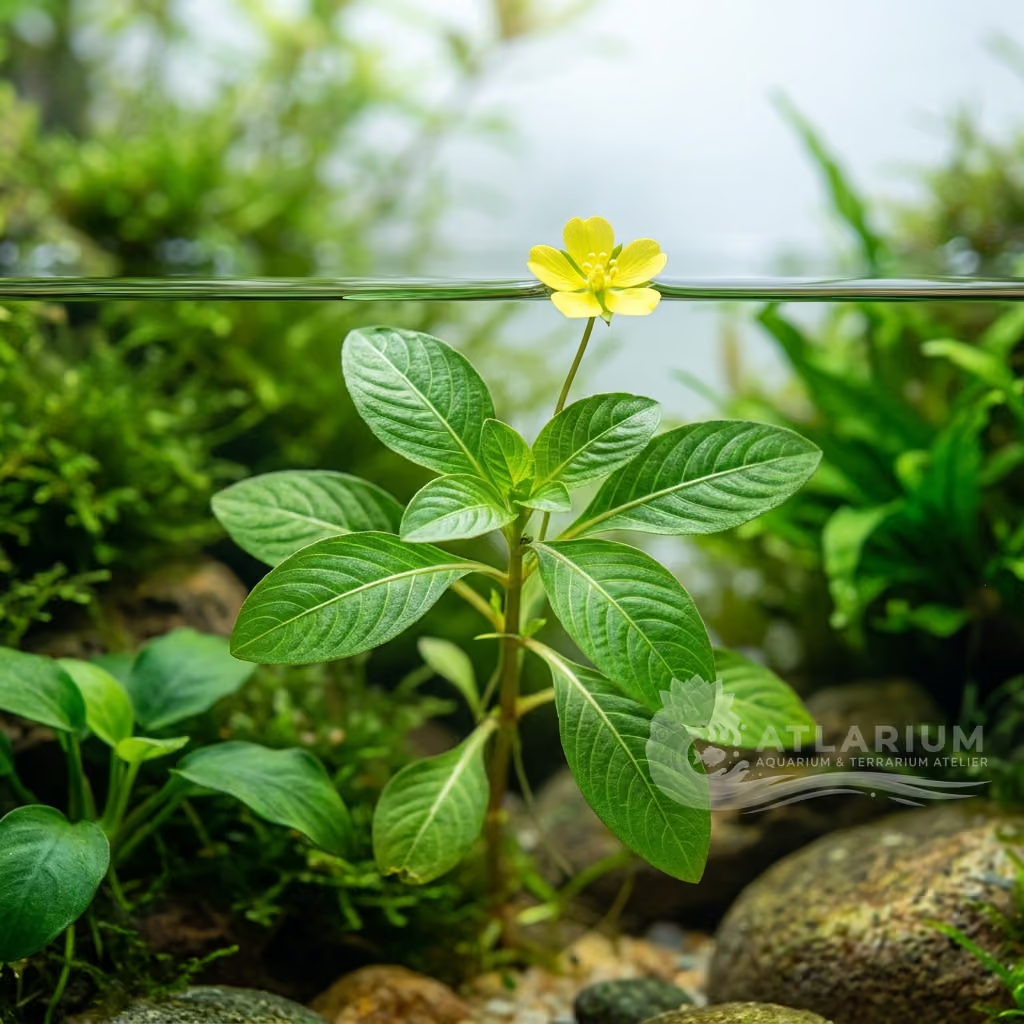
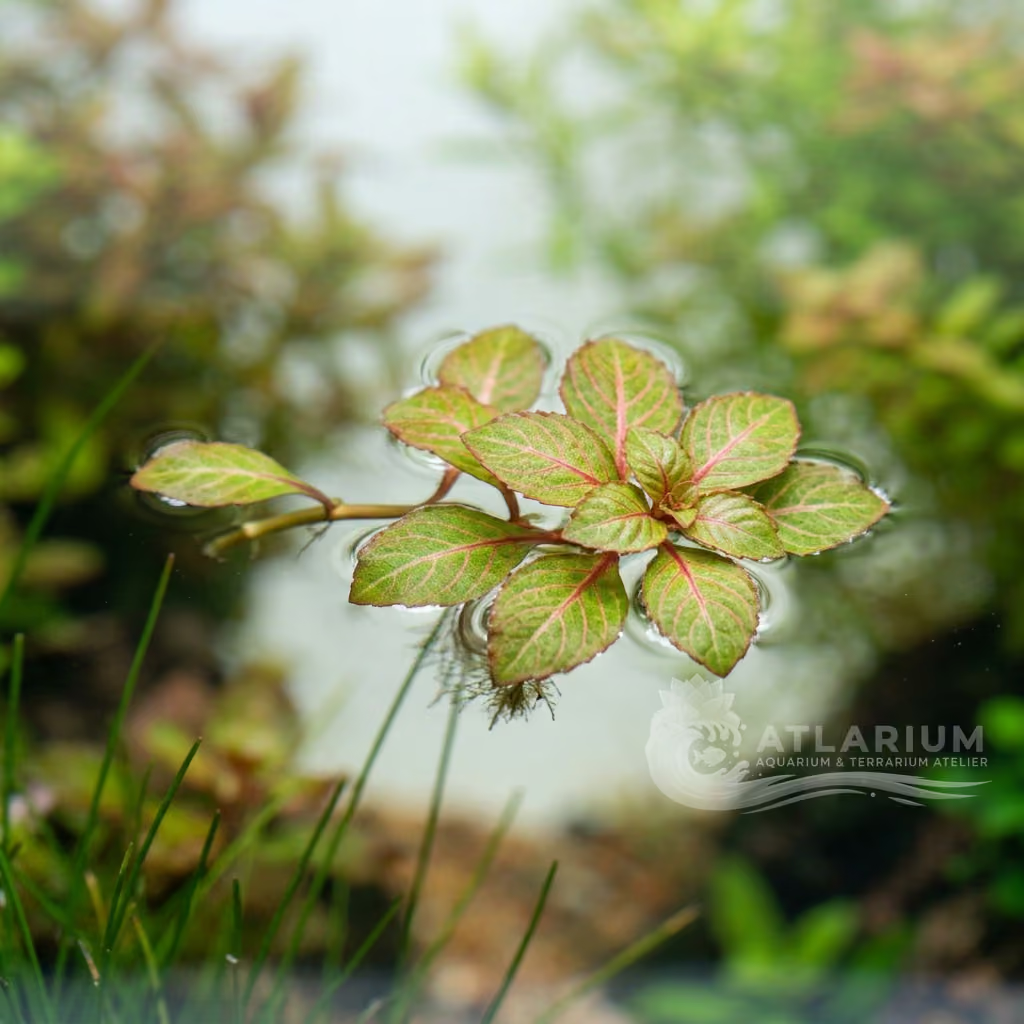
Physical Structure: The submerged architecture is stunning: it is a robust stem plant (erect caulescent) whose fleshy stems, up to 1 cm thick, support rosettes of decussate leaves with an impressive diameter (up to 20 cm). While the emersed leaves are leathery, entire, and lanceolate, the submerged form is exquisitely modified: the leaves divide into very fine segments (pinnatisect), taking on a feathery, needle-like appearance entirely similar to that of a giant *Myriophyllum* or a majestic tree fern.
Color & Texture: The visual impact is dominated by a bright, fresh, and luminous meadow green, which stands out prominently in aquascaping. It never mutates towards red or orange, even under blinding light. The texture of the submerged leaf blades is soft, vaporous, and feathery, creating wonderful plays of light and shading among the dense carvings.

Cuidado, criação e companheiros de tanque
Lighting & CO2: An extremely demanding plant, not suitable for novices. Without powerful (PAR > 70) and constant lighting, the stems quickly lose their lower leaves and the canopy thins out, appearing bare and skeletal. Pressurized CO2 injection (minimum 20-30 mg/l) is its vital fuel: without carbon injections, the plant cannot support its enormous feathery leaf development, halting its growth and degrading within a month.
Nutrition & Substrate: It is a nutrient-devouring titan. Although it absorbs macro and microelements from the water column through its massive leaf apparatus, it categorically demands a fertile allophane substrate or one abundantly enriched with root tabs to anchor its extensive and voracious root system. Copious Iron (Fe) and Potassium (K) must be administered to keep the lime green color alive and prevent necrosis of the leaf plumage.
Water Chemistry: Relatively demanding regarding parameters. It thrives in a warm, soft biotope: it prefers slightly acidic waters (pH 6.0-7.0) with medium-low carbonate and total hardness (KH 2-6, GH 4-8) typical of monsoon rains. The optimal temperature range is purely tropical (24-28°C). It rejects alkaline African calcareous waters.
Space Management & Placement: Its colossal size (reaching 60 cm in height) and the width of its canopy consign it solely to the background of large aquariums, from at least 200 liters upwards. It is imperative to space the stems at least 6-8 cm apart during planting: if crowded together, the feathering of the leaf will completely obscure the adjacent stem, causing it to rot at the base due to lack of light.
Pruning: Growth is vigorous under optimal conditions. To prevent it from collapsing on the water surface, it requires decisive topping operations. The enormous tops are severed, removing 15-20 cm of healthy stem, and replanted, discarding the old, bare bases. Warning: it emits a very strong balsamic/minty scent when cut out of the water.
Risks & Diseases: Extreme chemical danger: the emersed form of this plant is highly TOXIC to fish and invertebrates. If you buy the plant grown in an emersed greenhouse, it CANNOT be cut and placed directly into the aquarium: the lethal essential oil contained in the terrestrial stems will wipe out the entire tank. It is necessary to confine it in a separate tub until it produces the new feathery submerged shoots (totally harmless), and cut and plant only those.

Origem e distribuição geográfica
Hygrophila balsamica, the "Fragrant Hygrophila," is a majestic marsh plant endemic to India, Sri Lanka, and neighboring areas of South Asia. In its native ecosystem, it does not live perpetually submerged: it colonizes swampy grounds, slow-flowing riverbanks, and marshes that flood during the frightening monsoon season. During the dry season, it transforms into a massive emersed shrub, only to re-submerge under meters of murky water when the rains arrive.
Origem
Sul e Sudeste Asiático

Perfil da planta
- Posicionamento
- Fundo
- Due to its striking, feathery appearance and large overall diameter, it serves perfectly as a solitary focal point or a midground to background feature in larger tanks. It requires ample space, as its finely divided leaves spread out widely and can easily shade adjacent plants. It should be planted where it receives direct, unobstructed light and good water flow. Frequent pruning is necessary to maintain its bushy shape and prevent it from reaching the surface too quickly.
- Forma botânica
- Caule
- The submerged form of H. balsamica is entirely different from its emersed state. Underwater, it develops spectacular, deeply pinnate, finely divided leaves that resemble dill or certain Myriophyllum species, though much thicker and fleshier. The overall plant is a bright, vivid light green, with thick, upright stems that can become quite fragile. The emersed form has solid, entire leaves and is highly toxic.
- Crescimento
- Rápida
- Under high light, high CO2, and rich nutrient conditions, its growth rate is very fast. The stems will quickly ascend towards the light, and lateral shoots will form readily if the top is pruned. In lower tech setups, it will rapidly degrade and die off. Its fast metabolism requires diligent maintenance, including frequent trimming and replanting of the tops to keep the stand looking fresh and bushy.
- Substrato
- Alta
- A high-quality, nutrient-rich aquarium soil is highly recommended to support its rapid growth and extensive root system. While it can theoretically grow in inert substrates heavily supplemented with root tabs, active soil provides the stable, acidic environment it prefers. A deep substrate allows it to anchor its thick, fleshy stems securely. The rich soil acts as a crucial buffer to complement heavy water column dosing.
- Fertilização de coluna
- Recomendada
- Aggressive liquid column fertilization is required to keep pace with its rapid growth. A complete liquid fertilizer dosed daily ensures that the plant does not exhaust the water column of essential trace elements and potassium. Iron is particularly important to maintain the pale, striking green of its finely cut leaves. Stunted new growth or yellowing is an immediate sign that column nutrients are insufficient.
- Fertilização radicular
- Necessária
- Root fertilization is an excellent way to ensure the long-term health of this demanding species. Using a nutrient-rich aquasoil or regularly adding root capsules directly beneath the stems will promote thick, sturdy growth and prevent the lower sections from rotting. A strong root base allows the plant to recover quickly from the severe pruning necessary to maintain its shape. It feeds heavily from both the roots and the leaves.
- Corte
- Ocasional
- Trimming is done by cutting the upper part of the stem. The rooted section will branch out, resulting in a denser, bushier appearance. The trimmings can be readily replanted to start new stands.
- Propagação
- Estacas
- Propagation is straightforward through stem cuttings. Snip the healthy top portion of the stem and replant it deep into the substrate. The original stem will readily produce new side shoots from the remaining nodes, creating a denser plant. Ensure that cuttings have plenty of light to encourage rapid rooting. Remember to handle emersed cuttings with extreme care, as their sap is highly toxic to aquarium inhabitants.
- Sensibilidade
- Moderada
- Note that emersed grown stems contain compounds toxic to fish and must be acclimated carefully before submerging. Submersed forms are safe but can be prone to algae if flow is poor. It requires high light; shading causes it to drop lower leaves.
- Função de layout
- Fundo
- Its feathery, light-green foliage makes it a superb focal point or contrasting background plant. It breaks up the monotony of solid, broad-leaved plants. It brings a soft, intricate texture to any layout.

Galeria de imagens
Imagens licenciadas vinculadas à espécie ou, quando marcadas, ao táxon representativo mais próximo.

Espécies relacionadas
Recomendações agrupadas por parentes próximos, escolhas de acompanhantes e cuidados semelhantes.