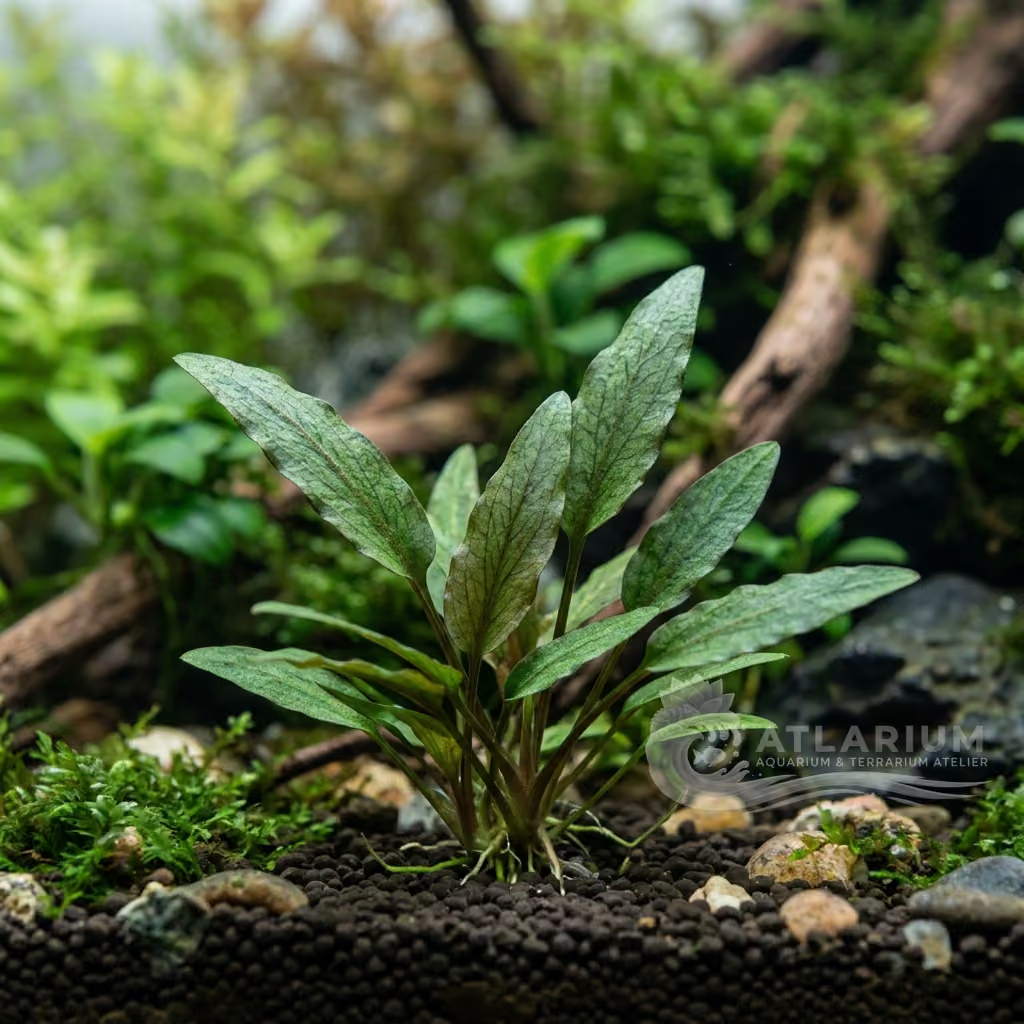
Staurogyne 'Bihar'
Staurogyne sp. 'Bihar'
Staurogyne sp. 'Bihar' is a robust and decorative aquarium plant native to India, known for its unique pinnately lobed leaves and vigorous growth habit.
Temperatura da água
22 - 28 °C
Valor de pH
6 - 7.5
Tipo de água
Água doce
Luz
Média
CO2
Média
Altura esperada
25 cm
Largura esperada
15 cm
GH
4 - 15 dGH
KH
3 - 10 dKH

Descrição da espécie
Geographical Origin and Habitat: Native to the state of Bihar in northern India. It grows primarily as an amphibious or marsh plant along the margins of slow-flowing rivers and streams, adapting to submersed conditions during seasonal flooding.
Taxonomy & Genetics: Belongs to the Acanthaceae family, genus *Staurogyne*. It is closely related to *Staurogyne repens* but is significantly larger. It remains formally undescribed scientifically, hence the placeholder name sp. 'Bihar'.
Physical Structure: Features upright, sturdy stems that can reach 15-30 cm in height. The submersed leaves are unique, displaying serrated or deeply lobed (pinnatifid) margins, giving them a feathered or jagged appearance depending on light levels.
Color & Texture: Submersed leaves range in color from olive green to bronze-brown, with purplish or reddish hues on the undersides under high light. The leaves have a leathery, slightly textured feel.

Cuidado, criação e companheiros de tanque
Lighting & CO2: Requires moderate to high lighting to promote deeply lobed leaves and compact growth. CO2 supplementation is highly recommended to encourage bushy growth and prevent the lower stems from shedding leaves.
Nutrition & Substrate: Benefits greatly from a nutrient-rich substrate containing iron and microelements. It absorbs nutrients through both its root system and leaves, requiring regular liquid dosing of macronutrients and micronutrients.
Water Chemistry: Adapts to a wide range of water parameters: temperature between 20°C and 28°C, pH 6.0-7.5, soft to moderately hard water (GH 4-15, KH 3-10). Prefers clean, well-filtered water.
Space Management & Placement: Due to its height and vigorous growth, it is best placed in the midground or background of medium to large aquariums. It tends to form wide, bushy clumps that require sufficient space to spread.
Pruning: Pruning is done by cutting the tops of the stems. This stimulates lateral shoots, resulting in a bushier appearance. The severed cuttings can be replanted into the substrate for propagation.
Risks & Diseases: Under low light or nutrient deficiencies, the lower leaves may rot and fall off. The large, relatively slow-growing leaves can attract black beard algae (BBA) if tank nutrients are unbalanced.

Origem e distribuição geográfica
Native to the state of Bihar in northern India. It grows primarily as an amphibious or marsh plant along the margins of slow-flowing rivers and streams, adapting to submersed conditions during seasonal flooding.
Origem
Sul e Sudeste Asiático

Perfil da planta
- Posicionamento
- Plano intermediário
- Given its impressive size and somewhat upright growth habit, it is best suited for the midground or background of larger aquariums. It can grow quite tall if left unpruned, creating a striking focal point. Ensure it is placed where its broad leaves will not cast excessive shade on smaller foreground plants.
- Forma botânica
- Caule
- This species features deeply lobed, almost pinnatifid leaves that are highly unusual for the Staurogyne genus, resembling a Hygrophila. The foliage is predominantly green but can develop beautiful bronze to reddish hues under intense lighting. Its stems are thick and robust, supporting the large, textured leaves.
- Crescimento
- Média
- It exhibits a moderate to fast growth rate, especially when provided with CO2 injection and high light. The growth is steady and vigorous, requiring regular maintenance to prevent it from overtaking its designated space. Lower light setups will result in slower, more leggy growth.
- Substrato
- Média
- Staurogyne sp. 'Bihar' benefits from a nutrient-rich aqua soil or a well-supplemented inert gravel to support its steady growth. Its roots penetrate moderately into the substrate to establish a strong and stable base. Providing at least 4-5 cm of substrate depth ensures proper root development and optimal nutrient uptake.
- Fertilização de coluna
- Recomendada
- Consistent liquid fertilization is important to support its rapid biomass accumulation. A complete fertilizer regime ensures robust stem development and prevents the lower leaves from deteriorating. Potassium and trace elements are particularly beneficial for maintaining leaf integrity.
- Fertilização radicular
- Opcional
- It develops a strong, extensive root system that benefits significantly from a nutrient-rich substrate. Root tabs or a quality aquasoil will encourage thicker stems and larger, healthier leaves. Substrate fertilization is key to unlocking its full, bushy potential.
- Corte
- Ocasional
- Regular trimming is necessary to maintain its shape and encourage bushy growth. Cutting the stem above a node will prompt the development of multiple side shoots. Replant the healthy tops to propagate and create a denser grouping.
- Propagação
- Estacas
- Propagation is easily achieved through standard stem cuttings. Simply snip the upper portion of a healthy stem and replant it directly into the substrate. The original stem will quickly sprout new lateral branches.
- Sensibilidade
- Moderada
- It is a generally hardy plant but can be prone to shedding lower leaves if light penetration is poor or nutrients are severely lacking. It adapts well to various water parameters but thrives in slightly acidic, soft to medium-hard water. Sudden massive changes in water chemistry should be avoided.
- Função de layout
- Plano intermediário, Fundo, group
- Its unique, deeply lobed leaf structure makes it an excellent contrast plant against finely-leaved or standard oval-leaved species. It serves well as a structural background or a towering midground feature in Dutch-style or nature aquariums. Its varied coloration adds significant visual interest.

Espécies relacionadas
Recomendações agrupadas por parentes próximos, escolhas de acompanhantes e cuidados semelhantes.