Cordyline fruticosa
Cordyline fruticosa
A vibrant tropical shrub from Asia and the Pacific with striking pink and red foliage. Best grown in emersed setups or terrariums, it needs high light to maintain colors but will eventually rot if fully submerged.
Temperatura da água
22 - 28 °C
Valor de pH
6 - 7.5
Tipo de água
Água doce
Luz
Média - Alta
CO2
Média - Alta
KH
2 - 10 dKH

Descrição da espécie
Geographical Origin and Habitat: Cordyline fruticosa is native to tropical Southern Asia, Northern Australia, and the Pacific Islands. It grows naturally as a swampy or terrestrial shrub in humid forest margins, riverbanks, and coastal zones. It prefers rich, damp but well-drained soils under filtered sunlight.
Taxonomy & Genetics: Belonging to the family Asparagaceae (formerly Laxmanniaceae), it is widely known by synonyms like *Cordyline terminalis*. Genetically, it has many cultivars selected for their striking variegated foliage. In the aquarium trade, it is frequently sold as a submersed plant, despite being palustrine.
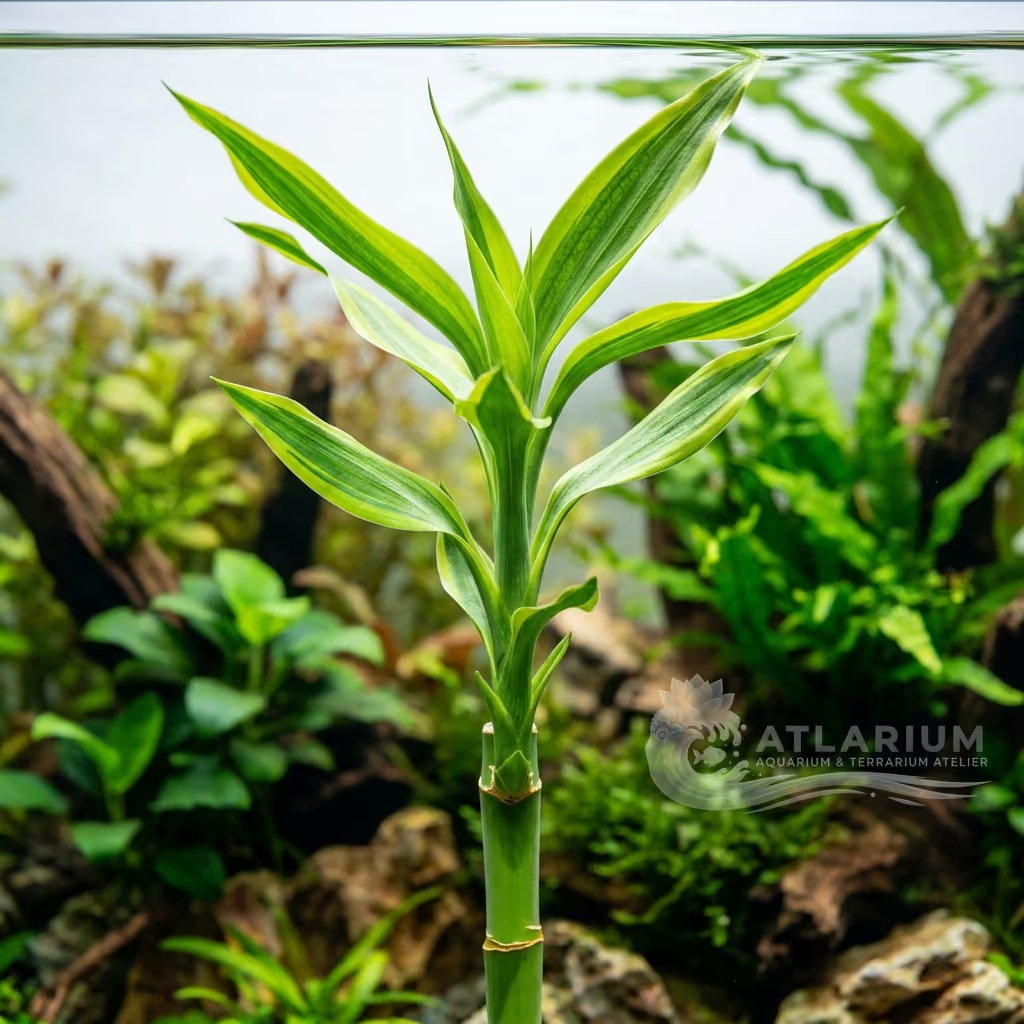
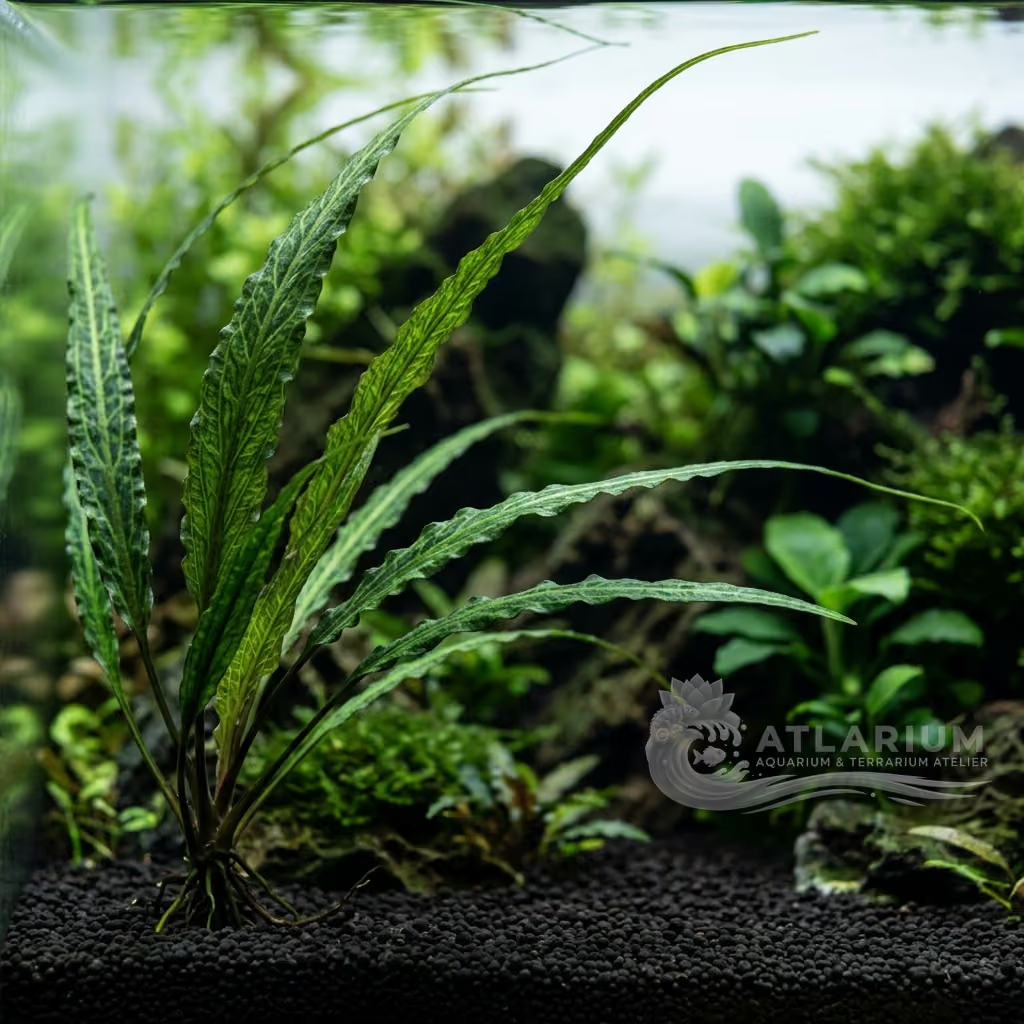
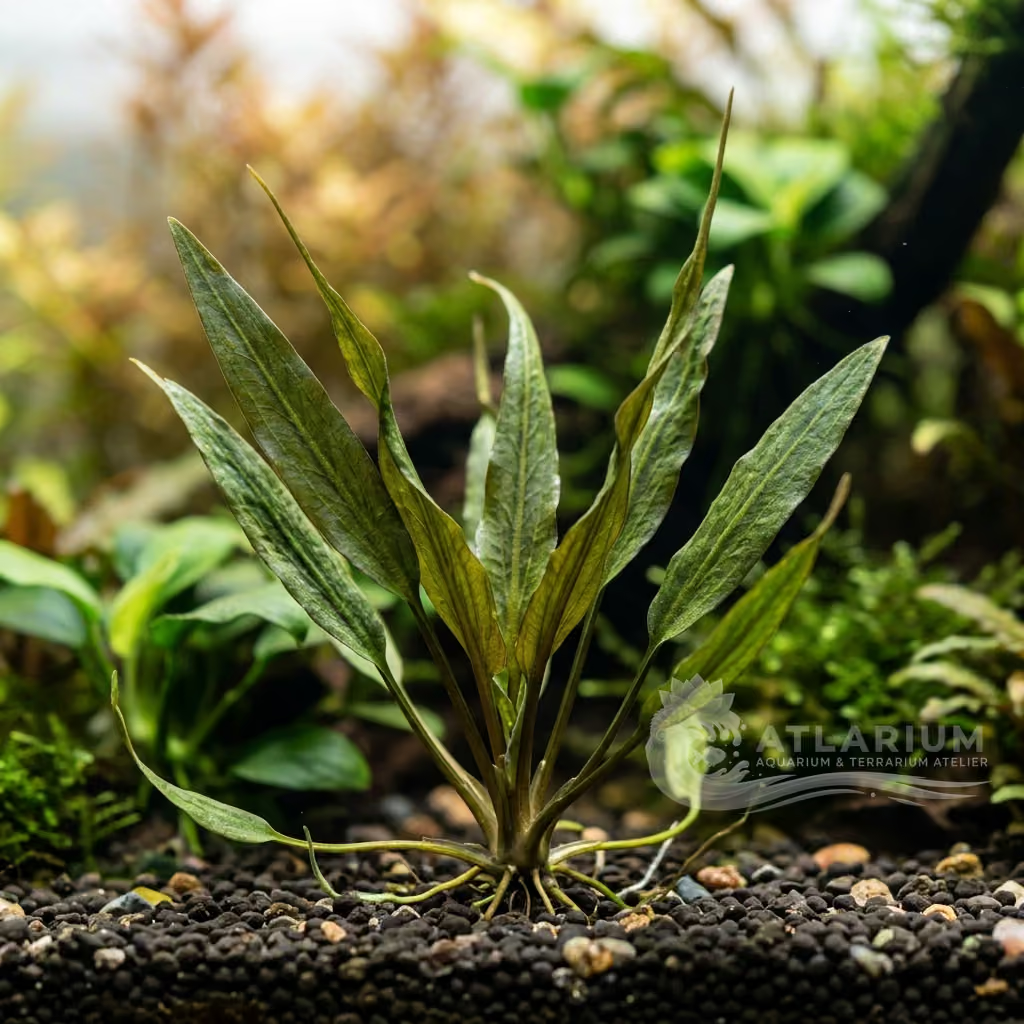
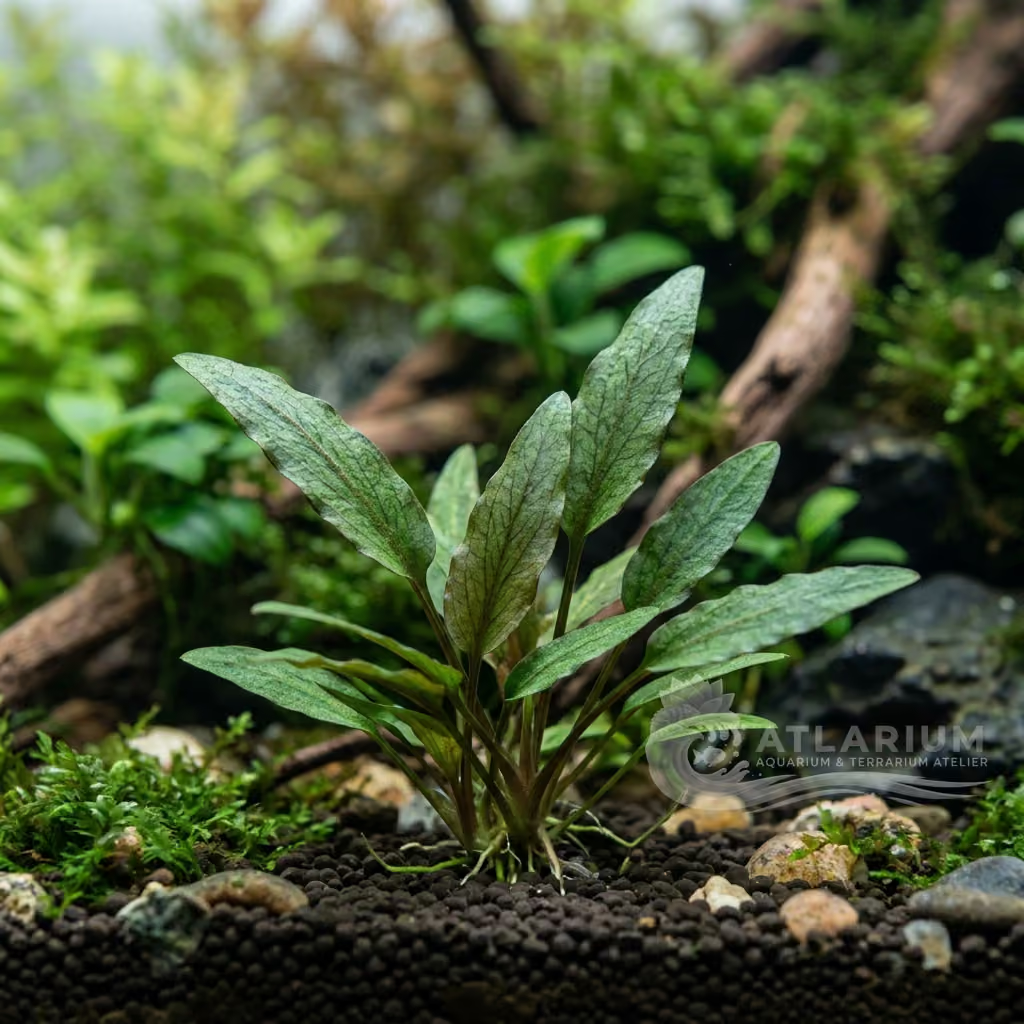
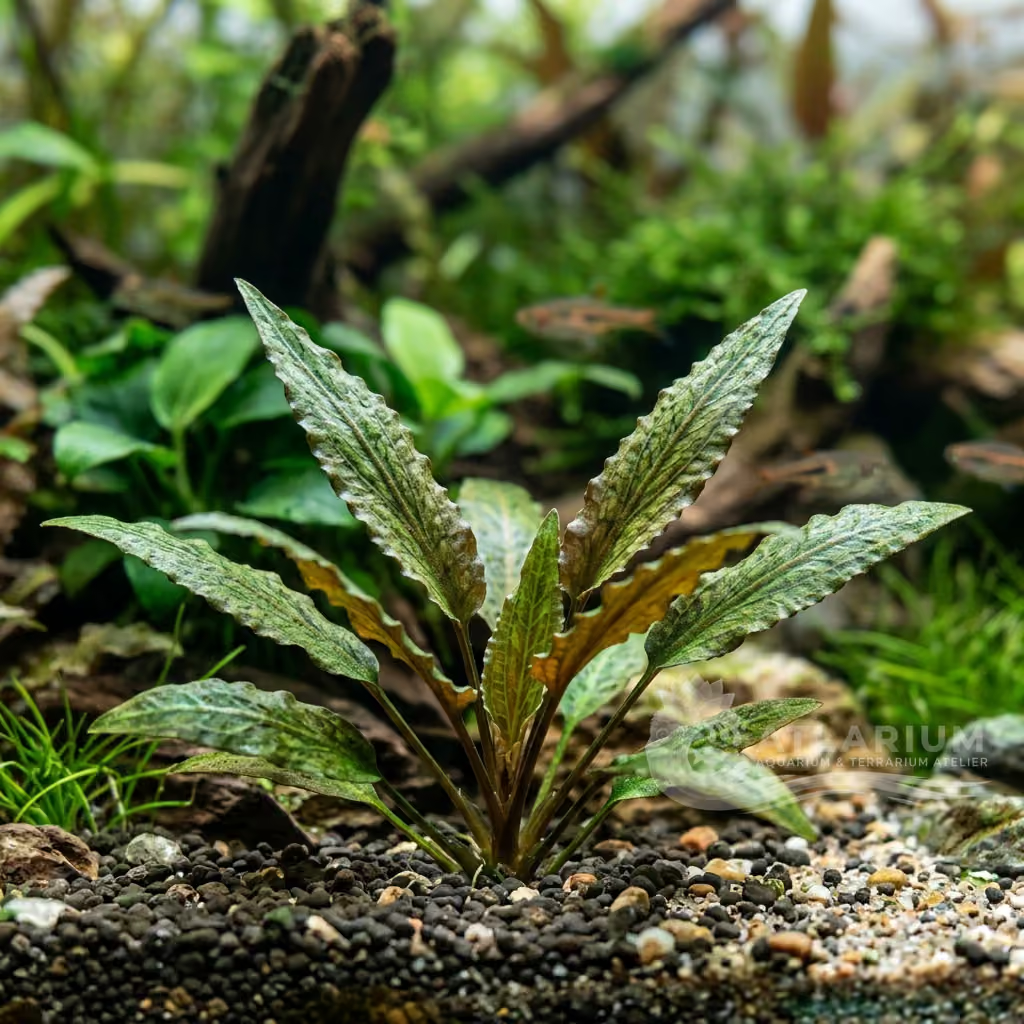
Physical Structure: It develops an upright woody stem with broad, lanceolate leaves arranged in a spiral pattern. The plant has a tufted, shrubby structure that can grow large. Under water, it stops growing because it lacks the physiological adaptations for submersed gas exchange.
Color & Texture: The leaves feature spectacular variegation ranging from dark green to deep purple-red, bright pink, and cream margins. The texture is tough, smooth, and leathery, with visible parallel veins. This intense color contrast makes it appealing to hobbyists seeking visual highlights.

Cuidado, criação e companheiros de tanque
Lighting & CO2: High to moderate light is required to keep its vibrant colors; low light causes the pink and red hues to fade into green. CO2 injection does not prevent its long-term decline if kept fully submerged, though it benefits the plant when grown emersed with leaves in the air.
Nutrition & Substrate: It requires a substrate rich in organic nutrients and iron. In paludariums or terrariums, it needs damp but well-aerated soils. In an aquarium, its roots will attempt to feed, but they are prone to rotting in compacted, oxygen-starved aquatic soils.
Water Chemistry: It tolerates soft to medium-hard water with a pH of 6.0 to 7.2. The optimal temperature is between 18°C and 28°C. Because it is not a true aquatic plant, water chemistry is less critical than avoiding permanent submersion.
Space Management & Placement: In a standard aquarium, place it in the midground only as a temporary decorative piece, or position it so the leaves emerge above the surface. The ideal placement is in the emersed section of paludariums or open-top aquaterrariums where roots are wet and leaves are dry.
Pruning: Pruning involves cutting away older, damaged lower leaves close to the stem. If the stem becomes too tall in an emersed setup, it can be topped; the cut portion can be rooted as a cutting, and the base will produce new shoots.
Risks & Diseases: The primary risk is rot of the stems and roots caused by long-term complete submersion. The plant will shed leaves, turn mushy, and decay within a few months. For successful long-term care, it must be grown in emersed conditions.

Origem e distribuição geográfica
Cordyline fruticosa is native to tropical Southern Asia, Northern Australia, and the Pacific Islands. It grows naturally as a swampy or terrestrial shrub in humid forest margins, riverbanks, and coastal zones. It prefers rich, damp but well-drained soils under filtered sunlight.
Origem
Sul e Sudeste AsiáticoAustrália, Nova Guiné e Oceania

Perfil da planta
- Posicionamento
- Plano intermediário
- Cordyline fruticosa should only be placed in ripariums, paludariums, or as a houseplant, keeping its leaves entirely out of the water. When submerged in an aquarium, it acts only as a temporary decoration and will degrade within a few weeks to months. In emersed setups, place it in a well-lit area where its striking colorful foliage can be displayed prominently. It serves as an excellent background focal point above the water level.
- Forma botânica
- Caule
- This is a robust, woody-stemmed terrestrial shrub boasting broad, leathery leaves with intense red, pink, and green variegation. The leaves are arranged in a spiral or rosette pattern along the sturdy central cane. It lacks the soft, permeable aquatic foliage necessary for submerged gas exchange. Its bold, structural form makes it a striking architectural plant for terrestrial displays.
- Crescimento
- Média
- When grown correctly in an emersed or terrestrial environment, it exhibits a moderate growth rate. Submerging the plant halts its growth entirely as it slowly begins to die and decay. In a humid paludarium with good lighting, it will steadily produce new colorful leaves from the central crown. Its growth is largely dependent on ambient humidity and proper root aeration.
- Substrato
- Alta
- This species demands a well-draining, airy potting mix rather than aquatic substrates. A blend of peat, perlite, and standard potting soil provides the ideal moisture retention without causing root rot. In a paludarium, its roots can be placed in a constantly moist substrate, provided the crown and foliage remain completely above the water line. Aquatic gravels will suffocate its roots over time.
- Fertilização de coluna
- Recomendada
- Water column fertilization is completely ineffective and irrelevant for this terrestrial species. Exposing its foliage to aquarium water does not allow for nutrient uptake and only accelerates tissue necrosis. All fertilization must be directed to its root system in a terrestrial or emersed context. Liquid aquatic fertilizers will not benefit this plant in any meaningful way.
- Fertilização radicular
- Nenhuma
- Root fertilization is the only viable method to nourish Cordyline fruticosa, using standard soil fertilizers. In a paludarium setup, if the roots extend into the aquatic substrate, they can absorb nitrates from the water, acting as a natural filter. However, specialized terrestrial slow-release granules work best when mixed into its primary well-draining soil. Ensure the root zone is never completely anaerobic.
- Corte
- Ocasional
- Maintenance involves simply removing the lower leaves as they naturally age, turn brown, and droop. If the central cane becomes too tall for the enclosure, it can be cut back; the plant will usually sprout new shoots from just below the cut. Do not allow dead leaves to fall into the aquarium water, as they will degrade water quality.
- Propagação
- Estacas
- Propagation is typically done through stem cuttings or cane sections planted in moist, well-draining soil. These cuttings require high humidity and warmth to develop a new root system successfully. It cannot be propagated underwater, as cuttings will simply rot. Once roots establish in soil, the new plant can be integrated into a terrarium or paludarium design.
- Sensibilidade
- Moderada
- The most critical sensitivity is its inability to survive underwater; submerging the crown and leaves is a guaranteed death sentence. It is also sensitive to dry air and requires relatively high humidity to prevent the leaf tips from browning. It prefers bright, indirect light to maintain its vibrant leaf coloration.
- Função de layout
- Plano intermediário, paludarium, riparium
- In an aquatic layout, its role is exclusively limited to the marginal, above-water areas of a paludarium or riparium. It provides a stunning, colorful canopy and a strong vertical element that draws the eye upward. It should never be used as submerged aquatic vegetation.

Espécies relacionadas
Recomendações agrupadas por parentes próximos, escolhas de acompanhantes e cuidados semelhantes.