Elatine gratioloides
Elatine gratioloides
A highly adaptable creeping plant from Australia and New Zealand. Perfect for foregrounds, it needs strong lighting and CO2 supplementation to form a dense carpet.
Temperatura da água
16 - 26 °C
Valor de pH
6 - 7
Tipo de água
Água doce
Luz
Média - Alta
CO2
Média - Alta
GH
0 - 20 dGH
KH
0 - 10 dKH

Descrição da espécie
Geographical Origin and Habitat: Native to Australia and New Zealand, where it inhabits the damp margins of ponds, lakes, and rivers. It is accustomed to living both in emerged form on muddy banks and submerged in shallow water, showing high tolerance to seasonal variations.
Taxonomy & Genetics: It is part of the Elatinaceae family, genus Elatine. This species shares many characteristics with Elatine triandra, but differs in microscopic details of the flowers and leaf arrangement.
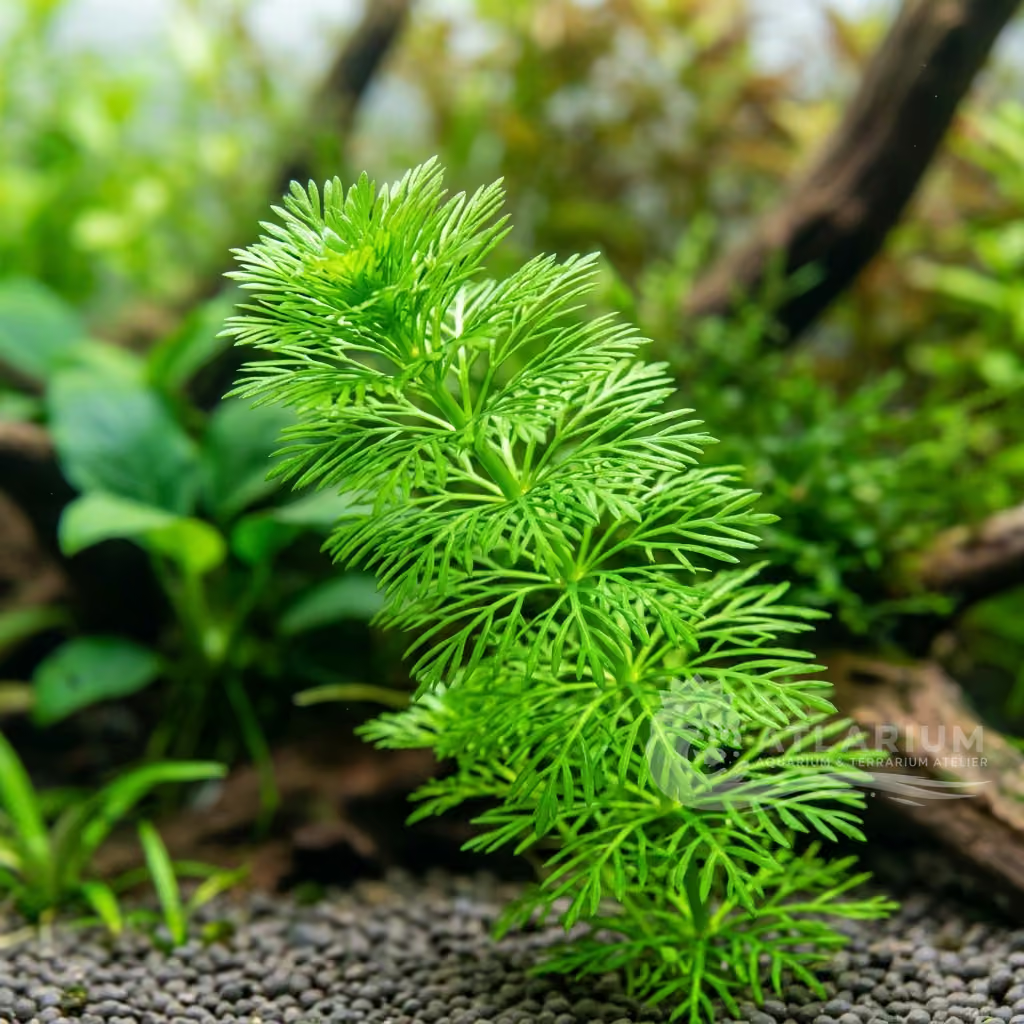
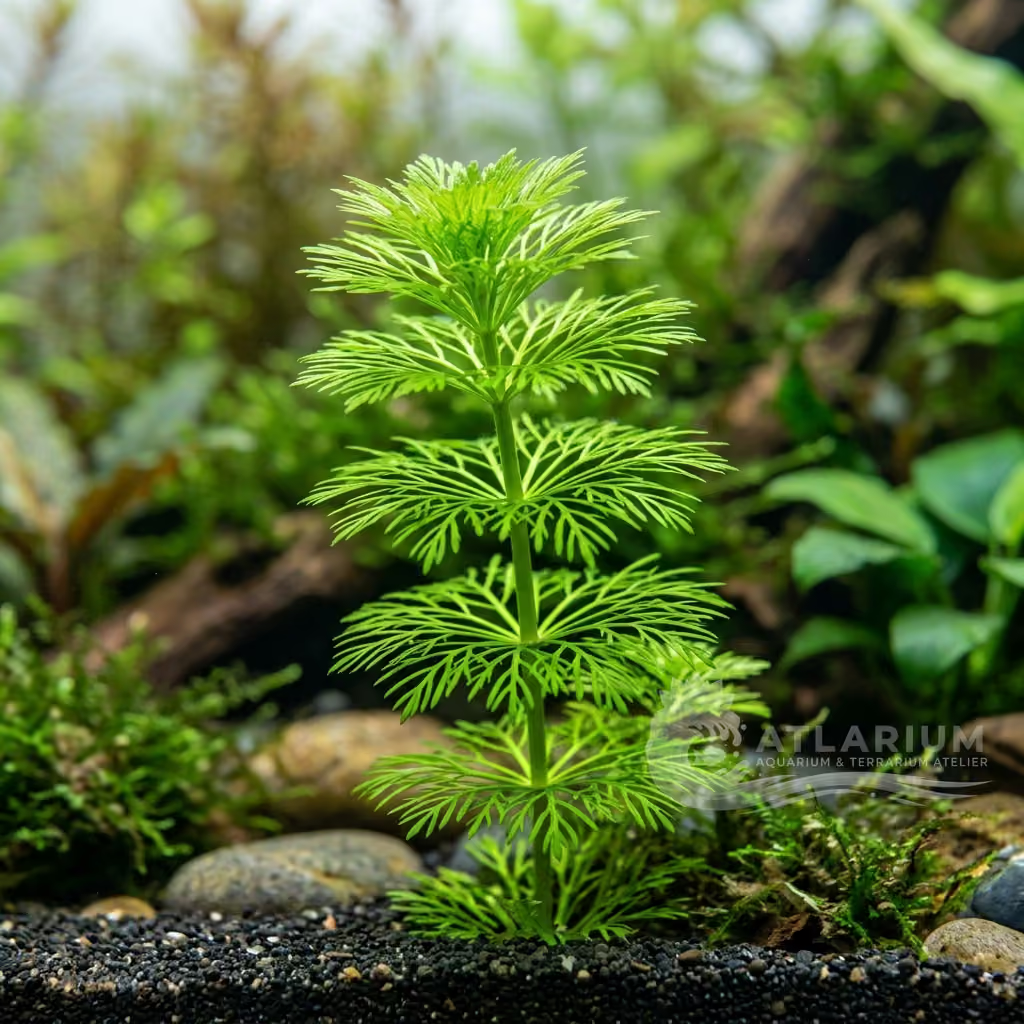
Physical Structure: It develops creeping or slightly erect, highly branched stems that form dense plant cushions. Roots develop easily from each stem node, anchoring the plant firmly to the substrate.
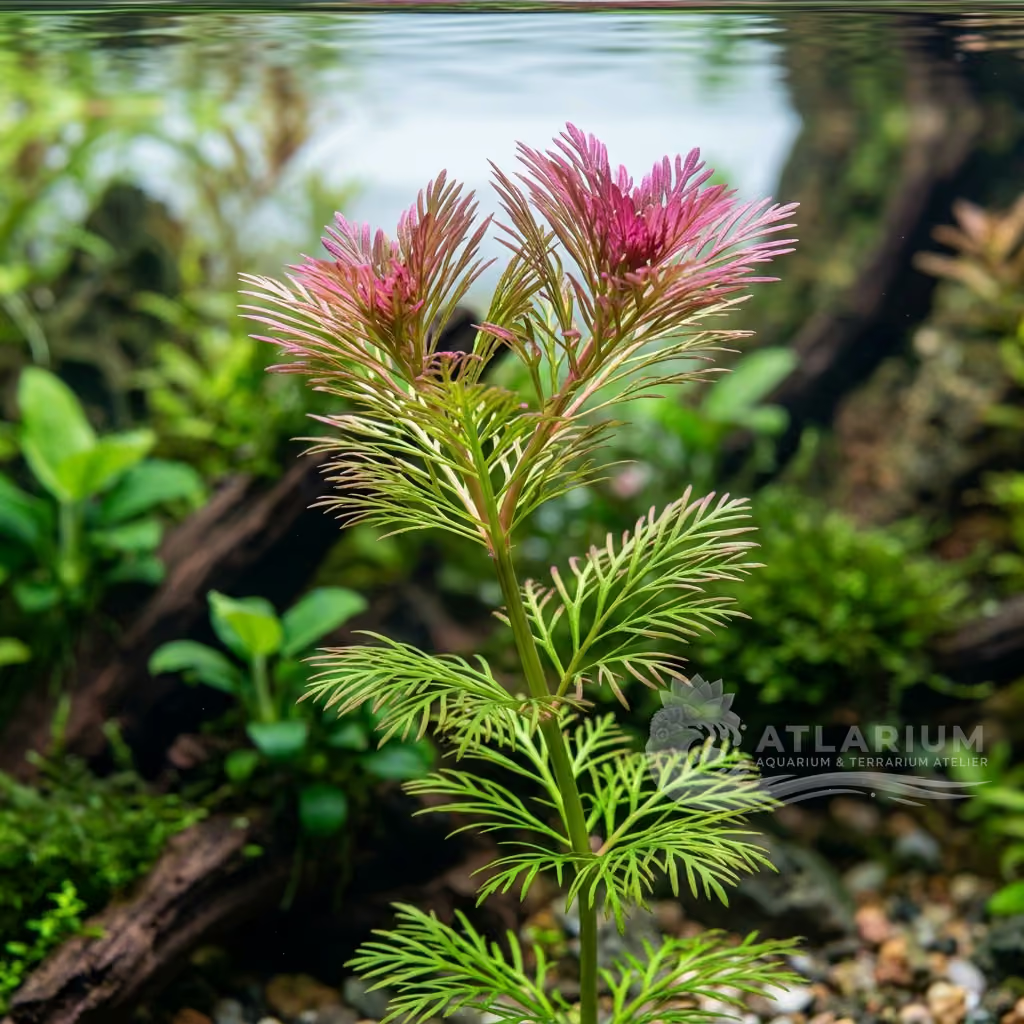
Color & Texture: The leaves have a light green or pastel green coloration. The texture is extremely soft and the leaf tissue is thin, giving the clump a soft and fluffy appearance.

Cuidado, criação e companheiros de tanque
Lighting & CO2: Requires moderate to strong lighting. Strong light promotes compact, creeping development. CO2 supplementation significantly accelerates growth.
Nutrition & Substrate: A fertile substrate is recommended to support the root system. It benefits from regular administration of liquid fertilizers containing iron.
Water Chemistry: Adapts well to pH ranges between 6.0 and 7.5. It prefers soft to index-hard water and a temperature between 15 and 26 °C.
Space Management & Placement: Great for the midground or for the foreground in large aquariums. It can be planted in small groups to form dense bushes.
Pruning: Should be pruned regularly by topping the longest stems to encourage lateral branching and maintain a tidy shape.
Risks & Diseases: Can suffer from chlorosis (leaf yellowing) if nutrients or iron are lacking. Watch out for shading caused by taller plants.

Origem e distribuição geográfica
Native to Australia and New Zealand, where it inhabits the damp margins of ponds, lakes, and rivers. It is accustomed to living both in emerged form on muddy banks and submerged in shallow water, showing high tolerance to seasonal variations.
Origem
Austrália, Nova Guiné e Oceania

Perfil da planta
- Posicionamento
- Plano intermediário
- This versatile plant is primarily used as a foreground carpeting plant or a low midground bush. When provided with intense lighting, it will hug the substrate and spread laterally. In lower light conditions, it may reach upward, making it suitable for midground placement among hardscape. It fits perfectly in both nano tanks and larger aquascapes.
- Forma botânica
- Caule
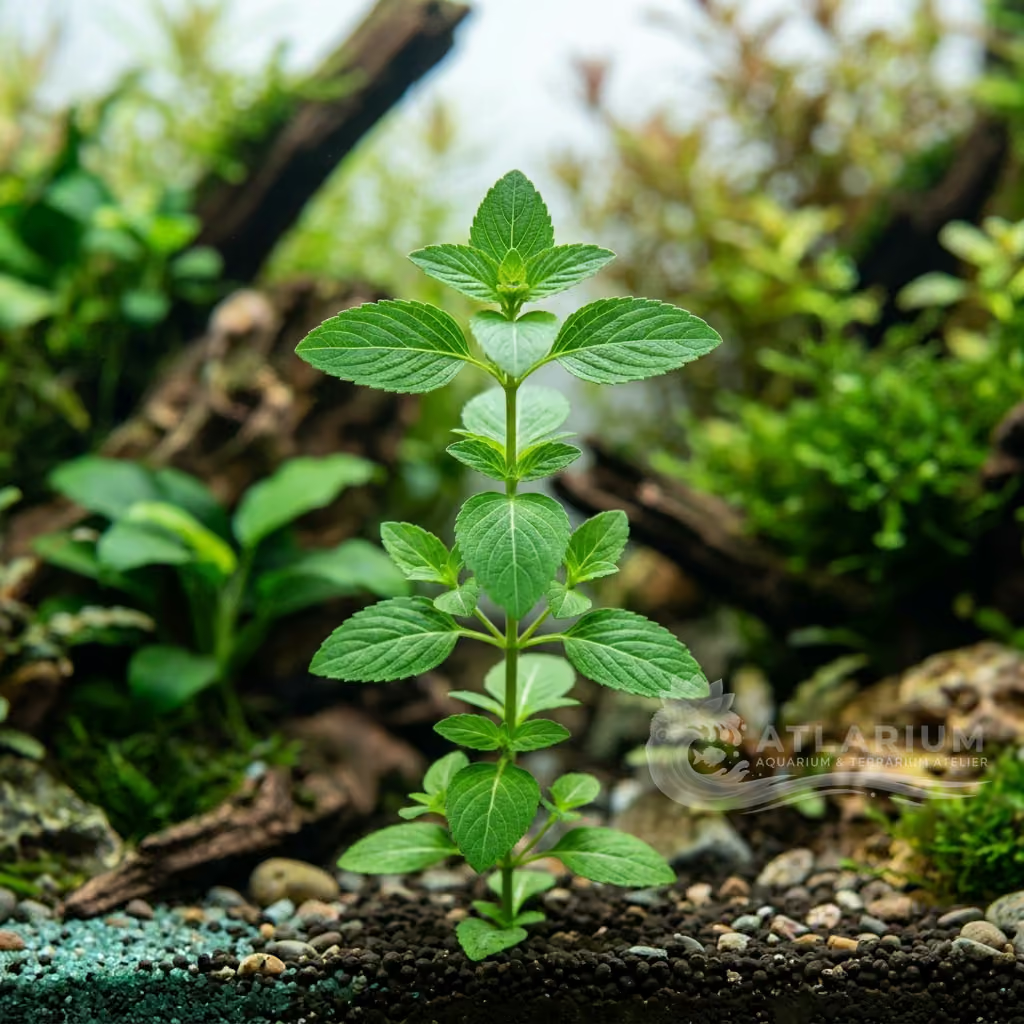
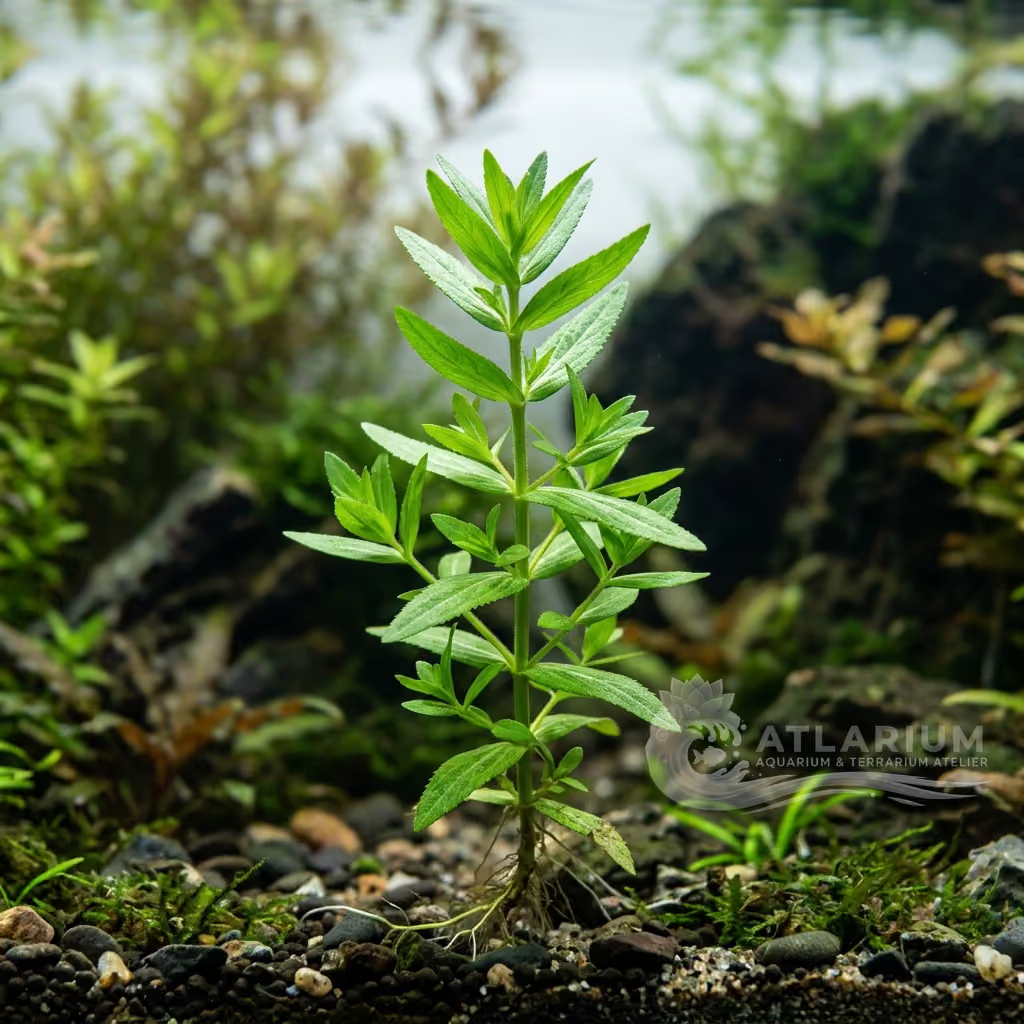
- The plant features small, opposite, bright green leaves arranged along a creeping, delicate stem. The leaves are slightly larger and more elongated than those of Elatine hydropiper. When growing well, it forms a lush, dense mat that completely obscures the substrate, resembling a miniature underwater lawn.
- Crescimento
- Rápida
- Under optimal conditions of high light and injected CO2, Elatine gratioloides exhibits a moderate to fast growth rate. Once acclimatized, it quickly sends out runners to colonize the surrounding substrate. If conditions are subpar, its growth will slow considerably, and it may struggle to outcompete algae. Regular maintenance is needed once a dense carpet forms.
- Substrato
- Alta
- As a delicate carpeting plant, Elatine gratioloides requires a fine-grained, nutrient-rich substrate to thrive and spread effectively. It develops tiny, shallow root systems that creep along the surface, making large gravel highly unsuitable for its runners. A high-quality aqua soil provides the necessary iron and macronutrients directly to its roots while allowing easy penetration. A substrate depth of 3-5 centimeters is adequate for supporting this low-growing species.
- Fertilização de coluna
- Recomendada
- Liquid column fertilization is highly beneficial and helps sustain the plant's overall health and rapid growth. Since the leaves are small but numerous, they effectively absorb nutrients from the water column. A complete liquid fertilizer dosed regularly will prevent deficiencies and encourage thick lateral growth.
- Fertilização radicular
- Nenhuma
- As a creeping foreground plant, it benefits immensely from a nutrient-rich substrate like aquasoil. A strong root system is essential for the plant to anchor itself securely and access necessary nutrients directly from the soil. Root tabs can be used if growing in inert substrates, though aquasoil yields the best results.
- Corte
- Regular
- Trimming should be done regularly using curved spring scissors to keep the carpet low and dense. Cutting the tops off encourages the plant to spread laterally rather than growing vertically. If left untrimmed, the lower layers may become shaded, leading to decay and causing the entire carpet to uproot and float away.
- Propagação
- Estacas
- Propagation is very simple; it naturally spreads via creeping stems and runners along the substrate. To propagate manually, you can simply cut a section of the stem or divide an established mat and replant the pieces slightly buried in the soil. The new cuttings will quickly root and begin spreading.
- Sensibilidade
- Moderada
- This species is somewhat sensitive to being overshadowed by larger plants or hardscape. It is also highly susceptible to smothering by algae, particularly diatoms or hair algae, which can easily ruin its delicate leaves. It prefers stable water parameters and may melt temporarily when newly introduced to an aquarium.
- Função de layout
- Plano intermediário, Primeiro plano
- Elatine gratioloides is an excellent choice for creating a lush, bright green carpet in the foreground of Nature Aquariums. Its relatively small leaf size provides a great sense of scale, making aquariums look larger than they are. It is an ideal alternative to Glossostigma or Hemianthus callitrichoides, offering a slightly different texture.

Espécies relacionadas
Recomendações agrupadas por parentes próximos, escolhas de acompanhantes e cuidados semelhantes.