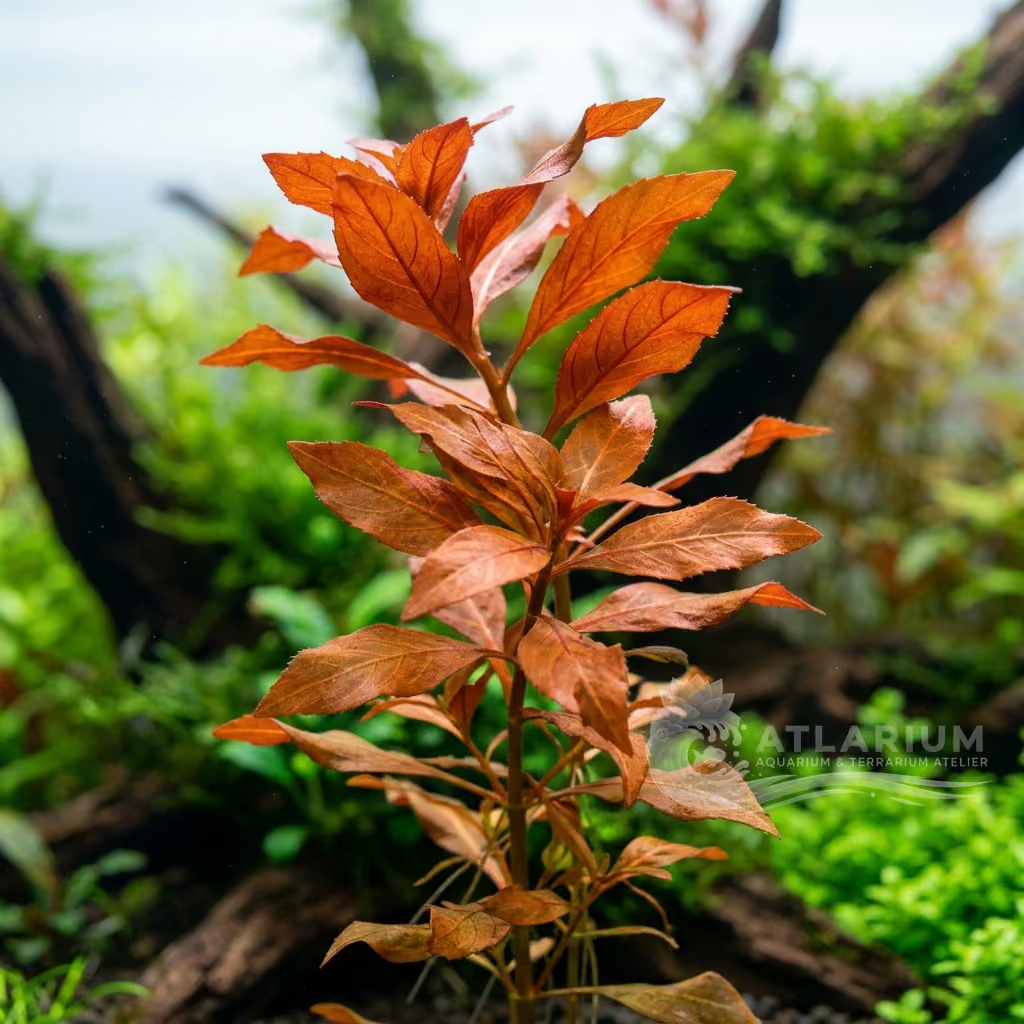
Lilaeopsis novae-zelandiae
Lilaeopsis novae-zelandiae
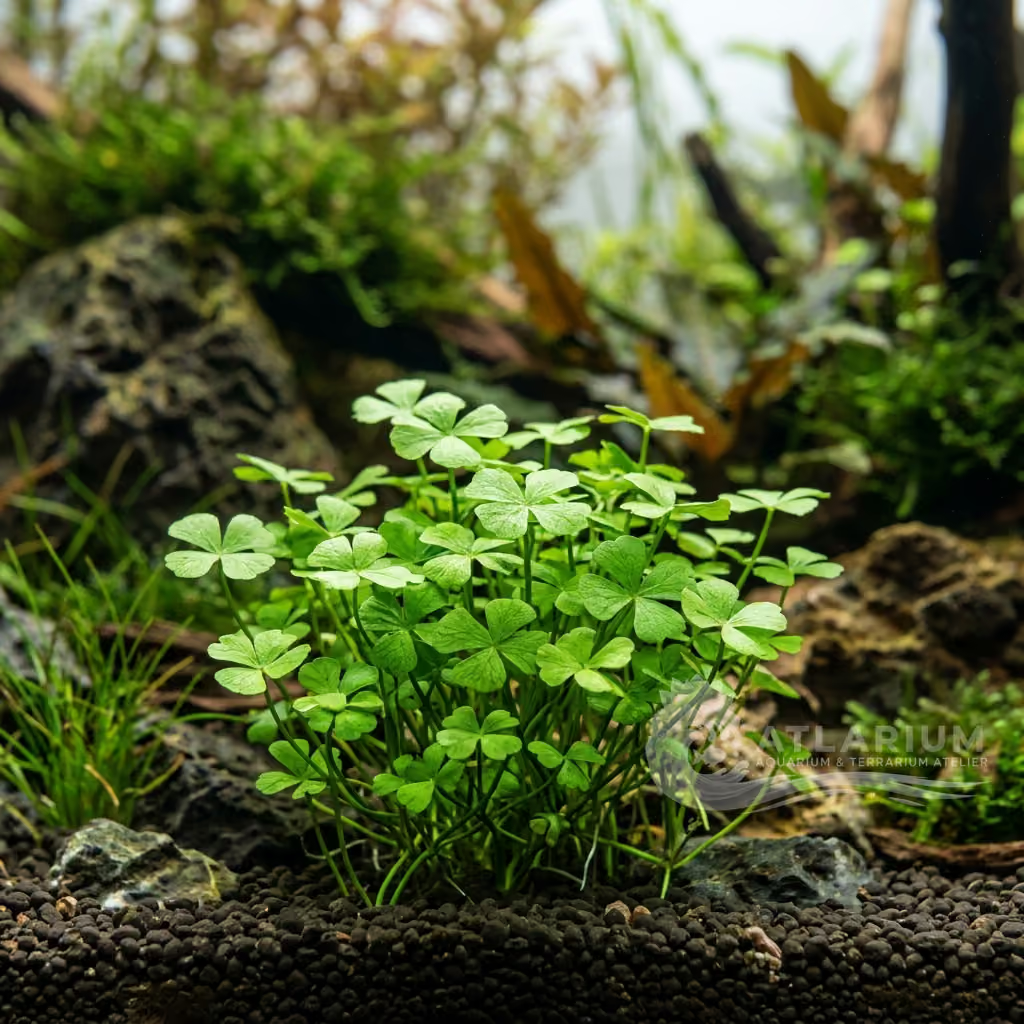
The New Zealand micro sword forms an elegant, low-growing turf. It spreads via horizontal runners and requires good lighting and nutrient-rich soil to thrive as a dense foreground carpet.
Temperatura da água
15 - 26 °C
Valor de pH
6 - 7.5
Tipo de água
Água doce
Luz
Média - Alta
CO2
Média - Alta
Altura esperada
15 cm
GH
4 - 20 dGH
KH
2 - 14 dKH

Descrição da espécie
Geographical Origin and Habitat: Lilaeopsis novae-zelandiae is native to New Zealand, where it grows abundantly along lake shores, coastal estuaries, and calm rivers. It is accustomed to temperate climates and periodic submersion caused by tides or rain. The species adapts to growing both completely submerged and in emersed form on muddy and constantly moist soils.
Taxonomy & Genetics: It belongs to the family Apiaceae, genus Lilaeopsis. At the genetic level, it has strong resilience to changes in salinity and temperature. Its morphology differs from related species by slightly wider and flatter leaves, which take on a more ribbon-like shape compared to the cylindrical leaves of other species in the genus.
Physical Structure: It features a creeping horizontal rhizome that propagates under the surface of the substrate. Anchoring roots and vertical leaves arranged in small clumps develop from each node. The leaves are flat, flexible, and can reach a height of about 10-15 centimeters in the aquarium, making it taller than L. brasiliensis.
Color & Texture: The color of the leaves ranges from a fresh light green to a uniform bright green. The texture is smooth, thin but structurally robust to withstand water currents. The flat leaves offer a flexible consistency that gracefully follows the water movement inside the aquarium.

Cuidado, criação e companheiros de tanque
Lighting & CO2: Requires medium to high lighting. Under strong light and with a good supply of CO2 (although not strictly necessary, as it is classified as an easy plant), it maintains a denser habit and prevents the leaves from extending excessively towards the surface.
Nutrition & Substrate: Prefers a sandy or fertile fine-grained substrate that facilitates root penetration and rhizome movement. While it absorbs nutrients from the bottom, it benefits from liquid column fertilization rich in iron and microelements.
Water Chemistry: It is recommended to maintain the temperature between 20°C and 28°C, with a slightly acidic or neutral pH (6.0 - 7.5). It tolerates water hardness from soft to medium. It can adapt well to conditions of very low salinity, typical of estuarine waters.
Space Management & Placement: Its optimal placement is in the midground of the aquarium or in the foreground in large tanks. It is ideal for creating a tall lawn effect or for harmoniously connecting the foreground with the background area.
Pruning: Pruning is done by shortening the taller or damaged leaves with sharp scissors. This cut stimulates the underground rhizome to produce new lateral shoots, increasing the visual density and compactness of the turf.
Risks & Diseases: It can suffer from nutrient deficiencies, particularly nitrogen and iron, which cause leaf yellowing. Due to the medium growth rate, the leaves can be subject to colonization by filamentous algae in case of stagnant water or imbalances in nutrients.

Origem e distribuição geográfica
Lilaeopsis novae-zelandiae is native to New Zealand, where it grows abundantly along lake shores, coastal estuaries, and calm rivers. It is accustomed to temperate climates and periodic submersion caused by tides or rain. The species adapts to growing both completely submerged and in emersed form on muddy and constantly moist soils.
Origem
Austrália, Nova Guiné e Oceania

Perfil da planta
- Posicionamento
- Plano intermediário
- This plant is ideal for the foreground of the aquarium, where it can spread to form a lush, grassy lawn. It should be planted in small clumps spaced a few centimeters apart to allow room for runners to interconnect. Ensuring it receives unobstructed light is essential, as shading from taller plants can impede its horizontal spread. When positioned correctly, it creates a stunning contrast against dark substrates and taller background vegetation.
- Forma botânica
- Rizoma
- Lilaeopsis novae-zelandiae exhibits a creeping, grass-like botanical form characterized by narrow, flat leaves that grow from a horizontal rhizome. The leaves typically reach a height of 3 to 6 centimeters, making it an excellent carpeting species. Unlike true aquatic grasses, its leaves are slightly thicker and more rigid, which helps them maintain an upright posture. The rhizome system forms a dense mat that anchors firmly into the substrate, providing stability in flowing water.
- Crescimento
- Média
- Under optimal conditions with high light and CO2 supplementation, the growth rate of Lilaeopsis novae-zelandiae is moderately fast. However, in low-tech setups without added CO2, its growth can be considerably slower, requiring patience to achieve a full carpet. The rate of runner production is directly influenced by the availability of nutrients and light intensity. Regular maintenance is necessary to keep the growth dense and prevent the grass from growing too tall.
- Substrato
- Média
- Lilaeopsis novae-zelandiae requires a fine-grained, nutrient-rich aqua soil to effectively spread its delicate runner system across the aquarium floor. A substrate depth of at least 3-4 cm is ideal, as it allows the creeping roots to securely anchor while forming a dense, grassy carpet. Since its shallow root network heavily relies on substrate fertilization, incorporating root tabs in older soils will significantly boost its growth and vitality.
- Fertilização de coluna
- Recomendada
- Liquid column fertilization is highly beneficial for Lilaeopsis novae-zelandiae, especially when grown in a dense carpet. A comprehensive liquid fertilizer containing both macro and micronutrients ensures that the leaves can absorb essential elements directly from the water column. Regular dosing helps sustain its moderately fast growth rate and prevents the tips of the leaves from turning yellow or transparent. Monitoring nitrate and phosphate levels is important to avoid algae blooms that can easily smother the fine leaves.
- Fertilização radicular
- Nenhuma
- As a plant with a substantial root system, Lilaeopsis novae-zelandiae relies heavily on root-absorbed nutrients. A nutrient-rich aqua soil or the use of root tabs is highly recommended to promote vigorous runner formation and dense growth. Root fertilization provides a steady supply of essential nutrients directly to the rhizome, reducing reliance on the water column alone. Replenishing root tabs every few months ensures continuous healthy development and prevents the carpet from thinning over time.
- Corte
- Ocasional
- Trimming Lilaeopsis novae-zelandiae is essential to maintain a neat, low-growing carpet and to encourage denser lateral growth. Sharp aquatic scissors should be used to cut the leaves horizontally at the desired height, typically just above the substrate. Regular pruning prevents the lower portions of the plant from being shaded, which can lead to decay and uprooting. After trimming, it is important to remove the floating cut leaves promptly to prevent them from breaking down and affecting water quality.
- Propagação
- Estolões
- Propagation of Lilaeopsis novae-zelandiae occurs naturally through the continuous production of horizontal runners extending from the main rhizome. To manually propagate, simply cut the runner between nodes using sharp scissors and replant the separated clump into the substrate. Each new section should have a few healthy leaves and a viable root structure to ensure successful establishment. This vegetative reproduction method allows aquarists to easily expand their grassy carpet across the aquarium floor.
- Sensibilidade
- Moderada
- This species is somewhat sensitive to sudden changes in water parameters, particularly fluctuations in temperature and pH. It can also be susceptible to algae growth, such as hair algae, which can entangle in its fine leaves and be difficult to remove without damaging the plant. Poor water circulation and inadequate CO2 levels often exacerbate sensitivity issues, leading to melting or stunted growth. Careful acclimatization and maintaining stable, clean water conditions are crucial for its long-term health.
- Função de layout
- Plano intermediário, Primeiro plano
- In an aquascape, Lilaeopsis novae-zelandiae plays a pivotal role as a foreground carpeting plant that mimics a natural grassy meadow. It is often used in Iwagumi layouts to soften the transition between hardscape stones and the substrate. The fine, upright texture of the leaves provides a sense of scale and depth, making the aquarium appear larger than it is. Its vibrant green color offers a refreshing contrast against both dark soils and colorful background stem plants.

Espécies relacionadas
Recomendações agrupadas por parentes próximos, escolhas de acompanhantes e cuidados semelhantes.