Hottonia inflata
Hottonia inflata
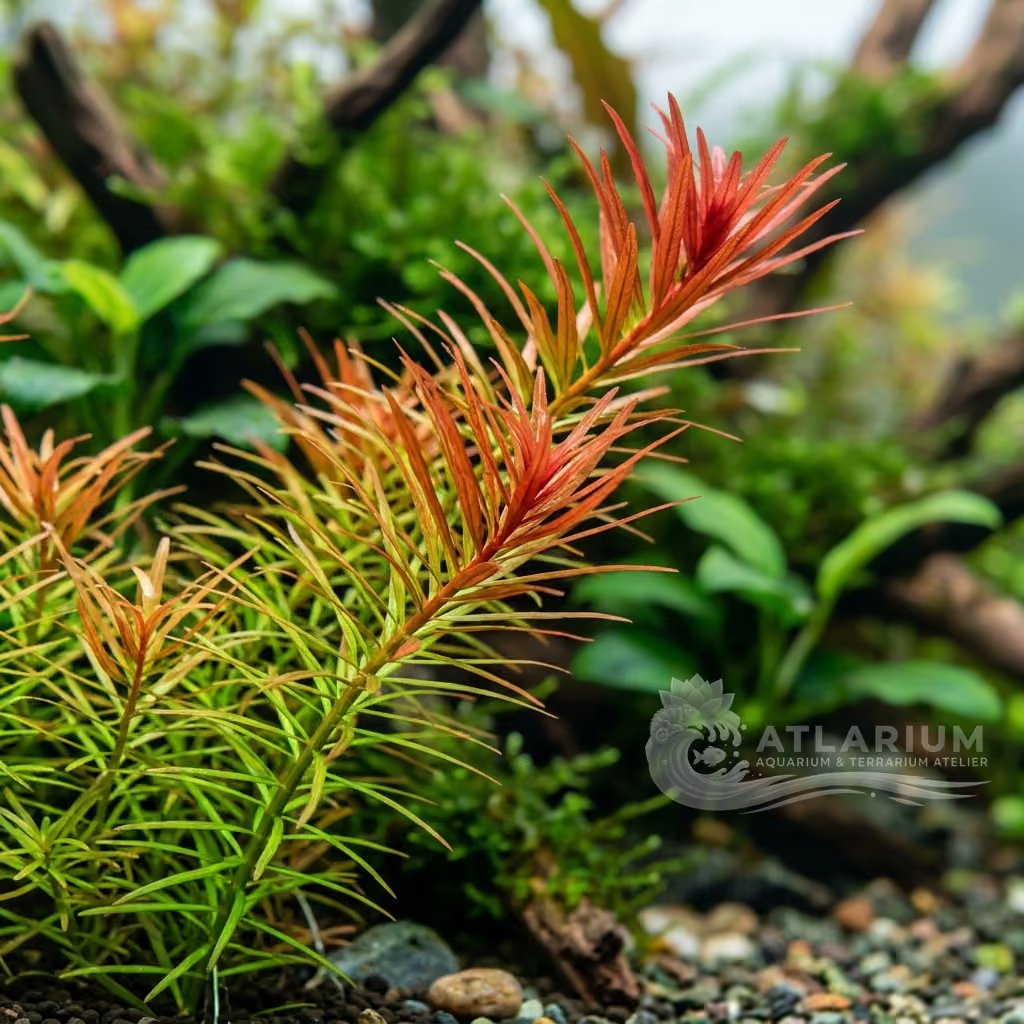
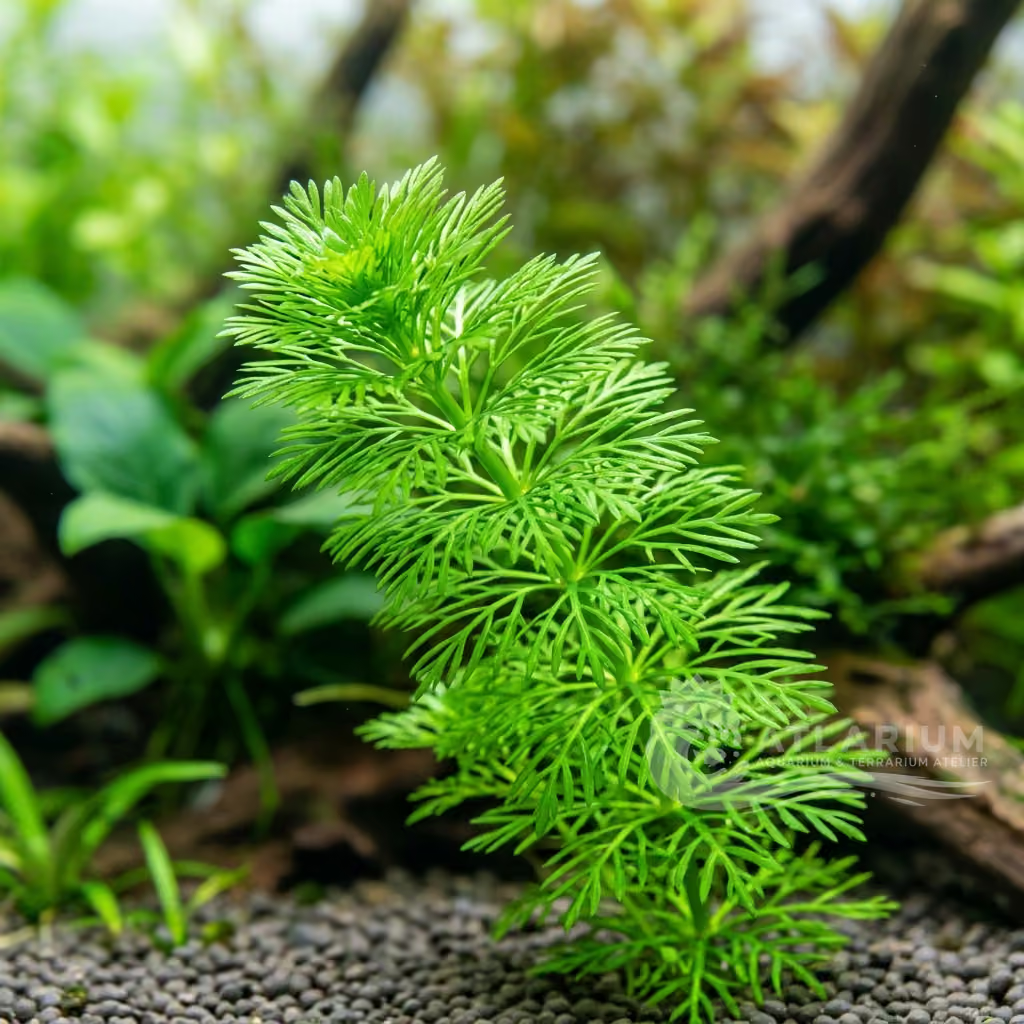
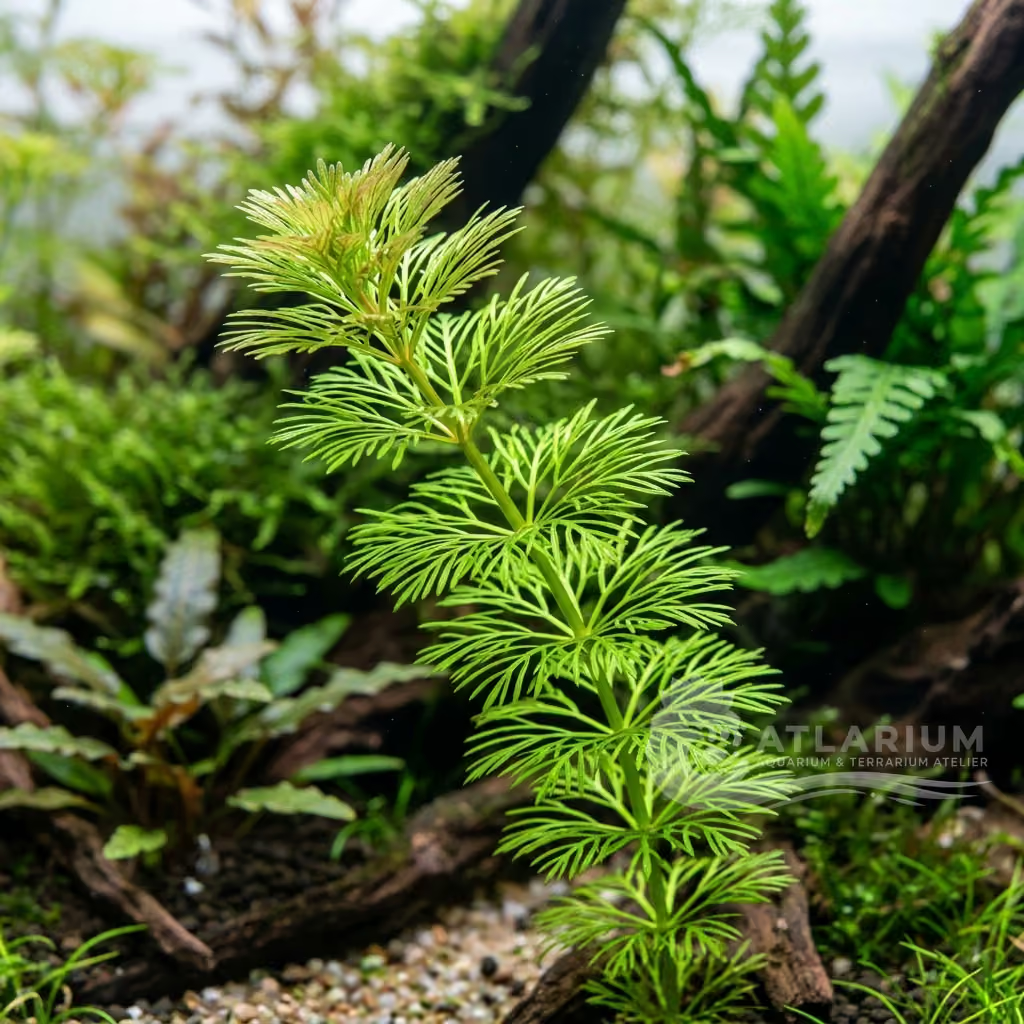
Hottonia inflata: a delicate stem plant for the midground or background with a medium growth rate. Featuring bright green pinnate leaves, it forms beautiful dense, feathery bushes.
Temperatura da água
4 - 26 °C
Valor de pH
5 - 7
Tipo de água
Água doce
Luz
Média - Alta
CO2
Média - Alta
Altura esperada
50 cm
Largura esperada
25 cm
GH
2 - 20 dGH
KH
2 - 14 dKH

Descrição da espécie
Geographical Origin and Habitat: Hottonia inflata is native to the eastern and southern regions of North America, where it inhabits slow-moving or stagnant waters such as ponds, ditches, swamps, and shaded floodplains. It is a marsh plant adapted to seasonal water level fluctuations, growing fully submerged during high water periods and emersed on muddy banks when the water recedes.
Taxonomy & Genetics: Taxonomically, it belongs to the Primulaceae family and is the only species of the genus Hottonia native to the American continent, closely related to the European Hottonia palustris. Genetically, this species exhibits unique adaptations for survival in nutrient-poor waters, such as swollen, hollow stems that facilitate buoyancy and gas exchange.
Physical Structure: It features erect, fleshy, and branched stems that can reach a height of 30-50 cm in the aquarium. The leaves are arranged in whorls along the main stem and are deeply divided into needle-like segments, giving the plant an extremely feathery and light appearance. The stem often has short internodes that enhance the compact, bushy appearance of the tops.
Color & Texture: The dominant color is a bright, light green, almost translucent, which adds freshness and light to the aquascape. The texture of its pinnate fronds is extremely fine and soft to the touch, creating a strong visual contrast when placed next to broad-leaved plants or dark moss-covered driftwood.

Cuidado, criação e companheiros de tanque
Lighting & CO2: Requires moderate to intense lighting to prevent the lower stems from shedding leaves due to shading. Constant CO2 injection is highly recommended to promote compact growth and prevent the internodes from stretching too much.
Nutrition & Substrate: The plant absorbs most of its nutrients from the
Water Chemistry: Prefers soft and slightly acidic water, with an optimal pH range between 6.0 and 7.0 and a KH below 6. It is highly sensitive to high temperatures, preferring cool water between 15 and 25 °C, and tends to decay or rot quickly if kept constantly above 26 °C.
Space Management & Placement: Position the plant in the midground or background, planting individual stems a few millimeters apart to allow light to reach the base. It is ideal for Dutch-style aquariums or natural layouts where a soft, light green focal point is desired.
Pruning: Pruning is performed by cutting the tops of the stems and replanting them in the substrate to propagate the plant. The remaining stem portion will quickly produce numerous lateral shoots, making the bush even denser and more branched.
Risks & Diseases: The main risk is associated with high summer temperatures and poor water circulation, which can cause the base of the stem to rot. Furthermore, due to the fine structure of the leaves, it tends to trap organic debris, favoring the growth of filamentous algae.

Origem e distribuição geográfica
Hottonia inflata is native to the eastern and southern regions of North America, where it inhabits slow-moving or stagnant waters such as ponds, ditches, swamps, and shaded floodplains. It is a marsh plant adapted to seasonal water level fluctuations, growing fully submerged during high water periods and emersed on muddy banks when the water recedes.
Origem
América do Norte

Perfil da planta
- Posicionamento
- Plano intermediário
- This plant is ideal for the midground or background of the aquarium. It looks best when planted in dense clusters. Its unique, deeply lobed leaves create a stunning visual contrast with other aquatic plants.
- Forma botânica
- Caule
- It features a classic stem plant structure with whorls of finely divided, deeply pinnate leaves. The leaves are light green, providing a soft and airy appearance. Its inflated flower stalks are rarely seen submerged but are its namesake.
- Crescimento
- Média
- Under optimal conditions, its growth rate is relatively fast. It can quickly reach the water surface if left unchecked. Frequent monitoring is necessary to maintain its desired height and shape.
- Substrato
- Média
- Hottonia inflata prefers a nutrient-rich aqua soil that mimics its natural, organic-rich muddy habitats. Its delicate root system anchors gently into the substrate, functioning both to stabilize the stem and absorb essential trace elements. A fine-grained soil with a depth of at least 3-4 cm allows the roots to spread evenly. While it can draw nutrients directly from the water column, a fertile base encourages more robust and lush foliage growth.
- Fertilização de coluna
- Recomendada
- Liquid column fertilization is essential as it draws most of its nutrients directly from the water. Regular additions of nitrogen, phosphorus, and potassium are highly recommended. Trace elements, especially iron, prevent the leaves from paling.
- Fertilização radicular
- Nenhuma
- While primarily a water column feeder, a nutrient-rich substrate can support a stronger root system. Root tabs can be beneficial in nutrient-depleted soils. However, they are secondary to consistent liquid dosing.
- Corte
- Ocasional
- Trimming should be done regularly by cutting the stems at the desired height. The lower portions will often develop new side shoots, creating a bushier appearance. Replanting the tops is an easy way to expand the cluster.
- Propagação
- Estacas
- Propagation is straightforward through stem cuttings. Simply snip the upper part of the stem and replant it directly into the substrate. The original stem will branch out from the nodes just below the cut.
- Sensibilidade
- Moderada
- It can be sensitive to sudden changes in water parameters or significant drops in nutrient availability. Algae can easily accumulate on its finely divided leaves if flow is insufficient or nutrients are imbalanced. High temperatures above 26°C (79°F) may cause melting.
- Função de layout
- Plano intermediário, Fundo, accent, group
- Its primary role is to add texture and a bright green accent to the aquascape. It serves as an excellent transition plant between low foregrounds and taller backgrounds. The distinct leaf shape makes it a great focal point or complementary cluster.

Espécies relacionadas
Recomendações agrupadas por parentes próximos, escolhas de acompanhantes e cuidados semelhantes.