Cryptocoryne spiralis var. caudigera
Cryptocoryne spiralis var. caudigera
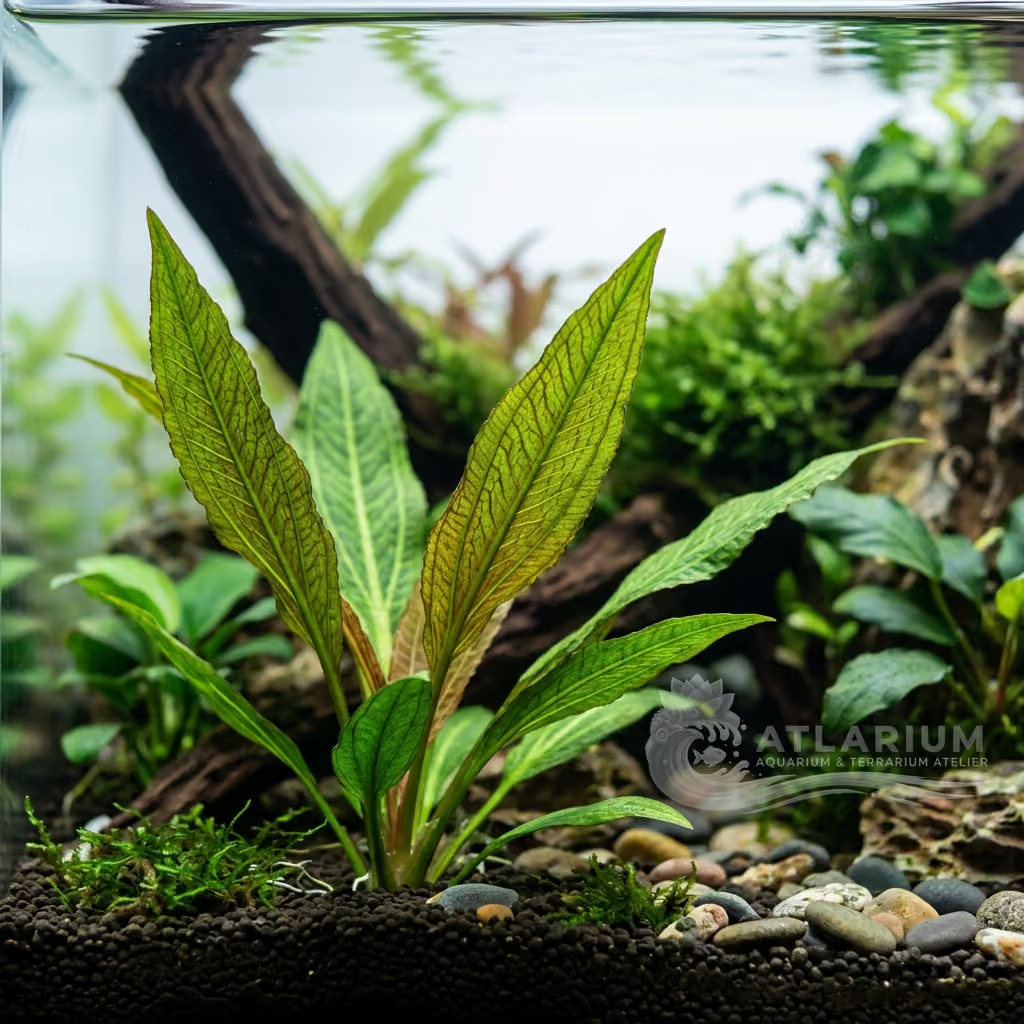
Cryptocoryne spiralis var. caudigera is an Indian variety characterized by long ribbon-like leaves and wavy margins. Medium growth, suitable for the background.
Temperatura da água
22 - 28 °C
Valor de pH
6 - 7.5
Tipo de água
Água doce
Luz
Medium to High
CO2
Média - Alta
Altura esperada
35 cm
Largura esperada
20 cm
KH
2 - 10 dKH

Descrição da espécie
Geographical Origin and Habitat: Cryptocoryne spiralis var. caudigera is native to the western regions of India, particularly within the states of Maharashtra and Karnataka. It inhabits riparian zones along rivers, streams, and seasonal pools affected by monsoon patterns. In nature, it grows submerged during seasonal floods and adapts to emersed life on wet muddy and clayey soils during the dry season, tolerating warm temperatures and water level changes.
Taxonomy & Genetics: It belongs to the Araceae family, genus Cryptocoryne. It is one of the recognized varieties within the Cryptocoryne spiralis complex, distinguished by the morphology of its inflorescence (spathe) and leaf details. Genetically, it possesses high robustness typical of Indian plants adapted to strong seasonal changes, allowing it to adapt well to aquarium life.
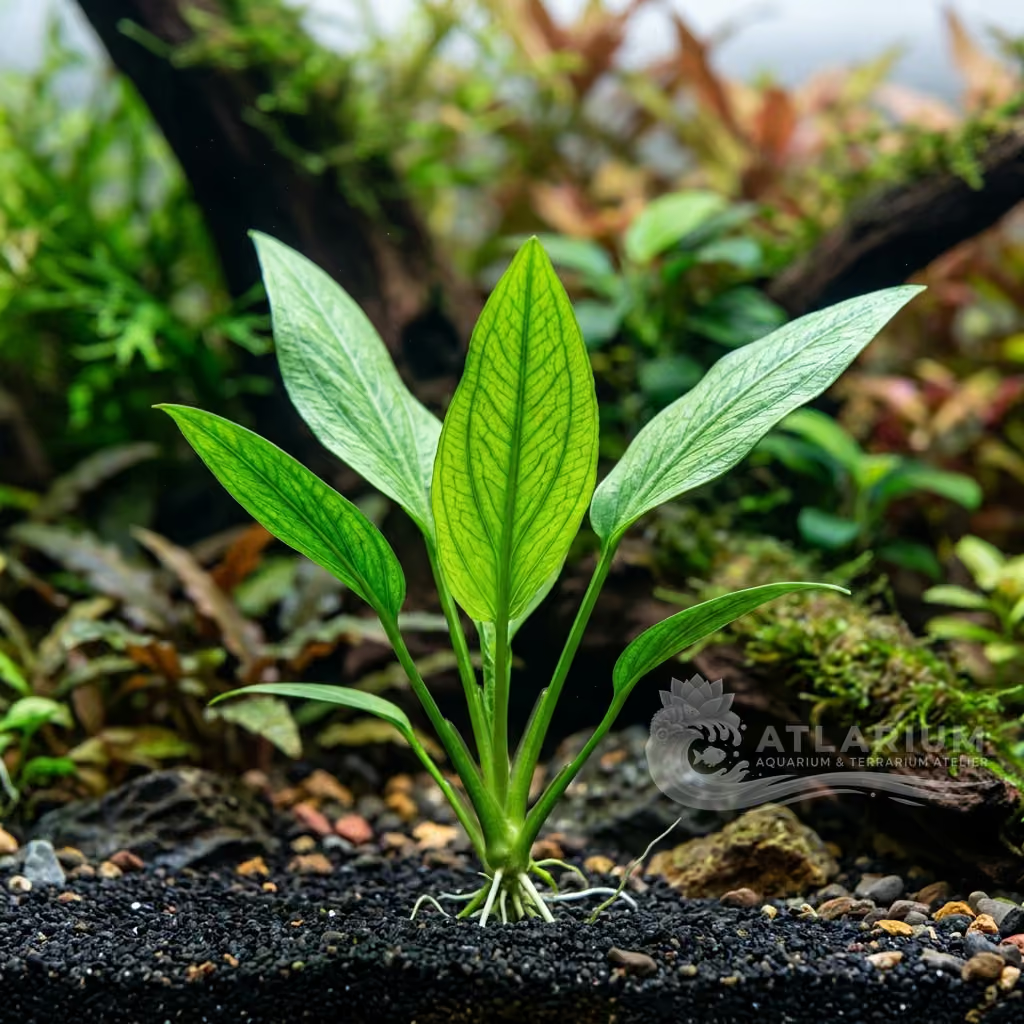
Physical Structure: It develops erect rosettes composed of narrow, flexible, ribbon-like leaves that grow almost vertically. It can reach a height of 30-45 cm and a width of approximately 20 cm. The root system is fleshy, consisting of thick fibrous roots and a strong rhizome capable of generating numerous runners vegetatively.
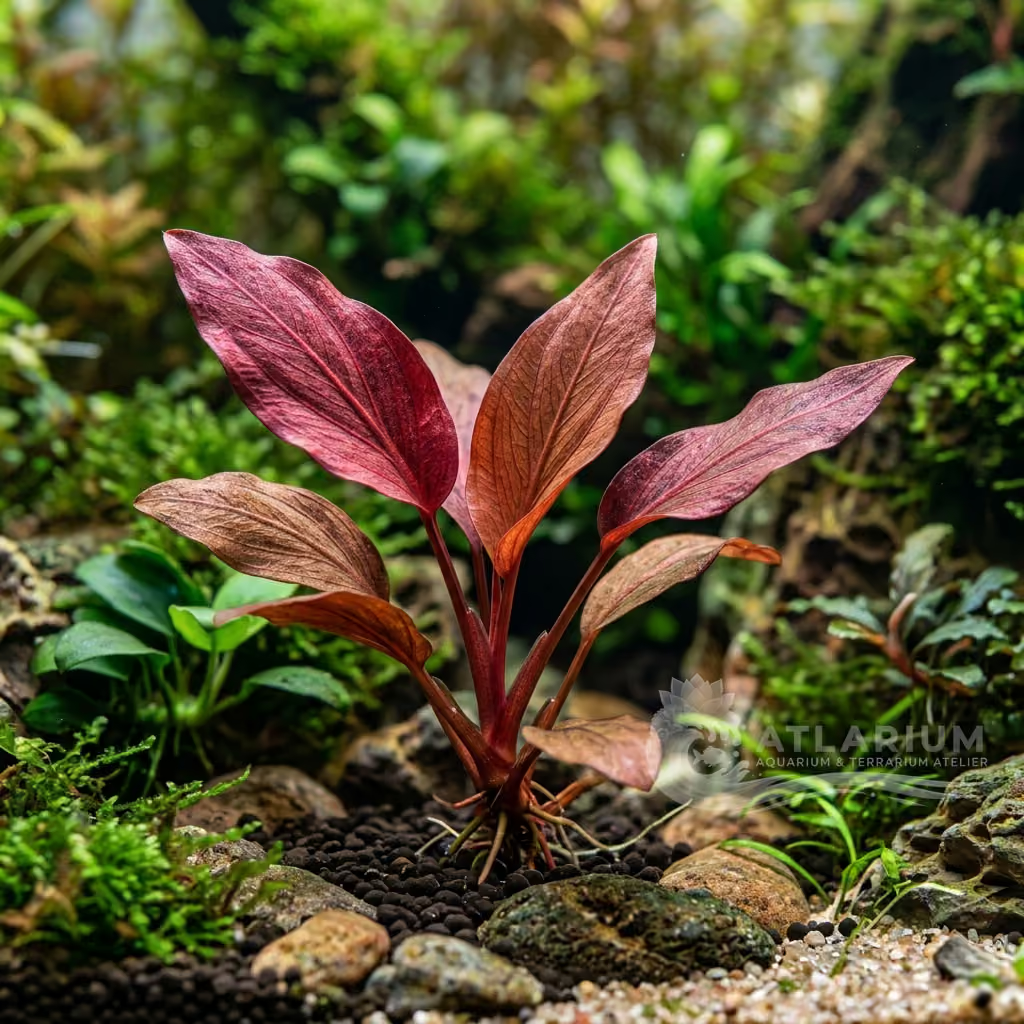
Color & Texture: The leaves have thin but leathery blades, with distinctly wavy or curled margins. The color ranges from olive green to bronze or reddish-brown under intense lights, with a clearly visible central vein that adds depth to the leaf. The texture is smooth, with moderate surface gloss.

Cuidado, criação e companheiros de tanque
Lighting & CO2: Requires moderate to high lighting intensity to stimulate vertical growth and maintain a bushy shape. Carbon dioxide injection, though not strictly mandatory, promotes healthy and robust leaf development, preventing biogenic decalcification.
Nutrition & Substrate: Requires a substrate rich in nutrients. The use of a fertile substrate or the periodic insertion of root tabs rich in iron and trace elements near the roots is vital to support the strong root system.
Water Chemistry: Adapts well to soft to moderately hard water with a KH between 3 and 15 dKH and a neutral or slightly alkaline pH (6.0-7.8). Optimal cultivation temperature is between 20°C and 28°C. Avoid drastic shifts during water changes.
Space Management & Placement: Excellent for the back-midground or the background of the aquarium. Plant individual crowns spaced 4-6 cm apart to allow the leaves to stretch upward without tangling excessively. Under strong light, the leaves tend to arch slightly, creating a beautiful flowing effect.
Pruning: Pruning consists of removing older or damaged outer leaves by cutting them at the base of the crown. Avoid cutting leaves in half to prevent rotting.
Risks & Diseases: It is moderately prone to "Cryptocoryne melt." To prevent leaf decay, maintain constant chemical-physical water values and avoid transplanting or frequently moving the plant once rooted in the substrate.

Origem e distribuição geográfica
Cryptocoryne spiralis var. caudigera is native to the western regions of India, particularly within the states of Maharashtra and Karnataka. It inhabits riparian zones along rivers, streams, and seasonal pools affected by monsoon patterns. In nature, it grows submerged during seasonal floods and adapts to emersed life on wet muddy and clayey soils during the dry season, tolerating warm temperatures and water level changes.
Origem
Sul e Sudeste Asiático

Perfil da planta
- Posicionamento
- Fundo
- With its upright, moderately tall leaves, it is an excellent choice for the midground to background of medium to large aquariums. It forms dense thickets that provide excellent hiding places for shy fish and shrimp. It should be placed where its upright growth can contrast with broader-leaved plants.
- Forma botânica
- Roseta
- The plant features straight, narrow leaves that are generally smooth at the edges, distinguishing it from other heavily rippled Cryptocoryne species. The foliage is typically a vibrant green, sometimes showing reddish or brownish hues depending on light intensity. It grows in a tight rosette formation, expanding outward through runners.
- Crescimento
- Média
- It has a moderate growth rate, establishing itself slowly over the first few weeks after planting. Once its root system is firmly anchored, it produces new leaves regularly. Its growth can be accelerated significantly under high light and CO2 conditions.
- Substrato
- Alta
- A nutrient-rich substrate is vital for the development of its substantial root system. It thrives in commercial aquasoils or gravel enriched with laterite and root tabs. Over time, a mature substrate provides the stability and continuous feeding this plant prefers.
- Fertilização de coluna
- Recomendada
- Routine dosing of a comprehensive liquid fertilizer supports overall health and leaf coloration. While the roots take up most of the nutrition, the leaves readily absorb available micronutrients from the water. Maintaining consistent nitrate levels prevents the older leaves from yellowing.
- Fertilização radicular
- Recomendada
- Heavy root feeding is highly recommended to achieve the best appearance and longevity. Placing root tabs deep beneath the plant will fuel its growth and encourage the rapid spread of runners. The robust root system responds exceptionally well to iron and trace element-rich substrates.
- Corte
- Ocasional
- Only trim dying, damaged, or heavily algae-covered leaves by cutting them as close to the crown as possible. Avoid cutting healthy leaves midway, as they will simply rot away from the cut point. Minimal pruning is needed due to its slow growth.
- Propagação
- Estolões
- Propagation occurs via stolons that grow horizontally under the substrate before breaking the surface to form new rosettes. These new plantlets can be left to form a dense group or separated once they have grown their own robust roots. Simply snip the connecting runner and relocate the young plant.
- Sensibilidade
- Moderada
- Susceptible to Crypt melt if parameters shift rapidly, especially temperature or lighting intensity. It may lose leaves when newly introduced to a tank but usually recovers once acclimatized. Stable water conditions are key to preventing sudden leaf loss.
- Função de layout
- Plano intermediário, Fundo
- Acts as a strong vertical element that can help disguise equipment or define spaces in the midground or background. Its upright, grass-like appearance makes it a popular choice for Nature Aquarium styles. It adds depth and texture without taking up too much horizontal space.

Espécies relacionadas
Recomendações agrupadas por parentes próximos, escolhas de acompanhantes e cuidados semelhantes.