Nair's Lagenandra
Lagenandra nairii
A rare, compact Lagenandra species with elongated leaves and slow growth. Very hardy and perfect for midground placement in medium and small aquariums.
Temperatura da água
24 - 28 °C
Valor de pH
6 - 7
Tipo de água
Água doce
Luz
Low to Medium
CO2
Baixa - Alta
Altura esperada
20 cm
Largura esperada
30 cm
GH
4 - 15 dGH
KH
2 - 12 dKH

Descrição da espécie
Geographical Origin and Habitat: Lagenandra nairii is native to southwestern India, specifically the humid forest wetlands of the state of Kerala. This species grows along the muddy banks of shaded forest streams and rivers. It is adapted to seasonal water level changes, enduring long periods of submersion during monsoon rains and growing emersed in high-humidity microclimates during drier periods.
Taxonomy & Genetics: Formally described as Lagenandra nairii, it belongs to the Araceae family. It is related to Lagenandra meeboldii and Lagenandra ovata but is distinguished by its smaller rosette size and narrower, elongated leaves. Genetically, it shares the robust cell structure of the genus, which provides high resistance to submerged decay.
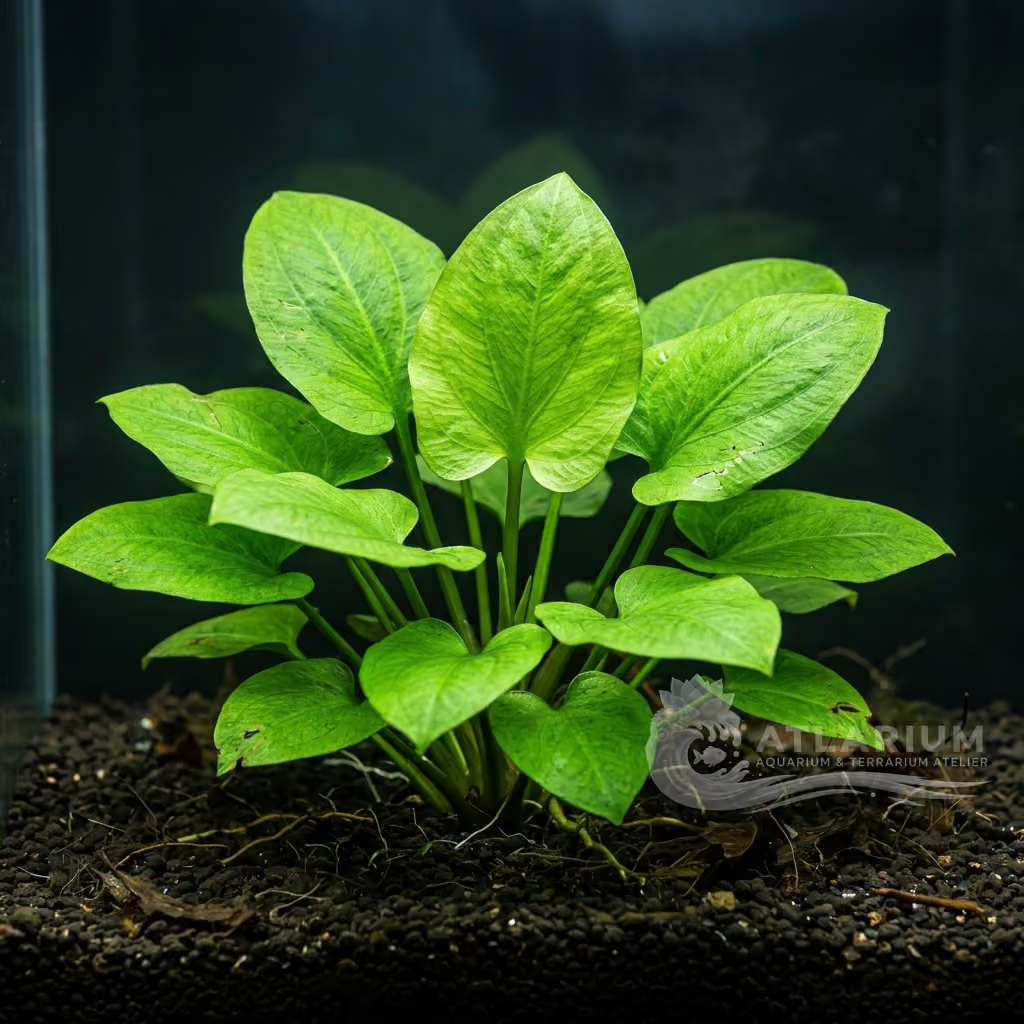
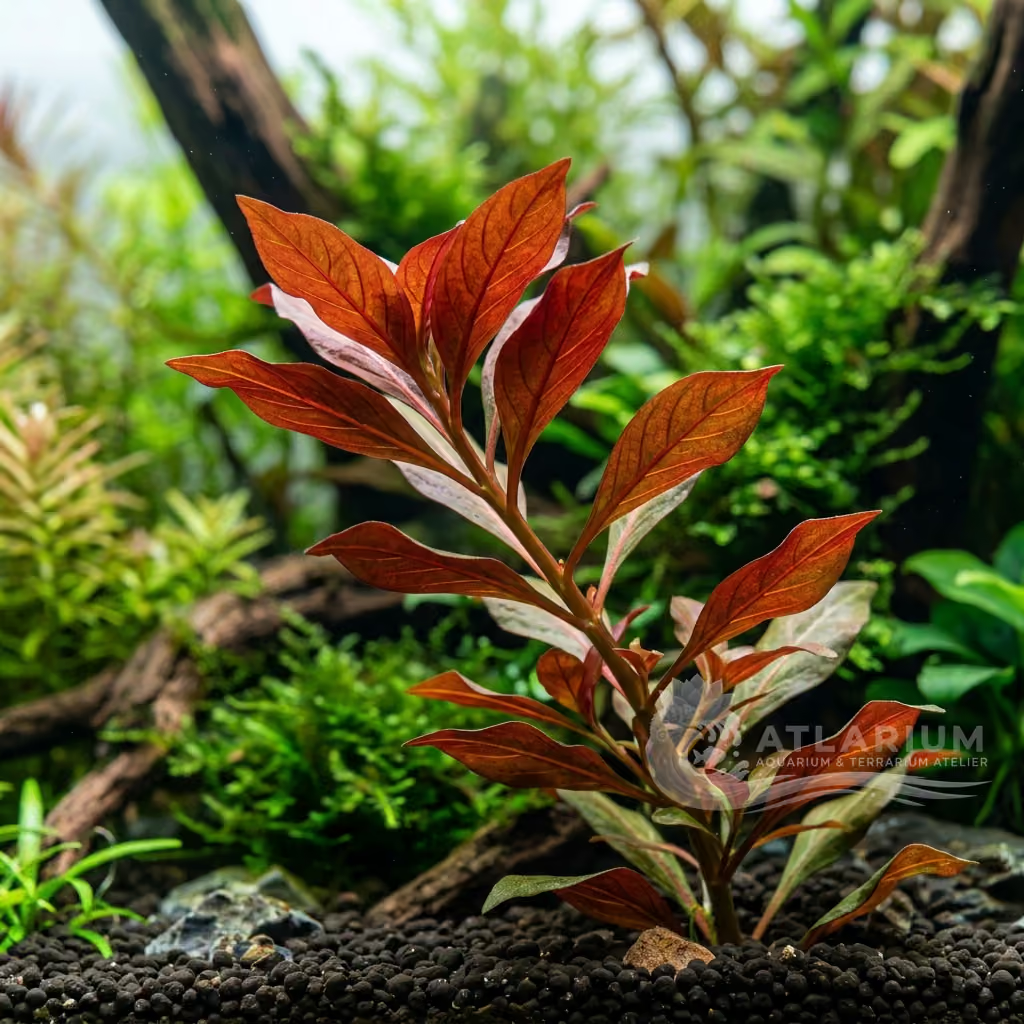
Physical Structure: The plant develops from a compact yet tough creeping rhizome from which thick, anchoring roots grow. The leaves form a rosette and have an elongated lanceolate-to-elliptical shape, supported by sturdy petioles. The overall height is compact compared to other Lagenandra species, rarely exceeding 20 cm in the aquarium.
Color & Texture: The leaves exhibit colors ranging from olive green to bronze-green, sometimes showing coppery undertones on the undersides under good lighting. The leaf texture is thick, rigid, and leathery, with slightly wavy margins that add visual depth to the plant's appearance in the aquascape.

Cuidado, criação e companheiros de tanque
Lighting & CO2: Lagenandra nairii grows well under low to moderate lighting. High-intensity lighting is not required and may encourage algae to establish on its slow-growing leaf surfaces. CO2 injection is not critical, but a low dosage will accelerate its slow growth rate and promote a denser leaf structure.
Nutrition & Substrate: Like all marsh-dwelling Araceae, a fertile substrate is highly important. Active soil or the regular addition of root fertilizer tabs rich in iron and trace elements near the roots is recommended. Column fertilization with potassium is helpful, but the plant responds best to root-based nutrition.
Water Chemistry: It prefers soft to moderately hard, slightly acidic to neutral water (pH 6.0-7.5). It requires water temperatures between 24 and 28 °C, showing less tolerance for cold water than Lagenandra meeboldii. Maintaining stable temperature and water parameters, especially during water changes, is crucial.
Space Management & Placement: Its ideal placement is in the midground or foreground of medium to large aquariums. Thanks to its compact size, it is also suitable as a background or central plant in nano setups, provided there is enough space for the creeping rhizome to expand horizontally.
Pruning: Pruning is limited to the occasional removal of old or damaged leaves. Cut the petiole close to the rhizome with sharp scissors. This prevents decay in the aquarium and stimulates new growth from the main rhizome, helping the plant maintain a bushy, clean appearance.
Risks & Diseases: It is a very robust plant that rarely suffers from diseases. The main risk is leaf melt caused by sudden shifts in pH or hardness. Black Brush Algae (BBA) may colonize the leaf margins under poor water flow or if there is an excess of phosphates in the water column.

Origem e distribuição geográfica
Lagenandra nairii is native to southwestern India, specifically the humid forest wetlands of the state of Kerala. This species grows along the muddy banks of shaded forest streams and rivers. It is adapted to seasonal water level changes, enduring long periods of submersion during monsoon rains and growing emersed in high-humidity microclimates during drier periods.
Origem
Sul e Sudeste Asiático

Perfil da planta
- Posicionamento
- Plano intermediário
- It is best placed as a focal point in the midground or background depending on the tank size. Due to its striking appearance and somewhat sprawling growth habit, it should be given ample room to prevent overcrowding. It pairs wonderfully with fine-leaved green plants to emphasize its unique texture.
- Forma botânica
- Roseta
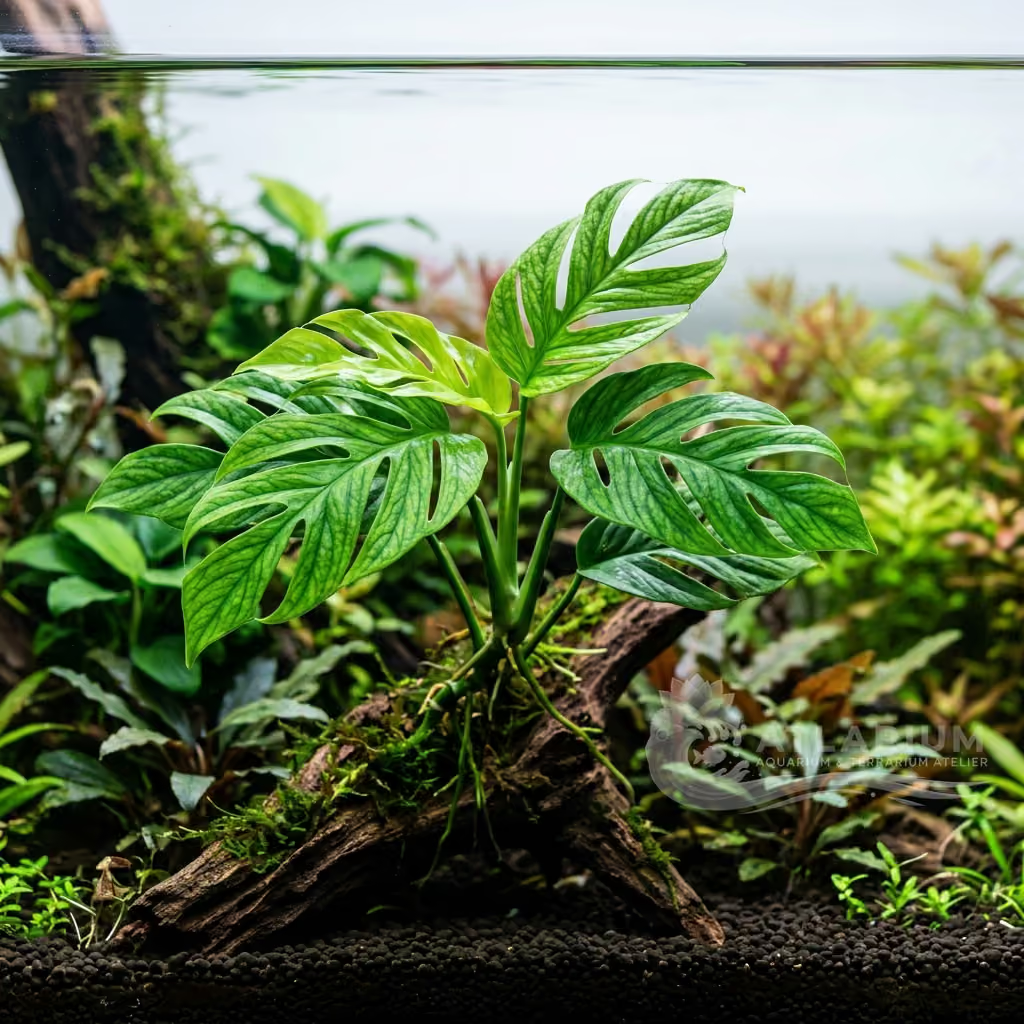
- Lagenandra nairii features distinctive, somewhat elongated ovate leaves with striking patterns and slightly ruffled edges. The leaves emerge from a thick, creeping rhizome and display a beautiful contrast of dark green to brownish hues with lighter venation. Its robust form adds an exotic touch to the layout.
- Crescimento
- Lenta
- This plant typically exhibits a slow growth rate, especially when first introduced to an aquarium. Patience is required as it establishes its root system before producing significant new foliage. Once established, it provides a stable, low-maintenance feature in the aquascape.
- Substrato
- Alta
- Lagenandra nairii is a demanding species that relies heavily on a nutrient-rich substrate to fuel its steady growth and large leaf production. A deep bed of high-quality aqua soil is highly recommended to accommodate its extensive root system, which serves as the primary conduit for nutrient absorption. The plant's creeping rhizome should be positioned atop the substrate, allowing the long roots to anchor deeply without suffocating the main stem.
- Fertilização de coluna
- Opcional
- While primarily a root feeder, supplemental water column fertilization supports the development of healthy, vibrant leaves. Consistent dosing of potassium and trace elements is recommended to prevent pinholes and ensure optimal growth. It readily absorbs nutrients from both the soil and the water.
- Fertilização radicular
- Necessária
- A fertile, nutrient-dense substrate is highly recommended for Lagenandra nairii. The plant develops a substantial root system that aggressively seeks out nutrients in the soil. Utilizing a quality aquasoil or root tabs will significantly enhance the size and overall health of the plant.
- Corte
- Ocasional
- Trimming is generally limited to the selective removal of old, yellowing, or damaged leaves to maintain a tidy appearance. Always use sharp scissors to cut the petiole near the rhizome to avoid introducing rot. Care should be taken not to damage the main rhizome during routine maintenance.
- Propagação
- Divisão
- Propagation is achieved by carefully dividing the mature rhizome. Ensure that each cut section contains several healthy leaves and a portion of the established root system. Replant the divisions with the rhizome slightly exposed above the substrate to prevent decay.
- Sensibilidade
- Moderada
- It can be sensitive to sudden, drastic fluctuations in water parameters, which may lead to the melting of leaves. Providing a stable environment with consistent CO2 injection and moderate to high lighting yields the best results. It is generally hardy once fully acclimated to the aquarium.
- Função de layout
- Plano intermediário, Nano
- Its primary role is serving as an exotic and eye-catching specimen plant in the midground. The unique leaf patterns and dark hues create a striking visual contrast against lighter green background plants. It is highly valued by collectors and aquascapers looking for a rare focal point.

Espécies relacionadas
Recomendações agrupadas por parentes próximos, escolhas de acompanhantes e cuidados semelhantes.