Anubias nana
Anubias barteri var. nana
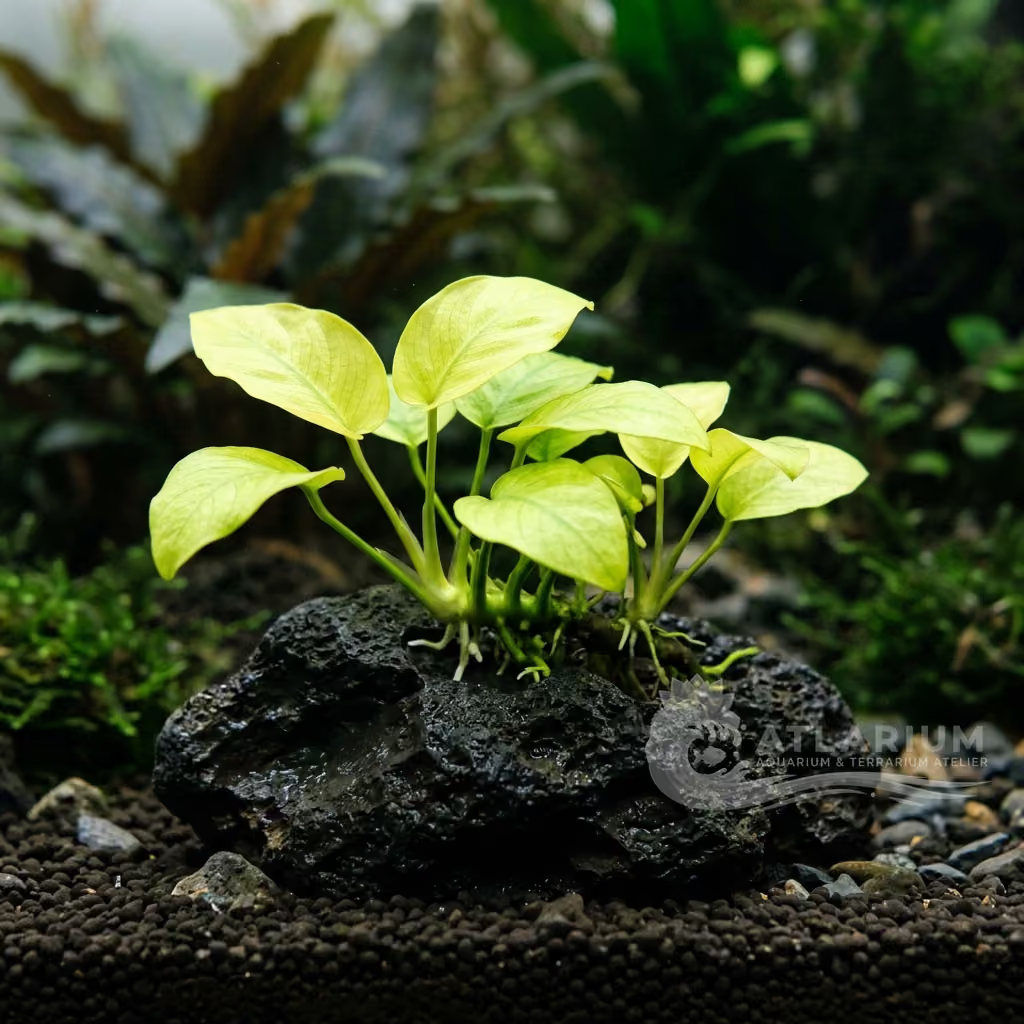
The Anubias barteri var. nana is grandfathered in as the undisputed queen of epiphytic aquarium plants. Extremely tough, very robust and virtually immortal, it has a slow metabolism and thick, dark leaves resistant as leather. Its fundamental particularity is the horizontal creeping rhizome: if buried, it will rot and die. It must be attached to driftwood or rock, surviving poor light and low CO2.
Temperatura da água
22 - 28 °C
Valor de pH
6 - 8
Tipo de água
Água doce
Luz
Bassa (Low-Tech)
CO2
Bassa (Non Necessaria)
Altura esperada
10 cm
Largura esperada
15 cm
GH
2 - 20 dGH
KH
1 - 15 dKH

Descrição da espécie
Geographical Origin and Habitat: Anubias barteri var. nana is native to West Africa, specifically Cameroon. It grows along the shaded margins of rivers in the tropical rainforest, where it is often found partially or completely submerged in fast-flowing water, anchoring firmly to porous rocks and exposed tree roots.
Taxonomy & Genetics: This plant belongs to the Araceae family and is a dwarf variety of the species Anubias barteri. Formally described in 1970, it has become one of the most popular plants in the aquarium trade. Genetically, it shares the hardiness of the parent species while exhibiting stable miniaturization of its leaves and pets.
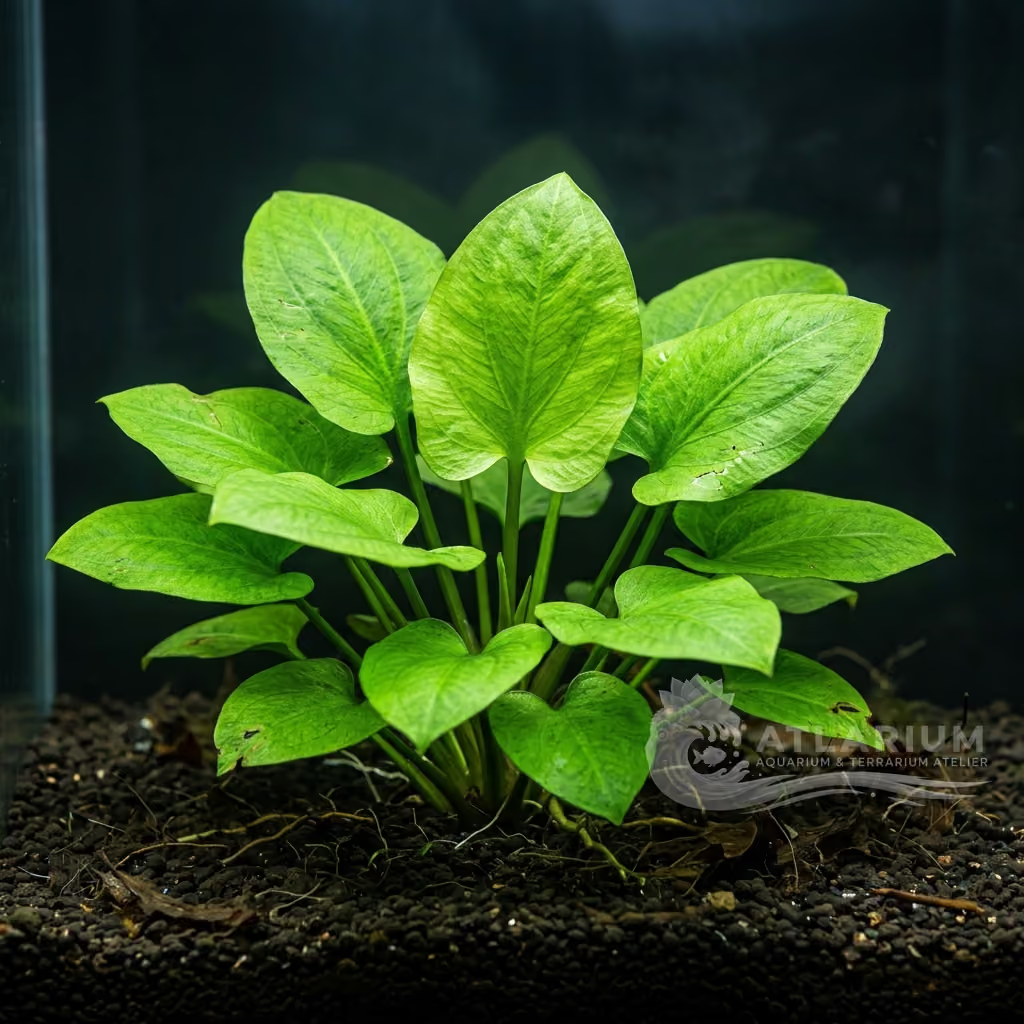
Physical Structure: It features a highly compact structure with a creeping, branching rhizome from which small leaves with short petioles (typically under 5 cm) develop. Thick adventitious roots are capable of penetrating microscopic crevices in rocks and wood to secure a tenacious grip.
Color & Texture: The leaves are a glossy, deep dark green. They have an oval or lanceolate shape and a thick, leathery texture. The lamina is rigid and durable, with a slightly textured surface that contributes to a compact and elegant appearance.

Cuidado, criação e companheiros de tanque
Lighting & CO2: Requires low to moderate light levels. It tolerates shade very well, whereas excessive lighting promotes the growth of brush algae on its slow-growing leaves. CO2 is not essential, but moderate supplementation improves vitality and speeds up new leaf formation.
Nutrition & Substrate: As an epiphytic plant, it must never be buried in the substrate, as the rhizome will rapidly rot. It should be attached to hardscape (rocks or driftwood) using thread or cyanoacrylate glue. It absorbs required nutrients directly from the water via liquid fertilizer.
Water Chemistry: Extremely adaptable to various water conditions. It thrives in temperatures between 22 and 28°C (72-82°F), with a pH between 6.0 and 8.0 and a hardness from soft to very hard. It is highly resilient to moderate chemical fluctuations.
Space Management & Placement: Ideal for the foreground and midground areas of the tank. Being a dwarf plant, it is perfect for decorating crevices between rocks or the roots of driftwood, creating natural and elegant transitions.
Pruning: Propagation is done by cutting the rhizome into sections containing at least 3-4 leaves each. Damaged, yellowing, or algae-covered leaves can be removed by cutting the petiole near the base of the rhizome with sharp scissors.
Risks & Diseases: The greatest risk is rhizome rot due to burial. Its slow growth rate exposes the leaves to colonization by Green Spot Algae (GSA) or Black Beard Algae (BBA) in high light conditions or when phosphate levels accumulate.

Origem e distribuição geográfica
Anubias barteri var. nana is native to West Africa, specifically Cameroon. It grows along the shaded margins of rivers in the tropical rainforest, where it is often found partially or completely submerged in fast-flowing water, anchoring firmly to porous rocks and exposed tree roots.
Origem
África e Madagascar

Perfil da planta
- Posicionamento
- Primeiro plano
- This species works exceptionally well in the foreground or midground of the aquarium, depending on the overall tank size. It should ideally be attached to hardscape materials such as driftwood or rocks using thread or aquarium-safe glue. If planted in the substrate, it is absolutely critical to keep the rhizome exposed above the soil to prevent it from rotting.
- Forma botânica
- Epífita
- Anubias barteri var. nana features compact, small rounded leaves that stand out in any planted aquarium. The leaves grow from a thick, creeping rhizome that anchors the plant to various surfaces. Its sturdy, leathery foliage is highly resilient, making it a great option for aquariums with herbivorous fish.
- Crescimento
- Lenta
- Like most Anubias species, Anubias barteri var. nana exhibits a very slow growth rate. You can expect it to produce only one or two new leaves per month under standard aquarium conditions. Providing slightly higher carbon dioxide levels and optimal fertilization can marginally speed up this process, but it remains a slow grower. This slow pace makes it an excellent choice for low-maintenance setups.
- Substrato
- Nenhuma
- As a diminutive epiphytic favorite, Anubias barteri var. nana requires no soil to flourish, preferring to grip onto hard surfaces within the aquarium. The vital rhizome structure must always remain unburied to ensure proper oxygen flow and prevent sudden decay. Its short, clinging roots are adapted to secure the plant to uneven wood or porous rocks, acting as both an anchor and the primary mechanism for nutrient uptake from the water column. Aquarium substrate is effectively irrelevant to this plant, provided the rhizome stays freely suspended above it.
- Fertilização de coluna
- Opcional
- Liquid fertilization in the water column is the primary and most effective method for feeding Anubias barteri var. nana. A comprehensive liquid fertilizer applied weekly or bi-weekly will provide all the necessary trace elements and macronutrients. Since it is a slow grower, lean dosing is highly recommended to avoid excess nutrients accumulating in the water.
- Fertilização radicular
- Nenhuma
- Root tabs or nutrient-rich substrates are generally unnecessary for Anubias barteri var. nana. Because it is an epiphyte that prefers to be attached to hardscape, its roots primarily serve an anchoring function rather than a nutrient-absorbing one. Even if planted in the substrate, the plant relies more heavily on water column fertilization than root feeding.
- Corte
- Ocasional
- Trimming is rarely required due to its very slow growth rate. When pruning is necessary, simply cut the leaves as close to the rhizome as possible using sharp aquascaping scissors. Always remove any yellowing, damaged, or algae-covered leaves to maintain the plant's aesthetic appeal and overall health.
- Propagação
- Rhizome division
- Propagating Anubias barteri var. nana is a simple and straightforward process. You simply cut the main rhizome into two or more pieces, ensuring each new section has at least three to four healthy leaves attached. These new sections can then be tied or glued to new pieces of hardscape, where they will eventually develop into full plants.
- Sensibilidade
- LOW
- This plant is incredibly hardy and tolerates a wide range of water parameters and temperatures. However, its slow-growing, broad leaves are particularly susceptible to spot algae and black beard algae if light intensity is too high. It is recommended to place it in shaded areas of the aquarium to mitigate this risk.
- Função de layout
- Primeiro plano, Plano intermediário, Epífita, Nano
- Its unique leaf shape makes it an excellent foreground transition plant. It is often used to bridge the gap between different aquascaping elements or provide shelter for small fish and shrimp. The rich green foliage provides a strong visual anchor and adds a sense of maturity to the aquascape.

Galeria de imagens
Imagens licenciadas vinculadas à espécie ou, quando marcadas, ao táxon representativo mais próximo.

Espécies relacionadas
Recomendações agrupadas por parentes próximos, escolhas de acompanhantes e cuidados semelhantes.