Anubias gilletii
Anubias gilletii
Robust, naturally occurring West African epiphyte. An obligate low-light plant requiring no CO2, perfect for heavily shaded aquascape regions.
Temperatura da água
12 - 30 °C
Valor de pH
5 - 8
Tipo de água
Água doce
Luz
Da bassa ad alta
CO2
Baixa
Altura esperada
40 cm
Largura esperada
40 cm
GH
4 - 20 dGH
KH
0 - 15 dKH

Descrição da espécie
Geographical Origin and Habitat: Anubias gilletii is a highly robust, naturally occurring species endemic to the deeply forested, tropical river basins of West and Central Africa, primarily documented in Nigeria, Cameroon, and the Democratic Republic of Congo. In the wild, it is a formidable rheophyte, specifically adapted to grow firmly attached to massive boulders and thick tree roots along the muddy margins of fast-flowing jungle streams. It thrives in the permanent, heavy shade provided by the overarching jungle canopy, perfectly adapting it to low-light environments in the aquarium.
Taxonomy & Genetics: First described by the Belgian botanist Émile Auguste De Wildeman in 1904, Anubias gilletii is a genetically distinct, true species within the Anubias genus, not merely a cultivar or variant of the common Anubias barteri complex. It is highly prized by elite collectors and biotopers because its leaf morphology is strikingly different from standard round-leaved Anubias, offering a distinctly wild and prehistoric aesthetic that is difficult to find in commercial trade.
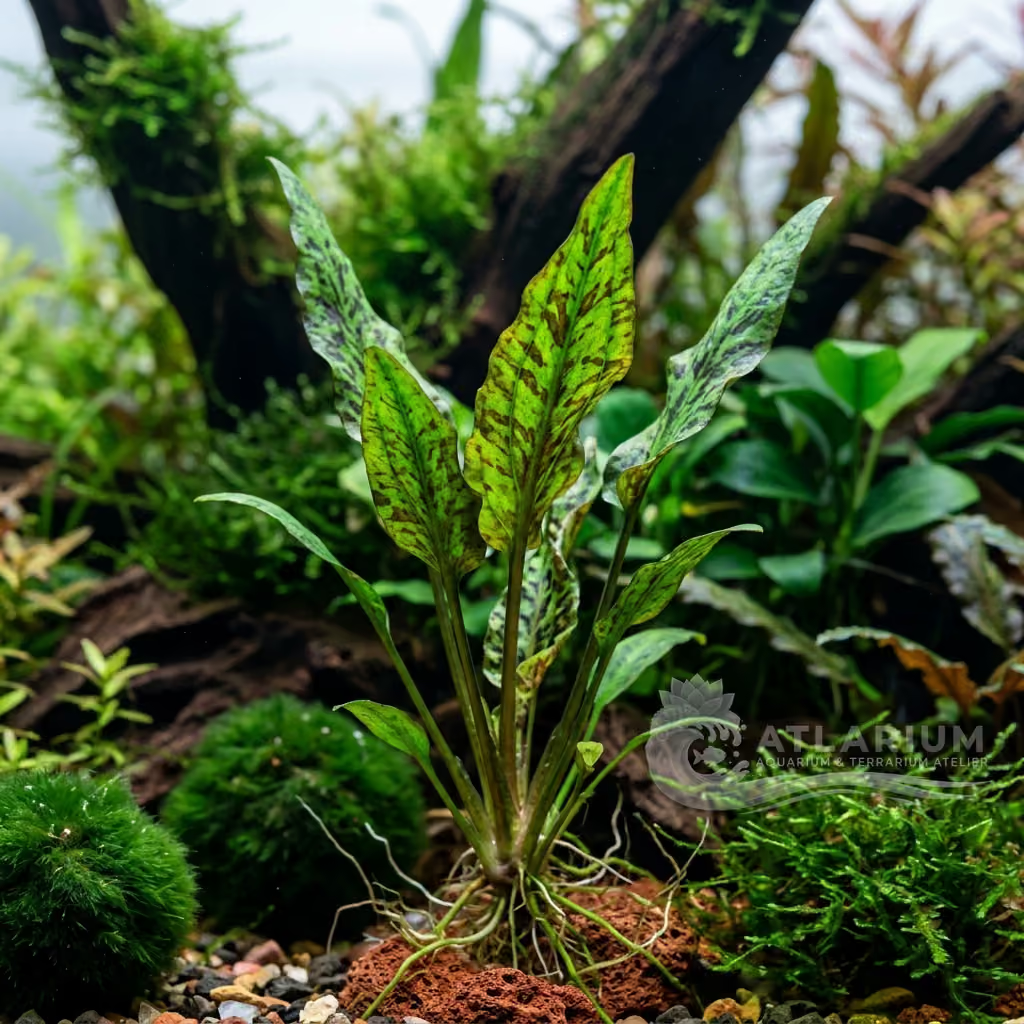
Physical Structure: The architecture of Anubias gilletii is imposing and deeply structural. It produces a massive, incredibly thick creeping horizontal rhizome. The true defining characteristic of this species is its astonishing leaf shape: the massive leaves are distinctly hastate (spear-shaped or arrowhead-shaped), featuring prominent, swept-back basal lobes that extend sharply outward from where the stem attaches to the leaf blade. The rigid leaf stems grow strictly upright and can easily reach 20-40 cm (8-16 inches) in height.
Color & Texture: The deeply grooved, arrowhead-shaped leaves are colored a solid, intensely opaque, dark emerald green. The texture is notoriously brutal: the leaves are exceptionally thick, ridged, and highly coriaceous (leathery), feeling almost exactly like thick, rigid cardboard. This extreme, armor-like cellular toughness evolved to withstand torrential seasonal floods and makes the plant virtually indestructible and entirely immune to grazing by heavy herbivorous fish.

Cuidado, criação e companheiros de tanque
Lighting & CO2: It is strictly an obligate low-light epiphyte and absolutely requires no CO2 injection to survive. Exposing this colossal, incredibly slow-growing plant to intense, high-energy LED lighting or direct sun is a fatal error. The massive, dark leaves cannot photosynthesize quickly enough to utilize the light, guaranteeing they will be instantly and permanently smothered in thick crusts of aggressive Black Beard Algae (BBA) and Green Spot Algae (GSA). It must be kept deeply shaded in the aquarium.
Nutrition & Substrate: This massive titan feeds exclusively from the water column. The colossal, creeping rhizome MUST NEVER be buried under the substrate (sand, gravel, or soil) under any circumstances, or the entire plant will rapidly melt into a toxic mush and die. It requires absolutely no substrate to survive. Instead, it absorbs all essential nutrients directly through its massive leaves and thick, wire-like root system via comprehensive liquid fertilization dosed directly into the water.
Water Chemistry: It is an unkillable, prehistoric survivor. It thrives effortlessly in standard tropical temperatures (22-28°C) but easily tolerates cooler water. Most importantly, it completely ignores wild, chaotic fluctuations in pH, severe ammonia spikes, or extreme water hardness. It can survive in soft, highly acidic blackwater biotopes just as easily as it thrives in the hard, liquid rock of an African Cichlid setup. It is the ultimate survivalist plant for unstable water conditions.
Space Management & Placement: Because of its truly gigantic size, long upright stems, and massive arrowhead leaves, it must be utilized exclusively as a dominant midground or background centerpiece in large aquariums. The massive rhizome must be aggressively attached—using cyanoacrylate superglue, thick zip ties, or heavy nylon thread—to a massive piece of driftwood or a very large rock. It is completely unsuitable for nano tanks, as a single towering leaf will block the entire display.
Pruning: Pruning is almost non-existent due to its glacial metabolic growth rate. To artificially propagate the plant, use heavy, sharp pruning shears to cut the massive, woody rhizome completely in half, ensuring both halves retain healthy roots. To maintain visual purity, simply cut any ancient, yellowing, or heavily algae-covered leaves directly at the base of the thick stem, as close to the main rhizome as physically possible.
Risks & Diseases: The plant suffers from virtually no biological diseases, melting, or nutritional deficiencies. Its glacial growth rate and massive, broad leaf surface area make it the absolute perfect, unavoidable host for Green Spot Algae (GSA) and Black Beard Algae (BBA). You MUST keep the aquarium water exceptionally clean, keep organics low, and most importantly, keep the plant heavily shaded by towering hardscape or floating plants.

Origem e distribuição geográfica
Anubias gilletii is a highly robust, naturally occurring species endemic to the deeply forested, tropical river basins of West and Central Africa, primarily documented in Nigeria, Cameroon, and the Democratic Republic of Congo. In the wild, it is a formidable rheophyte, specifically adapted to grow firmly attached to massive boulders and thick tree roots along the muddy margins of fast-flowing jungle streams. It thrives in the permanent, heavy shade provided by the overarching jungle canopy, perfectly adapting it to low-light environments in the aquarium.
Origem
África e Madagascar

Perfil da planta
- Posicionamento
- Plano intermediário
- It is best placed in the midground or background depending on the tank size. Attach it to wood or rocks, ensuring the rhizome is exposed to the water flow. Do not plant it directly into the substrate.
- Forma botânica
- Rizoma
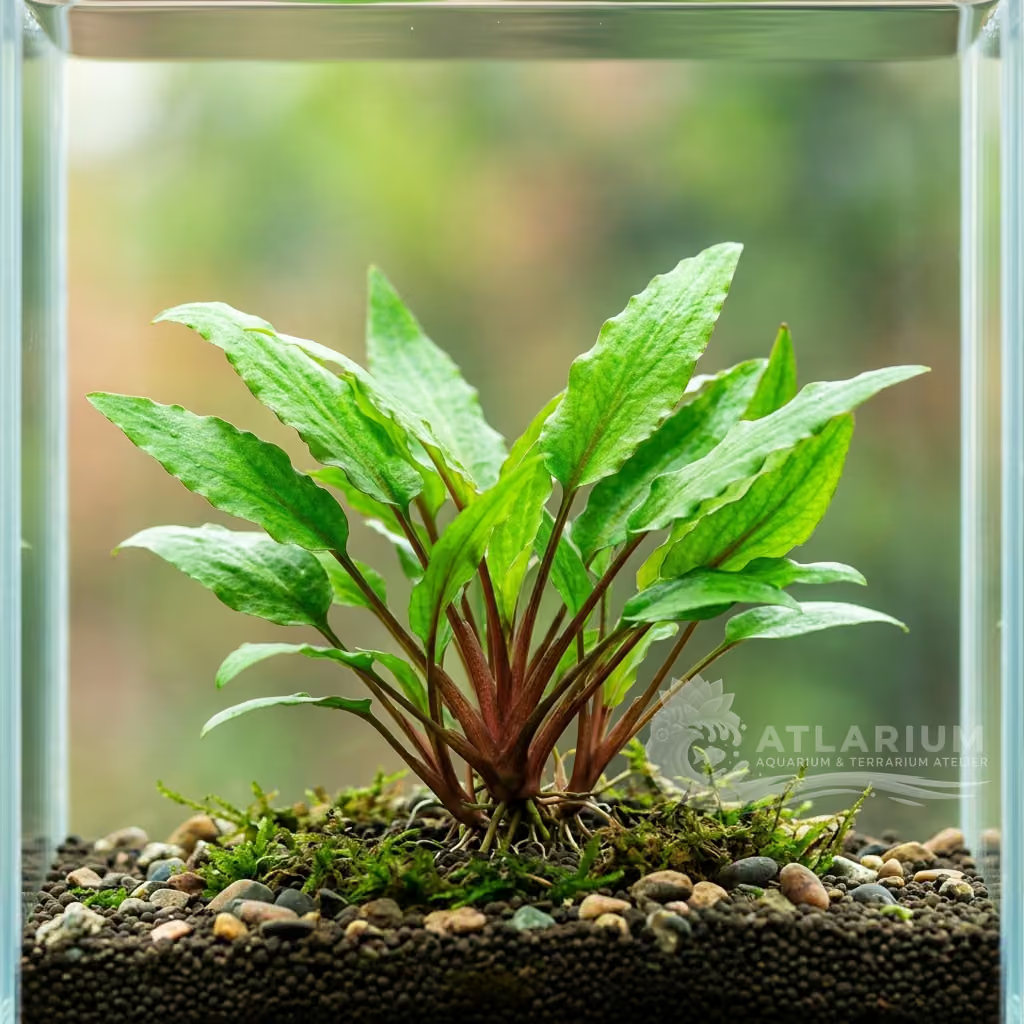
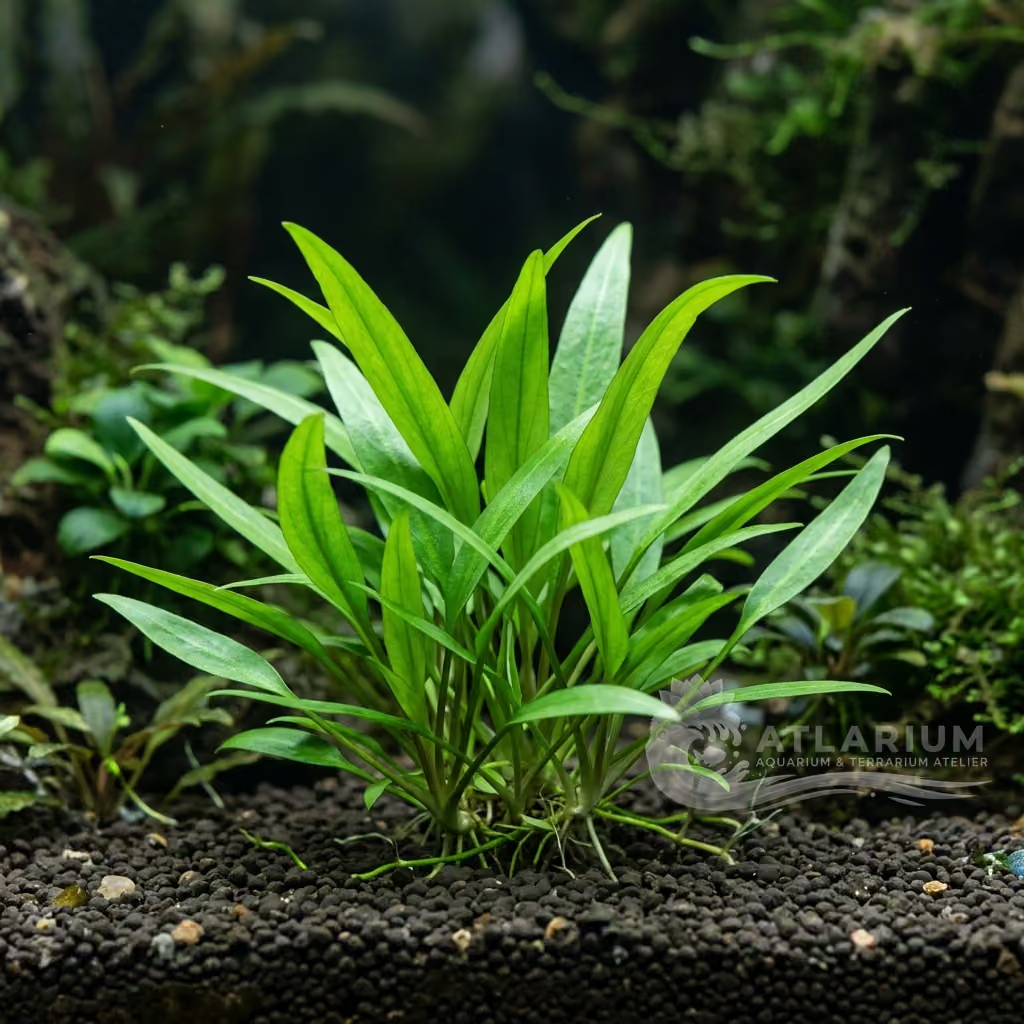
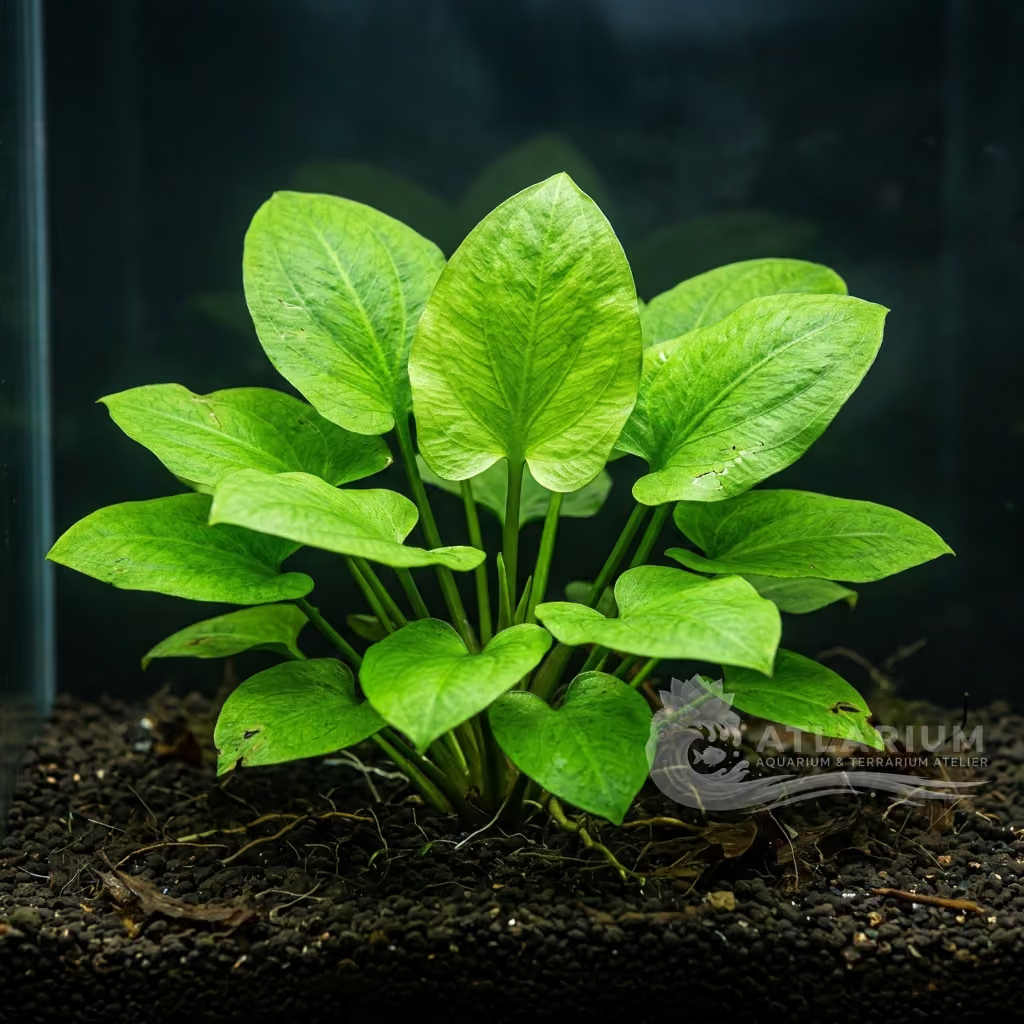
- It produces distinct, somewhat arrow-shaped or heart-shaped leaves with a lighter green coloration. The long petioles emerge from a sturdy creeping rhizome. It provides a unique leaf shape compared to typical Anubias.
- Crescimento
- Very slow
- The growth rate is notoriously slow, making it easy to manage. It will slowly develop a creeping habit over months and years. CO2 injection is optional and only marginally increases growth.
- Substrato
- Nenhuma
- Anubias gilletii shares the classic epiphytic requirements of its genus, thriving best when entirely decoupled from traditional planted aquarium substrates. Its rhizome should be situated openly on hard surfaces like driftwood branches or lava rocks, allowing water to flow freely around its core. While mature roots may eventually plunge into the substrate to provide extra structural support for its long petioles, they do not participate meaningfully in nutrient uptake. Consequently, it requires no specific substrate depth or composition, provided the water column contains adequate dissolved fertilization.
- Fertilização de coluna
- Recomendada
- Water column dosing is the most effective way to feed this plant. Use a comprehensive liquid fertilizer sparingly to avoid algae blooms. Potassium is particularly useful for preventing pinholes in leaves.
- Fertilização radicular
- Nenhuma
- It does not benefit from root fertilizers since it is a true epiphyte. Its robust roots are designed for clinging to surfaces, not absorbing soil nutrients. Save your root tabs for substrate-rooted plants.
- Corte
- Ocasional
- Maintenance is minimal, requiring only the occasional removal of old or damaged foliage. Cut the leaf stems close to the rhizome to keep the plant tidy. Ensure the rhizome is not damaged during pruning.
- Propagação
- Rhizome division
- Propagation is easily achieved by rhizome division using a sharp blade. Each divided piece must retain a few leaves and healthy roots to survive. Attach them to new hardscape to establish new plants.
- Sensibilidade
- Moderada
- Like other Anubias, it is very prone to algae growth on its leaves in brightly lit tanks. Shaded areas are highly recommended. It will quickly rot if the rhizome is suffocated by substrate.
- Função de layout
- Plano intermediário, Fundo
- The unique leaf shape adds interesting textural variety to the midground of aquascapes. It contrasts nicely with standard round or oval-leaved plants. It is excellent for creating a natural, wild-looking environment.

Galeria de imagens
Imagens licenciadas vinculadas à espécie ou, quando marcadas, ao táxon representativo mais próximo.

Espécies relacionadas
Recomendações agrupadas por parentes próximos, escolhas de acompanhantes e cuidados semelhantes.