Aponogeton crispus
Aponogeton crispus
Specialized geophyte from Sri Lanka with heavily ruffled leaves. Fast-growing and requires medium-high light to prevent leggy, weak stem development.
Temperatura da água
15 - 34 °C
Valor de pH
5 - 8
Tipo de água
Água doce
Luz
Da media ad alta
CO2
Média
Altura esperada
50 cm
Largura esperada
40 cm
GH
4 - 20 dGH
KH
2 - 15 dKH

Descrição da espécie
Geographical Origin and Habitat: Endemic entirely to the tropical island nation of Sri Lanka, located in the Indian Ocean. Aponogeton crispus thrives specifically in the shallow, seasonal ponds, flooded marshes, and slow-moving streams of the island. It is a highly specialized bulb plant (geophyte) that evolved to survive extreme dry seasons. When its native ponds dry out entirely, the plant dies back to its subterranean tuber, waiting patiently in the baked mud. When the intense monsoon rains return, flooding the plains, the bulb violently erupts back to life, rapidly sending its spectacular, ruffled leaves toward the sun.
Taxonomy & Genetics: First scientifically described in the late 19th century, Aponogeton crispus is one of the most historically significant and widely cultivated bulb plants in the entire global aquarium trade. The Latin specific epithet "crispus" translates directly to "curly" or "wavy," perfectly summarizing its defining morphological trait. True specimens are incredibly striking, but the commercial market is heavily flooded with generic, hybridized Aponogeton bulbs from Asia that are often falsely sold under the "crispus" name.
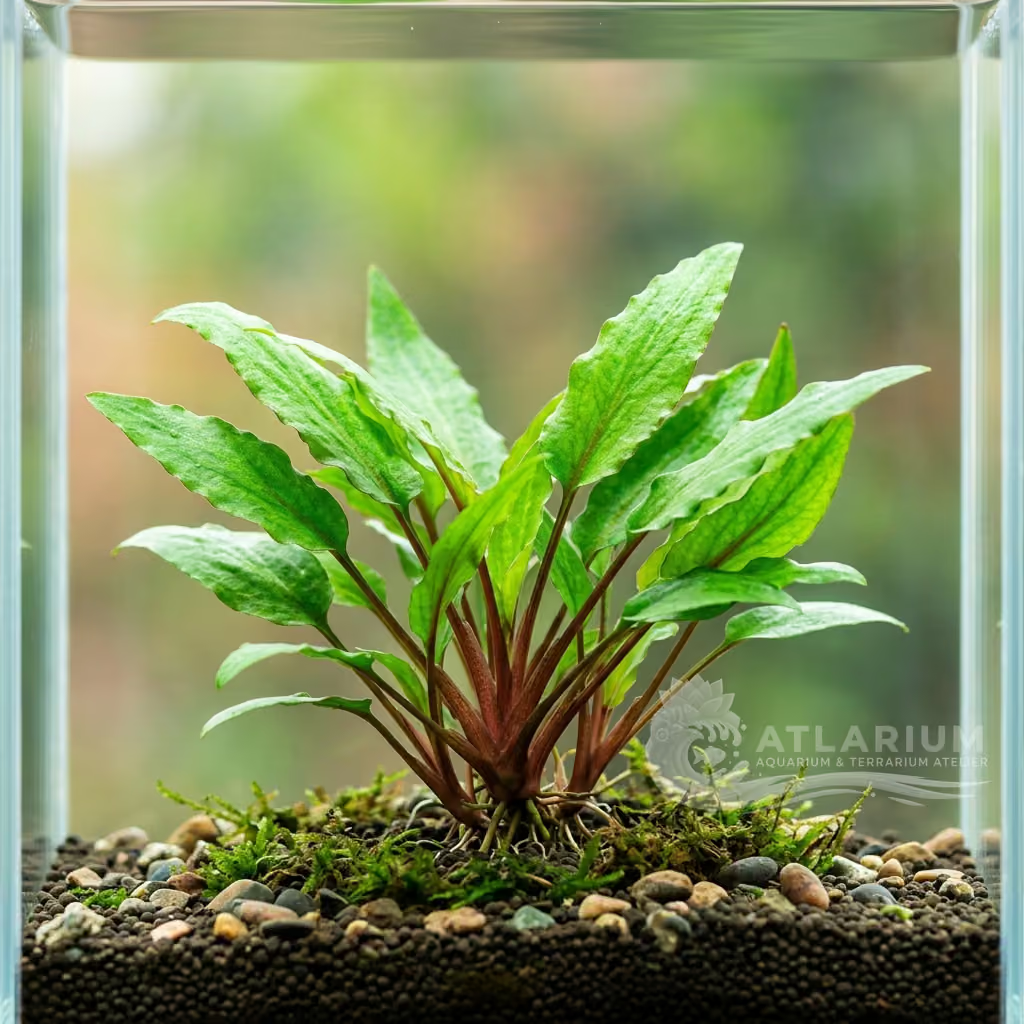
Physical Structure: The architecture of this plant is stunningly vertical and kinetic. It grows from a small, dense, starchy subterranean tuber (bulb). From this central bulb, an explosive rosette of long, extremely delicate stems shoots straight up toward the water surface. These stems support magnificent, highly elongated, sword-shaped leaves that can easily reach 30 to 50 cm (12-20 inches) in length, creating a towering, fountain-like silhouette in the aquarium.
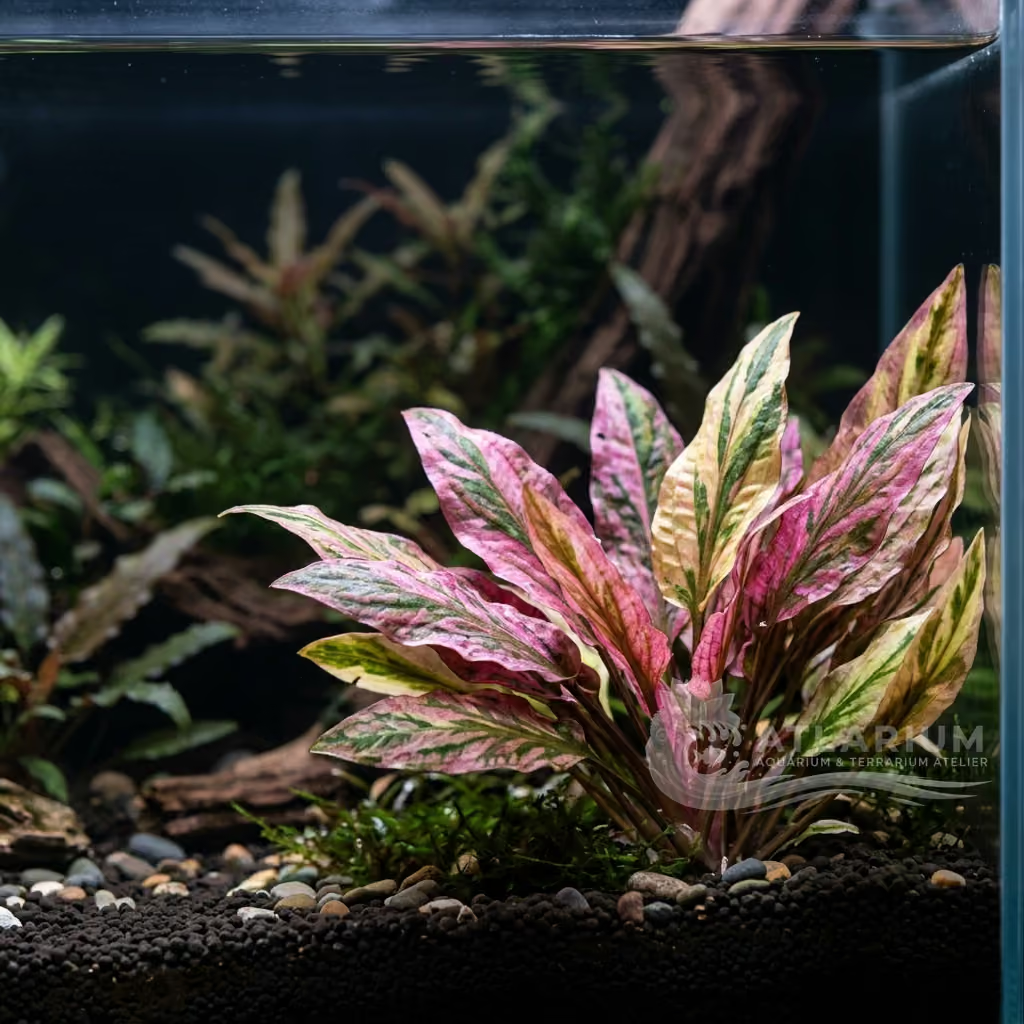
Color & Texture: The leaves of A. crispus are famously spectacular. The margins (edges) of every single leaf are intensely ruffled, waved, and fluted, creating a beautiful corkscrew or ribbon-like effect. The coloration is typically a vibrant, glowing light green, though under intense lighting, new leaves frequently emerge with a striking translucent bronze or pinkish-red hue. The texture is completely smooth but exceptionally thin and highly translucent, allowing light to shine brilliantly through the delicate cell walls.

Cuidado, criação e companheiros de tanque
Lighting & CO2: This is a fast-growing, high-energy bulb plant that demands medium to high-intensity lighting to thrive. Under weak light, the plant will become hopelessly leggy, the ruffles will flatten out, and it will slowly exhaust its bulb and die. While it can survive without CO2, injecting pressurized carbon dioxide is highly recommended to unlock its true explosive growth potential, intensify its bronze coloration, and encourage the production of its beautiful, fragrant white surface flowers.
Nutrition & Substrate: Aponogeton crispus is an aggressive, monstrous root feeder. The bulb MUST be planted in a deep, highly nutritious substrate. A premium aquasoil heavily fortified with iron-rich root tabs is absolutely mandatory to sustain its explosive growth rate. A sterile sand or gravel bed will starve the plant to death. The roots extending from the bulb will aggressively colonize the entire surrounding substrate, violently competing with neighboring plants for buried macronutrients.
Water Chemistry: Originating from the tropical waters of Sri Lanka, it thrives in standard tropical temperatures (24-28°C) but is notably adaptable. Unlike the finicky Madagascar Aponogetons, A. crispus is surprisingly forgiving of water chemistry. It prefers slightly acidic, soft to moderately hard water, but will generally adapt to most standard tap water conditions. Good water flow is recommended to keep its delicate, translucent leaves free of suffocating detritus.
Space Management & Placement: Due to its towering vertical height (often exceeding 50 cm) and explosive, fountain-like rosette of leaves, it must be used exclusively as a dominant background or rear-midground centerpiece in large aquariums. The bulb should be planted deeply, leaving only the very top crown exposed above the aquasoil. It requires a massive amount of vertical and horizontal space, as a single mature plant can easily overshadow and block the light of smaller foreground species.
Pruning: Heavy, aggressive pruning is required to manage its explosive growth. Use long aquascaping scissors to cut the oldest, tallest, or algae-covered leaves as close to the crown of the bulb as physically possible. If the plant produces a long, floating flower stalk, you must cut it off immediately unless you intend to harvest seeds, as flowering drains massive amounts of energy from the bulb and can trigger premature dormancy.
Risks & Diseases: The most significant threat is "Bulb Rot." If the bulb is damaged or buried entirely beneath anaerobic, compacted sand, it will rapidly rot into a foul, toxic mush. Additionally, like many Aponogetons, it may enter a natural biological dormancy phase. If the plant suddenly stops growing and drops all its leaves after several months, the bulb is resting. Leave it in the substrate or move it to a cool, dark container of damp sand for a few months before replanting.

Origem e distribuição geográfica
Endemic entirely to the tropical island nation of Sri Lanka, located in the Indian Ocean. Aponogeton crispus thrives specifically in the shallow, seasonal ponds, flooded marshes, and slow-moving streams of the island. It is a highly specialized bulb plant (geophyte) that evolved to survive extreme dry seasons. When its native ponds dry out entirely, the plant dies back to its subterranean tuber, waiting patiently in the baked mud. When the intense monsoon rains return, flooding the plains, the bulb violently erupts back to life, rapidly sending its spectacular, ruffled leaves toward the sun.
Origem
Sul e Sudeste Asiático

Perfil da planta
- Posicionamento
- Fundo
- It is best utilized as a background plant or a midground focal piece in taller aquariums. The bulb should be planted shallowly, ensuring the growing tip is not smothered by the substrate. Give it adequate space, as the leaves can grow quite long and arch over the water surface.
- Forma botânica
- Tubérculo
- It is characterized by elongated, light green leaves with beautifully ruffled or wavy margins. The leaves grow from a central tuberous bulb and have an almost translucent quality under bright light. It is a highly ornamental plant that adds a sense of elegance and verticality to the tank.
- Crescimento
- Rápida
- This plant generally exhibits a fast growth rate, especially when supplemented with CO2 and good nutrition. It can quickly produce a dense cluster of foliage in a short amount of time. Like other Aponogetons, it may undergo periodic resting phases where growth temporarily ceases.
- Substrato
- Alta
- This beautiful bulbous plant heavily relies on a nutrient-rich substrate to support its impressive, undulating leaves. An active aquarium soil with a high cation exchange capacity provides the perfect base for its vigorous root system. The substrate should be reasonably deep, around 5-7 cm, ensuring the tuber remains completely covered and well-anchored. Regular use of root tabs will help replenish essential minerals, preventing nutrient depletion during its rapid growth cycles.
- Fertilização de coluna
- Recomendada
- Liquid fertilization is beneficial to keep the foliage vibrant and prevent nutrient deficiencies. Dosing potassium and iron helps maintain the structural integrity and bright color of the ruffled leaves. It absorbs a fair amount of nutrients directly from the water column during its active growth phases.
- Fertilização radicular
- Necessária
- A fertile substrate or the use of root tabs is highly recommended to support its rapid growth. The bulb develops an extensive root network that aggressively seeks out nutrients in the soil. Providing a steady source of root nutrition delays the onset of its dormant period.
- Corte
- Ocasional
- Pruning consists solely of removing older, yellowing, or damaged leaves right at the crown of the bulb. Do not trim the tips of the leaves, as they will simply rot and die off. If the plant enters dormancy, you can trim away all dead foliage and leave the bulb in the substrate.
- Propagação
- Sementes
- It can be propagated from seeds if the plant successfully sends up a flower stalk above the water surface. Cross-pollination is often required to produce viable seeds, which can then be germinated in shallow water. Vegetative propagation by splitting the bulb is not recommended and rarely succeeds.
- Sensibilidade
- Moderada
- It is generally hardy but prefers clean, well-oxygenated water with moderate flow. Burying the bulb too deeply is the most common cause of failure, leading to rapid rot. It is relatively resistant to algae unless placed under excessively intense light without adequate CO2.
- Função de layout
- Plano intermediário, Fundo
- Aponogeton crispus is an excellent specimen plant that adds vertical texture and movement to the background. Its ruffled leaves contrast nicely with smooth-edged or broad-leaved species. It creates a lush, classic aquarium look and provides great vertical cover for shy fish.

Galeria de imagens
Imagens licenciadas vinculadas à espécie ou, quando marcadas, ao táxon representativo mais próximo.

Espécies relacionadas
Recomendações agrupadas por parentes próximos, escolhas de acompanhantes e cuidados semelhantes.