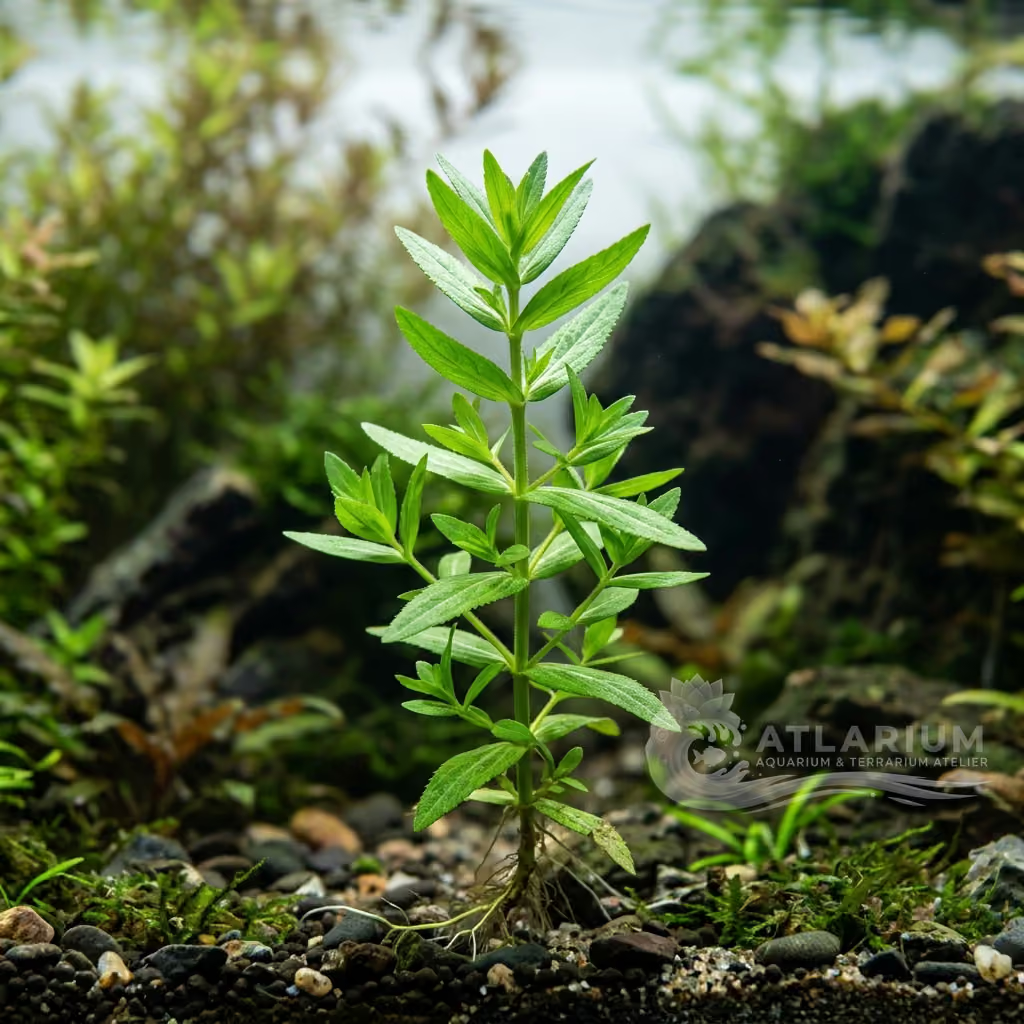
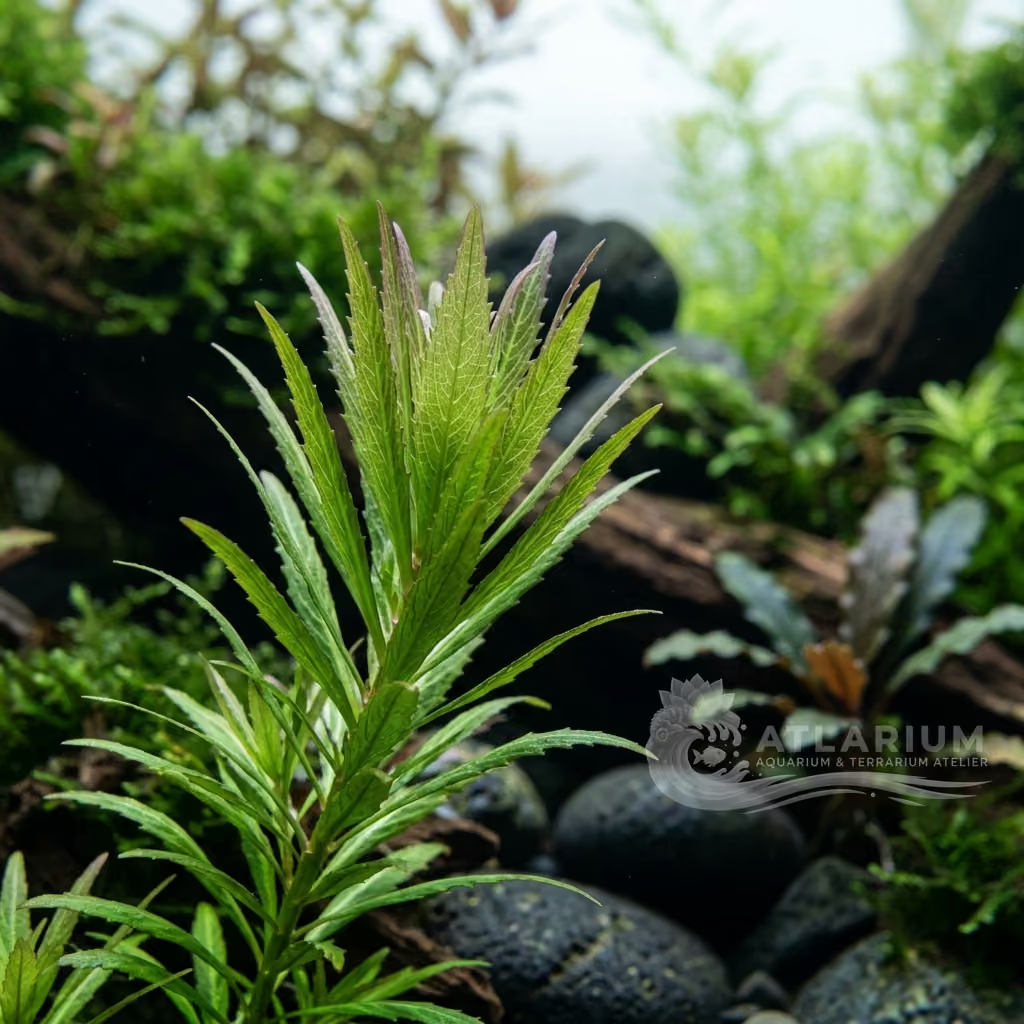
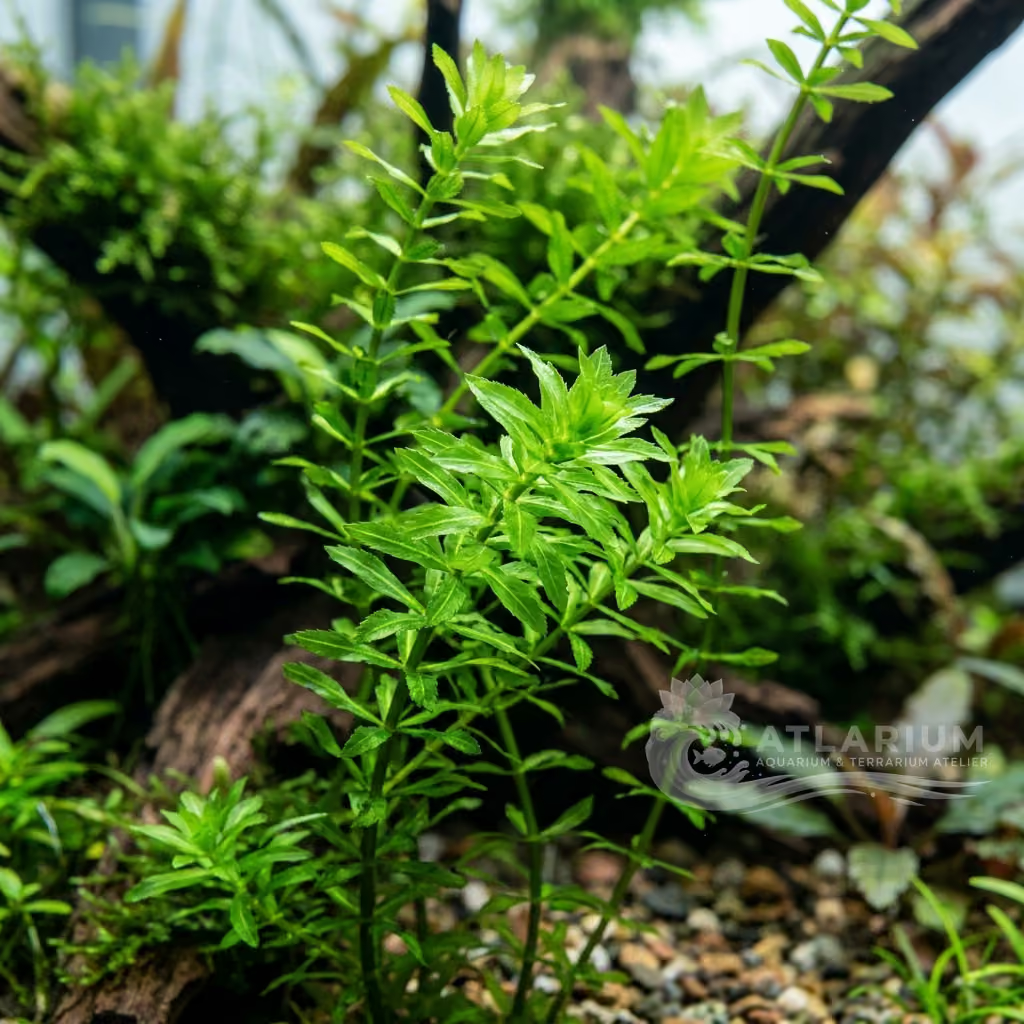
Eriocaulon sp. "Japan Needle Leaf"
Eriocaulon sp. "Japan Needle Leaf"
Elegant midground rosette plant from Japan featuring narrow, dark green needle-like leaves. Requires strong lighting, CO2, and nutrient-rich aquasoil to thrive.
Temperatura da água
21 - 26 °C
Valor de pH
5 - 7
Tipo de água
Água doce
Luz
Média - Alta
CO2
Alta
Altura esperada
40 cm
Largura esperada
20 cm
GH
0 - 10 dGH
KH
0 - 12 dKH

Descrição da espécie
Geographical Origin and Habitat: This selection comes from humid and aquatic environments in Japan. It grows in cool, clear, flowing waters, often on sandy substrates rich in organic matter along the margins of small rivers and mountain springs.
Taxonomy & Genetics: It belongs to the Eriocaulaceae family, genus Eriocaulon. Species of this genus are famous for their specific requirements and geometric shape. The 'Japan Needle Leaf' variety is prized for its exceptionally narrow leaf shape.
Physical Structure: It develops a dense and compact rosette from which numerous very thin and pointed leaves radiate. The plant looks like a green sea urchin, with a robust and deep root system in proportion to the aerial part.
Color & Texture: The leaves have a uniform dark green or forest green coloration. The texture is rigid and needle-like, creating a defined geometric structure that stands out clearly compared to other plant textures.

Cuidado, criação e companheiros de tanque
Lighting & CO2: Requires strong lighting to maintain the compactness of the rosette. Consistent CO2 supply is essential to prevent the plant from decaying.
Nutrition & Substrate: A substrate very rich in nutrients (such as aquasoil) is fundamental, as it absorbs most of its nutrients through the roots. Root fertilization is recommended.
Water Chemistry: Requires very soft (low KH, preferably 0-4) and acidic water (pH 5.0-7.0). The optimal temperature must be cool and stable, between 21 and 26 °C.
Space Management & Placement: Place in the midground or foreground as a focal point. It grows slowly, so it does not require frequent relocation.
Pruning: It is not pruned in the classic sense. Only yellowed or damaged outer leaves at the base of the rosette are removed with sharp scissors.
Risks & Diseases: It is highly sensitive to sudden changes in chemical parameters and organic buildup on the substrate. Root rot is the main risk in compacted substrates.

Origem e distribuição geográfica
This selection comes from humid and aquatic environments in Japan. It grows in cool, clear, flowing waters, often on sandy substrates rich in organic matter along the margins of small rivers and mountain springs.
Origem
Leste Asiático

Perfil da planta
- Posicionamento
- Plano intermediário
- It is best placed in the midground to background. Its tall, grassy appearance makes it a great transition plant to bridge the gap between low foregrounds and tall stem plants.
- Forma botânica
- Roseta
- This is a grassy plant with very long, fine, needle-like leaves that sway gracefully in the water current. It forms tall tufts rather than a low, compact rosette.
- Crescimento
- Média
- It has a moderate growth rate. It is slower than typical background stem plants but grows faster and taller than the smaller Eriocaulon rosettes.
- Substrato
- Alta
- Eriocaulon sp. "Japan Needle Leaf" is a sensitive root-feeder that absolutely thrives when planted in a rich, active aqua soil. Its extensive root network requires a deep, loose, and nutrient-dense bed to properly anchor and draw in essential elements. A substrate depth of at least 5-7 cm is necessary to accommodate the long roots and prevent the plant from uprooting. Providing a consistent supply of nutrients at the root zone, often supplemented by root tabs in older setups, will ensure its delicate, needle-like leaves remain vibrant and healthy.
- Fertilização de coluna
- Recomendada
- It benefits immensely from regular liquid fertilization, especially trace elements and iron. High CO2 injection and pristine water conditions are essential to prevent stunting.
- Fertilização radicular
- Recomendada
- It is strongly root-feeding. A deep, rich aquasoil bed is required, and root tabs should be used to replenish the substrate as the setup ages.
- Corte
- Ocasional
- Avoid cutting the leaves across the middle as they will not regrow properly and will look unnatural. Instead, pull out older, damaged, or algae-covered leaves directly from the base.
- Propagação
- Estacas
- Propagation is done by splitting the crown at the base once the plant has formed a substantial clump. Carefully pull apart the sections to ensure each has roots.
- Sensibilidade
- Moderada
- It is highly sensitive to hard water and fluctuating parameters. It may melt if the substrate becomes anaerobic, or if it is subjected to shading by other plants.
- Função de layout
- Plano intermediário, Fundo
- It provides a beautiful grassy texture in the midground or background. It contrasts beautifully with broad-leaved plants, hardscape, or dense carpeting plants.

Espécies relacionadas
Recomendações agrupadas por parentes próximos, escolhas de acompanhantes e cuidados semelhantes.