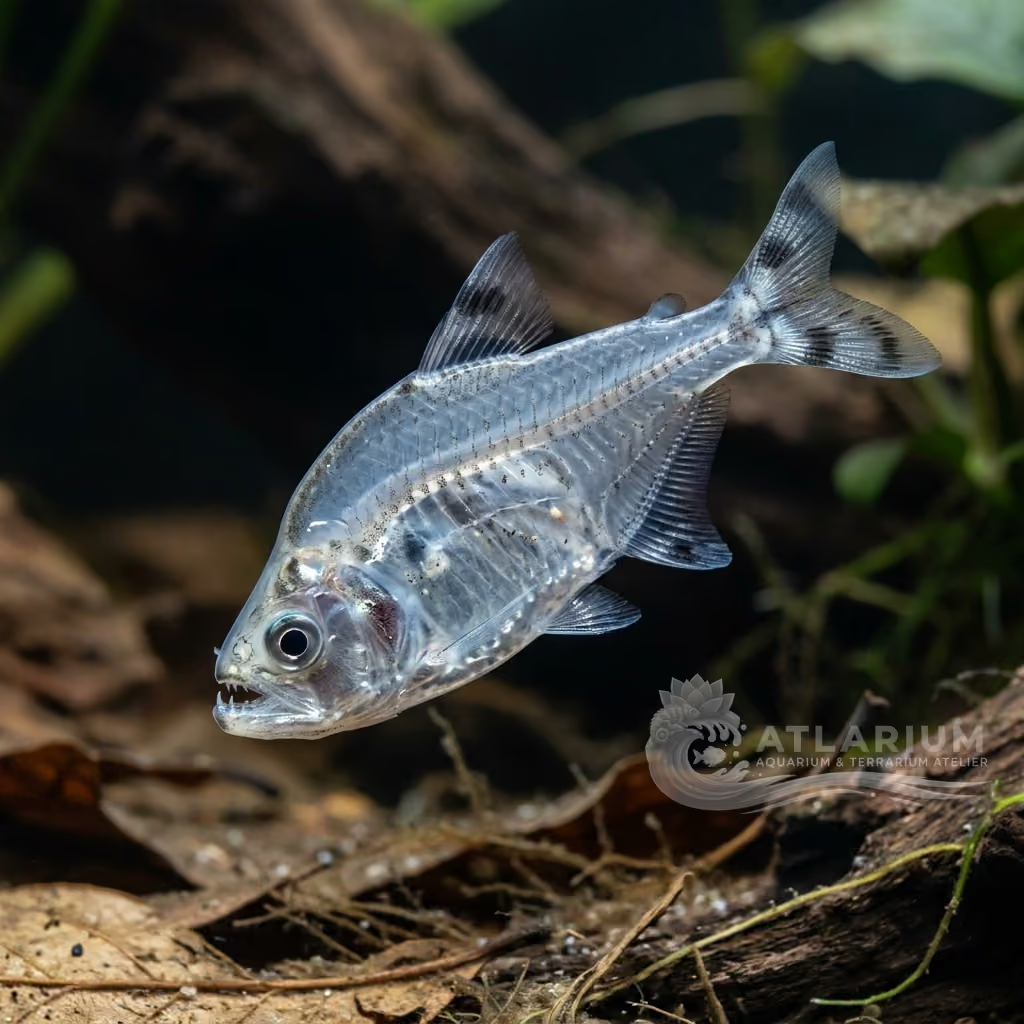
Blue-bellied Night Wanderer
Cyanogaster noctivaga
Stunning and almost completely transparent species recently discovered. It possesses a single gaudy feature: the belly/visceral sac shines with an intense metallic turquoise.
Temperatura da água
24 - 28 °C
Valor de pH
4.5 - 6.5
Tipo de água
Água doce
Nível do tanque
Meio
Tamanho adulto
2 cm
Volume mínimo do tanque
>= 60 L
Grupo mínimo
>= 6
GH
0 - 5 dGH
KH
1 - 2 dKH
TDS
10 - 95 ppm
Condutividade
16 - 148 uS/cm

Descrição da espécie
Geographical Origin and Habitat: Endemic exclusively to a small section of the extreme upper Rio Negro (Brazil). Its habitat consists of very pure, slow black waters (Blackwater) with a totally muddy-sandy substrate, loaded with rotting leaves.
Taxonomy and Morphology: Blue-bellied Night Wanderer (Cyanogaster noctivaga). Very small Characin (max 2 cm / 0.8 inches) described only in 2013. It is a miniature vertebrate. Features disproportionately large eyes, specialized teeth, and is almost completely transparent.
Social Behavior: Highly peculiar: as the name suggests, it is a strictly nocturnal animal. By day it remains invisible and inactive, hidden in root tangles; it comes out at night to forage in large groups in mid-water.
Coloration and Sexual Dimorphism: Almost total body transparency showing the skeleton. Distinguished by a vibrant abdominal sac (stomach/intestines) colored iridescent neon blue. The mature male possesses microscopic bony hooks on the pelvic fins.

Cuidado, criação e companheiros de tanque
Aquarium Setup: Very specific Nano-aquarium (minimum 40 liters / 10 gallons). Strict Blackwater biotope setup: alder cones, peat, dim (or absent) light. Leaves on the bottom and dense tangles of thin branches to offer essential daytime protection.
Diet and Feeding: Nocturnal micro-predator. Feeding in the dark, it hunts small invertebrates. In the aquarium, it must be fed with lights off with newly hatched brine shrimp nauplii, micro-nematodes, copepods, and paramecia. Will not touch classic granular foods.
Water Quality: The most critical aspect. Requires acidic water (extreme pH, 4.5-6.5) and devoid of carbonate and total hardness (pure RO + natural acidifiers). ZERO tolerance towards nitrites and ammonia. Sponge filtering recommended.
Compatibility and Cohabitation: Best kept in a species-only aquarium (only them) in groups of 15+ specimens. Any fish larger than 3 cm (1.2 inches) could prey on them. Possibly compatible with Neocaridina shrimp if water conditions match (difficult).
Aquarium Breeding: Almost entirely unknown in captivity given its rarity and very recent discovery. It is assumed it scatters tiny eggs among dense root vegetation or aquatic mosses during the night.
Risks and Diseases: Will starve to death if fed only during the day or if placed with food competitors. Sudden chemical changes are lethal. Requires a hyper-stable and mature aquarium (rich in micro-fauna to feed on).

Origem e distribuição geográfica
Endemic exclusively to a small section of the extreme upper Rio Negro (Brazil). Its habitat consists of very pure, slow black waters (Blackwater) with a totally muddy-sandy substrate, loaded with rotting leaves.
Origem
Amazônia, Orinoco e Guianas

Perfil de peixe
- Temperamento
- Semi-aggressive
- The Blue-bellied Night Wanderer is extremely peaceful and quite shy. They are schooling fish that rely on the presence of conspecifics to feel secure and display their best natural behaviors. Without a suitable group size or hiding places, they will remain highly stressed and largely invisible.
- Dieta
- Carnivore
- In the wild, they likely feed on minute aquatic invertebrates and zooplankton. In the aquarium, they require tiny, appropriately sized foods such as microworms, newly hatched brine shrimp, and fine powdered dry foods. They may struggle to accept larger standard flakes or pellets, making live or frozen micro-foods essential.
- Expectativa de vida
- 1.5-2.5 years
- Tamanho adulto
- 2 cm
- Proporção sexual
- Group
- Sexual dimorphism is subtle, but mature females generally exhibit a rounder belly, particularly when gravid. Males may be slightly slimmer and potentially show slightly more intense coloration under the right lighting. They should be kept in groups of at least 6-8 individuals, where the sex ratio naturally balances out.
- Frequência de alimentação
- Twice daily
- Due to their small size and fast metabolism, they require frequent feedings of very small amounts of food. Feeding them two to three times a day ensures they receive adequate nutrition without fouling the water. Care must be taken to ensure the food particles are small enough for them to swallow easily.
- Carga biológica
- Low
- The Blue-bellied Night Wanderer is an extremely small fish that produces a negligible bioload in the aquarium. They can be safely kept in nano tanks or large groups without overwhelming biological filtration. However, due to their delicate nature, pristine water conditions must still be maintained through regular small water changes.
- Fluxo
- Stagnant
- They originate from slow-moving, dark water habitats and strongly prefer gentle water flow in the aquarium. Strong currents will exhaust these tiny fish and induce severe stress. Sponge filters or baffled HOB filters are ideal for providing necessary filtration without creating overwhelming water movement.
- Risco de salto
- Yes
- Like many small schooling fish, they pose a moderate risk of jumping, especially if startled by sudden light changes or vibrations. Their small size means they can escape through even the tiniest gaps in an aquarium lid. A secure, well-fitting cover is recommended to prevent accidental losses.
- Reprodução
- Oviparous
- Details regarding their reproduction in captivity are incredibly sparse, as they are a relatively new and rare species in the hobby. They are likely egg scatterers that require very soft, acidic water and dim lighting to induce spawning. Rearing the minute fry would require microscopic foods like infusoria.
- Compatibilidade e companheiros de tanque
- With caution
- This is a remarkably peaceful and highly timid micro-predator that should only be housed with similarly sized, docile nano fish. Aggressive, boisterous, or large tank mates will easily outcompete them for food or view them as a snack. Excellent companions include dwarf rasboras, small tetras, and peaceful freshwater shrimp.
- Nível do tanque
- Middle
- These fish tend to occupy the middle to lower levels of the aquarium, often hovering near the substrate or hiding among vegetation. They are somewhat reclusive and appreciate a densely planted tank with plenty of shaded areas. Floating plants can help dim the lighting and encourage them to venture out more often.

Modelos e parâmetros científicos
FishBase
Acesso aos dados científicos oficiais da espécie
FishBase v25.04Dados sincronizados em: 15/06/2026
- Nível trófico
- 3 ± 0,4 se
- Unicidade filogenética (PD50)
- 0.75
- Relação bayesiana comprimento-peso
- a = 0.01122, b = 3.04
- VulnerabilidadeVulnerabilidade baixa (10 / 100)

Espécies relacionadas
Recomendações agrupadas por parentes próximos, escolhas de acompanhantes e cuidados semelhantes.