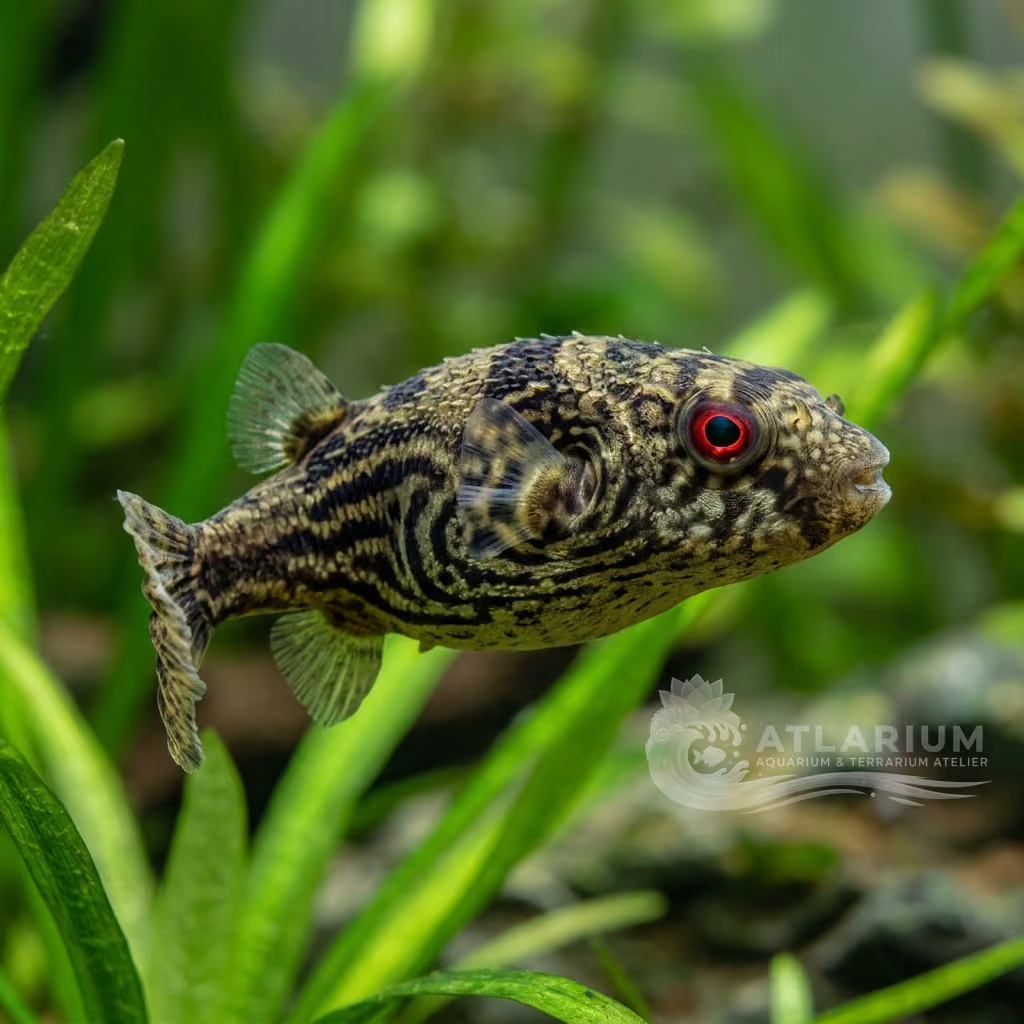
Siamese fighting fish
Betta splendens
Siamese fighting fish (Betta splendens) is a freshwater species with an adult-size reference of about 7 cm. It needs at least 20 litres and one individual, with its social and territorial profile taken into account.
Temperatura da água
24 - 29 °C
Valor de pH
6 - 7.5
Tipo de água
Água doce
Nível do tanque
Superfície e meio
Tamanho adulto
7 cm
Volume mínimo do tanque
>= 20 L
Grupo mínimo
>= 1
GH
4 - 15 dGH
KH
1 - 8 dKH
TDS
70 - 305 ppm
Condutividade
109 - 477 uS/cm

Descrição da espécie
Geographical Origin and Habitat: A freshwater species; the enclosure should provide stability, oxygenation, space and shelter consistent with its behaviour without turning one habitat description into a mandatory recipe.
Taxonomy and Morphology: The accepted scientific name is Betta splendens; the verified classification records genus Betta, family Osphronemidae, subfamily Macropodusinae, order Anabantiformes. Historical names remain searchable as synonyms rather than separate species.
Social Behavior: Siamese fighting fish is normally kept as a single individual and does not require conspecifics. The minimum reference is one individual; sex, maturity and available space can require a more conservative composition. Observe access to food, resting behaviour, chasing and use of shelter. Isolation, persistent competition or aggression means the number, composition or environment needs to be corrected.
Coloration and Sexual Dimorphism: Colour and shape can vary with age, sex, physiological state and environmental conditions. Identification and sexing require recognized species-level characters; one appearance or photograph is not enough.

Cuidado, criação e companheiros de tanque
Aquarium Setup: Siamese fighting fish needs an aquarium of at least 20 litres, sized for adult body size and a minimum group of one individual. Filtration, shelter and swimming room must match the species and the actual number kept. Volume alone does not make an enclosure suitable: tank shape and length, usable area, oxygenation and the ability to separate territories must reflect adult behaviour.
Diet and Feeding: The recorded diet is carnivorous. Offer appropriately sized foods varied within that category, and adjust quantity and frequency from actual intake, body condition and leftovers. One food or a fixed schedule is not suitable for every age and situation.
Water Quality: Maintain stable, well-oxygenated water appropriate to a freshwater species; the card's reference values are 24–29 °C, pH 6–7.5. Verify conditions with reliable tests and size maintenance and filtration to the actual load. Ranges are not automatic thresholds for treatment or rapid chemical correction.
Compatibility and Cohabitation: The cohabitation profile is best kept alone, with a generally territorial temperament. Keep at least one individual; tankmates, stocking density and decor must allow escape, rest and feeding without excessive competition. Watch interactions especially during feeding, maturity and breeding. Persistent chasing, injury or exclusion from food requires a change in stocking or layout, or separation of the animals.
Aquarium Breeding: The recorded reproductive profile is “bubble-nest building”. Breeding should be attempted only with healthy adults, separation capacity and a plan for eggs or young. Do not treat unverified triggers, sex ratios or hatch times as universal for this species.
Risks and Diseases: Use a secure cover and close escape gaps. Prevent problems through quarantine of new arrivals, stable water, appropriate feeding and daily observation. Similar signs can have different causes, so check parameters, history and diagnosis before medication. Follow the product label and qualified aquatic-veterinary advice; there is no universal reduced dose for a species or family.

Origem e distribuição geográfica
A freshwater species; the enclosure should provide stability, oxygenation, space and shelter consistent with its behaviour without turning one habitat description into a mandatory recipe.
Origem
Sul e Sudeste AsiáticoLeste Asiático

Perfil de peixe
- Temperamento
- Territorial
- Siamese fighting fish has a generally territorial temperament. Insufficient space, an unsuitable social ratio or incompatible tankmates can substantially change observed behaviour.
- Dieta
- Carnivore
- In their natural habitat, Betta splendens are carnivores and micropredators that feed on small insects, insect larvae, zooplankton, and worms. In captivity, they should be offered a varied diet rich in high-quality protein to maintain their health and vibrant colors. Specialist betta pellets or flakes can serve as a staple, but they must be supplemented with live or frozen foods. Offerings like Daphnia, brine shrimp, and bloodworms are highly beneficial and mimic their natural feeding habits.
- Expectativa de vida
- 2-5 years
- Tamanho adulto
- 7 cm
- Proporção sexual
- Solitary
- Siamese fighting fish is normally kept as a single individual and does not require conspecifics. The reference minimum is one individual and must not be read as permission to overcrowd the aquarium.
- Frequência de alimentação
- Twice daily
- Betta splendens should be fed once or twice a day with small portions that they can consume within a couple of minutes. Because they are highly prone to bloating, constipation, and obesity, it is crucial not to overfeed them. A betta's stomach is roughly the size of its eye, so only a few pellets or tiny pinches of food are needed per meal. Incorporating a fasting day once a week is highly recommended to help clear their digestive system and maintain optimal metabolic health.
- Carga biológica
- Low
- Betta splendens has a low biological footprint due to its small size and solitary nature. However, because they are often kept in smaller aquariums (minimum 5 gallons/20 liters), waste can accumulate quickly if not monitored. A low-flow, gentle filter is essential to maintain excellent water quality without creating stress-inducing currents. Regular partial water changes are crucial to prevent the build-up of harmful toxins like ammonia and nitrates.
- Fluxo
- Stagnant
- Betta splendens naturally inhabits slow-moving or stagnant waters, such as swamps, marshes, floodplains, and rice paddies. Consequently, they have a strong preference for minimal to weak water flow in the aquarium. Long-finned varieties, in particular, struggle to swim against even moderate currents, which causes them continuous exhaustion and stress. Using adjustable filters, sponge filters, or pre-filter sponges is highly recommended to keep the current gentle while maintaining proper water filtration.
- Risco de salto
- Yes
- Betta splendens is an exceptional jumper capable of leaping out of the smallest openings in search of new water bodies. In the wild, this behavior helps them navigate between shallow puddles, but in a home aquarium, it is frequently fatal. A tight-fitting lid or cover slide is absolutely mandatory to prevent them from jumping out. Additionally, keeping the water level a couple of inches below the rim helps reduce this risk and preserves a layer of humid air for their labyrinth organ.
- Reprodução
- Bubble nest builder
- Breeding Betta splendens is a fascinating but moderately difficult process that requires a dedicated breeding setup. The male constructs a bubble nest at the water surface, often utilizing floating plants or leaves to anchor it. During spawning, the male wraps his body around the female in an "embrace" to fertilize the eggs, which he then catches and places into the nest. The male guards the nest diligently and will become aggressive towards the female, who must be removed immediately after spawning, followed by the male once the fry are free-swimming.
- Compatibilidade e companheiros de tanque
- Solitary
- The cohabitation profile is best kept alone, with a generally territorial temperament. Keep at least one individual; tankmates, stocking density and decor must allow escape, rest and feeding without excessive competition. Watch interactions especially during feeding, maturity and breeding. Persistent chasing, injury or exclusion from food requires a change in stocking or layout, or separation of the animals.
- Nível do tanque
- Top/Middle
- Betta splendens is primarily a middle-to-top dweller in the aquarium, where they can easily access the water surface. As labyrinth breathers, they must periodically gulp atmospheric air, making the upper third of the tank their primary activity zone. Broad-leafed plants, floating logs, or suction-cup hammocks placed near the surface provide essential resting spots for them. While they will occasionally explore the bottom to look for food or rest, they spend the vast majority of their time in the upper water column.

Modelos e parâmetros científicos
FishBase
Acesso aos dados científicos oficiais da espécie
FishBase v25.04Dados sincronizados em: 15/06/2026
- Nível trófico
- 3,3 ± 0,41 se
- Resiliência
- Alta (menos de 15 meses)
- Unicidade filogenética (PD50)
- 0.5
- Relação bayesiana comprimento-peso
- a = 0.01, b = 2.97
- VulnerabilidadeVulnerabilidade baixa (10 / 100)

Galeria de imagens
Imagens licenciadas vinculadas à espécie ou, quando marcadas, ao táxon representativo mais próximo.

Espécies relacionadas
Recomendações agrupadas por parentes próximos, escolhas de acompanhantes e cuidados semelhantes.