Emerald Eye Rasbora
Brevibora dorsiocellata
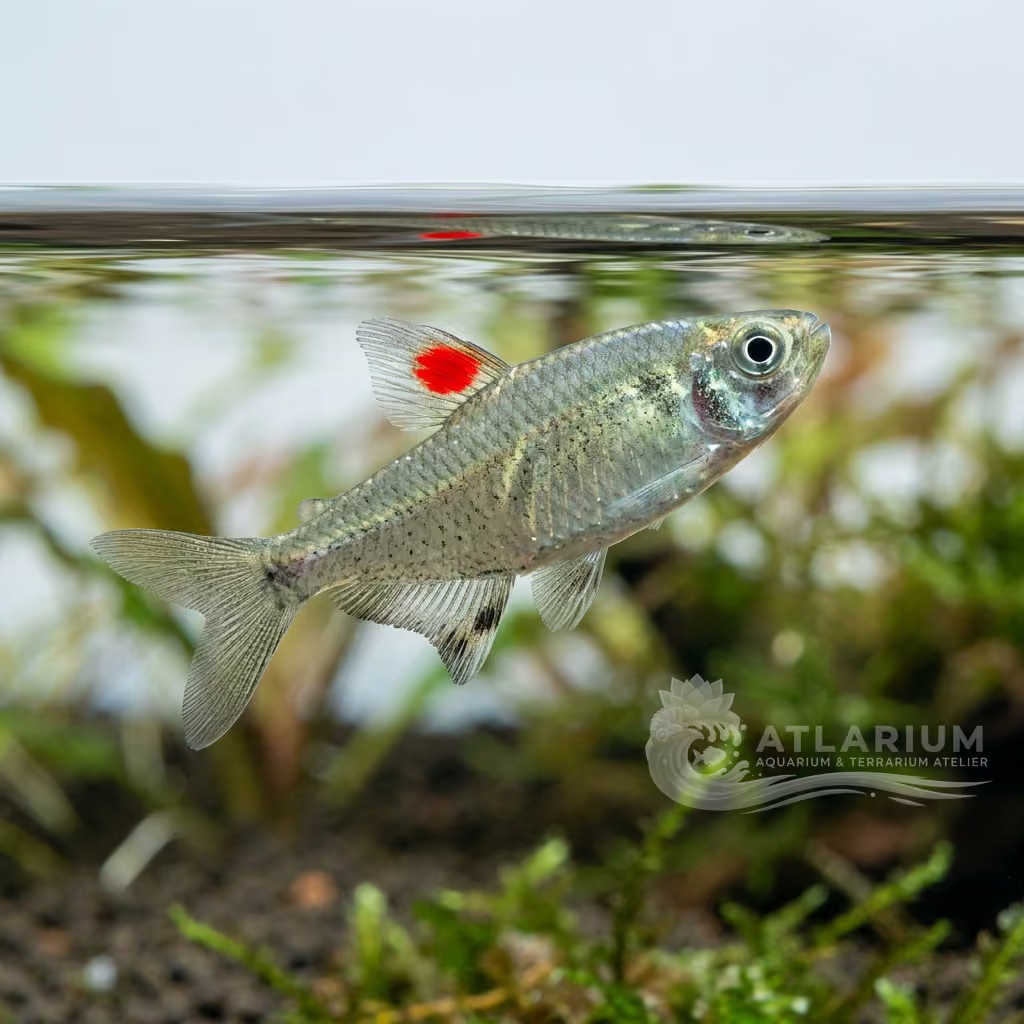
A peaceful schooling fish that compensates for a neutral-colored body with two magnificent features: a brilliantly reflective emerald-green eye and a striking ocellated spot on its dorsal fin.
Temperatura da água
22 - 26 °C
Valor de pH
5.5 - 7.5
Tipo de água
Água doce
Nível do tanque
Superfície e meio
Tamanho adulto
4 cm
Volume mínimo do tanque
>= 30 L
Grupo mínimo
>= 1
GH
1 - 12 dGH
KH
1 - 6 dKH
TDS
25 - 240 ppm
Condutividade
39 - 375 uS/cm

Descrição da espécie
Geographical Origin and Habitat: Native to Southeast Asia (Sumatra, Peninsular Malaysia, Borneo). Populates slow streams, peat bogs, blackwater swamps and lakes, taking refuge among dense aquatic vegetation.
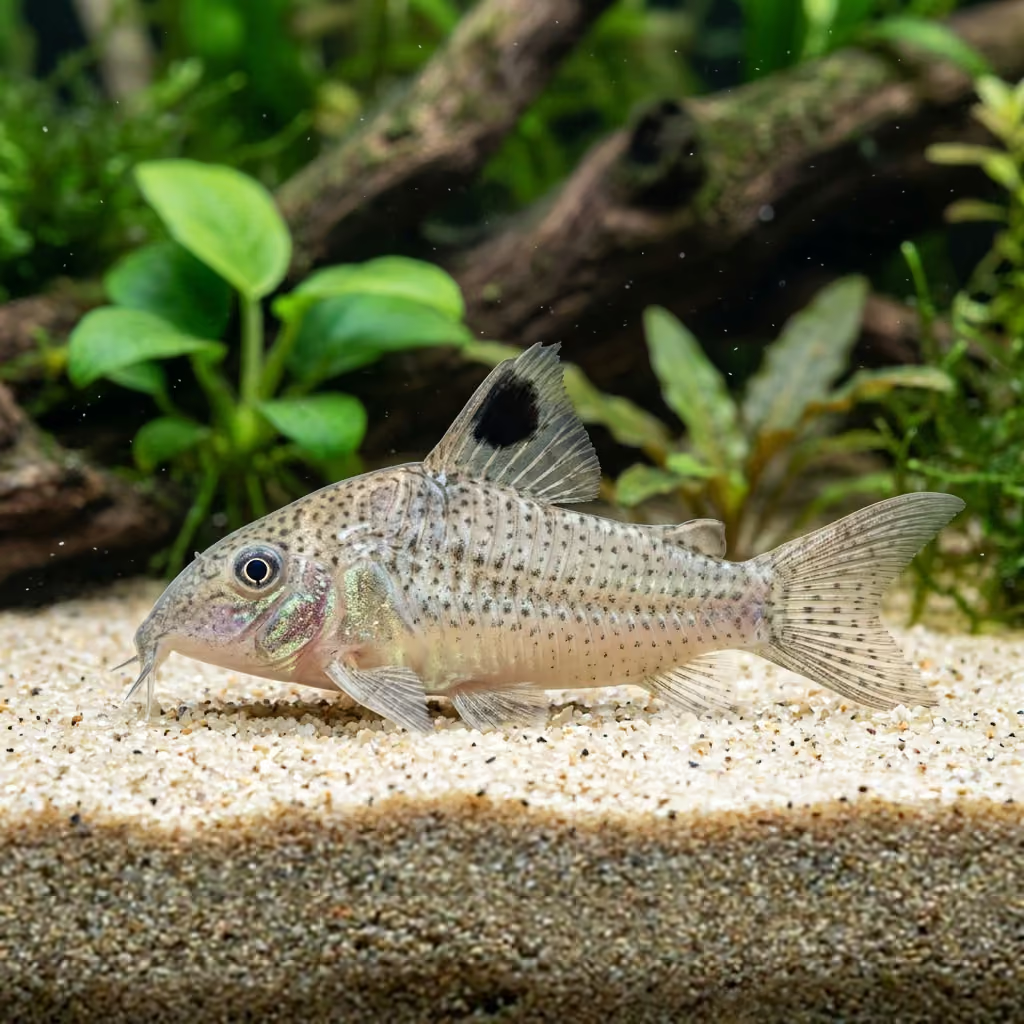
Taxonomy and Morphology: Emerald Eye Rasbora (Brevibora dorsiocellata). Formerly *Rasbora dorsiocellata*, now reclassified in the genus *Brevibora*. Reaches about 4 cm (1.5 inches) in length. Distinctive feature is the pointed dorsal fin bearing a conspicuous ocellus.
Social Behavior: Extremely gregarious and peaceful schooling cyprinid. Must be kept in large schools (minimum 10-15 specimens) so that it maintains cohesion and does not become shy or stressed.
Coloration and Sexual Dimorphism: Iridescent silvery background. On the dorsal fin stands out a roundish black spot ("dorsi-ocellata") surrounded by a white halo. The eye reflects light with emerald reflections. Females are noticeably larger and with a prominent abdomen.

Cuidado, criação e companheiros de tanque
Aquarium Setup: Minimum 60 cm (24 inches) aquarium. Appreciates dark bottoms and dense planting along the margins to provide shelter, maintaining ample space for free swimming in the center. Light shielded by floating plants (e.g. Salvinia).
Diet and Feeding: Micropredator in nature. In the aquarium it easily accepts dry food in flakes or microgranules. It is essential to regularly supplement the diet with live or frozen food (Daphnia, Artemia, Bloodworms) to stimulate the colors.
Water Quality: Hardy fish but prefers slightly acidic or neutral waters (pH 5.5-7.5) and soft (GH 1-12). A little tannin in the water will greatly enhance the shine of the scales.
Compatibility and Cohabitation: Excellent fish for peaceful community aquariums. Pairs well with other small rasboras, peaceful tetras, small loricariids, Pangio and Colisa or Honey Gourami.
Aquarium Breeding: Continuous egg scatterer with no parental care. If conditions are good it will lay eggs daily among fine-leaved plants. Parents will devour the eggs if not separated in time.
Risks and Diseases: Resistant to common diseases if the water is kept clean. The primary stress is the lack of a sufficiently large school, which drastically lowers their immune defenses.

Origem e distribuição geográfica
Native to Southeast Asia (Sumatra, Peninsular Malaysia, Borneo). Populates slow streams, peat bogs, blackwater swamps and lakes, taking refuge among dense aquatic vegetation.
Origem
Oceanos tropicais e recifesSul e Sudeste Asiático

Perfil de peixe
- Temperamento
- Semi-aggressive
- The Eyespot Rasbora is an exceptionally peaceful and non-aggressive fish, making it an ideal candidate for established community aquariums. They are active, schooling fish that display tight shoaling behavior when kept in proper numbers, which also helps reduce their natural shyness. They do not possess any territorial behaviors and will not bother other tankmates, including tiny shrimp or fry. However, their timid nature means they can easily be intimidated by larger, boisterous, or aggressive species.
- Dieta
- Omnivore
- In the wild, this species is a micropredator feeding on small insects, worms, and microcrustaceans falling into the water. In the home aquarium, they are omnivorous and accept high-quality crushed flakes or micropellets. To promote optimal coloration and health, their diet should be supplemented with live or frozen foods such as Daphnia, Artemia nauplii, and cyclops. Due to their small mouths, any food offered must be finely sized to ensure they can consume it easily.
- Expectativa de vida
- 2-5 years
- Tamanho adulto
- 4 cm
- Proporção sexual
- Group
- There is no strict sex ratio required for this species, as they are peaceful shoaling fish that live harmoniously. They should be purchased in a group of at least 8 to 10 individuals, which helps them feel secure and exhibit their natural schooling behavior. Within this group, a mixed ratio of males and females is ideal, as it promotes natural interaction and group cohesion. Mature females are generally slightly larger and rounder-bellied than males, especially when in breeding condition.
- Frequência de alimentação
- Twice daily
- It is recommended to feed these fish small portions two to three times a day. Because they are active, surface-oriented fish with high metabolisms, frequent small feedings are highly beneficial. Care should be taken to offer only as much food as they can consume within one to two minutes to prevent uneaten food from decomposing and affecting water quality. Varying the food type between dried, frozen, and live items across different days ensures a balanced nutrient intake.
- Carga biológica
- Low
- The Eyespot Rasbora (Brevibora dorsiocellata) is a small fish (approx. 3-4 cm) and has a very low biological waste footprint. Because they must be kept in schools of at least 8 to 10 individuals, their collective bioload is low-medium but remains easily manageable with standard aquarium filtration. Efficient biological filtration and regular small water changes of about 10-15% weekly are sufficient to maintain pristine water quality. Over-filtration is not necessary, but the filter should keep up with the overall stocking of the community tank.
- Fluxo
- Stagnant
- The Eyespot Rasbora prefers gentle to moderate water flow, reflecting their natural slow-moving habitats like peat swamps and forest streams. Strong currents can exhaust these small fish and cause chronic stress, making them susceptible to common diseases. The filtration system should provide efficient turnover without creating harsh rapids or turbulent areas. Providing calm pockets of water with decorations, driftwood, or dense planting allows the school to rest comfortably.
- Risco de salto
- Yes
- This species poses a moderate jump risk, particularly when startled, during water changes, or if they feel stressed by larger tankmates. Since they swim close to the surface, they can easily leap out of open-top aquariums if spooked by sudden light changes or external movements. A tight-fitting lid or cover slides are essential to prevent accidental jumps and losses. Additionally, dense floating vegetation can act as a natural barrier and increase their sense of security.
- Reprodução
- Oviparous
- Breeding this cyprinid is moderately challenging as they are egg-scatterers that show no parental care. To successfully breed them, a separate spawning tank with soft, acidic water and fine-leaved plants or spawning mops is required. The parents should be conditioned with high-quality live food before being moved to the breeding tank. Spawning is often triggered by a slight temperature drop, after which the adults must be immediately removed to prevent them from eating the eggs.
- Compatibilidade e companheiros de tanque
- Peaceful
- This species is highly compatible with a wide range of peaceful, small community fish. Ideal tankmates include other small cyprinids, peaceful tetras, dwarf cichlids, small catfish like Corydoras, and peaceful loaches. They can also be safely housed with ornamental freshwater dwarf shrimp, as they are too small to pose a threat. Aggressive, large, or fast-swimming species should be avoided, as they will easily outcompete the rasboras for food or treat them as prey.
- Nível do tanque
- Top/Middle
- The Eyespot Rasbora primarily inhabits the middle to upper levels of the water column. They are active swimmers that spend most of their time schooling in open water areas just below the surface. Floating plants can be used to provide shade and shelter, which encourages them to swim comfortably in the upper sections of the tank. Their upward-facing mouths are naturally adapted for feeding from the surface and catching falling food items.

Modelos e parâmetros científicos
FishBase
Acesso aos dados científicos oficiais da espécie
FishBase v25.04Dados sincronizados em: 15/06/2026
- Nível trófico
- 3,2 ± 0,39 se
- Resiliência
- Alta (menos de 15 meses)
- Unicidade filogenética (PD50)
- 0.625
- Relação bayesiana comprimento-peso
- a = 0.00891, b = 3.02
- VulnerabilidadeVulnerabilidade baixa (10 / 100)

Espécies relacionadas
Recomendações agrupadas por parentes próximos, escolhas de acompanhantes e cuidados semelhantes.