Echinodorus 'Foxtail'
Echinodorus 'Foxtail'
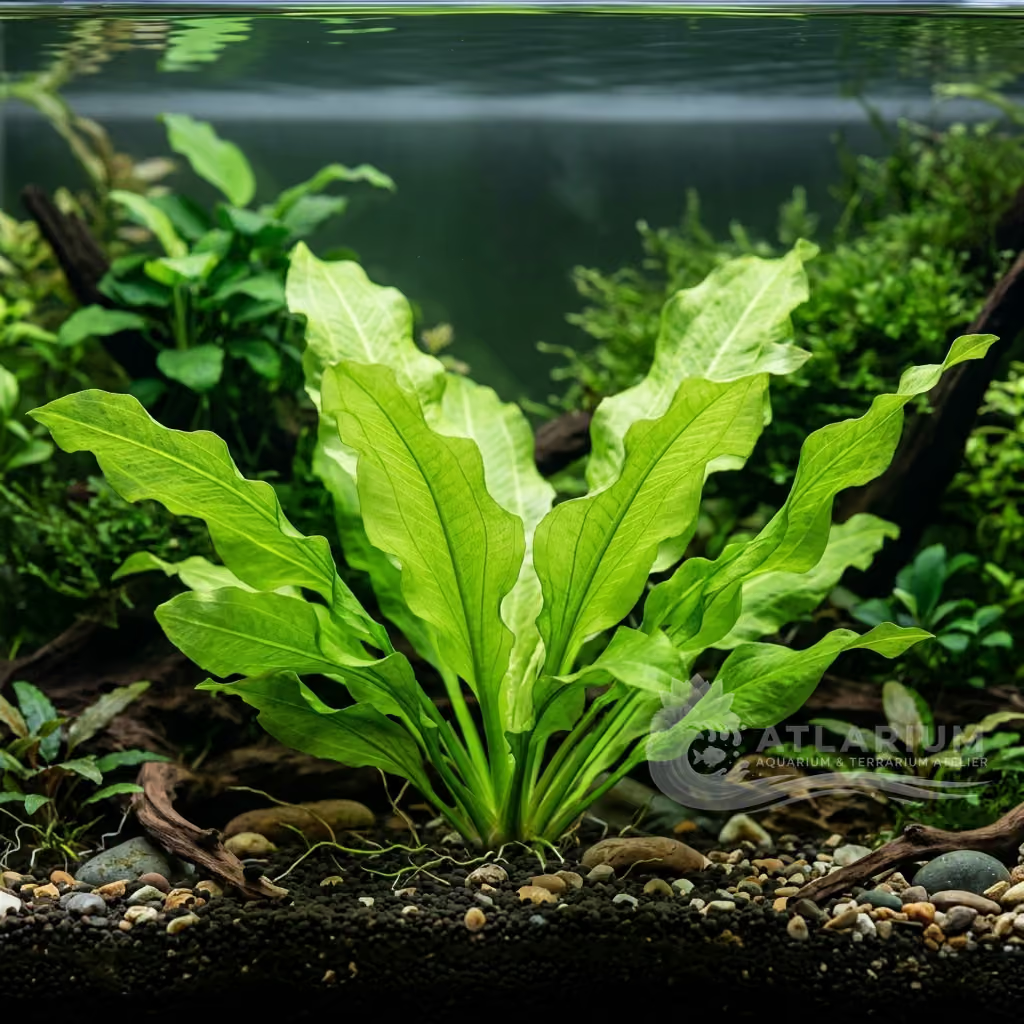
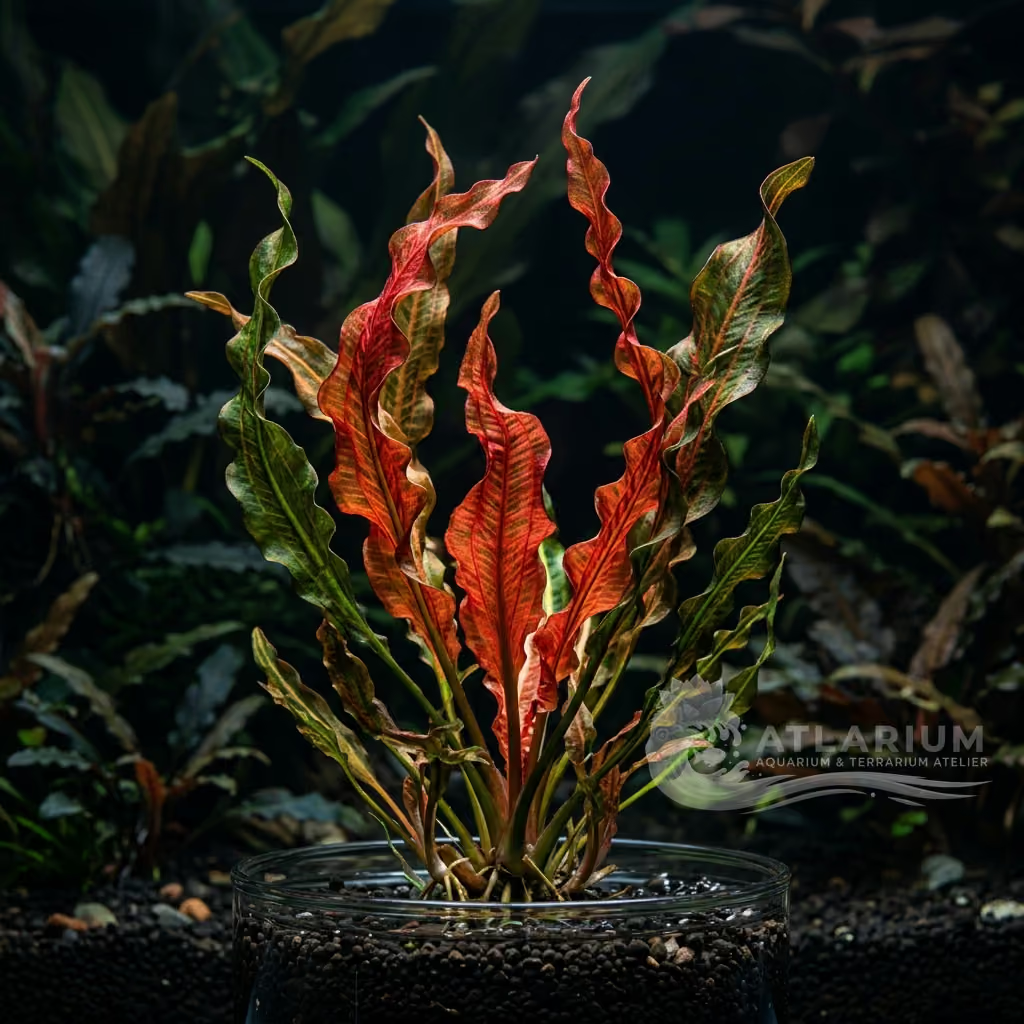
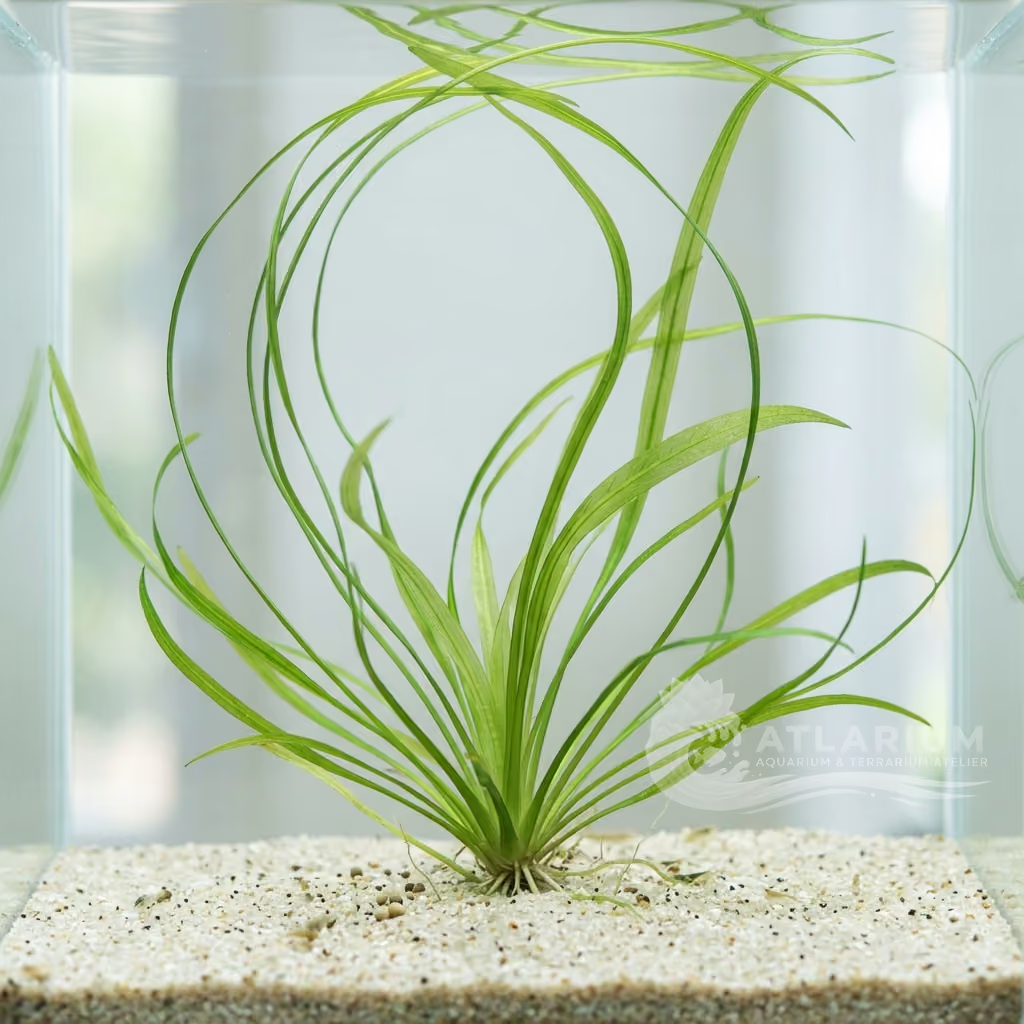
Echinodorus 'Foxtail' is a deeply unusual and architecturally bizarre hybrid featuring an intensely dense, spiky rosette reminiscent of a terrestrial fox's tail.
Temperatura da água
20 - 28 °C
Valor de pH
6 - 8
Tipo de água
Água doce
Luz
Média
CO2
Baixa
Altura esperada
40 cm
Largura esperada
20 cm
GH
4 - 20 dGH
KH
0 - 21 dKH

Descrição da espécie
Geographical Origin and Habitat: This highly unusual, extremely specific botanical cultivar does not exist in nature. Echinodorus "Foxtail" is a deeply strange, architecturally bizarre commercial hybrid created specifically for the high-end aquascaping hobby. It was meticulously crossbred from wild South American Amazon Sword stock to produce a completely unique, highly elongated, and drastically narrowed leaf structure. In the aquarium, it behaves precisely like its wild ancestors, acting as a wildly resilient, deeply rooted amphibious rosette plant.
Taxonomy & Genetics: Scientifically classified within the Alismataceae family, "Foxtail" is a highly prized, modern dwarf-to-medium cultivar known for its structural weirdness. Taxonomically, it is a complex hybrid. Genetically, it inherited the bulletproof survival traits of standard Amazon Swords. However, its defining genetic feature is a severe mutation that forces the extreme elongation and narrowing of its leaves, while simultaneously suppressing all red anthocyanin pigments, resulting in a plant that looks entirely unlike a standard sword.
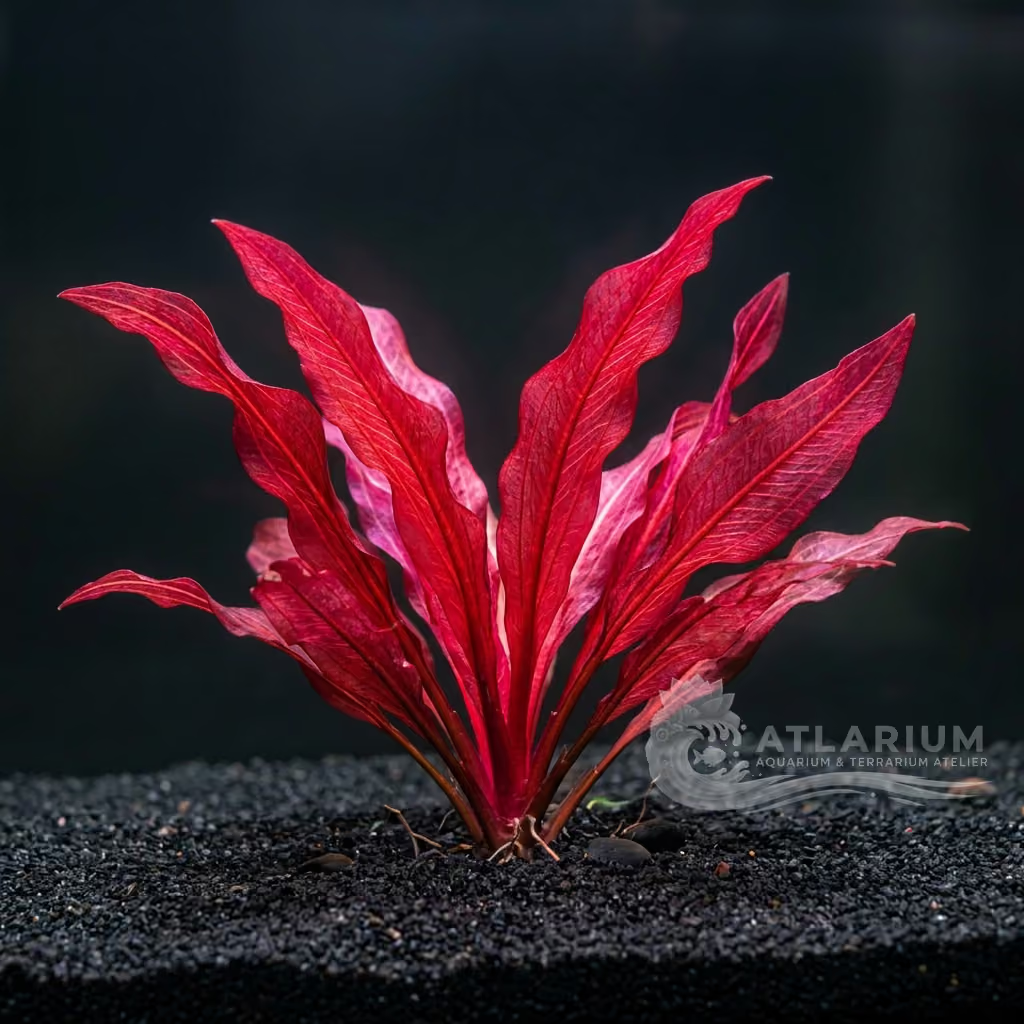
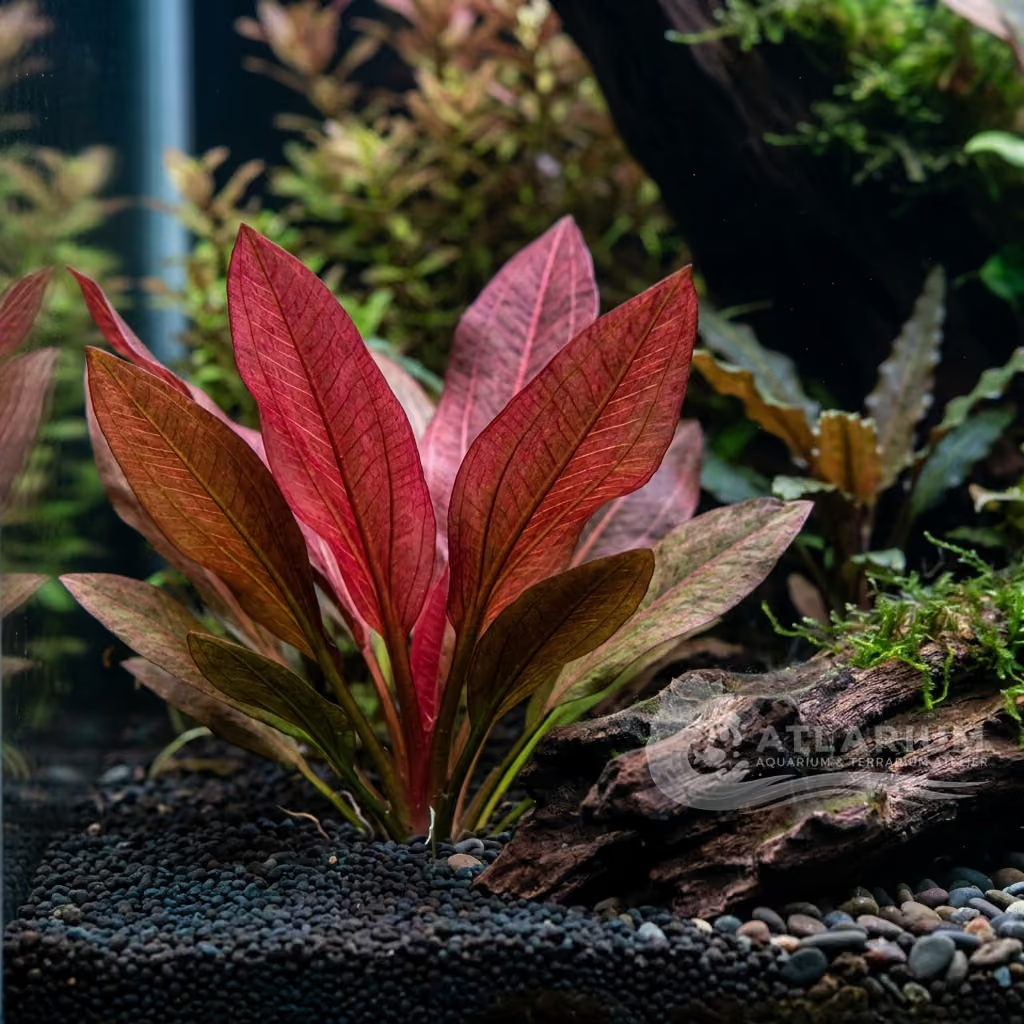
Physical Structure: The architectural structure of the "Foxtail" sword is intensely dense, violently compact, and highly bizarre. It is a rosette plant completely lacking vertical stems. The foundation is a massive, incredibly thick, tuberous subterranean rhizome that deploys an aggressive, deep-reaching root system. The leaves erupt tightly from the crown on incredibly short, stiff petioles. The foliage is strictly narrowly lanceolate to strictly linear (ribbon-like), highly elongated (capable of reaching 20-30 cm), and perfectly flat.
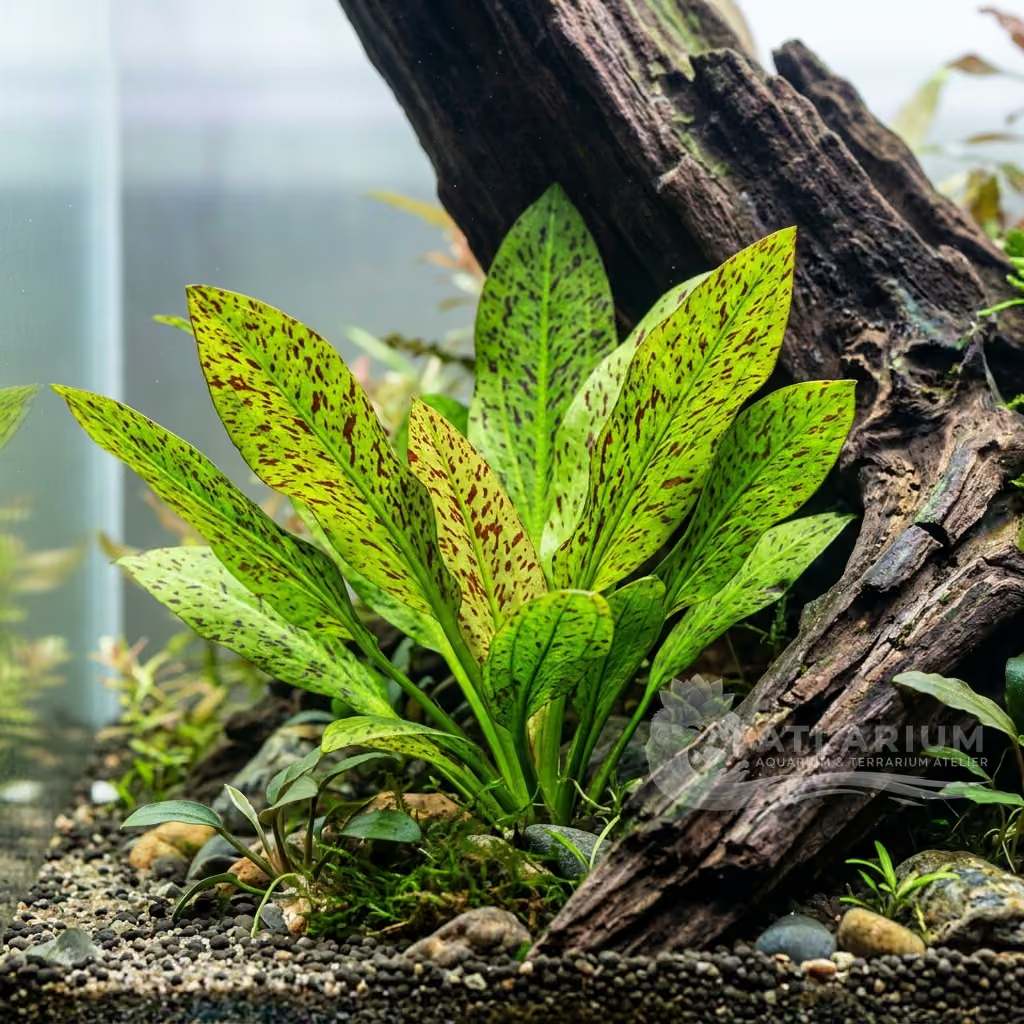
Color & Texture: The coloration is distinctly pure, solid, and visually refreshing. Grown submerged under intense lighting, the massive cluster of narrow, ribbon-like leaves is an unwavering, solid, glowing light apple-green. Crucially, its superior genetics completely prevent the green from turning muddy or dark, and it absolutely never produces any red or brown spots. The texture is intensely rigid, heavily leathery, and perfectly smooth, completely lacking any dimples or hammered texture, feeling exactly like stiff plastic ribbons.

Cuidado, criação e companheiros de tanque
Lighting & CO2: It is an incredibly resilient, structurally bizarre hybrid perfectly suited for beginner, low-tech aquariums. While it will effortlessly survive in shaded environments, it will lose its intense density and the ribbon-like leaves will stretch upward. To unlock its intensely compact, bushy "foxtail" shape and force the blindingly bright apple-green color, blasting, high-intensity LED lighting is absolutely mandatory. Pressurized CO2 drastically speeds up its growth, forcing the production of hundreds of leaves.
Nutrition & Substrate: As a highly specialized Amazon Sword hybrid, the "Foxtail" is a terrifyingly aggressive, obligate root feeder. Its massive root system strictly demands a very deep (minimum 5 cm / 2 inches), heavily nutrient-dense substrate. It absolutely demands premium aquasoil heavily enriched with iron and macro-nutrient root tabs directly beneath the massive tuber to fuel the massive production of its ribbon-like leaves. If starved of root nutrients, the dense green leaves will quickly turn pale white and dissolve.
Water Chemistry: Originating from highly stabilized nursery conditions, it is practically invincible regarding standard water parameters. It thrives effortlessly in heated tropical aquariums (22-28°C) and is exceptionally adaptable, comfortably tolerating both soft, acidic blackwater and rock-hard, highly alkaline tap water (pH 6.0 - 8.0). The single most critical environmental requirement is absolute chemical stability. It drastically prefers stable, unchanging parameters over perfectly optimized ones. It demands moderate water flow to keep its dense core clean.
Space Management & Placement: Due to its deliberately compact size (rarely exceeding 20-30 cm height), intensely rigid, linear (ribbon-like) leaves, and dense bushy growth habit, "Foxtail" is an elite, indestructible midground centerpiece for small to medium aquariums. It MUST be planted as a singular focal point directly in the midground. Because it grows as a dense, heavily clustered rosette resembling a thick tuft of grass, it provides a perfectly organized visual anchor that violently contrasts against broad-leafed plants.
Pruning: Pruning is a simple, highly necessary procedure to maintain its dense aesthetic. Never attempt to trim a rigid, ribbon-like leaf in half; the cut edge will instantly turn black, rot, and destroy the aesthetic. To prune dead, yellowing, or algae-covered older leaves, you must reach deep down into the absolute base of the dense rosette and cleanly snap or slice the stiff petiole directly at the crown. It rarely spreads via runners; instead, it slowly forms a massive, impenetrable, single-crowned anchor.
Risks & Diseases: The absolute greatest threat to the "Foxtail" sword is Green Spot Algae (GSA) and nutrient starvation. Because the highly rigid, smooth ribbon-like leaves live for years and form incredibly dense clusters, they trap debris and act as massive landing pads for devastating Green Spot Algae if phosphate levels drop. Once GSA aggressively spots the tough leaves, it is physically impossible to clean off and ruins the crisp green aesthetic. The second risk is nutrient starvation; if root tabs run out, it will melt.

Origem e distribuição geográfica
This highly unusual, extremely specific botanical cultivar does not exist in nature. Echinodorus "Foxtail" is a deeply strange, architecturally bizarre commercial hybrid created specifically for the high-end aquascaping hobby. It was meticulously crossbred from wild South American Amazon Sword stock to produce a completely unique, highly elongated, and drastically narrowed leaf structure. In the aquarium, it behaves precisely like its wild ancestors, acting as a wildly resilient, deeply rooted amphibious rosette plant.
Origem
Melhoramento seletivo e cultivaresAmazônia, Orinoco e Guianas

Perfil da planta
- Posicionamento
- Plano intermediário
- This highly unique cultivar is best used as a striking midground focal point. Its bushy, textured appearance demands adequate spacing to fully appreciate its foxtail-like form. It should be placed where it will not be overshadowed by taller, broader plants.
- Forma botânica
- Roseta
- The plant is defined by its incredibly dense rosette of narrow, slightly twisted leaves. This gives it a highly textured, almost fluffy appearance reminiscent of a fox's tail. It grows a very thick, fibrous root system to anchor its bushy crown.
- Crescimento
- Média
- It possesses a moderate growth rate, focusing its energy on producing many narrow leaves rather than height. High lighting and CO2 injection will encourage a much denser, bushier growth habit. It maintains a relatively compact size compared to other large sword varieties.
- Substrato
- Alta
- Echinodorus 'Foxtail' relies intensely on substrate nutrients to fuel the growth of its distinctively shaped, elongated leaves. It generates a prolific network of thick roots, necessitating a substrate depth of at least 2 to 3 inches (5-8 cm) to prevent uprooting and allow proper foraging. A fertile commercial aqua soil or heavily amended gravel with frequent root tab insertions is crucial for long-term health and vitality.
- Fertilização de coluna
- Recomendada
- Liquid dosing of micronutrients is highly beneficial to reach all the densely packed leaves. While roots do the heavy lifting, column feeding ensures no leaf is left deficient. Consistent potassium dosing is recommended to keep the narrow leaves looking pristine.
- Fertilização radicular
- Necessária
- Strong root nutrition is completely vital for maintaining its dense, bushy growth pattern. Placing root tabs directly into the substrate near the base provides the necessary foundation. Poor root nutrition will result in sparse, stringy growth that ruins its aesthetic.
- Corte
- Ocasional
- Pruning should focus exclusively on removing the oldest, outermost leaves that begin to yellow. Carefully cut these away at the base to allow new growth to emerge from the center. Avoid heavy pruning, as its beauty lies in its densely packed foliage.
- Propagação
- Rhizome division
- It propagates by sending out runners that develop small, exact replicas of the mother plant. Wait for a robust root system to form on the plantlets before snipping them free. Replant them carefully in a well-lit area with abundant substrate nutrients.
- Sensibilidade
- Moderada
- It is somewhat more sensitive to shading than broader-leaved Echinodorus species. If light is blocked, the lower leaves will quickly deteriorate and detach. It prefers stable, clean water conditions with excellent circulation through its dense leaves.
- Função de layout
- accent
- Its unique texture provides an incredible contrast against plants with large, rounded leaves. It serves as an excellent, eye-catching centerpiece in the midground of any aquascape. The dense foliage is also perfect for providing shelter to small fish and shrimp.

Galeria de imagens
Imagens licenciadas vinculadas à espécie ou, quando marcadas, ao táxon representativo mais próximo.

Espécies relacionadas
Recomendações agrupadas por parentes próximos, escolhas de acompanhantes e cuidados semelhantes.