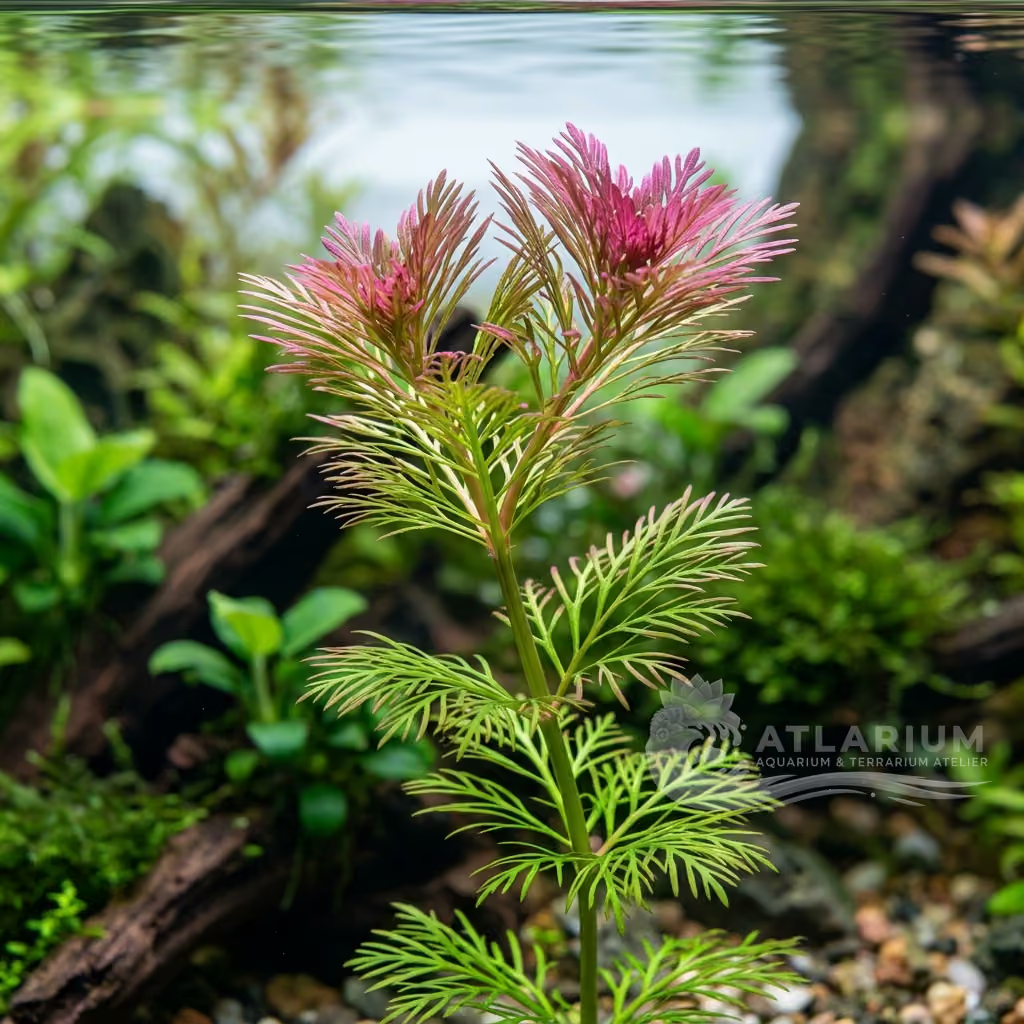
Bacopa monnieri "Rundblättrig"
Bacopa monnieri
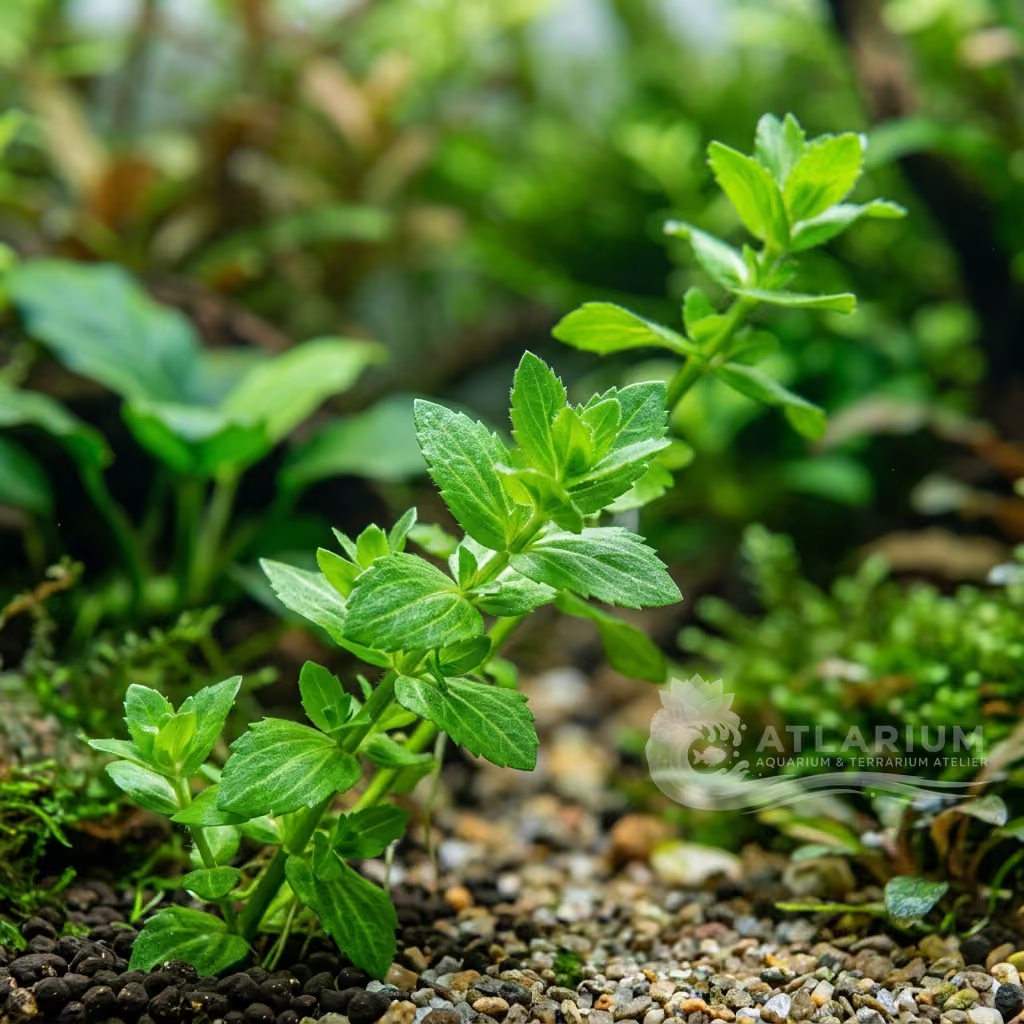
Identical variant featuring beautifully rounded leaves. An unkillable, robust marsh plant suitable for beginners and varying water parameters.
Temperatura da água
15 - 30 °C
Valor de pH
5 - 9
Tipo de água
Água doce
Luz
Média - Alta
CO2
Baixa - Alta
Altura esperada
25 cm
Largura esperada
10 cm
GH
4 - 20 dGH
KH
2 - 30 dKH

Descrição da espécie
Geographical Origin and Habitat: This specific cultivar of Bacopa monnieri, widely known in the hobby by its German name "Rundblättrig" (meaning round-leafed), originates from the parent species which is distributed across tropical and subtropical regions globally. In its native habitat, it is found along the margins of slow-flowing rivers, marshes, wetlands, and rice fields. The round-leaf variant was specifically selected for its distinct foliage and is cultivated primarily in professional nurseries. Its high plasticity allows it to grow both emerged in damp soils and completely submerged in freshwater environments.
Taxonomy & Genetics: Taxonomically, this plant belongs to the family Plantaginaceae and the genus Bacopa. The "Rundblättrig" cultivar is distinguished from the wild type primarily by its genetics, which dictate a much rounder, more compact leaf morphology. It is a dicotyledonous vascular plant that propagates vegetatively to preserve its cultivar characteristics. Its genetic traits remain highly stable under proper aquarium conditions, making it a reliable choice for aquascapers seeking consistent growth forms.
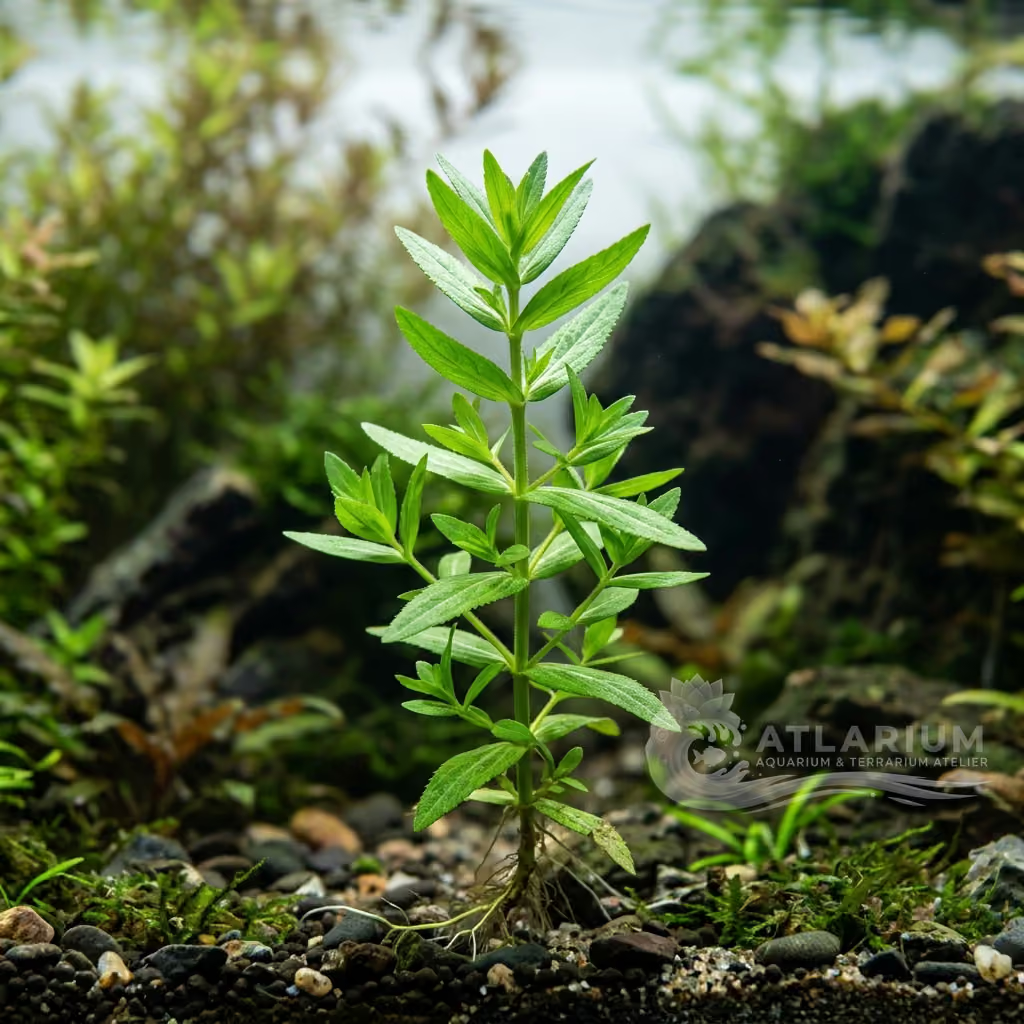
Physical Structure: The plant features an upright, sturdy stem structure typical of vertical marsh plants. Stems are fleshy and thick, capable of supporting the leaves without drooping easily under water currents. Leaves are arranged oppositely along the stem in a decussate pattern, presenting a rounded, spatulate shape that differs significantly from the lanceolate leaves of standard Bacopa monnieri. The root system is fibrous, developing quickly from the lower nodes to anchor the plant securely.
Color & Texture: The leaf blades display a uniform, vibrant light green coloration that does not easily develop reddish hues even under strong lighting. Leaves are smooth, glossy, and coriaceous (leathery) to the touch, featuring a thick waxy cuticle that protects the plant in its emerged state. Underwater, this dense texture gives the plant a clean, well-defined appearance that provides a stark contrast to fine-leafed or needle-like aquatic plants.

Cuidado, criação e companheiros de tanque
Lighting & CO2: Moderate to high lighting is required to maintain compact growth and prevent leggy stems. Under low light, the plant will stretch toward the surface, increasing internodal distance and shedding lower leaves. While CO2 injection is not strictly necessary for survival, it significantly accelerates growth, producing thicker stems and larger, healthier leaves.
Nutrition & Substrate: As a marsh species, it absorbs nutrients through both its root system and the
Water Chemistry: This cultivar is exceptionally hardy and adaptable to varying water conditions. It thrives in soft to very hard water with a KH range of 2 to 30 dKH. The suitable pH range is broad, from 5.0 to 9.0, making it compatible with African Cichlid tanks. The water temperature should ideally be kept between 15°C and 30°C.
Space Management & Placement: Due to its vertical growth habit, it is best suited for the midground or background of medium-sized aquariums. In nano tanks, it can serve as a background plant if pruned regularly. Stems should be planted individually about 1-2 cm apart to prevent them from shading each other's lower sections.
Pruning: Pruning is straightforward: cut the stem just above a leaf node using sharp aquascaping scissors. The cut portion (top) can be replanted directly into the substrate to grow new roots, while the remaining bottom stem will produce multiple side shoots from the nodes, leading to a bushier appearance.
Risks & Diseases: The main threat is light starvation, which causes leggy growth and decay of the lower leaves. Accumulation of organic debris on the thick leaves can attract filamentous algae. Sudden changes in environmental parameters or severe nutrient deficiencies can occasionally cause the stems to become brittle and rot.

Origem e distribuição geográfica
This specific cultivar of Bacopa monnieri, widely known in the hobby by its German name "Rundblättrig" (meaning round-leafed), originates from the parent species which is distributed across tropical and subtropical regions globally. In its native habitat, it is found along the margins of slow-flowing rivers, marshes, wetlands, and rice fields. The round-leaf variant was specifically selected for its distinct foliage and is cultivated primarily in professional nurseries. Its high plasticity allows it to grow both emerged in damp soils and completely submerged in freshwater environments.
Origem
Melhoramento seletivo e cultivaresExtra-Amazônica América do SulAmérica Central e CaribeAmérica do NorteSul e Sudeste AsiáticoAustrália, Nova Guiné e OceaniaCosmopolita ou apresentado

Perfil da planta
- Posicionamento
- Plano intermediário
- It is ideally placed in the midground or background depending on tank size. Grouping several stems together creates an attractive, dense thicket. Its perfectly round leaves offer a very tidy and uniform appearance in the aquascape.
- Forma botânica
- Caule
- As the name implies, it features noticeably rounder leaves compared to the standard species. The leaves are light green, fleshy, and grow opposite each other on a thick, upright stem. The highly symmetrical growth pattern is visually very soothing.
- Crescimento
- Média
- This variant grows at a moderate pace, making it very easy to manage. It does not aggressively take over the aquarium, requiring only occasional pruning. Its predictable growth makes it a favorite for structured layouts.
- Substrato
- Média
- The "Rundblättrig" (round-leaved) variant of Bacopa monnieri thrives best when planted in a highly nutritious substrate, heavily relying on root absorption to fuel its broader leaf development. Its vigorous roots require a deep, active aqua soil bed of about 5 to 7 centimeters to anchor properly and access the rich mineral reserves needed for optimal health. A fine-textured substrate allows the delicate root hairs to penetrate easily, ensuring the thick stems are structurally supported and well-fed. Without a nutrient-dense base, this demanding cultivar may struggle to maintain its distinct round leaf shape and vibrant green coloration.
- Fertilização de coluna
- Recomendada
- Liquid fertilization is effective as it absorbs nutrients directly from the water column. Regular additions of trace elements keep the foliage a vibrant, healthy green. Adequate potassium helps maintain the integrity of its beautiful round leaves.
- Fertilização radicular
- Recomendada
- A nutrient-rich substrate is beneficial and promotes a strong root system. While it can draw most of its needs from the water, root tabs provide a reliable backup source. Good root anchorage is essential as the stems grow taller and thicker.
- Corte
- Regular
- Prune by simply cutting the top portions of the stem with sharp scissors. The lower parts will shoot new side branches from the nodes. Replanting the trimmed tops quickly thickens the plant cluster.
- Propagação
- Estacas
- Propagation is incredibly easy through stem cuttings. Snip any healthy stem section and insert it straight into the substrate. It will grow new roots in just a few days.
- Sensibilidade
- LOW
- It retains the extreme hardiness of the wild Bacopa monnieri species. It handles fluctuations in water parameters very well and is rarely affected by common pests. It is highly resilient against melting or sudden die-offs.
- Função de layout
- Nano, Plano intermediário, Fundo
- Its round leaves provide a wonderful geometric contrast to grassy or needle-like plants. It is excellent for softening the sharp lines of rocks and wood. It serves as a beautiful, structural accent in any nature aquarium or Dutch-style setup.

Galeria de imagens
Imagens licenciadas vinculadas à espécie ou, quando marcadas, ao táxon representativo mais próximo.

Espécies relacionadas
Recomendações agrupadas por parentes próximos, escolhas de acompanhantes e cuidados semelhantes.