Bacopa lanigera
Bacopa lanigera
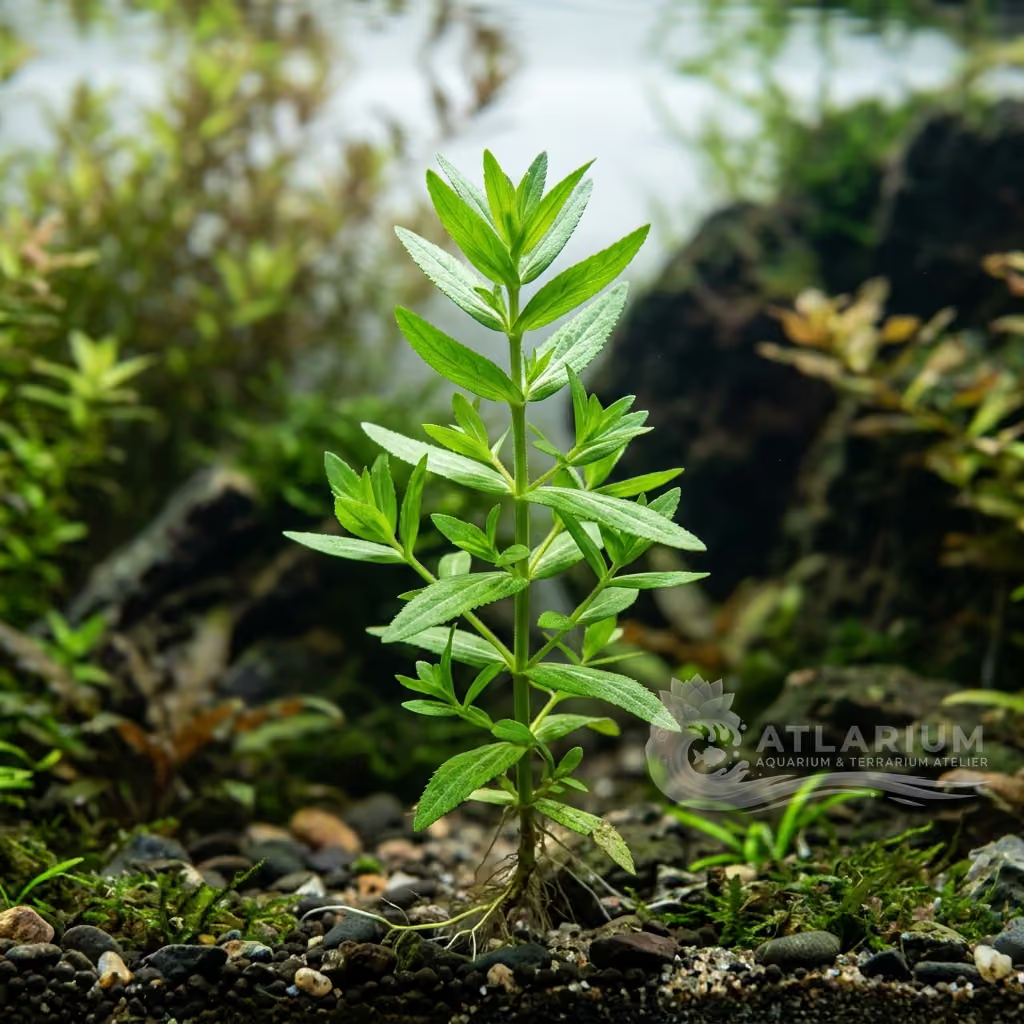
Native to South American swamps, this unusual stem plant features fleshy leaves and distinctive whitish hairs covering its emersed stems.
Temperatura da água
20 - 30 °C
Valor de pH
5 - 7
Tipo de água
Água doce
Luz
Alta
CO2
Baixa - Alta
Altura esperada
30 cm
Largura esperada
6 cm
KH
0 - 7 dKH

Descrição da espécie
Geographical Origin and Habitat: Bacopa lanigera is native to the tropical regions of South America, with a significant presence in Brazil (especially the Pantanal) and Paraguay. It populates sunny swamps, riverbanks, and wet floodplains. It grows mainly as a semi-emersed marsh plant, where its stems spread over wet ground or float in shallow water. It is adapted to hot, humid climates with strong direct solar exposure, flowering abundantly during the hottest months of the year.
Taxonomy & Genetics: It belongs to the Plantaginaceae family and the genus Bacopa. The specific name 'lanigera' comes from Latin and means 'wool-bearing,' referring to the dense glandular hair covering the plant's stems in emersed form. From a genetic standpoint, this hair is a protective adaptation against dehydration and terrestrial insect attacks, a feature that partially or totally disappears when the plant is grown submerged.
Physical Structure: It features erect or creeping, fleshy, robust stems that tend to branch moderately. The submerged leaves are sessile, opposite, and oval or lanceolate. In emersed form, the distinguishing feature is the stem covered with a dense white fuzz, and the leaves assume a slightly more leathery and pubescent appearance. The root system is fibrous and easily develops from the nodes of creeping stems.
Color & Texture: Submerged leaves have a very warm, bright golden green or light olive green color. In emersed form, the coloration is bright green, embellished by the silvery fuzz on the stem and the beautiful blue-violet flowers that bloom in the leaf axils. The submerged leaf texture is soft, slightly fleshy, and smooth, with thin parallel veins visible against the light.

Cuidado, criação e companheiros de tanque
Lighting & CO2: Requires very intense lighting. In the presence of insufficient light, Bacopa lanigera tends to weaken rapidly, showing thin stems, long internodes, and loss of lower leaves. CO2 contribution is highly recommended to promote correct photosynthesis and vigorous growth in the aquarium.
Nutrition & Substrate: Benefits greatly from a fertile, nutrient-rich substrate. Because it is a marsh plant with moderate growth, the roots play a key role in mineral absorption; supplementing the bottom with fertilizer tablets containing iron and trace elements ensures healthy stems and robust leaves.
Water Chemistry: Prefers soft and slightly acidic water. Ideal parameters include a pH between 5.0 and 7.0, low KH hardness (0-7 dKH), and a temperature between 20°C and 30°C. It does not tolerate high saline concentrations and is sensitive to sudden pH increases.
Space Management & Placement: Best placed in the midground or background of the aquarium. It can also be used in aquaterrariums, paludariums, or Wabi-Kusa, where emersed growth allows the plant to display its characteristic woolly stem hair and produce decorative flowers.
Pruning: Pruning is carried out by cutting the stems with sharp scissors at the desired height. The cut tips can be replanted directly into the substrate to give rise to new plants, while the basal part will develop new lateral shoots from the nodes below the cut.
Risks & Diseases: The main risk is stem rot if positioned in areas with poor water movement or if shaded by larger plants. The plant requires lots of light at the bottom level; otherwise, the basal leaves turn yellow and detach, compromising the aesthetic.

Origem e distribuição geográfica
Bacopa lanigera is native to the tropical regions of South America, with a significant presence in Brazil (especially the Pantanal) and Paraguay. It populates sunny swamps, riverbanks, and wet floodplains. It grows mainly as a semi-emersed marsh plant, where its stems spread over wet ground or float in shallow water. It is adapted to hot, humid climates with strong direct solar exposure, flowering abundantly during the hottest months of the year.
Origem
Amazônia, Orinoco e GuianasExtra-Amazônica América do Sul

Perfil da planta
- Posicionamento
- Plano intermediário
- It is best used as a midground or background accent in the aquarium. Grouping stems together creates a visually striking bush that showcases its unique texture. Ensure it is not shaded by overhanging plants, as it requires ample light.
- Forma botânica
- Caule
- This species is notable for the fine hairs covering its stems and leaves, giving it a 'woolly' or velvety appearance. The leaves are ovate, thick, and grow opposite each other along the robust stem. Emersed growth strongly displays the hairs, which persist but are less prominent underwater.
- Crescimento
- Média
- The growth rate is relatively slow to moderate, depending on light and CO2 levels. This slow pace makes it easy to maintain without the need for constant trimming. It generally does not outgrow its space quickly, making it suitable for carefully planned layouts.
- Substrato
- Alta
- Bacopa lanigera has high substrate demands, thriving best in a deeply nutritious aqua soil that can provide a steady supply of essential macro and micronutrients. The plant develops a robust, extensive root system that requires a deeper substrate bed, ideally 5 to 7 centimeters, to anchor securely and fuel its robust stem growth. It heavily relies on root feeding to maintain the health of its distinctly hairy stems and prevent lower leaf loss. A nutrient-depleted or purely inert substrate will severely stunt its growth and diminish its unique botanical characteristics.
- Fertilização de coluna
- Recomendada
- Liquid fertilization is effective since the plant readily takes up nutrients from the water column. A comprehensive fertilizer containing potassium and trace elements should be dosed regularly. Keeping nitrates at a moderate level helps maintain its compact growth form.
- Fertilização radicular
- Nenhuma
- A nutrient-rich substrate promotes stronger root development and thicker stems. While it can survive on column dosing alone, root tabs provide a helpful nutrient reserve. Strong roots are necessary to support its thick, fleshy structure.
- Corte
- Ocasional
- Trim the plant by cutting the stem just above a set of healthy leaves. The cut portion can be replanted, while the bottom will develop new lateral shoots. Trimming helps to create a denser, bushier appearance over time.
- Propagação
- Estacas
- Propagation is easily achieved through stem cuttings. Snip the top few inches of a healthy stem and plant it directly into the substrate. The cutting will quickly develop its own root system.
- Sensibilidade
- Moderada
- It is somewhat sensitive to low light conditions, which can lead to the lower leaves rotting or dropping off. Sudden changes in water chemistry should be avoided. It generally tolerates standard aquarium medications well.
- Função de layout
- Plano intermediário, Fundo
- The fuzzy texture of Bacopa lanigera adds a highly unique visual element to any aquascape. It contrasts beautifully with smooth-leaved plants or fine, delicate textures. It serves as an excellent focal point in the midground.

Espécies relacionadas
Recomendações agrupadas por parentes próximos, escolhas de acompanhantes e cuidados semelhantes.