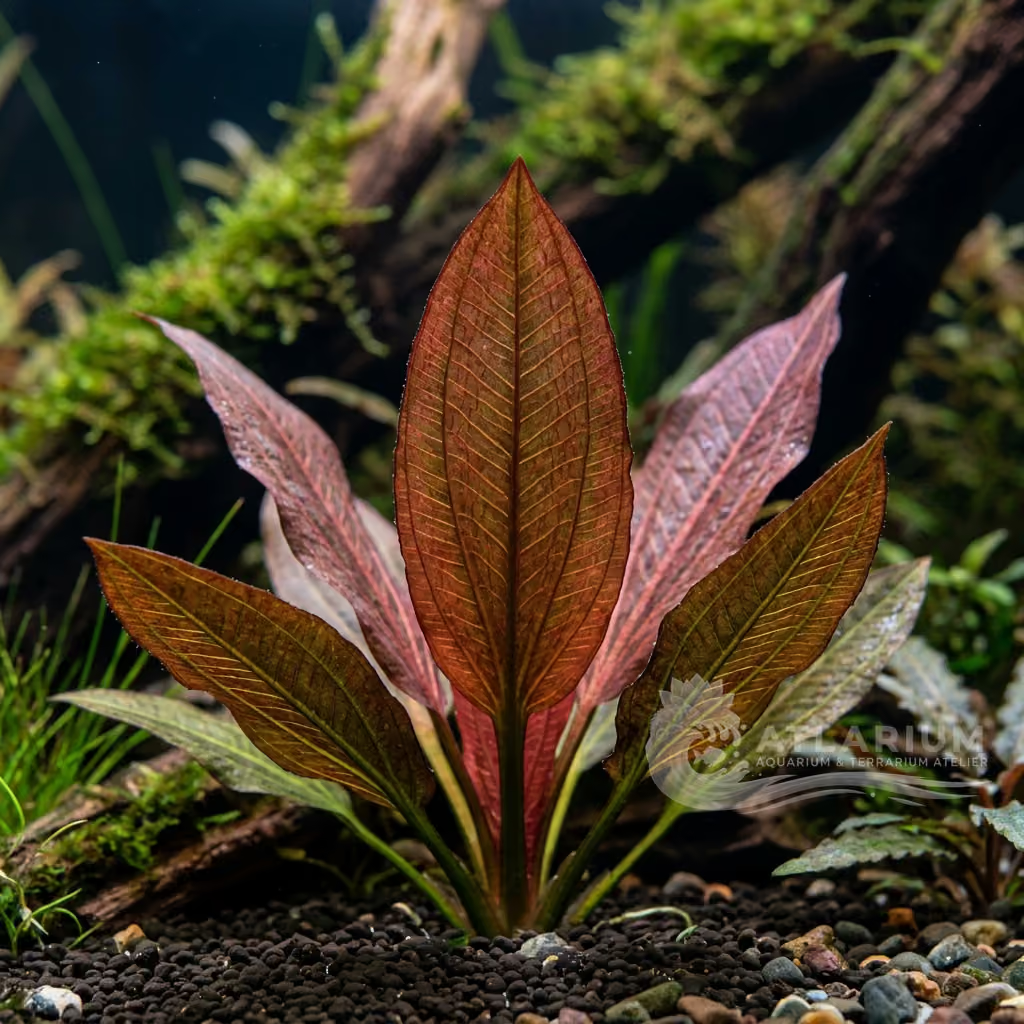
Cabomba caroliniana var. caroliniana
Cabomba caroliniana var. caroliniana
This fast-growing stem plant from the Americas features finely divided, bright olive-green leaves. It needs medium to high light and CO2 injection is highly recommended for dense, vigorous growth.
Temperatura da água
4 - 27 °C
Valor de pH
5 - 7
Tipo de água
Água doce
Luz
Medium to High
CO2
Baixa - Alta
Altura esperada
50 cm
Largura esperada
15 cm
KH
0 - 14 dKH

Descrição da espécie
Geographical Origin and Habitat: This plant is native to the temperate and tropical regions of North and South America, particularly in the eastern United States and parts of South America. It colonizes slow-moving or stagnant water bodies such as ponds, lakes, ditches, and calm rivers, growing fully submerged except for its small floating flowers.
Taxonomy & Genetics: It belongs to the Cabombaceae family and the genus Cabomba. This specific variety is the nominate form of the species, characterized by high genetic adaptability that allows it to tolerate significant temperature ranges, making it invasive in some non-native areas.
Physical Structure: It features slender stems that can reach substantial lengths. The leaves are arranged in opposite pairs along the stem and are finely divided into fan-like shapes, giving the plant a feathery and lightweight appearance. It develops thread-like roots from basal nodes to anchor in the substrate.
Color & Texture: The dominant color is a bright olive green, which can shift toward reddish or coppery tones near the growing tips when exposed to very intense light. The leaf texture is extremely fine and silky, creating a strong visual contrast against broad-leaved plants.

Cuidado, criação e companheiros de tanque
Lighting & CO2: Requires medium to high lighting to prevent the internodes from stretching excessively. Carbon dioxide injection is highly recommended to stimulate dense and vigorous growth, although it can survive in low-tech tanks with slower growth rates.
Nutrition & Substrate: Nutrient uptake is mainly oriented toward leaf absorption via liquid column fertilization. A sandy substrate or light aquasoil helps root anchorage, though the plant absorbs most of its micro and macronutrients directly from the
Water Chemistry: Prefers soft to moderately hard water with a slightly acidic to neutral pH (5.0-7.0). It tolerates a wide temperature range (4-27°C), making it suitable for both coldwater and tropical aquariums.
Space Management & Placement: Excellent as a background or midground plant. Due to its very fast growth rate, it should be planted in spaced groups to prevent adjacent stems from shading each other out.
Pruning: Pruning is done by cutting off the vigorous tops and replanting them in the substrate. The remaining bottom portion will quickly develop new lateral shoots from the nodes.
Risks & Diseases: Highly sensitive to light deprivation, which causes the lower leaves to drop and the stem to decay. Its fine leaves can easily collect debris, promoting filamentous algae if the water flow is insufficient.

Origem e distribuição geográfica
This plant is native to the temperate and tropical regions of North and South America, particularly in the eastern United States and parts of South America. It colonizes slow-moving or stagnant water bodies such as ponds, lakes, ditches, and calm rivers, growing fully submerged except for its small floating flowers.
Origem
América do NorteExtra-Amazônica América do Sul

Perfil da planta
- Posicionamento
- Plano intermediário
- Because of its rapid vertical growth and tall stature, Cabomba caroliniana var. caroliniana is typically utilized as a classic background plant. It looks incredibly striking when planted in dense groups or large bunches, creating a beautiful, soft textured curtain at the back of the aquarium. It should be placed in an area that receives intense, unobstructed light, as shading will cause the lower sections to lose their leaves and eventually rot. Due to its delicate structure, it should be kept away from strong, direct filter outflows that might damage its fine leaves.
- Forma botânica
- Caule
- The botanical form of Cabomba caroliniana var. caroliniana is characterized by its long, flexible stems covered in finely divided, fan-shaped leaves that give it a highly feathery texture. The leaves are arranged in whorls along the stem, creating a lush, voluminous appearance when viewed in clusters. Depending on the exact variant and the light intensity, the color can range from bright, vivid green to striking shades of red, orange, or copper. When it reaches the surface and is allowed to grow emersed, it may produce small, floating leaves and delicate, attractive flowers.
- Crescimento
- VERY_FAST
- Cabomba caroliniana var. caroliniana is renowned for its incredibly rapid growth rate, easily reaching the surface of the aquarium in a matter of weeks under optimal conditions. This vigorous growth makes it an excellent plant for absorbing excess nutrients and combating algae outbreaks in newly established tanks. However, this fast pace means that aquarists must be prepared for frequent and regular pruning to keep the plant well-shaped and prevent it from shading out other species. If left unchecked, it will quickly trail across the water surface and block out light to the lower levels of the tank.
- Substrato
- Baixa
- A soft, nutrient-rich substrate is highly beneficial for the optimal development of Cabomba caroliniana var. caroliniana. The plant develops an extensive, fine root system that efficiently extracts nutrients deeply buried in the aquasoil. While it can theoretically grow in plain gravel or sand, growth will be markedly slower and the internodes may become undesirably elongated. Using a high-quality aquatic soil or enriching an inert substrate with root tabs will ensure the stems remain thick and the foliage stays dense.
- Fertilização de coluna
- Recomendada
- Water column fertilization plays a crucial role in maintaining the lush canopy of Cabomba caroliniana var. caroliniana. Due to its rapid metabolic rate, it rapidly depletes the water column of essential macronutrients and trace elements, necessitating a comprehensive liquid dosing regime. Providing a steady supply of potassium and iron is particularly important to prevent yellowing leaves and to encourage strong, vibrant new shoots. Dosing should be carefully calibrated to match the high uptake rate of the plant while avoiding excesses that could lead to algae blooms.
- Fertilização radicular
- Nenhuma
- Although Cabomba caroliniana var. caroliniana absorbs a significant portion of its nutrients through its foliage, strong root fertilization leads to dramatically thicker stems and more robust overall health. Planting the stems in a nutrient-dense aquasoil or regularly inserting root tabs near its base will provide a steady, slow-release source of vital elements. This dual approach of column and root feeding ensures that the plant never experiences a nutrient deficiency during its rapid growth spurts. Strong roots also help anchor the highly buoyant stems securely in the substrate.
- Corte
- Ocasional
- Frequent trimming is necessary to prevent the plant from overtaking the aquarium and blocking light from other species. To prune, simply cut the top portion of the stem and replant it to create a denser bush. The remaining bottom portion will often develop side shoots, further increasing the volume of the plant. Discard any old, bare stems that have lost their lower leaves to maintain a pristine look.
- Propagação
- Estacas
- Propagating Cabomba caroliniana var. caroliniana is incredibly easy and follows the standard procedure for most aquatic stem plants. To multiply the plant, simply use sharp scissors to cut the top portion of a healthy stem, ensuring the cutting is at least a few inches long. The bottom section left in the substrate will soon develop side shoots and become bushier, while the newly cut top portion can be directly replanted into the substrate. Gently pushing the new cutting into the aquasoil will allow it to quickly develop roots and establish itself as an independent, growing stem.
- Sensibilidade
- Moderada
- This species is particularly sensitive to poor water conditions, lack of light, and certain chemical treatments. Low lighting will quickly cause the lower leaves to drop off, leaving bare, unattractive stems. It also prefers clean water with low levels of suspended organic waste to prevent algae from choking its fine leaves. Sudden changes in water chemistry can cause the delicate foliage to melt.
- Função de layout
- Plano intermediário, Fundo
- This plant is widely used to create dense, textured background bushes that provide a dramatic backdrop for the aquascape. Its fine leaves offer excellent hiding spots for small fish and fry, adding to the tank's overall ecosystem. The soft, feathery look softens the hard lines of rocks and driftwood. When planted in large groups, it creates a striking visual impact that draws the eye.

Galeria de imagens
Imagens licenciadas vinculadas à espécie ou, quando marcadas, ao táxon representativo mais próximo.

Espécies relacionadas
Recomendações agrupadas por parentes próximos, escolhas de acompanhantes e cuidados semelhantes.