Cyanotis sp.
Cyanotis sp.
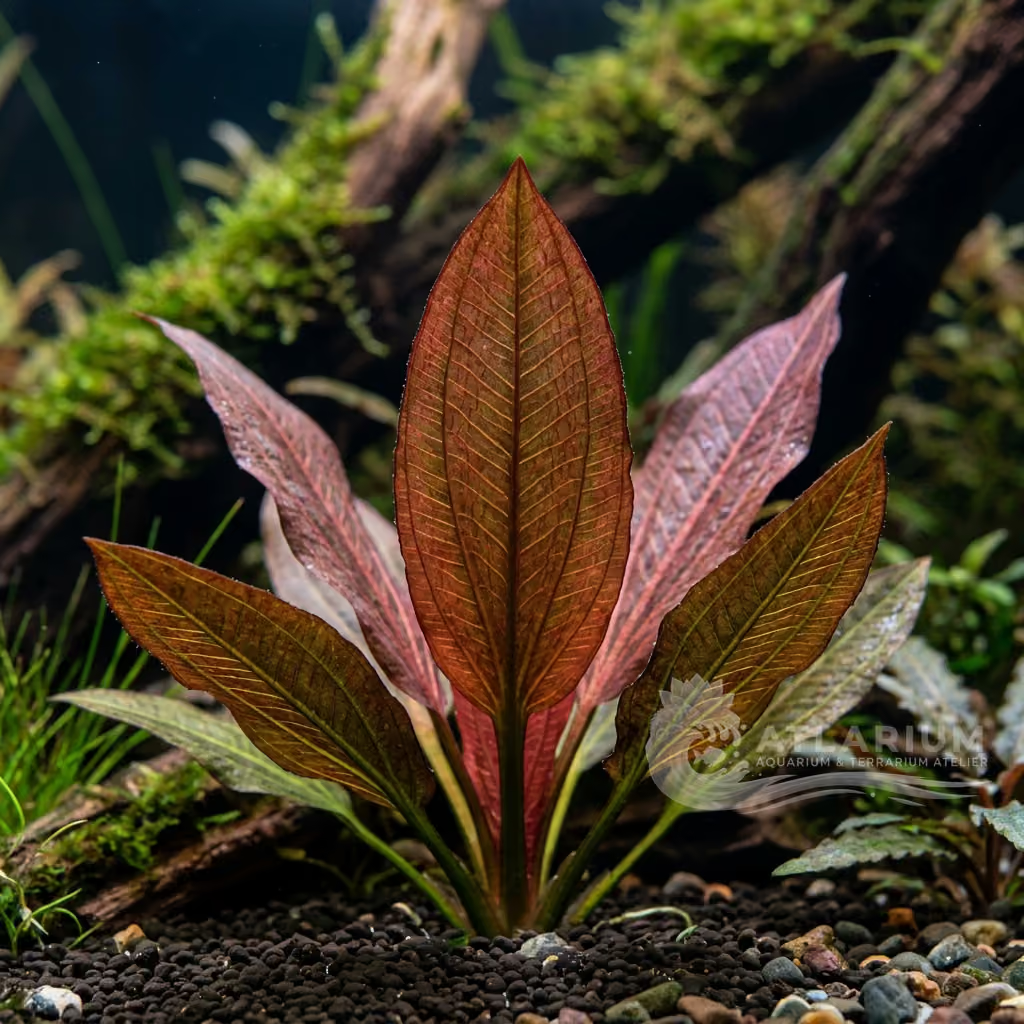
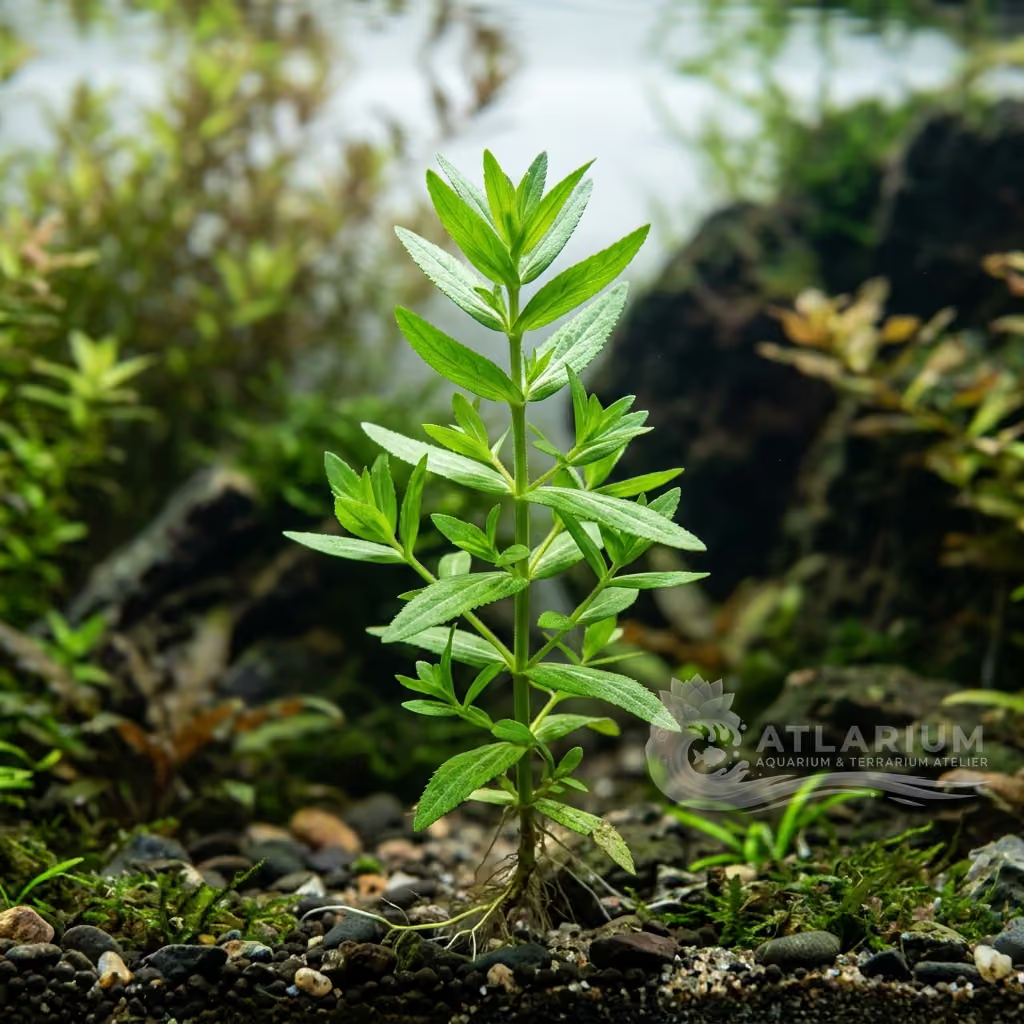
Cyanotis sp. is a striking terrestrial Commelinaceae, prized for its silvery hairs and vibrant purple leaf undersides. It thrives in humid paludariums, ripariums, and brilliantly lit emersed setups.
Temperatura da água
20 - 30 °C
Valor de pH
5 - 7
Tipo de água
Água doce
Luz
Medium to High
CO2
Baixa - Alta
Altura esperada
15 cm
Largura esperada
10 cm
KH
0 - 14 dKH

Descrição da espécie
Geographical Origin and Habitat: Species of the genus Cyanotis are primarily native to the tropical and subtropical regions of Africa, Southern Asia, and Australia. In nature, they grow in semi-arid or seasonally wet environments, often colonizing rocky crevices, sandy stream banks, and semi-shaded forest edges. It is not an aquatic plant in the strict sense, but rather a marsh or creeping plant that adapts excellently to high humidity environments as long as the roots are well drained.
Taxonomy & Genetics: It belongs to the Commelinaceae family, the same family as Tradescantia. The genus Cyanotis is distinguished by the presence of woolly or velvety hairs on the leaves and stems. The undetermined species commercialized as Cyanotis sp. retains the typical genetic robustness of the genus, adapting to high humidity conditions but requiring a dry or well-drained root zone to prevent rotting.
Physical Structure: It features fleshy and creeping or ascending stems, with leaves arranged alternately or spirally along the stem. The leaves are thick, lanceolate, and clasping at the base. The unique feature is the dense silvery hair (trichomes) covering the leaves and stems, which serves the biological function of retaining atmospheric moisture and protecting the plant from solar burns.
Color & Texture: The leaves have an olive green or grayish-green coloration on the upper side, due to the presence of silvery hairs, while the lower side can assume reddish or purplish hues under intense lighting. The texture is velvety and soft to the touch, offering a strong sensory and visual contrast against smooth-leaved plants.

Cuidado, criação e companheiros de tanque
Lighting & CO2: Requires moderate to intense lighting. Strong light promotes compact stem growth and enhances the density of the silver hairs and purple tones. It does not require CO2 injection as it is cultivated mainly in emersed or semi-emersed form in paludariums and terrariums.
Nutrition & Substrate: Requires a very well-drained substrate, such as a mixture of soil, sand, and volcanic gravel. Avoid
Water Chemistry: If grown in ripariums or hydroponics, it prefers soft to moderately hard water with a KH between 0 and 14 dKH and a slightly acidic to neutral pH (5.0-7.0). The optimal cultivation temperature is between 20°C and 30°C; it does not tolerate frost.
Space Management & Placement: Place in the midground or background of paludariums, terrariums, or on the shoreline of ripariums. Due to its creeping or cascading habit, it is ideal for covering rocks or damp walls, provided there is good air circulation to prevent moisture from stagnating on the leaf hairs.
Pruning: Trim by pinching the tips of the stems to encourage lateral branching. The cut portions root very easily when placed in a damp substrate or water, making propagation extremely simple and rapid.
Risks & Diseases: The main risk is soft rot of the stems and roots caused by excess stagnant water or poor ventilation. If the leaves remain constantly wet without air circulation, the hairs trap water, promoting fungal outbreaks. Keep the environment well ventilated.

Origem e distribuição geográfica
Species of the genus Cyanotis are primarily native to the tropical and subtropical regions of Africa, Southern Asia, and Australia. In nature, they grow in semi-arid or seasonally wet environments, often colonizing rocky crevices, sandy stream banks, and semi-shaded forest edges. It is not an aquatic plant in the strict sense, but rather a marsh or creeping plant that adapts excellently to high humidity environments as long as the roots are well drained.
Origem
África e MadagascarSul e Sudeste AsiáticoAustrália, Nova Guiné e Oceania

Perfil da planta
- Posicionamento
- Plano intermediário
- Best utilized in the midground where it can add a unique textural and color contrast to surrounding green plants. It should be planted in an open area that receives unobstructed, intense lighting. Planting it in a small, dense group maximizes its visual impact.
- Forma botânica
- Caule
- Characterized by distinctive, bamboo-like stems with slightly fuzzy or hairy leaves, a trait uncommon in aquatic plants. Under high light, the leaves develop attractive purple, pink, or reddish hues on their undersides. Its growth habit is upright but it can occasionally branch out.
- Crescimento
- Lenta
- Has a moderate growth rate when provided with optimal conditions, including high light and CO2 injection. Without CO2, its growth can be quite slow and its appearance may suffer. Once acclimated to the environment, it grows steadily toward the water surface.
- Substrato
- Média
- Cyanotis sp. prefers a moderately rich substrate that offers a good balance of drainage and nutrient retention. A fine-grained aqua soil or porous gravel blend is ideal for its root system to penetrate easily. Providing a substrate bed of 4-5 centimeters ensures the roots can properly anchor the plant and access essential minerals. Steady nutrient uptake from the bottom complements its foliar absorption, leading to denser and healthier growth.
- Fertilização de coluna
- Recomendada
- Consistent liquid fertilization is critical to ensure it receives all necessary micro and macronutrients. Sufficient iron is particularly important for bringing out the purple and pink tones in its foliage. A comprehensive dosing regime will keep the plant robust and colorful.
- Fertilização radicular
- Nenhuma
- While it relies heavily on water column nutrients, a fertile substrate will provide a strong foundation and support vigorous root development. Root tabs can be beneficial in older setups where the substrate has become depleted. A healthy root system aids in overall nutrient uptake and stability.
- Corte
- Ocasional
- Trim the tops using sharp scissors when the stems grow too tall or reach the surface. The remaining lower portions will typically produce side shoots, creating a bushier appearance. The trimmed tops can be replanted to propagate the plant.
- Propagação
- Estacas
- Easily propagated by stem cuttings; simply snip the top portion and replant it into the substrate. Ensure the newly planted cuttings are not shaded by taller plants. Leaving the rooted bottom part in the substrate will encourage branching.
- Sensibilidade
- Moderada
- This plant is sensitive to shading and requires high light intensity to prevent the lower leaves from melting or falling off. It also demands stable CO2 levels and good water circulation. It can be somewhat delicate during shipping or transplantation.
- Função de layout
- Nano, Plano intermediário, Fundo
- Serves as a unique focal point or midground accent due to its unusual texture and purplish undersides. It contrasts exceptionally well with fine-leaved, bright green foreground or background plants. It adds a touch of rarity and botanical interest to advanced aquascapes.

Espécies relacionadas
Recomendações agrupadas por parentes próximos, escolhas de acompanhantes e cuidados semelhantes.