Fissidens crispulus
Fissidens crispulus
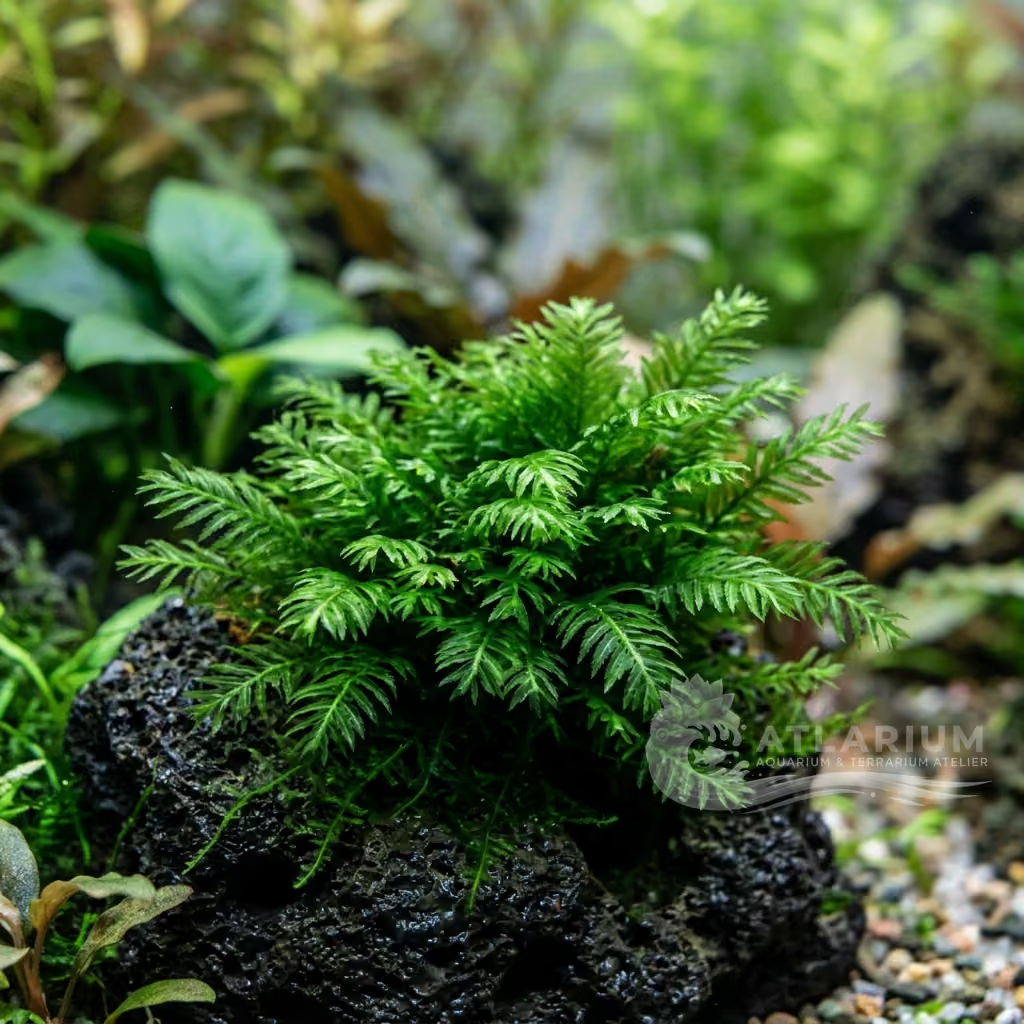
Fissidens crispulus is an aquarium plant belonging to the Fissidentaceae family, characterized by a slow growth rate and ideal for placement in the foreground.
Temperatura da água
18 - 30 °C
Valor de pH
5 - 7.5
Tipo de água
Água doce
Luz
Média - Alta
CO2
Baixa
Altura esperada
3 cm
Largura esperada
3 cm
GH
0 - 20 dGH
KH
0 - 14 dKH

Descrição da espécie
Geographical Origin and Habitat: This fascinating aquatic species has its geographical origin in the warm tropical regions of Asia and South America, where it inhabits clear river systems with weak to moderate current. It is commonly found both submerged and partially emersed along sandy or muddy banks. Additionally, its occurrence is highly associated with shaded banks and shallow water basins.
Taxonomy & Genetics: From a taxonomic point of view, it belongs to the Fissidentaceae family and is assigned to the Fissidens genus. Its genetics reflect a high degree of adaptation to seasonal variations in water and chemical parameters of its native waters, assuring its resilience.
Physical Structure: The physical structure of the plant is characterized by a epiphyte or epilith botanical form with well-proportioned and elastic stems or rosettes. Under proper lighting conditions, it develops a stable root system capable of anchoring firmly into the riverbed.
Color & Texture: The color of the leaves presents as a bright and natural green, with translucent shades and fine textures that increase the perception of visual depth. The leaf texture is smooth or slightly wrinkled depending on aquarium conditions.

Cuidado, criação e companheiros de tanque
Lighting & CO2: Optimal lighting to support the plant's development ranges from medium to high, depending on the desired leaf density. Constant CO2 injection is recommended to support effective photosynthesis and prevent tissue decay.
Nutrition & Substrate: The plant benefits from a rich, porous substrate coupled with a balanced liquid fertilization in the
Water Chemistry: The ideal water chemistry includes a slightly acidic or neutral pH (5.0 - 7.5) and a moderate carbonate hardness KH (0.0 - 14.0). The optimal water temperature must be kept stable between 18.0 and 30.0 °C.
Space Management & Placement: Regarding space management, the plant should be positioned in the foreground, spacing the stems adequately to avoid shaded areas. It is ideal for creating dynamic layouts in natural aquascaping.
Pruning: Pruning must be performed regularly by topping the upper part or thinning the densest clumps with suitable scissors. Propagation is successfully achieved through cuttings replanted directly into the soil.
Risks & Diseases: The main risks are related to the development of parasitic algae on old leaves and tissue necrosis if essential nutrients are lacking. Good filtration and regular water changes prevent most diseases.

Origem e distribuição geográfica
This fascinating aquatic species has its geographical origin in the warm tropical regions of Asia and South America, where it inhabits clear river systems with weak to moderate current. It is commonly found both submerged and partially emersed along sandy or muddy banks. Additionally, its occurrence is highly associated with shaded banks and shallow water basins.
Origem
Sul e Sudeste AsiáticoExtra-Amazônica América do Sul

Perfil da planta
- Posicionamento
- Primeiro plano
- It should be tied or glued as an epiphyte to hardscape materials such as rocks and driftwood. It can be placed in the foreground, midground, or even in shaded areas.
- Forma botânica
- Epífita
- It is a unique moss featuring tiny, distinctively crisped (wavy or curly) fronds. While similar in growth habit to Phoenix moss, its leaflets are notably crinkled.
- Crescimento
- Lenta
- It is a very slow-growing moss. It takes significant time and patience to establish and form a lush, visible carpet or tuft on the hardscape.
- Substrato
- Alta
- Fissidens crispulus is an aquatic moss and functions as an epiphyte, meaning it does not require any substrate to grow or survive. Instead of developing true roots, it utilizes tiny rhizoids to firmly anchor itself to hardscape materials such as driftwood, rocks, or mesh. It absorbs all of its necessary nutrients directly from the water column, making the composition of the tank's substrate entirely irrelevant to its health. If placed directly on the substrate, it is best tied to a small stone to prevent it from being buried or smothered by shifting soil.
- Fertilização de coluna
- Recomendada
- It thrives with only light liquid fertilization. It is sensitive to overdosing, particularly to liquid carbon additives (glutaraldehyde), which can easily damage or kill the moss.
- Fertilização radicular
- Nenhuma
- Like all true mosses, it lacks roots and does not absorb any nutrients from the substrate. All its necessary nutrition must be available in the water column.
- Corte
- Ocasional
- Trimming is rarely needed due to its slow growth. If the patch becomes too thick over time, carefully snip away the overgrowth to prevent the lower layers from decaying.
- Propagação
- Estacas
- Propagation is straightforward; simply divide the clump or separate small pieces of the frond and re-attach them to new hardscape surfaces using thread or glue.
- Sensibilidade
- Moderada
- It is prone to algae accumulation if placed under intense, direct light without adequate CO2. It requires clean, well-oxygenated water and good flow to prevent detritus buildup.
- Função de layout
- Nano, Primeiro plano, group, Epífita, Plano intermediário
- It is perfect for fine detailing on wood and rocks. Its uniquely textured, curly fronds provide a mature, ancient, and deeply natural look to the aquascape.

Galeria de imagens
Imagens licenciadas vinculadas à espécie ou, quando marcadas, ao táxon representativo mais próximo.

Espécies relacionadas
Recomendações agrupadas por parentes próximos, escolhas de acompanhantes e cuidados semelhantes.