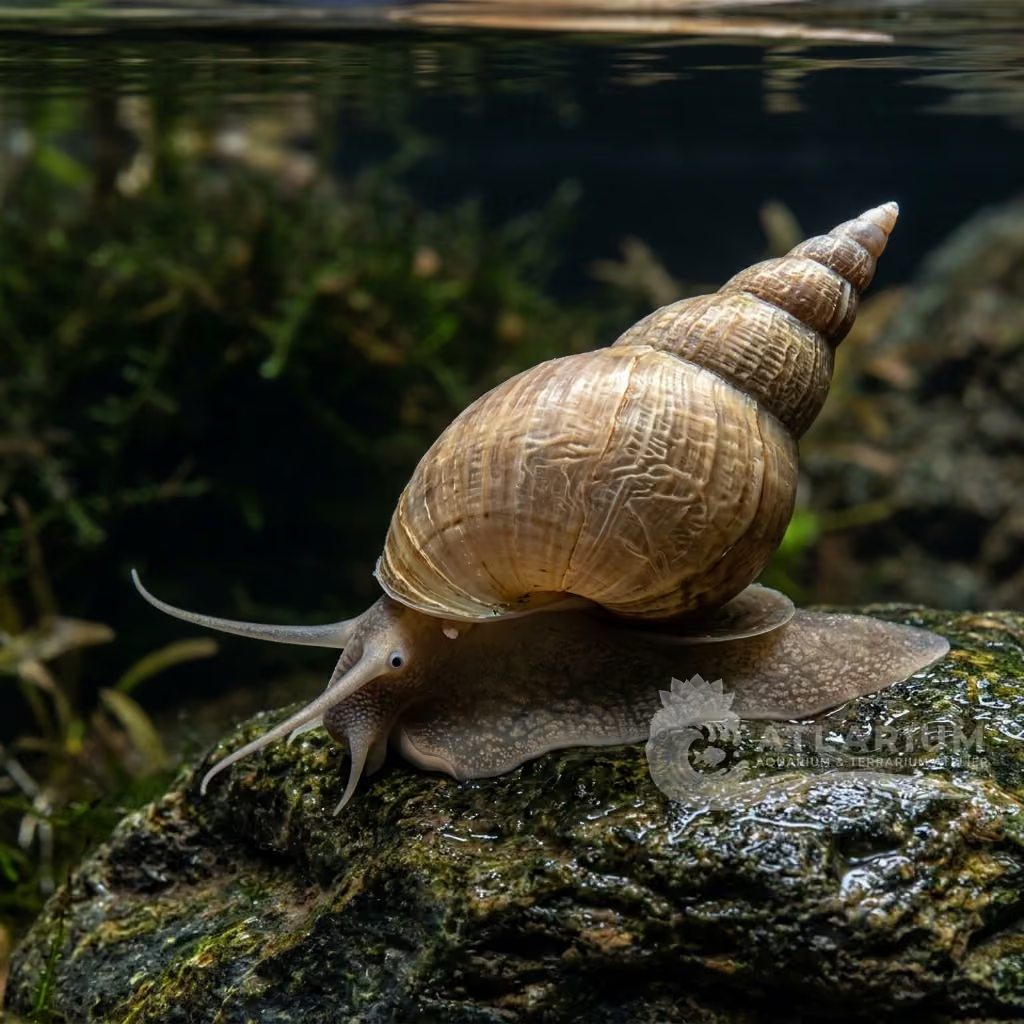
Bladder snail
Physella acuta
Bladder snail: aquarium gastropod in the family Physidae, useful for biofilm, light algae, and substrate cleanup. Geographical Origin and Habitat: The Bladder Snail (Physella acuta,...
Temperatura da água
20 - 28 °C
Valor de pH
7 - 8.4
Tipo de água
Água doce
Tipo invertebrado
Freshwater snail
Tamanho adulto
1,5 cm
Grupo mínimo
>= 1
GH
6 - 20 dGH
KH
3 - 15 dKH
TDS
120 - 450 ppm
Papel ecológico
Scavenger
Sensibilidade ao cobre
High

Descrição da espécie
Geographical Origin and Habitat: The Bladder Snail (*Physella acuta*, formerly *Physa acuta*) is an incredibly resilient, nearly indestructible freshwater gastropod originally native to the rivers and wetlands of North America. However, due to the global aquarium and aquatic plant trade, it has become a cosmopolitan species, found in almost every body of freshwater on Earth. Their natural biotope is defined by heavily vegetated, slow-moving waters loaded with decaying organic matter and dense algal biofilms.
Taxonomy: Scientifically classified within the Physidae family, they are exceptionally small, fast-moving snails. Fully mature adults rarely exceed 1.0 to 1.5 centimeters (0.4-0.6 inches) in length. Their most defining morphological feature—which instantly distinguishes them from similar pond snails—is their sinistral (left-handed) shell coil; if you hold the shell with the point up, the opening is on the left. Like Ramshorns, they lack an operculum (trapdoor) and possess a lung for breathing atmospheric air.
Social Behavior: They are hyper-active, completely peaceful, and fiercely industrious microscopic scavengers. Unlike larger, slower snails, Bladder Snails are remarkably fast, rapidly gliding across glass, substrate, and plants. They are completely indifferent to fish and shrimp. Their most famous behavior is traversing the underside of the water surface upside-down to consume protein biofilms, and rapidly releasing air from their lung to instantly drop from the surface down to the substrate to evade perceived threats.
Coloration and Sexual Dimorphism: Like true Ramshorns, Bladder Snails are simultaneous hermaphrodites capable of both cross-fertilization and self-fertilization, eliminating any sexual dimorphism. They possess a delicate, thin, and slightly translucent shell. The shell coloration is typically a mottled yellowish-brown, golden-amber, or dark olive-green, often covered in tiny, faint golden specks. Their fleshy body and long, incredibly thin sensory tentacles are usually a translucent pale grey, speckled with dark microscopic dots.

Cuidado, criação e companheiros de tanque
Tank Setup: The aquarium architecture requires absolutely zero specific accommodations; they will thrive in almost literally any container holding water, from pristine high-tech planted aquariums to unheated, stagnant jars. Because they possess a lung, they require a tiny gap of atmospheric air above the waterline. They strongly prefer heavily planted setups where decaying organic matter provides endless foraging opportunities. No special lighting or substrate is required.
Diet and Feeding: They are spectacular, relentless detritivores and highly efficient algae eaters.
CRITICAL CLARIFICATION: Bladder Snails absolutely DO NOT eat healthy, living aquarium plants. They possess tiny, soft radulas (teeth) entirely incapable of piercing living cellulose. They strictly consume soft green algae, diatoms, decaying plant matter (melting leaves), and massive amounts of uneaten fish food. Overfeeding an aquarium will immediately trigger an explosive, unstoppable population boom.
Water Quality: They are the definition of an indestructible extremophile within the aquarium hobby. They can survive in freezing water (down to 0°C) and hot tropical tanks (up to 30°C / 86°F), and tolerate immense spikes in Ammonia and Nitrites that would instantly kill any fish. While they can survive in incredibly soft, acidic water, they do prefer moderately hard water (GH 6-15, pH 7.0 - 8.2) to maintain healthy shell growth. Poor water quality will not kill them, but it will cause their shells to turn opaque white.
Compatibility and Tankmates: Compatibility is universal, but their tiny size, lack of armor, and lack of a trapdoor make them the ultimate prey. They are the perfect, harmless cleanup crew for peaceful nano setups and shrimp breeding tanks. However, they are routinely cultivated specifically as a live food source. They will be effortlessly and brutally hunted to extinction in any tank containing specialized snail-eaters like Pea Puffers, Yoyo Loaches, Clown Loaches, large Cichlids, or Assassin Snails (*Clea helena*).
Aquarium Breeding: Breeding is immediate, explosive, and unstoppable; they are considered the ultimate "pest" snail. Because they are hermaphrodites capable of self-fertilization, introducing just ONE single snail (or microscopic egg hidden on a new plant) guarantees a colony. They lay tiny, transparent, curved, gelatinous egg sacs containing 10-30 eggs on absolutely any surface. The population is 100% dictated by food availability: if you overfeed your fish, you will have hundreds of snails within weeks.
Risks and Diseases: The absolute greatest risk to the aquarist is a massive, visually overwhelming population explosion caused entirely by severe overfeeding or neglecting tank maintenance. The greatest physical risk to the snail is predation; they have zero defense mechanisms. Chemical copper treatments (often found in fish medications or cheap fertilizers) are immediately, brutally, and completely lethal to all Bladder Snails. Starvation is nearly impossible to induce.

Origem e distribuição geográfica
The Bladder Snail (*Physella acuta*, formerly *Physa acuta*) is an incredibly resilient, nearly indestructible freshwater gastropod originally native to the rivers and wetlands of North America. However, due to the global aquarium and aquatic plant trade, it has become a cosmopolitan species, found in almost every body of freshwater on Earth. Their natural biotope is defined by heavily vegetated, slow-moving waters loaded with decaying organic matter and dense algal biofilms.
Origem
Cosmopolita ou apresentadoAmérica do NorteÁfrica e MadagascarEuropa, Mediterrâneo e Ásia OcidentalLeste Asiático

Perfil de invertebrados
- Dieta
- Biofilm grazer
- They are highly efficient scavengers and detritivores, eagerly consuming uneaten fish food, dead plant matter, and various types of algae. They do not eat healthy, living plant tissue, making them excellent custodians for planted tanks. Their population size will dynamically adjust based strictly on the amount of excess food available.
- Papel ecológico
- Scavenger
- Bladder snails play a crucial role in breaking down waste and preventing the buildup of dangerous organic sludge in the substrate. They can reach tight spaces and plant leaves that larger cleaner fish cannot access. They also serve as a highly nutritious, natural food source for snail-eating fish like pufferfish and loaches.
- Tamanho adulto
- 1.5 cm
- Risco de salto
- Yes
- Bladder snails are fully aquatic and generally stay beneath the water's surface, posing no jump risk. They are known for trapping a bubble of air in their shell to quickly float to the surface or drop to the bottom. They do not crawl out of the tank under normal circumstances.
- Sensibilidade ao choque
- High
- This species is incredibly hardy and can tolerate a massive range of water temperatures, pH levels, and overall water quality conditions. They rarely experience shock during introduction and can thrive in almost any freshwater environment. This extreme resilience is exactly what allows them to populate tanks so successfully.
- Cálcio e minerais
- High
- While they need some calcium to build their thin, translucent shells, they require significantly less than larger snail species. They can successfully survive and breed even in relatively soft water. However, extremely acidic water may still pit or weaken their shells over time.
- Muda
- Shell growth
- Bladder snails do not molt; their shell grows continuously with them throughout their brief lifecycle. Because their shell is naturally thin, rapid growth can make it somewhat fragile. A healthy bladder snail will have a smooth, unblemished, semi-transparent shell.
- Reprodução
- Variable
- They are hermaphrodites capable of both sexual reproduction and self-fertilization, meaning a single snail can start a massive population. They lay small, transparent jelly-like egg clutches on glass, plants, and decorations. To control their population, aquarists must strictly avoid overfeeding the aquarium.
- Compatibilidade e companheiros de tanque
- Peaceful
- They are completely harmless and can be kept with any fish or shrimp that will not eat them. They are ideal for breeding tanks where they help clean up excess food without threatening eggs or fry. Conversely, they are highly compatible as feeder organisms for predatory species like pea puffers and assassin snails.

Galeria de imagens
Imagens licenciadas vinculadas à espécie ou, quando marcadas, ao táxon representativo mais próximo.

Espécies relacionadas
Recomendações agrupadas por parentes próximos, escolhas de acompanhantes e cuidados semelhantes.