Amiet's lyretail
Fundulopanchax amieti
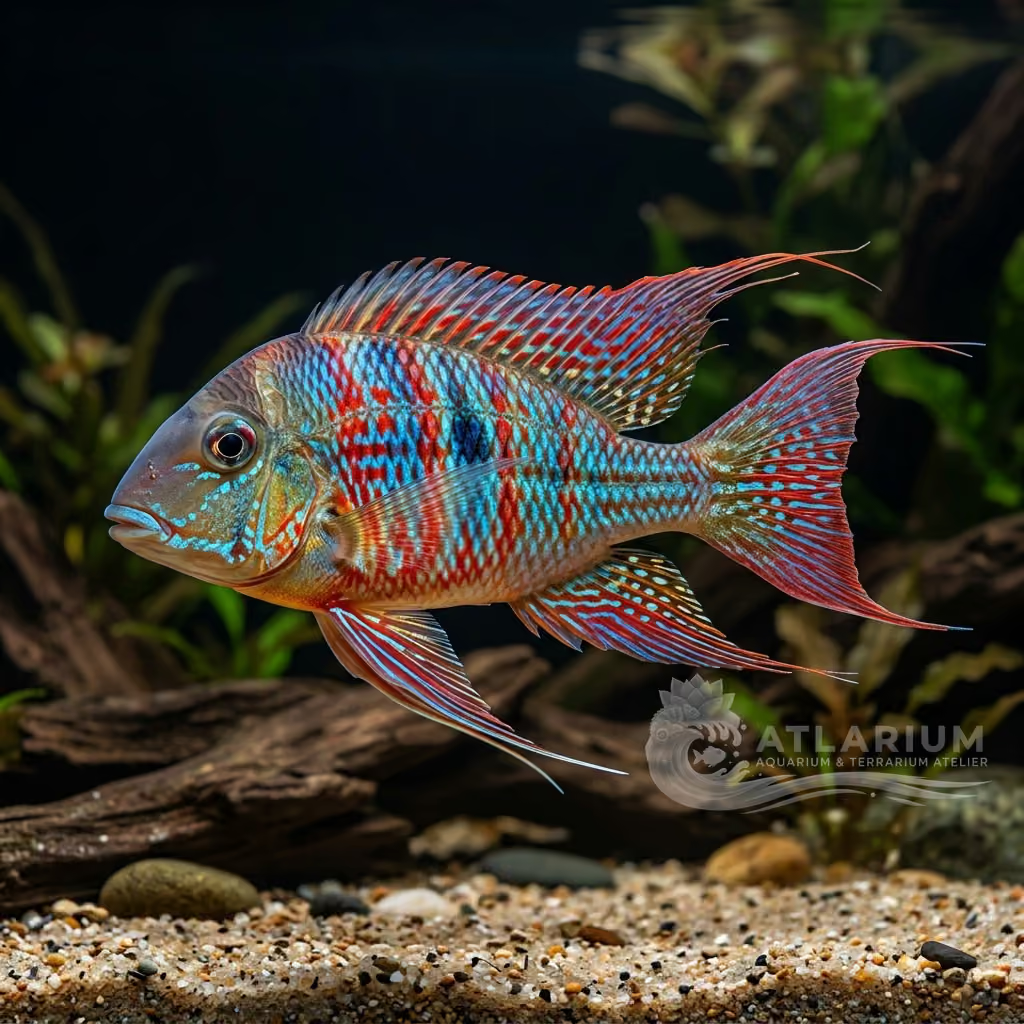
A non-annual African killifish of spectacular color: the male displays a palette of red, orange, blue and green with lyretail fins, among the most elaborate patterns in killifish. Native to the forest streams of southwestern Cameroon (Sanaga basin). Despite a relatively short life (1–2 years), breeding is a highlight: eggs can be stored in moist peat for weeks before hatching. Males are territorial and aggressive: minimum ratio of 1 male to 2 females. Lid essential: accomplished jumper.
22 - 25 °C
6 - 7.2
Água doce
Todos os níveis
7 cm
>= 40 L
>= 3
4 - 10 dGH
2 - 5 dKH
80 - 200 ppm
125 - 313 uS/cm

Descrição da espécie

Cuidado, criação e companheiros de tanque

Origem e distribuição geográfica
Origem

Perfil de peixe
- Temperamento
- Territorial
- They are generally peaceful and shy, especially when housed without adequate cover. Males may display harmless sparring behaviors with one another to establish dominance. Providing a heavily planted environment encourages them to exhibit their best colors and most natural behaviors.
- Dieta
- Carnivore
- They are active micro-predators that eagerly consume small live and frozen foods. Bloodworms, daphnia, and brine shrimp are excellent choices for conditioning them. They will usually accept high-quality crushed flakes or micro-pellets with some coaxing.
- Expectativa de vida
- 1-2 years
- Tamanho adulto
- 7 cm
- Proporção sexual
- Specific M:F ratio
- Males are stunningly colorful, while females are duller and typically smaller. Keeping a ratio of one male to two or three females reduces harassment toward any single female. Multiple males can be kept together if the tank is heavily planted and spacious enough.
- Frequência de alimentação
- Twice daily
- Feeding them small amounts once or twice daily is generally sufficient for maintenance. If conditioning for breeding, providing live foods two to three times a day is beneficial. Ensure all food is consumed quickly to prevent water quality degradation.
- Carga biológica
- Low
- This small killifish has a very minimal bioload, making them suitable for smaller setups. Standard sponge filters or gentle hang-on-back filters are more than adequate. Regular, moderate water changes will easily keep their environment clean and stable.
- Fluxo
- Stagnant
- They strongly prefer gentle water flow, mimicking the sluggish streams and swamps of their natural habitat. Vigorous currents will cause them stress and exhaust them over time. Air-driven sponge filters provide the perfect combination of gentle flow and biological filtration.
- Risco de salto
- Yes
- Like most killifish, they are notorious and expert jumpers. A completely sealed lid with no gaps is absolutely necessary to prevent tragic escapes. Floating plants can also help deter them from jumping by providing a sense of overhead security.
- Reprodução
- Oviparous
- They are non-annual or semi-annual killifish that readily lay eggs in spawning mops or fine-leaved plants. The eggs can be water-incubated or collected and stored in damp peat moss. Fry hatch within a few weeks and require infusoria or freshly hatched brine shrimp.
- Compatibilidade e companheiros de tanque
- Peaceful
- They are peaceful and do well in community tanks with other small, gentle species. Avoid keeping them with large or aggressive fish that might easily prey upon them. They also thrive in dedicated species-only tanks where their behaviors can be fully appreciated.
- Nível do tanque
- All levels
- They mostly inhabit the middle and upper levels of the water column. They appreciate tanks with dense vegetation, especially floating plants that dim the lighting. They frequently explore the surfaces of plant leaves searching for tiny organisms.

Modelos e parâmetros científicos
Acesso aos dados científicos oficiais da espécie
- Nível trófico
- 3,3 ± 0,5 se
- Unicidade filogenética (PD50)
- 0.5
- Relação bayesiana comprimento-peso
- a = 0.00603, b = 3.13
- VulnerabilidadeVulnerabilidade baixa (10 / 100)

Espécies relacionadas
Recomendações agrupadas por parentes próximos, escolhas de acompanhantes e cuidados semelhantes.