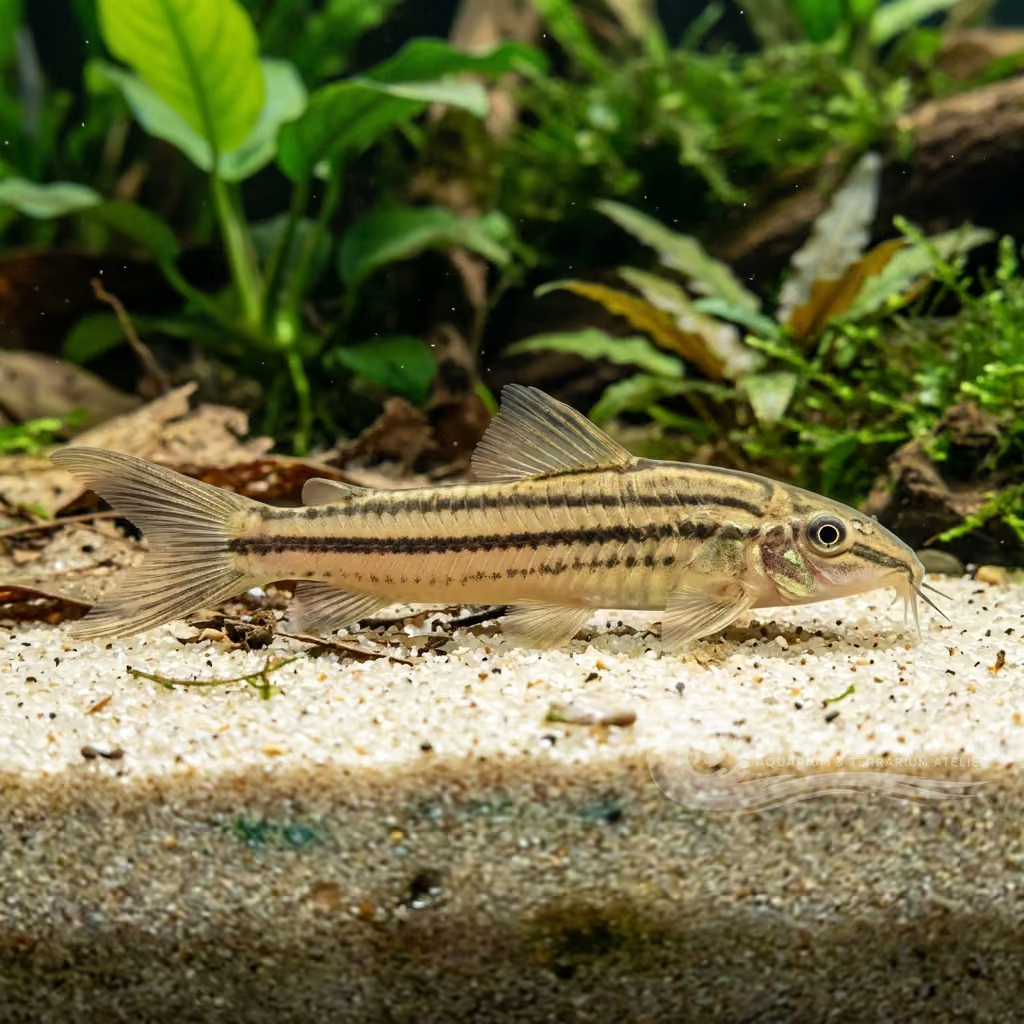
Frogmouth Catfish
Chaca chaca
The Frogmouth Catfish is a bizarre ambush predator that perfectly mimics a dead leaf. Completely inactive, it requires specific feeding care in a dedicated species tank.
Water Temperature
22 - 26 °C
pH Value
6 - 8
Water type
Freshwater
Tank level
Bottom
Adult size
20 cm
Minimum tank volume
>= 180 L
Minimum group
>= 1
GH
4 - 15 dGH
KH
2 - 7 dKH
TDS
80 - 295 ppm
Conductivity
125 - 461 uS/cm

Species description
Geographical Origin and Habitat: Native to the Ganges and Brahmaputra rivers, up to some streams in Myanmar. It is found mainly in flooded swamps and canals with deep beds of mud and macerating dry leaves.
Taxonomy and Morphology: Frogmouth Catfish / Angler Catfish (Chaca chaca). A siluriform with a monstrous (or fascinating) appearance. Immensely flattened and very wide head (frog mouth), club-like body, fringed barbels to camouflage. Reaches 20 cm (8 inches).
Social Behavior: The ambush predator par excellence. Totally inactive, day and night. Camouflages itself in the mud becoming invisible and, using a tiny maxillary barbel to attract curious onlookers (like a bait), sucks the unsuspecting prey in an instant.
Coloration and Sexual Dimorphism: Camouflage coloration reminiscent of a dead leaf or striated mud: leaf brown, mud gray and faded black. Tiny eyes. No clear sexual dimorphism at a young age.

Care, breeding and tankmates
Aquarium Setup: Specific tank (about 100 cm / 40 inches). Very fine sand (not quartz or gravel) and a layer of dry leaves (Catappa) on which it will hover forever are mandatory. Turbid water and very little light. Hates the current.
Diet and Feeding: The biggest problem in keeping it. In nature it is a strict piscivore. In the aquarium it must be accustomed to frozen food by waving it in front of its mouth with tweezers, otherwise it will starve to death. Absolutely DO NOT use goldfish as feed.
Water Quality: Tolerates a wide range of hardness and pH, but prefers calm and neutral-acidic leaning waters (pH 6.0-7.5). Suffers enormously from the presence of pollutants caused by the putrefaction of excess food.
Compatibility and Cohabitation: Species to be dedicated to a species-only tank. Any tankmate (up to half its size) will be swallowed overnight. Avoid armored bottom fish (Plecos or Corydoras): if swallowed, they will get stuck in the Chaca's throat, killing both.
Aquarium Breeding: Exceptionally rare. It is known that eggs are laid in hidden channels in the mud or in caves. The males take on parental care, strenuously defending the brood.
Risks and Diseases: Often sold as a "monster fish" but ends up dying of starvation in normal community aquariums due to the inability of keepers to wean it to dead food and excessive light.

Geographic origin and distribution
Native to the Ganges and Brahmaputra rivers, up to some streams in Myanmar. It is found mainly in flooded swamps and canals with deep beds of mud and macerating dry leaves.
Origin
North AmericaSouth and Southeast AsiaEast Asia

Fish profile
- Temperament
- Semi-aggressive
- Chaca chaca is a solitary, highly sedentary, and completely nocturnal ambush predator. It spends the daylight hours motionless, disguised as a leaf, rock, or piece of wood on the tank floor. While peaceful in the sense that it is not active or aggressive, it is highly predatory and will attempt to eat any tankmate that can fit into its exceptionally large mouth. They can be territorial toward conspecifics, meaning they are best kept singly or in groups only if ample space and cover are provided.
- Diet
- Omnivore
- This species is a strict carnivore and an ambush predator, using a modified barbel as a lure to draw in small fish. In the aquarium, they usually refuse prepared flakes or pellets and require live foods such as small feeder fish, earthworms, and river shrimp. Some specimens can eventually be trained to accept frozen foods like krill, silversides, or strips of fish flesh, though this requires patience. Care must be taken not to overfeed them, as they have massive stomachs and can consume prey up to half their own body length.
- Life expectancy
- 8-12 years
- Adult size
- 20 cm
- Sex ratio
- Harem
- There are no strict sex ratio requirements for Chaca chaca because they do not form harems or complex social groups. In aquarium environments, they are usually kept as solitary specimens due to their predatory and territorial nature. If keepers wish to house multiple individuals together, they must provide a very spacious aquarium with plenty of visual barriers, hiding spots, and distinct territories to prevent aggression. Males are generally longer and slimmer than females, but identifying them can be difficult outside of breeding conditions.
- Feeding frequency
- Twice daily
- Because of their sedentary nature and low metabolic rate, Chaca chaca does not need to be fed daily. Young, growing individuals can be fed every two to three days, while mature adults only need to be fed once or twice a week. Overfeeding can lead to severe digestive issues and rapid water pollution due to their large waste output. Keepers should monitor their body shape and adjust the feeding schedule to ensure they do not become obese or suffer from food rotting in their stomachs.
- Bioload
- Medium to High
- The Frogmouth Catfish is a carnivorous ambush predator that produces a significant biological waste load due to its meaty diet and large prey size. Although sedentary and inactive, it produces heavy metabolic waste, and there are reports of its secretions or waste causing sudden and severe drops in pH in confined systems. Consequently, robust filtration (such as oversized canister filters) and regular water maintenance are required to keep water parameters stable. It is recommended to perform frequent water changes and monitor the pH, ammonia, and nitrite levels closely to prevent sudden crashes.
- Flow
- Stagnant
- The Frogmouth Catfish naturally inhabits still or very slow-flowing waters, such as swamps, ponds, and sluggish forest streams. In the aquarium, they prefer weak water flow and should not be subjected to strong currents or turbulent filters, which can stress them and disrupt their ambush hunting. Filtration should be designed to handle their high biological load without creating strong surface or bottom currents. Gentle spray bars or filter deflectors can help disperse the flow while maintaining necessary filtration capacity.
- Jump risk
- No
- Reproduction
- Oviparous
- Breeding Chaca chaca in captivity is extremely rare and considered very difficult. They are cave spawners, and successful breeding usually requires large, dark shelters like PVC pipes or clay tubes where the pair can spawn. After spawning, the male takes on the role of guarding the eggs and fry, which hatch in about three days and become free-swimming a week later. The fry must be raised on tiny live foods, such as baby brine shrimp, once they absorb their yolk sacs.
- Compatibility & tankmates
- Semi-aggressive
- This species has very limited compatibility and is generally best kept in a single-species setup or entirely alone. Any tankmates small enough to fit into its wide mouth will eventually be swallowed, including fish of similar length but slender bodies. Fast-swimming, peaceful midwater species can sometimes coexist with them in very large aquariums, but this always carries a risk. Keeping them with aggressive or active bottom dwellers like large cichlids or active loaches should be avoided, as these can stress or injure the sedentary catfish.
- Tank level
- Bottom
- The Frogmouth Catfish is strictly a bottom-dwelling species that spends almost all of its time resting on the substrate. It is highly sedentary and relies on camouflage, often burying itself in soft sand with only its eyes and mouth exposed to ambush prey. Due to this lifestyle, they rarely venture into the middle or upper sections of the water column unless startled or during feeding. Consequently, the bottom layout of the aquarium is the most critical area to design, requiring soft sand and ample open ground.

Scientific Parameters & Models
FishBase
Window to the official scientific data of the species
FishBase v25.04Data synced on: 06/15/2026
- Trophic level
- 4.2 ± 0.73 se
- Phylogenetic uniqueness (PD50)
- 0.625
- Bayesian Length-Weight
- a = 0.00389, b = 3.12
- VulnerabilityLow vulnerability (10 / 100)

Related species
Recommendations grouped by close relatives, companion choices, and similar care.