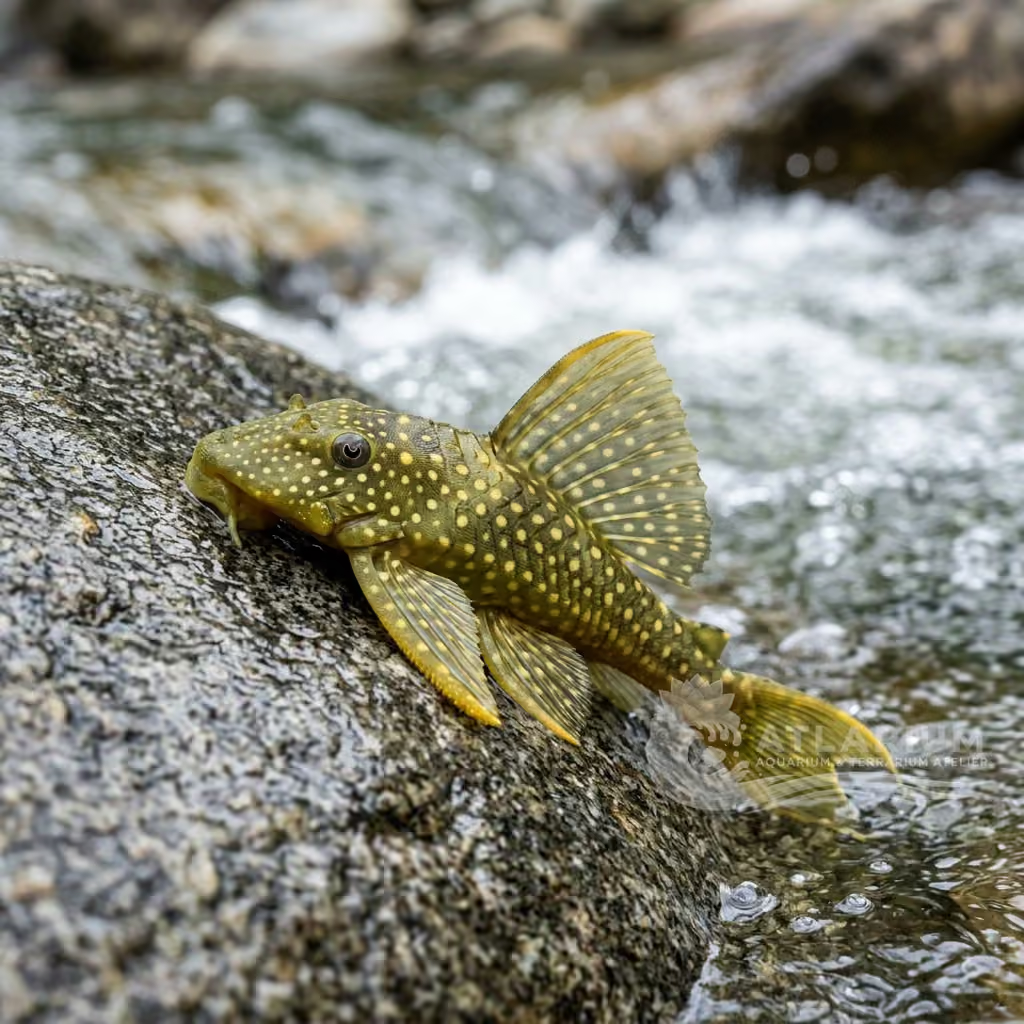
Marbled Headstander
Abramites hypselonotus
A massive, beautifully banded headstander with a highly arched back. Swims constantly at a downward angle. Unlike its peaceful cousins, it is a boisterous, nippy colossus (15 cm) that will mercilessly devour and destroy any live plants in the aquarium.
Water Temperature
23 - 27 °C
pH Value
6 - 7.5
Water type
Freshwater
Tank level
Bottom and middle
Adult size
14 cm
Minimum tank volume
>= 100 L
Minimum group
>= 1
GH
4 - 15 dGH
KH
2 - 7 dKH
TDS
80 - 295 ppm
Conductivity
125 - 461 uS/cm

Species description
Geographical Origin and Habitat: Endemic to the Amazon and Orinoco river basins in South America. Prefers fluvial areas with weak to moderate current, abundant with submerged marsh vegetation and dense tangles of branches and roots.
Taxonomy and Morphology: Characin belonging to the Anostomidae family. Reaches 14 cm (5.5 inches). Distinguished by its high, laterally compressed body, with a peculiar and conspicuous sail-like dorsal fin that enhances its oblique head-down swimming (Headstander).
Social Behavior: Schooling animal with strong hierarchical tendencies; keeping single specimens makes them fearful or strangely aggressive. It is imperative to form schools of at least 6-8 individuals to disperse the harmless intraspecific skirmishes for dominance.
Coloration and Sexual Dimorphism: Silvery or pale yellow background crossed by vigorous and faded dark gray or brown vertical bands, irregular and "marbled". The lower fins can show amber or orange reflections. Mature females are distinctly thicker and swollen compared to males.

Care, breeding and tankmates
Aquarium Setup: Long tank (at least 120 cm / 4 feet). Set up with sandy bottoms, huge curved woods and smooth rocks. Warning: it will brutally devour almost every live plant; use only very robust epiphytes (Anubias, Microsorum) tenaciously tied to the woods, or synthetic vegetation.
Diet and Feeding: Tireless vegetarian with omnivorous hints. Requires a massive and continuous vegetable intake: blanched lettuce leaves, zucchini, shelled peas, spirulina and wafers for herbivorous fish. Supplement occasionally with bloodworms and krill.
Water Quality: Robust and adaptable, but demands stability. Temperature 23-27°C (73-81°F), pH tendentially neutral or slightly acidic (6.0 - 7.5), medium hardness (GH 4-15). The water must be excellently filtered but without stormy currents unbearable for its swimming.
Compatibility and Cohabitation: Relatively peaceful with species of similar size and temperament. Excellent companion for large loricariids, peaceful earth-eating cichlids (Geophagus) and generously sized tetras. Avoid slow, timid tankmates or those with long veil fins (it might nip them).
Aquarium Breeding: Extremely rare in captivity. Requires huge tanks, very strong thermal and osmotic shocks simulating the rainy season. They are egg scatterers, do not provide parental care and will greedily feast on their own offspring if not removed.
Risks and Diseases: Very robust; however, if deprived of the vegetable component in the diet it will face lethal intestinal obstructions or nutritional deformations. Suffers acute intoxication in case of sudden spikes in ammonia or nitrites.

Geographic origin and distribution
Endemic to the Amazon and Orinoco river basins in South America. Prefers fluvial areas with weak to moderate current, abundant with submerged marsh vegetation and dense tangles of branches and roots.
Origin
Amazon, Orinoco, and Guianas

Fish profile
- Temperament
- Semi-aggressive
- This species possesses a semi-aggressive and highly territorial temperament, particularly toward its own kind. If kept individually, they can become quite reclusive or redirect their aggression toward other tankmates. They are notorious fin-nippers, especially when kept with slow-moving or long-finned species. Providing plenty of hiding spaces, caves, and visual barriers helps minimize territorial disputes and stress.
- Diet
- Omnivore
- Abramites hypselonotus is primarily herbivorous and requires a diet rich in vegetable matter. In the wild, they graze on algae, macrophytes, and organic detritus. In the aquarium, they should be offered high-quality algae wafers, spirulina flakes, and blanched vegetables such as spinach, cucumber, and zucchini. They will rapidly consume or damage soft-leaved live plants, so only tough plants like Anubias should be kept. While they accept meaty foods like bloodworms or brine shrimp, these should only be offered occasionally.
- Life expectancy
- 10-15 years
- Adult size
- 14 cm
- Sex ratio
- Group
- This species does not exhibit obvious sexual dimorphism, making visual sex determination very difficult. It is highly recommended to keep them in groups of at least six to eight individuals rather than in pairs. Keeping them in a group helps distribute and mitigate intraspecific aggression, which can become severe if they are kept singly or in too small a group. If housed in small numbers, a dominant individual will likely harass weaker tankmates to the point of exhaustion.
- Feeding frequency
- Twice daily
- Given their active grazing nature, they should be fed small portions two to three times daily. This frequency mimics their natural feeding behavior, where they continuously search for food throughout the day. Providing food in smaller, frequent intervals also helps reduce aggression and grazing pressure on aquarium decor. Ensuring that food is distributed so all group members can feed is important to prevent resource guarding.
- Bioload
- Medium to High
- Abramites hypselonotus produces a moderate amount of biological waste due to its size, reaching up to 15-20 cm in length, and its constant grazing habits. To manage the bioload of a group, which is the recommended way to keep them, a powerful external canister filter is highly recommended. Regular weekly water changes of 20-30% are essential to maintain low nitrate levels and prevent water deterioration. Providing a well-oxygenated environment helps beneficial bacteria process the waste efficiently.
- Flow
- Moderate
- This species prefers a moderate water flow in the aquarium, mimicking the steady river channels of their native South American habitats. Strong, turbulent currents should be avoided, as they can cause stress and make swimming difficult. However, they still require clean, well-oxygenated water, which can be achieved through efficient filtration systems. Utilizing spray bars or deflecting the filter output can help distribute the current evenly across the tank.
- Jump risk
- Yes
- The marbled headstander is an agile and powerful swimmer that exhibits a high risk of jumping. They can easily leap out of the aquarium if startled, stressed, or during feeding times. Consequently, a secure, tight-fitting cover or lid is absolutely mandatory for their enclosure. Any small gaps around filter pipes or cords should be blocked to prevent accidental escapes.
- Reproduction
- Rare / not documented
- Breeding Abramites hypselonotus in the home aquarium is extremely difficult and there are no documented cases of successful captive reproduction. In their natural habitat, they are egg-scatterers that migrate to spawn in densely vegetated areas during the wet season. Replicating the seasonal changes, water parameters, and environmental triggers in captivity is highly complex. Most specimens available in the aquarium trade are either wild-caught or commercially produced using hormone stimulation.
- Compatibility & tankmates
- Aggressive
- Abramites hypselonotus is compatible with robust, active fish of similar or larger size. Ideal tankmates include larger tetras, medium-sized South American cichlids, Loricariid catfish, and armored catfish like Corydoras. Slow-moving fish, those with long, flowy fins (like Angelfish or Guppies), or very small species should be strictly avoided due to fin-nipping risk. Additionally, keeping them in a group of their own kind is vital to prevent them from focusing their territorial behavior on other species.
- Tank level
- Middle/Bottom
- Abramites hypselonotus primarily occupies the bottom and middle levels of the aquarium. They are frequently observed grazing on algae and organic matter from rocks, driftwood, and substrate. Their unique head-down swimming angle of about 45 degrees is adapted for feeding on these surfaces. While they spend most of their time in the lower half of the tank, they will occasionally venture to the upper layers to search for food.

Scientific Parameters & Models
FishBase
Window to the official scientific data of the species
FishBase v25.04Data synced on: 06/15/2026
- Trophic level
- 2.9 ± 0.33 se
- Resilience
- High (less than 15 months)
- Phylogenetic uniqueness (PD50)
- 0.75
- Bayesian Length-Weight
- a = 0.01072, b = 3.08
- VulnerabilityLow vulnerability (10 / 100)

Image gallery
Licensed images linked to the species or, when marked, to the closest representative taxon.

Related species
Recommendations grouped by close relatives, companion choices, and similar care.