Bluestreak Cleaner Wrasse
Labroides dimidiatus
A popular marine wrasse famous for its cleaning symbiosis, feeding on parasites and dead tissue of other fish. Requires experienced care due to specialized dietary needs.
Temperatura da água
24 - 27 °C
Valor de pH
8.1 - 8.4
Tipo de água
Marinho
Nível do tanque
Parte inferior e intermediária
Tamanho adulto
11 cm
Volume mínimo do tanque
>= 300 L
Grupo mínimo
>= 1
KH
8 - 12 dKH

Descrição da espécie
Geographical Origin and Habitat: This species is widely distributed throughout the tropical waters of the Indo-Pacific, ranging from the Red Sea and the East African coast to the Great Barrier Reef, French Polynesia, and the southern islands of Japan. It primarily inhabits outer coral reefs, protected lagoons, and rocky reefs, at depths ranging from shallow waters down to about 40 meters, where it establishes prominent "cleaning stations" near large coral heads or small caves.
Taxonomy and Morphology: Belonging to the large wrasse family Labridae, genus Labroides. It features an extremely slender, almost cylindrical body with a pointed snout and a narrow terminal mouth adapted for plucking small parasites. Adults reach a maximum length of about 10-12 cm (4 inches). The fins are short and rounded, enabling agile and quick movements through complex coral branches.
Social Behavior: Renowned for its mutualistic cleaning behavior, it hosts "client" fish that pose in specific postures to be inspected and cleaned of external parasites, mucus, and dead tissue. It exhibits territorial behavior and defends its cleaning station from other males of the same species. It usually lives in stable pairs or small harems led by a dominant male. In captivity, a single specimen per tank is recommended unless the tank is very large.
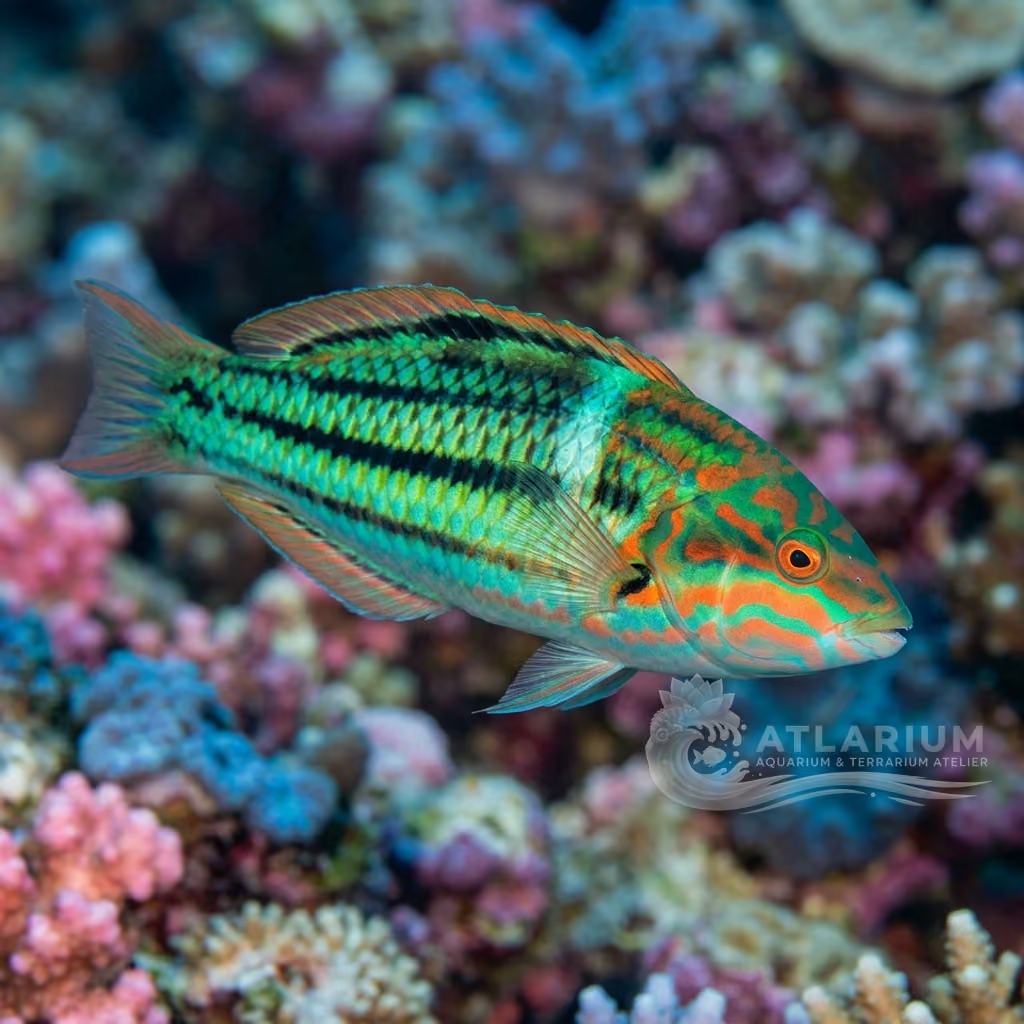
Coloration and Sexual Dimorphism: The color pattern is unmistakable: a bold black longitudinal stripe runs from the snout to the end of the caudal fin, widening progressively towards the tail. The anterior body is bright neon blue or vivid yellow, fading into electric blue or silvery white posteriorly. This species is a protogynous hermaphrodite: all individuals are born female, and if the dominant male disappears, the largest female changes sex to become male within a few weeks.

Cuidado, criação e companheiros de tanque
Aquarium Setup: Requires a mature marine aquarium of at least 200 liters (55 gallons), rich in stable live rock that provides caves, crevices, and swim-throughs to simulate its natural reef habitat. A secure lid or screen cover is mandatory because they are excellent jumpers and can easily escape when startled. The substrate should consist of fine sand or crushed coral.
Diet and Feeding: In nature, it feeds exclusively on ectoparasites (such as gnathiid isopods) and mucus from client fish. In captivity, this specialized diet presents a monumental challenge: many specimens waste away. It is necessary to patiently transition them to alternative foods like frozen brine shrimp, mysis, fish eggs, and high-quality flake or pellet foods enriched with vitamins. They must be fed multiple times a day (at least 3-4 meals) due to their fast metabolism.
Water Quality: Demands pristine and stable reef conditions. Salinity/specific gravity should be maintained between 1.023 and 1.025, with a stable temperature between 24°C and 28°C (75°F - 82°F). The pH must be kept between 8.1 and 8.4, and carbonate hardness (dKH) between 8 and 12. Ammonia and nitrite levels must be zero, and nitrates kept below 10-15 ppm using a high-quality protein skimmer and regular water changes.
Compatibility and Cohabitation: Excellent tankmate for community marine aquariums with larger fish, which will benefit from its cleaning services. Avoid housing with aggressive predators like scorpionfish, groupers, or large moray eels, which may swallow them despite their beneficial role. Do not house with other wrasses of the genus Labroides to prevent severe territorial combat.
Aquarium Breeding: Captive reproduction is extremely difficult and rarely documented in home aquariums. In nature, spawning occurs in open water at dusk, with the simultaneous release of pelagic eggs and sperm that drift in the water column. Raising the larvae requires planktonic conditions that are very hard to replicate in closed systems.
Risks and Diseases: Highly sensitive to transport stress and starvation if inadequate food is provided. They are susceptible to marine ich (Cryptocaryon irritans) and velvet (Oodinium), though their cleaning role provides partial immunity to some external parasites. However, without a high-calorie daily diet, their immune system will fail rapidly.

Origem e distribuição geográfica
This species is widely distributed throughout the tropical waters of the Indo-Pacific, ranging from the Red Sea and the East African coast to the Great Barrier Reef, French Polynesia, and the southern islands of Japan. It primarily inhabits outer coral reefs, protected lagoons, and rocky reefs, at depths ranging from shallow waters down to about 40 meters, where it establishes prominent "cleaning stations" near large coral heads or small caves.
Origem
Oceanos tropicais e recifesÁfrica e MadagascarLeste AsiáticoAustrália, Nova Guiné e Oceania

Perfil de peixe
- Temperamento
- Active
- They are extremely peaceful toward other species and highly beneficial to the aquarium community. Their unique cleaning behavior is fascinating to watch. However, they can be a nuisance if they constantly pester fish that do not want to be cleaned.
- Dieta
- Carnivore
- They are obligate cleaners in the wild, feeding entirely on crustacean ectoparasites and mucus from other fish. In captivity, they can be incredibly difficult to transition to prepared foods and often starve. They must be offered high-quality finely chopped meaty foods like mysis shrimp and cyclops frequently.
- Expectativa de vida
- 4-6 years
- Tamanho adulto
- 11 cm
- Proporção sexual
- Solitary
- They are best kept singly in most home aquariums to avoid intense conspecific aggression. In extremely large tanks, a male can be kept with a small harem of females. Two males in the same tank will fight relentlessly.
- Frequência de alimentação
- 2-3 times daily
- If they accept prepared foods, they must be fed small amounts multiple times a day (3-4 times). Their natural grazing habit means their metabolism requires constant small meals. A well-stocked community tank provides more fish for them to naturally 'clean'.
- Carga biológica
- Medium
- The Bluestreak Cleaner Wrasse has a very low bioload. They are small, active fish that produce minimal waste. However, they require pristine marine water conditions, requiring excellent protein skimming and filtration.
- Fluxo
- Strong
- They enjoy moderate to strong water flow typical of the coral reefs they inhabit. Brisk water movement keeps them active and simulates their natural environment. Good oxygenation is crucial for their survival.
- Risco de salto
- Yes
- They are notorious jumpers, especially when first introduced to a new aquarium or if startled. A completely sealed, tight-fitting mesh or glass lid is mandatory. Open-top aquariums will almost certainly result in the loss of the fish.
- Reprodução
- Oviparous
- They are protogynous hermaphrodites, meaning females can change into males if the dominant male of a group dies. Breeding in home aquariums is exceedingly rare due to their pelagic spawning nature. Rearing the larvae requires specialized setups and microscopic live foods.
- Compatibilidade e companheiros de tanque
- Reef safe
- They are generally peaceful and are welcomed by almost all other fish because of their cleaning services. Even large predatory fish will usually recognize them and allow them to clean their gills and mouths. However, they may act aggressively towards other cleaner wrasses.
- Nível do tanque
- Middle/Bottom
- They utilize all levels of the aquarium, constantly darting around to inspect and clean other fish. They will set up a 'cleaning station' usually near a prominent rock outcropping. At night, they spin a mucous cocoon in a rock crevice to sleep.

Modelos e parâmetros científicos
FishBase
Acesso aos dados científicos oficiais da espécie
FishBase v25.04Dados sincronizados em: 15/06/2026
- Nível trófico
- 3,5 ± 0,4 se
- Resiliência
- Média (1,4 - 4,4 anos)
- Unicidade filogenética (PD50)
- 0.5156
- Relação bayesiana comprimento-peso
- a = 0.00603, b = 3.16
- VulnerabilidadeVulnerabilidade baixa (10 / 100)

Espécies relacionadas
Recomendações agrupadas por parentes próximos, escolhas de acompanhantes e cuidados semelhantes.