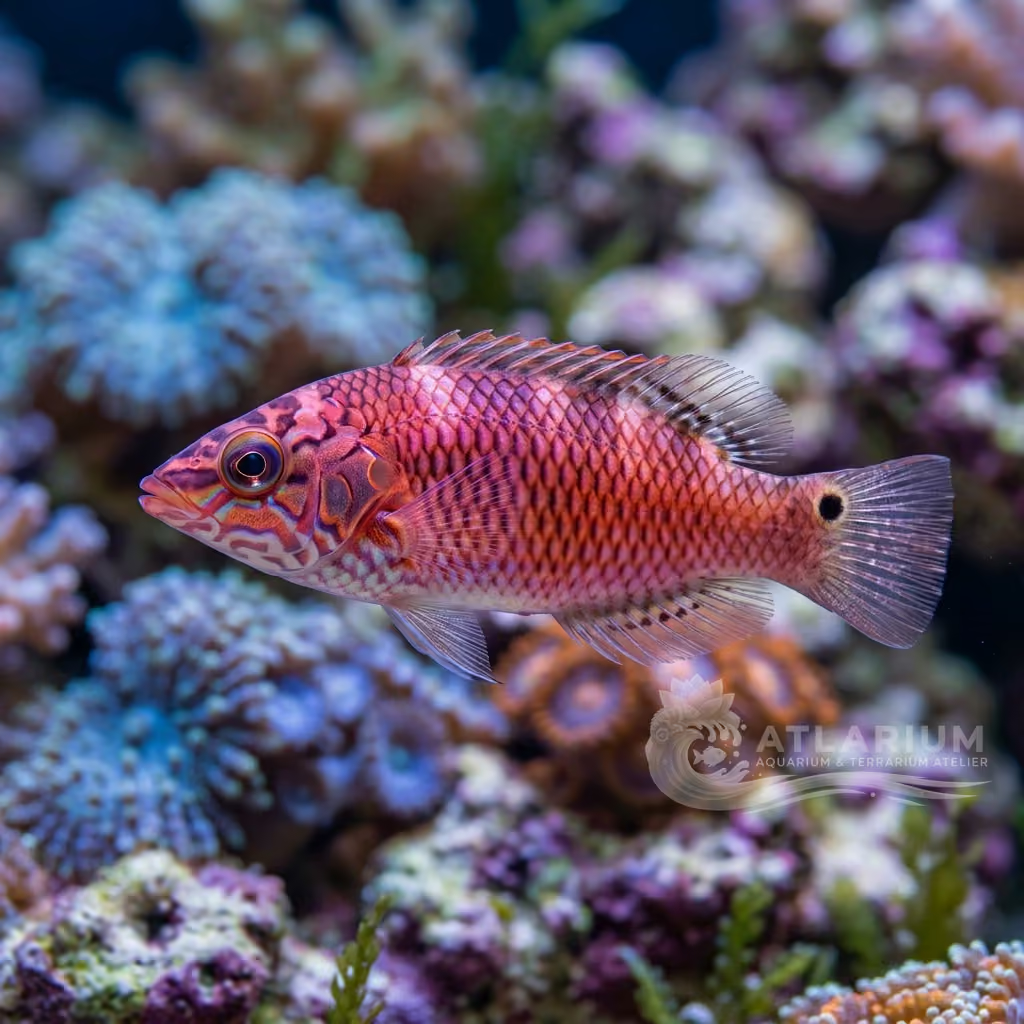
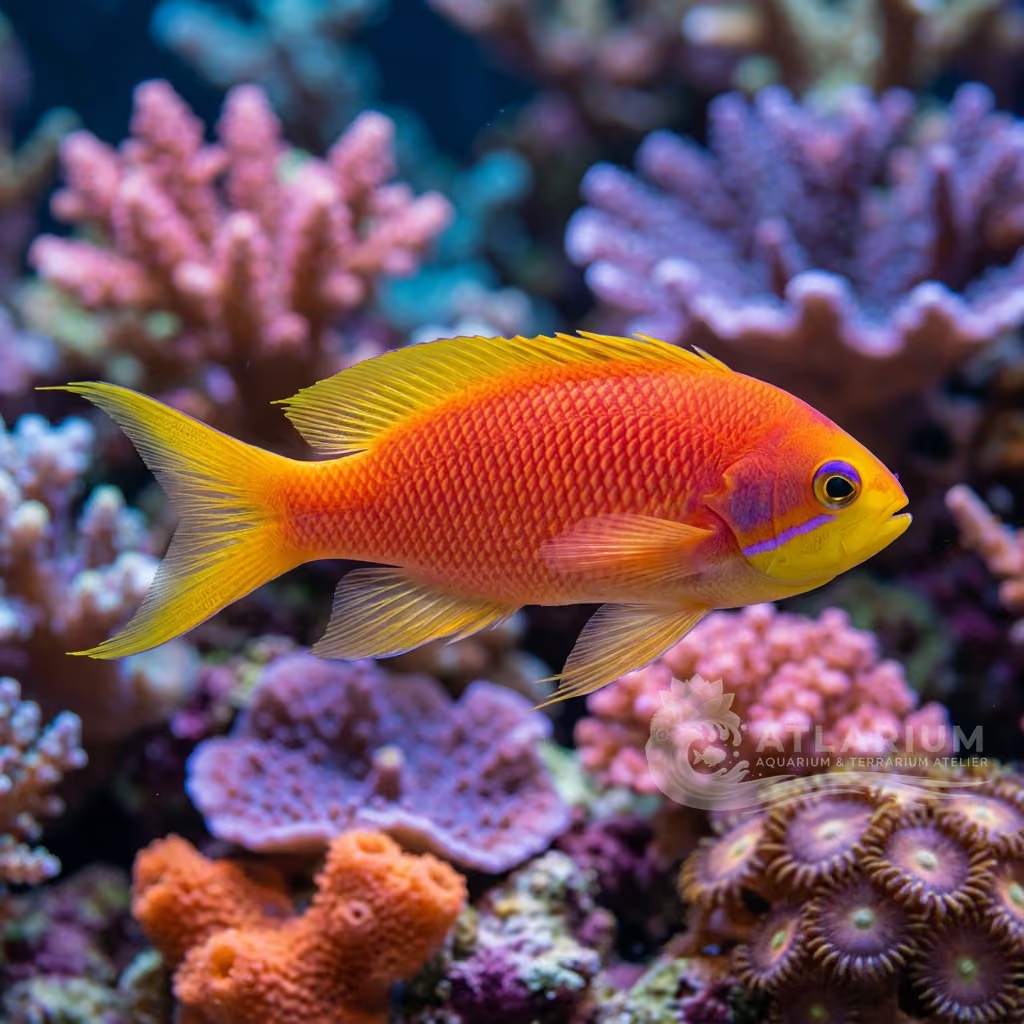
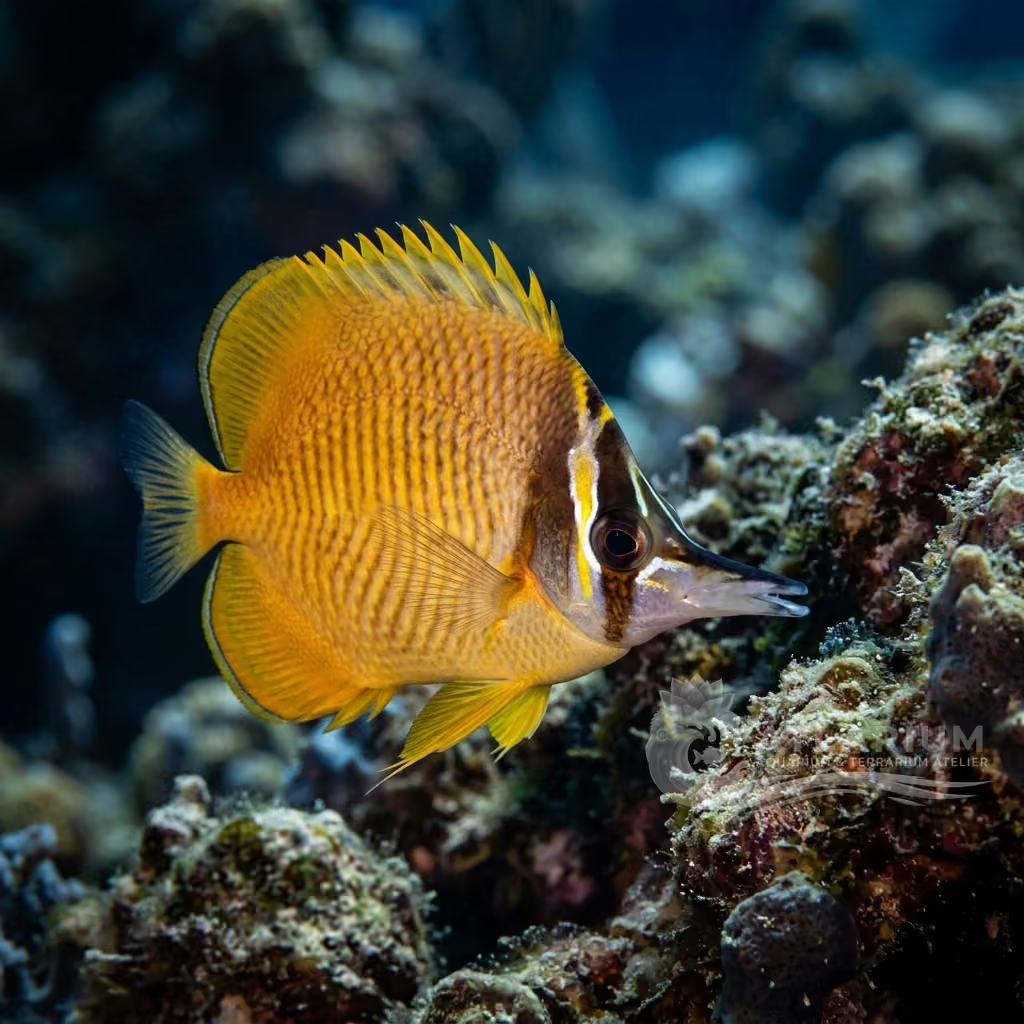
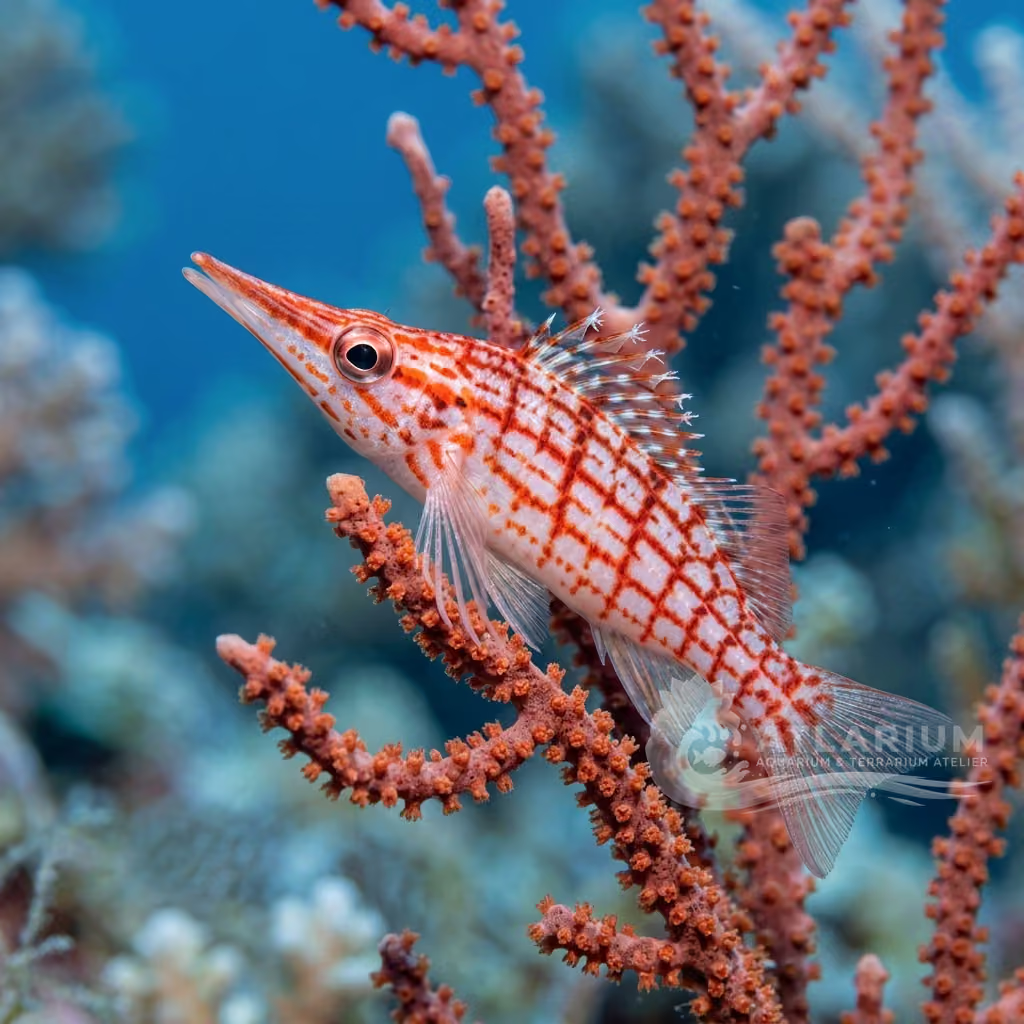
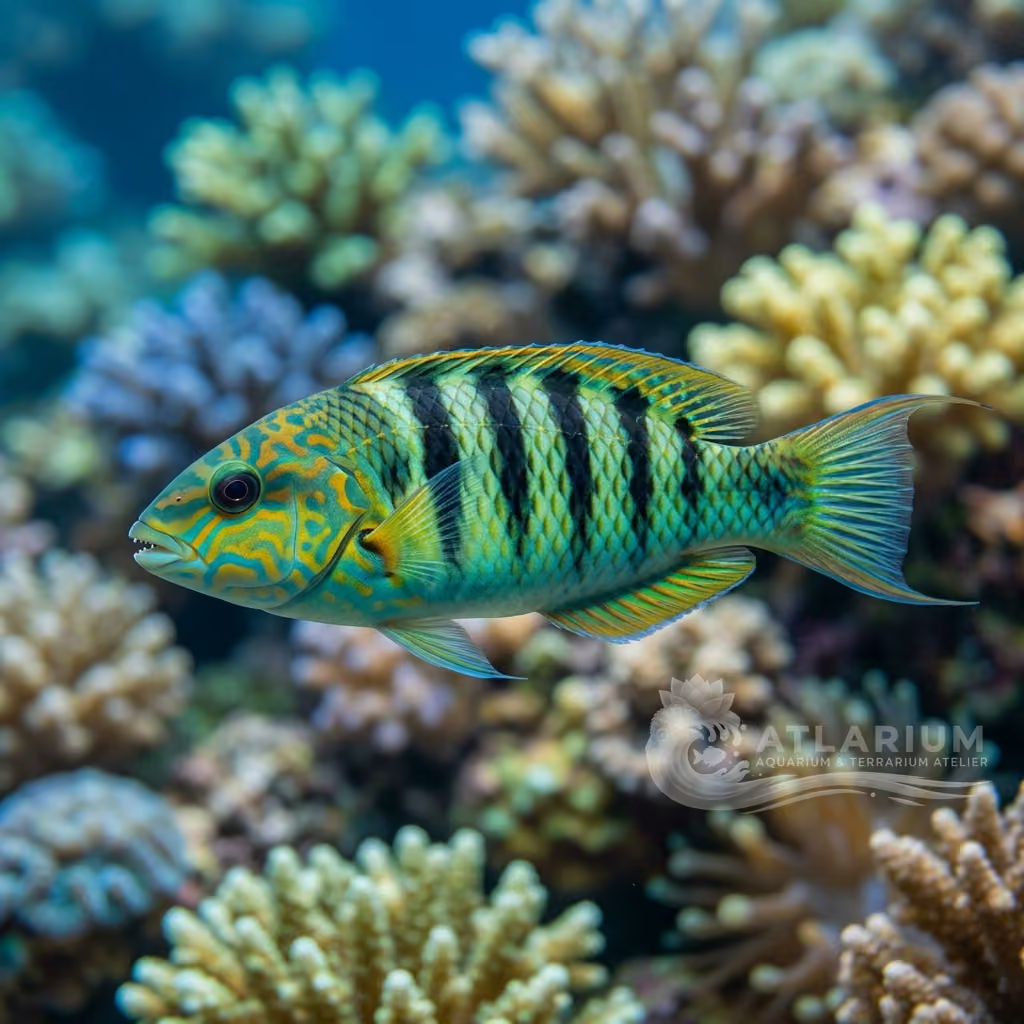
Broadstriped cardinalfish
Ostorhinchus angustatus
A hardy, peaceful marine cardinalfish characterized by striking dark longitudinal stripes. Primarily nocturnal, it thrives in stable reef aquariums with plenty of shaded overhangs.
Temperatura da água
24 - 27 °C
Valor de pH
8.1 - 8.4
Tipo de água
Marinho
Nível do tanque
Parte inferior e intermediária
Tamanho adulto
11 cm
Volume mínimo do tanque
>= 120 L
Grupo mínimo
>= 2
KH
8 - 12 dKH

Descrição da espécie
Geographical Origin and Habitat: This species is widely distributed throughout the tropical Indo-Pacific, from the Red Sea and East African coast to the Line and Mangareva Islands, north to southern Japan, and south to New Caledonia. It inhabits seaward reefs and clear lagoons, preferring to stay near rocky crevices and branching corals at depths ranging from 2 to 65 meters.
Taxonomy and Morphology: Belonging to the family Apogonidae and the genus Ostorhinchus. Previously classified under the genus Apogon (as Apogon angustatus), it shows the typical body structure of cardinalfishes, with a moderately compressed body, large eyes adapted for night vision, and two separate dorsal fins. Adults reach a maximum length of 8 to 9 cm.
Social Behavior: It is a peaceful and predominantly nocturnal fish. During daytime hours, it tends to remain hidden, either solitary or in small loose groups, inside rocky caves, under reef ledges, or among the branches of stony corals. At dusk, it leaves its shelter to hunt actively in the water column. Males practice oral incubation of eggs, holding them in their mouths until hatching.
Coloration and Sexual Dimorphism: The coloration is characterized by a silver-white or pinkish ground color, crossed by five prominent dark brown or black longitudinal stripes running along the flanks. A key identifying feature is a round black spot on the caudal peduncle base, surrounded by golden hues. There is no visible sexual dimorphism to the naked eye.

Cuidado, criação e companheiros de tanque
Aquarium Setup: Requires a mature marine aquarium with a minimum capacity of 150 liters (approx. 40 gallons) for a small group. The aquascape must feature plenty of live rock arranged to form deep caves, shaded overhangs, and crevices where the fish can take shelter during intense lighting hours, mimicking their natural environment.
Diet and Feeding: Aquarium lighting should include shaded areas. The water temperature must be kept constantly between 24°C and 27°C (75-81°F). Heating should be regulated with a reliable heater. A slight nighttime temperature drop is not necessary, but parameters must remain within the optimal range for reef fish.
Water Quality: Water quality must be high and stable. Recommended parameters: pH 8.1-8.4, specific gravity 1.021-1.025, and controlled nitrate and phosphate levels. An efficient protein skimmer is recommended to keep organic nutrients low, along with regular partial water changes of 10-15% of the water volume every two weeks.
Compatibility and Cohabitation: Strictly carnivorous. In the aquarium, it readily accepts a variety of frozen foods such as mysis, brine shrimp, finely chopped krill, and small pieces of shrimp. Since it is active mainly at dusk, it is advisable to feed late in the evening or with the lights off, especially during the initial acclimation phase in the tank.
Aquarium Breeding: Extremely peaceful and reef-safe. It can be kept in small groups of the same species if space is adequate. It coexists peacefully with clownfish, wrasses, small surgeonfish, and invertebrates. Avoid large predatory fish or very aggressive, fast-swimming species that could intimidate it and prevent it from feeding.
Risks and Diseases: It is a hardy species that rarely falls ill if water conditions are optimal. It can be susceptible to marine ich (Cryptocaryon) in cases of severe stress or sudden temperature changes. During the oral incubation period, the male stops feeding; it is important to avoid stressing him to prevent premature expulsion of the eggs.

Origem e distribuição geográfica
This species is widely distributed throughout the tropical Indo-Pacific, from the Red Sea and East African coast to the Line and Mangareva Islands, north to southern Japan, and south to New Caledonia. It inhabits seaward reefs and clear lagoons, preferring to stay near rocky crevices and branching corals at depths ranging from 2 to 65 meters.
Origem
Oceanos tropicais e recifesAmérica Central e CaribeAmérica do NorteÁfrica e MadagascarLeste AsiáticoAustrália, Nova Guiné e Oceania

Perfil de peixe
- Temperamento
- Territorial
- They are very peaceful, slow-moving, and somewhat shy fish. Keeping them in a group of five or more makes them feel secure. They are nocturnal and become much more active and bold after the aquarium lights go out.
- Dieta
- Carnivore
- They are nocturnal carnivores that prey on small crustaceans and zooplankton. Offer them enriched mysis shrimp, brine shrimp, and high-quality carnivore pellets. Feeding them just after the lights go out will yield the best results.
- Expectativa de vida
- 3-4 years
- Tamanho adulto
- 11 cm
- Proporção sexual
- Flexible
- There are no obvious physical differences between males and females. They are best kept in small schools where pairs will naturally form. Once a pair bonds, they generally tolerate the rest of the school.
- Frequência de alimentação
- Twice daily
- Feed them once or twice daily, preferably during twilight or evening hours. They may be reluctant to eat in bright lighting. Ensure food reaches their hiding spots if they are hesitant to come out.
- Carga biológica
- Medium
- The Broad-striped Cardinalfish has a relatively low bioload. They are small and mostly inactive during the day, producing little waste. A standard marine filtration setup is perfectly adequate to maintain them.
- Fluxo
- Strong
- They prefer gentle to moderate water flow. In the wild, they shelter among branching corals and urchin spines during the day to avoid strong currents. Avoid aiming powerheads directly at their preferred resting areas.
- Risco de salto
- No
- Reprodução
- Mouthbrooder
- They are paternal mouthbrooders. The male will hold the egg mass in his mouth until the fry hatch and are released. Captive breeding is possible, but rearing the fry requires specialized planktonic foods.
- Compatibilidade e companheiros de tanque
- Reef safe
- They are extremely peaceful and reef-safe, making them excellent community fish. They should be housed with other peaceful species like gobies and blennies. Do not keep them with large, aggressive fish that might bully or eat them.
- Nível do tanque
- Middle/Bottom
- They generally occupy the middle and lower levels of the aquarium. During the day, they will hover motionlessly in caves or under overhangs. At night, they venture out into the open water column to feed.

Modelos e parâmetros científicos
FishBase
Acesso aos dados científicos oficiais da espécie
FishBase v25.04Dados sincronizados em: 15/06/2026
- Nível trófico
- 3,3 ± 0,32 se
- Resiliência
- Alta (menos de 15 meses)
- Unicidade filogenética (PD50)
- 0.5
- Relação bayesiana comprimento-peso
- a = 0.01445, b = 3.07
- VulnerabilidadeVulnerabilidade baixa (10 / 100)

Espécies relacionadas
Recomendações agrupadas por parentes próximos, escolhas de acompanhantes e cuidados semelhantes.