Purple Queen Anthias
Mirolabrichthys tuka
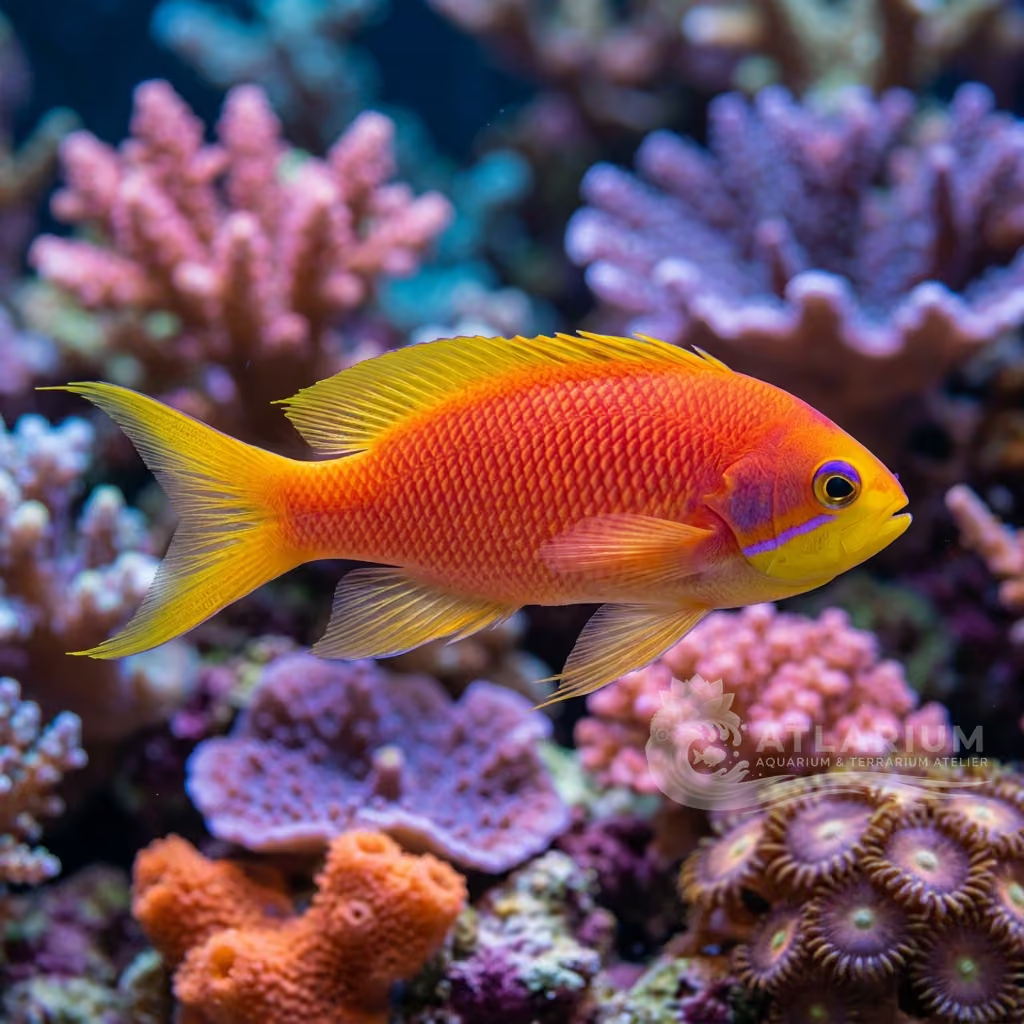
Also known as the Purple Queen Anthias, it is one of the most spectacular marine fish due to its electric purple color, but it is extremely difficult to maintain long-term.
Temperatura da água
22 - 27 °C
Valor de pH
8.1 - 8.4
Tipo de água
Marinho
Nível do tanque
Parte inferior e intermediária
Tamanho adulto
12 cm
Volume mínimo do tanque
>= 400 L
Grupo mínimo
>= 6
KH
8 - 12 dKH

Descrição da espécie
Geographical Origin and Habitat: Western Indo-Pacific: distributed from Mauritius to the Philippines, Indonesia, Palau, Solomon Islands, and the Great Barrier Reef. Inhabits upper outer reef slopes exposed to strong ocean currents at depths of 10 to 30 meters.
Taxonomy and Morphology: Member of the family Serranidae. Compressed body, pointed snout, and highly elongated lyre-shaped caudal fin. Reaches approximately 12 cm.
Social Behavior: Peaceful, highly gregarious, and shy in aquaria. Forms large tight schools swimming in unison near reef branches. Protogynous hermaphrodite.
Coloration and Sexual Dimorphism: Males are electric purple with an oblique yellow stripe on the head and a yellow or orange dorsal fin. Females are brilliant purple with a bright yellow stripe running along the back to the tail tips. Marked dimorphism. Wild populations swim constantly against the current to optimize food capture. The sexual transition from female to male is accompanied by obvious morphological changes in the shape and length of the dorsal fin.

Cuidado, criação e companheiros de tanque
Aquarium Setup: Requires a large, mature tank of at least 400 liters with strong water movement and excellent oxygenation. Plenty of rocky hiding spots are mandatory. Cover is essential. High jumping risk.
Diet and Feeding: Obligate planctivorous carnivore. Requires frequent feeding (4-5 times daily) with live copepods, rotifers, cyclops, and baby frozen brine shrimp. Most specimens reject dry food.
Water Quality: Pristine and stable parameters. Temperature 22-27°C, pH 8.1-8.4, salinity SG 1.020-1.026. GH 15-25. Requires an oversized protein skimmer to handle the organic load from frequent feedings.
Compatibility and Cohabitation: Reef safe. Must be housed only with extremely peaceful fish and kept in groups of at least 6-8 specimens (one male and several females). Active or boisterous tankmates will prevent it from feeding, leading to death.
Aquarium Breeding: Not successfully bred in captivity due to the prolonged planktonic larval stage.
Risks and Diseases: Very high initial mortality rate due to fasting stress. Extremely sensitive to oodinium and external parasitic infections. A timed automatic feeding system is highly recommended to ensure constant food delivery throughout the day. The use of ozone or UV sterilizers helps keep the water's bacterial load extremely low.

Origem e distribuição geográfica
Western Indo-Pacific: distributed from Mauritius to the Philippines, Indonesia, Palau, Solomon Islands, and the Great Barrier Reef. Inhabits upper outer reef slopes exposed to strong ocean currents at depths of 10 to 30 meters.
Origem
Oceanos tropicais e recifesÁfrica e MadagascarSul e Sudeste Asiático

Perfil de peixe
- Temperamento
- Peaceful
- They are incredibly docile and often quite timid, especially when first introduced. They rely heavily on the presence of their conspecifics to feel secure. They will never bother other fish or invertebrates in a reef setting.
- Dieta
- Carnivore
- This species is notoriously difficult to feed and requires highly specialized zooplankton diets. They often refuse anything but live foods such as copepods, baby brine shrimp, or specialized micro-foods. Transitioning them to frozen mysis or high-quality prepared foods requires immense patience and time.
- Expectativa de vida
- 3-8 years
- Tamanho adulto
- 12 cm
- Proporção sexual
- Harem
- They should only be kept in groups with a strict harem structure. One male to a group of at least five or more females is strongly recommended. Attempting to keep multiple males in an average-sized aquarium will lead to severe territorial disputes.
- Frequência de alimentação
- Twice daily
- They have incredibly high metabolic rates and need to feed almost continuously. It is recommended to feed them at least four to six times a day. If adequate feeding frequency is not met, they will rapidly lose weight and perish.
- Carga biológica
- Medium
- The constant need for feeding results in a high bioload for the aquarium. A heavily over-sized protein skimmer and frequent water changes are essential. Heavy biological filtration is necessary to process the resulting waste efficiently.
- Fluxo
- Strong
- They require very strong, turbulent water flow reflecting their native reef edge habitats. The intense flow keeps their tiny planktonic food items moving naturally in the water column. High flow also encourages their natural schooling behaviors and vivid displays.
- Risco de salto
- Yes
- Like other anthias, they are very easily spooked and will jump from the water when panicked. A fitted screen or glass canopy is strictly necessary. Keeping them in a calm environment away from sudden movements helps reduce this risk.
- Reprodução
- Protogynous hermaphrodite
- They are pelagic spawners, with the male fertilizing the eggs in the open water column. They are protogynous hermaphrodites where females can change sex if the dominant male is lost. Captive breeding is nearly impossible because of the demanding needs of their extremely small fry.
- Compatibilidade e companheiros de tanque
- Reef safe
- They are highly peaceful and completely reef safe. Due to their delicate nature, they must only be kept with very passive tank mates. Aggressive or fast-swimming tank mates will easily outcompete them for food, leading to starvation.
- Nível do tanque
- Middle/Bottom
- They spend the vast majority of their time in the middle to upper water levels. They demand large expanses of open water for their schooling activities. Ample live rock structures are also required for them to hide in during the night or when scared.

Modelos e parâmetros científicos
FishBase
Acesso aos dados científicos oficiais da espécie
FishBase v25.04Dados sincronizados em: 15/06/2026
- Nível trófico
- 3,6 ± 0,41 se
- Resiliência
- Alta (menos de 15 meses)
- Unicidade filogenética (PD50)
- 0.625
- Relação bayesiana comprimento-peso
- a = 0.01413, b = 3
- VulnerabilidadeVulnerabilidade baixa (10 / 100)

Espécies relacionadas
Recomendações agrupadas por parentes próximos, escolhas de acompanhantes e cuidados semelhantes.