Red-belted Anthias
Pseudanthias rubrizonatus
Inhabiting deep seaward slopes, this vibrant anthias lives in small harems. It needs a 300L tank, a tight lid to prevent jumping, and a highly demanding feeding schedule.
Temperatura da água
22 - 26 °C
Valor de pH
8.1 - 8.4
Tipo de água
Marinho
Nível do tanque
Meio
Tamanho adulto
12 cm
Volume mínimo do tanque
>= 300 L
Grupo mínimo
>= 4

Descrição da espécie
Geographical Origin and Habitat: Widespread in the tropical Indo-Pacific Ocean, ranging from Indonesia and northern Australia north to Taiwan and the Ryukyu Islands of southern Japan. It primarily inhabits deep seaward reef slopes, drop-offs, and tidal channels swept by strong currents, at depths ranging from 10 to 50 meters, often near large tabular corals.
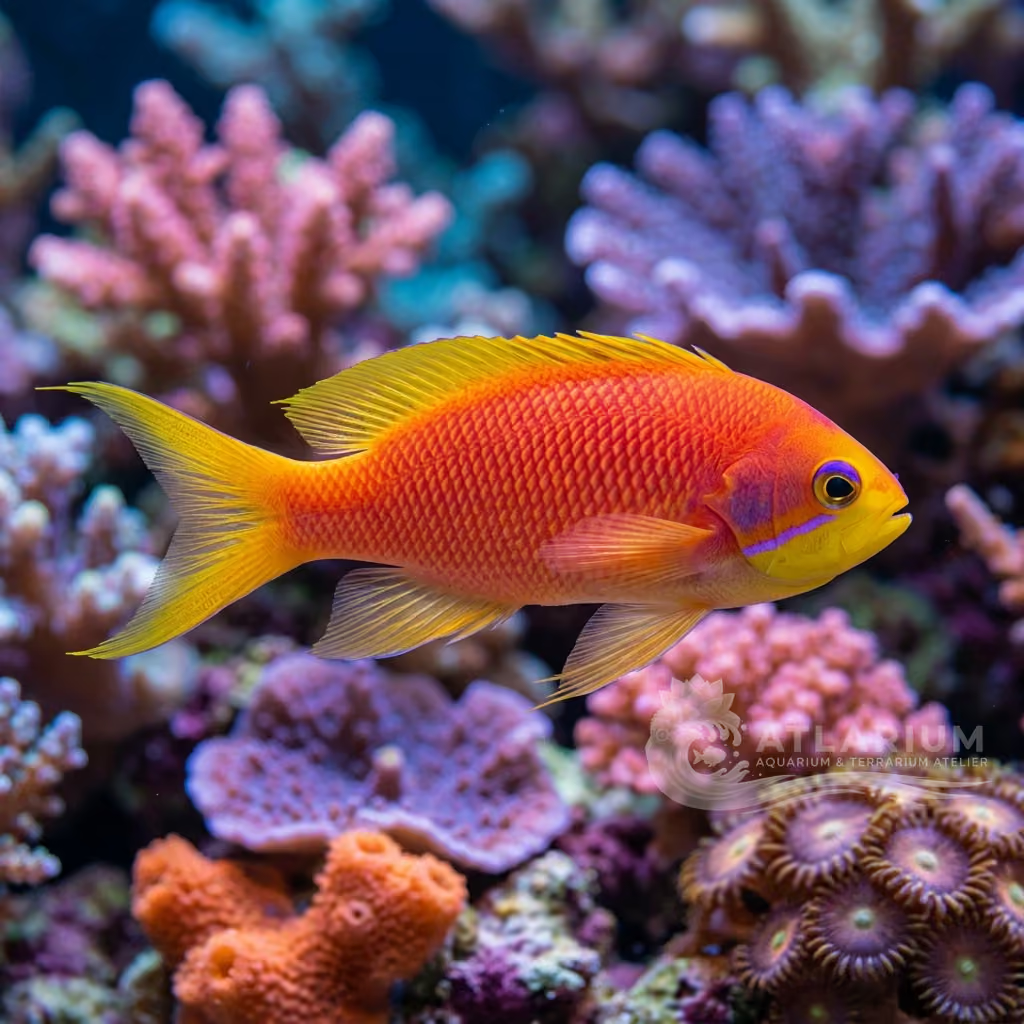
Taxonomy and Morphology: A member of the Serranidae family, subfamily Anthiadinae, under the genus Pseudanthias. It grows relatively large for an anthias, with adult males reaching up to 12 centimeters in length. The body is slender and streamlined, with a deeply lunar caudal fin displaying long filaments on its tips.
Social Behavior: An extremely active and gregarious schooling species. They form strict social structures (harems) consisting of a single dominant male and several females. They spend their days hovering in water currents above coral heads, snapping up drifting zooplankton, and maintaining a clear dominance hierarchy.
Coloration and Sexual Dimorphism: Displays beautiful coloration: females and juveniles are generally solid pinkish-red or orange. Mature males develop a highly prominent vertical red or purple band (hence the name 'Red-belted') across the middle of their flanks, along with yellow markings on the pectoral fins and red-tipped caudal lobes.

Cuidado, criação e companheiros de tanque
Aquarium Setup: Requires a spacious reef aquarium of at least 300 liters (80 gallons) with a minimum length of 120 cm to accommodate a small harem. Arrange live rock to form numerous shelves and caves for hiding, while keeping the upper-middle water column open for swimming. A tight cover is mandatory as they are notorious jumpers.
Diet and Feeding: Planktivorous. Because of their high metabolism, they must be fed multiple small meals daily (at least 2 to 3 times). Offer high-protein frozen foods like mysis shrimp, brine shrimp, lobster eggs, and copepods. They can be trained to accept high-quality dry pellets or flakes enriched with marine vitamins.
Water Quality: Maintain stable parameters: temperature 22-26°C (72-79°F), pH 8.1-8.4, specific gravity 1.020-1.025. High water turnover with strong currents is necessary to replicate their natural surge environment and ensure high oxygen levels. Perform regular water changes to keep nitrates minimal.
Compatibility and Cohabitation: Fully peaceful and 100% reef-safe. Excellent addition to reef aquariums. Do not house with aggressive, territorial fish that will stress them. They must be kept in a group, introducing one male and at least 3 to 4 females; keeping multiple males in the same tank will lead to fatal fighting.
Aquarium Breeding: Protogynous hermaphrodites, where the dominant female in the harem will transform into a male if the resident male dies. Spawning in home aquariums is very rare and involves pelagic spawning in open water, making larval rearing extremely difficult without specialized plankton breeding setups.
Risks and Diseases: The primary risk is starvation due to insufficient feeding frequency. They are also highly sensitive to transport stress and sudden drops in dissolved oxygen. Ensure the tank is well-oxygenated using wavemakers and a highly efficient protein skimmer to prevent respiratory distress.

Origem e distribuição geográfica
Widespread in the tropical Indo-Pacific Ocean, ranging from Indonesia and northern Australia north to Taiwan and the Ryukyu Islands of southern Japan. It primarily inhabits deep seaward reef slopes, drop-offs, and tidal channels swept by strong currents, at depths ranging from 10 to 50 meters, often near large tabular corals.
Origem
Oceanos tropicais e recifesSul e Sudeste AsiáticoLeste AsiáticoAustrália, Nova Guiné e Oceania

Perfil de peixe
- Temperamento
- Active
- They are peaceful, schooling fish that bring brilliant color and constant movement to the aquarium. The male acts as the harem leader, keeping females in line with rapid, non-destructive darting. They are relatively hardy for an Anthias, provided their dietary needs are met.
- Dieta
- Carnivore
- They are strictly carnivorous, feeding on plankton in the wild. A captive diet must include finely chopped frozen seafood, mysis, copepods, and high-quality pellets. Color-enhancing vitamins mixed with their food will keep their distinctive red belt vibrant.
- Expectativa de vida
- 5-8 years
- Tamanho adulto
- 12 cm
- Proporção sexual
- Harem
- They are protogynous hermaphrodites, best kept in a group of one male and several females. If the male dies, the most dominant female will morph into a male to replace him. Keeping multiple males will result in severe aggression and eventual death.
- Frequência de alimentação
- Twice daily
- They must be fed small amounts at least three times a day to sustain their metabolism. Automated feeders dispensing high-quality dry food can help bridge the gap between frozen meals. A well-established refugium is highly recommended to supply live natural prey.
- Carga biológica
- Medium
- The Red-belted Anthias produces a moderate bioload tied to its demanding feeding schedule. Frequent, meaty feedings require robust protein skimming to prevent water quality degradation. Excellent biological filtration is non-negotiable for keeping this species successfully long-term.
- Fluxo
- Strong
- They prefer strong, laminar water flow that replicates the deep reef slopes they originate from. High circulation encourages them to swim in the open and hunt for suspended food particles. Adequate oxygenation provided by strong surface agitation is also critical.
- Risco de salto
- Yes
- Like all Anthias, they are very prone to jumping if startled or harassed. A completely secure mesh top is mandatory to prevent them from leaping out of the tank. Extreme care should be taken during acclimation and tank maintenance.
- Reprodução
- Hermaphrodite
- They are broadcast spawners that require tall aquariums to complete their vertical mating swim. While spawning can be triggered by temperature and lighting cues, raising the fry is nearly impossible. The larval stage requires specialized microscopic live foods rarely available to hobbyists.
- Compatibilidade e companheiros de tanque
- Peaceful
- They are peaceful but active, making them great companions for a mixed reef. They should be kept with other non-aggressive fish that won't compete too fiercely for food. Fast-moving or hyper-aggressive fish may cause them to hide and starve.
- Nível do tanque
- Middle
- They primarily occupy the middle and upper levels of the aquarium, swimming against the current. They need plenty of open swimming space to feel comfortable. Ample rockwork with caves is also required for them to retreat into at night.

Modelos e parâmetros científicos
FishBase
Acesso aos dados científicos oficiais da espécie
FishBase v25.04Dados sincronizados em: 15/06/2026
- Nível trófico
- 3,4 ± 0,45 se
- Resiliência
- Alta (menos de 15 meses)
- Unicidade filogenética (PD50)
- 0.5
- Relação bayesiana comprimento-peso
- a = 0.01413, b = 3
- VulnerabilidadeVulnerabilidade baixa (10 / 100)

Espécies relacionadas
Recomendações agrupadas por parentes próximos, escolhas de acompanhantes e cuidados semelhantes.