Bartlett's anthias
Nemanthias bartlettorum
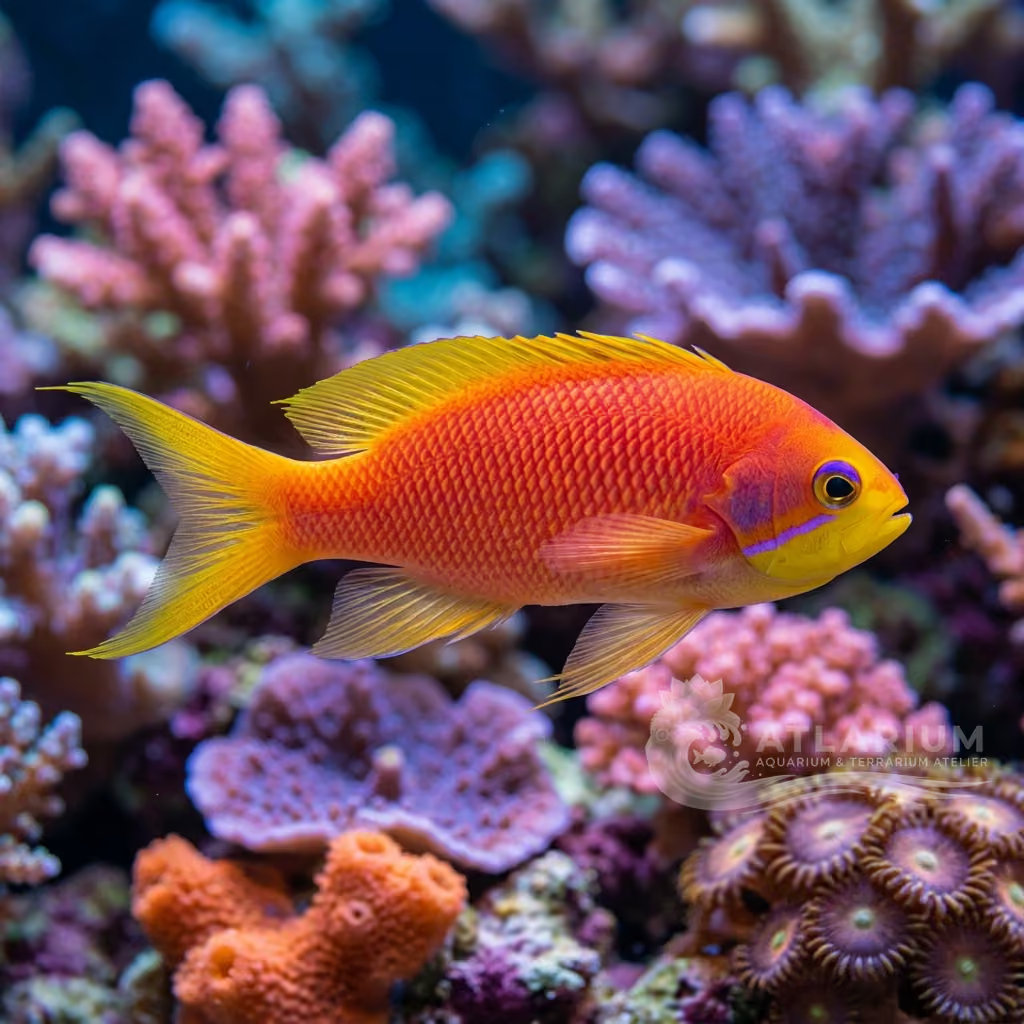
Bartlett's anthias is a stunning bicolored Indo-Pacific marine fish featuring a yellow back and pinkish-violet sides. It thrives in high-flow reef aquariums.
Temperatura da água
22 - 26 °C
Valor de pH
8.1 - 8.4
Tipo de água
Marinho
Nível do tanque
Meio
Tamanho adulto
9 cm
Volume mínimo do tanque
>= 250 L
Grupo mínimo
>= 4
KH
8 - 12 dKH

Descrição da espécie
Geographical Origin and Habitat:
This species is native to the tropical regions of the Western and Central Pacific Ocean. Its distribution ranges from the coastal waters of Palau to Tuamotu and the Marshall Islands. It primarily inhabits seaward reef slopes, current-swept drop-offs, and reef crests at depths between 4 and 30 meters, where the waters are crystal clear and rich in planktonic food carried by ocean currents.
Taxonomy and Morphology:
Belonging to the family Serranidae and the subfamily Anthiadinae, Nemanthias bartlettorum features a slender, elongated body that is moderately compressed. It has a relatively large terminal mouth. Adults reach a maximum total length of approximately 9 centimeters. The caudal fin is deeply forked, enabling rapid and agile swimming against strong reef currents.
Social Behavior:
This is a highly gregarious species that forms large schools consisting of hundreds of individuals in the wild. The social structure is highly organized and haremic, with a single dominant male ruling over a group of females. In captivity, they must be kept in groups of at least 5-6 individuals (one male and multiple females) to reduce stress.
Coloration and Sexual Dimorphism:
It boasts a spectacular bicolored pattern: the back and dorsal fin are bright lemon-yellow, while the flanks and lower body are pinkish-violet. Mature males display more intense coloration, a more developed dorsal fin with reddish or violet filaments, and yellow coloration extending onto the snout. Females are slightly smaller and less vibrant.

Cuidado, criação e companheiros de tanque
Aquarium Setup:
To house a small group, a mature marine aquarium of at least 350 liters is required. The tank should feature a robust live rock structure with plenty of overhangs, caves, and crevices for shelter, while leaving a large open space for swimming. Powerful water movement and high oxygenation are essential to replicate their natural habitat.
Diet and Feeding:
A specialized zooplanktivore that requires multiple feedings per day (at least 2-3 times) due to its high metabolic rate. Offer a varied diet of high-quality frozen foods such as mysis shrimp, brine shrimp, copepods, lobster eggs, and finely chopped krill. Over time, it will accept small-sized vitamin-enriched pellets and flakes.
Water Quality:
Requires clean, stable marine water parameters: temperature between 23°C and 26°C, pH range from 8.1 to 8.4, specific gravity (SG) from 1.020 to 1.025, and carbonate hardness (KH) of 8 to 12 dKH. An efficient protein skimmer and regular water changes are necessary to prevent nutrient accumulation from frequent feedings.
Compatibility and Cohabitation:
Completely reef safe and an excellent addition to mixed reef aquariums. It coexists peacefully with other non-aggressive marine fish like tangs, wrasses, and gobies. Avoid keeping more than one male per aquarium, as they will fight to the death. Do not house with large, predatory, or overly aggressive tankmates.
Aquarium Breeding:
Captive breeding in home aquariums is extremely difficult. They are protogynous hermaphrodites: if the dominant male dies, the largest and strongest female in the group will change sex to become the new male. Spawning is pelagic, and rearing the larvae is nearly impossible in closed systems due to their microscopic size.
Risks and Diseases:
Due to their high metabolism, starvation is a major threat, and they can waste away quickly if not fed regularly. They are moderately susceptible to common parasites such as Cryptocaryon irritans (marine ich) when stressed by poor acclimation or temperature fluctuations. A quiet quarantine period is highly recommended.

Origem e distribuição geográfica
This species is native to the tropical regions of the Western and Central Pacific Ocean. Its distribution ranges from the coastal waters of Palau to Tuamotu and the Marshall Islands. It primarily inhabits seaward reef slopes, current-swept drop-offs, and reef crests at depths between 4 and 30 meters, where the waters are crystal clear and rich in planktonic food carried by ocean currents.
Origem
Oceanos tropicais e recifes

Perfil de peixe
- Temperamento
- Active
- They are peaceful toward other species but exhibit strict hierarchical behavior among themselves. The dominant male will playfully chase females to assert his dominance. They are highly active and bring a dynamic energy to any reef tank.
- Dieta
- Carnivore
- They are strict zooplanktivores in the wild, requiring a highly specialized meaty diet. Offer them finely chopped seafood, frozen mysis, cyclops, and high-quality micro-pellets. Vitamin enrichment is crucial to maintain their stunning pink and yellow coloration.
- Expectativa de vida
- 5-6 years
- Tamanho adulto
- 9 cm
- Proporção sexual
- Harem
- They are best kept in a harem consisting of one dominant male and several females. All individuals are born female, and the most dominant fish transitions to male. A group of at least five provides the best behavioral dynamics.
- Frequência de alimentação
- Twice daily
- They possess a very high metabolism and must be fed three to four times a day. Automated feeders or frequent manual feedings are necessary for their survival. Insufficient feeding will quickly lead to weight loss and fading colors.
- Carga biológica
- Low to Medium
- Bartlett's Anthias produce a moderate bioload due to their requirement for frequent feedings. Robust mechanical and biological filtration are essential to process the waste from their intensive diet. A high-quality protein skimmer is mandatory to maintain the pristine water conditions they require.
- Fluxo
- Strong
- They strongly prefer high water flow that simulates the currents of outer reef slopes. Brisk circulation keeps them active and properly suspends their microscopic food. Wavemakers should be used to provide strong, highly oxygenated laminar flow.
- Risco de salto
- Yes
- Anthias are notorious jumpers, particularly when first introduced or if startled. A secure, fine-mesh screen lid is absolutely essential for keeping them safely in the tank. Care must be taken not to spook them during maintenance.
- Reprodução
- Hermaphrodite
- They are pelagic spawners that release their gametes into the water column at dusk. While courtship and spawning are frequently observed in captivity, raising the larvae is nearly impossible. The fry require microscopic live foods and massive rearing tanks.
- Compatibilidade e companheiros de tanque
- Peaceful
- They are generally peaceful and make excellent additions to mixed reef aquariums. They should be housed with other peaceful to semi-aggressive fish that will not outcompete them for food. Avoid overly aggressive tank mates that may force them into hiding.
- Nível do tanque
- Middle
- They constantly school in the middle to upper levels of the water column. They are highly active swimmers that demand significant open space. They will retreat to complex rockwork crevices when frightened or sleeping.

Modelos e parâmetros científicos
FishBase
Acesso aos dados científicos oficiais da espécie
FishBase v25.04Dados sincronizados em: 15/06/2026
- Nível trófico
- 3,4 ± 0,45 se
- Resiliência
- Alta (menos de 15 meses)
- Unicidade filogenética (PD50)
- 0.5312
- Relação bayesiana comprimento-peso
- a = 0.01349, b = 3.05
- VulnerabilidadeVulnerabilidade baixa (10 / 100)

Espécies relacionadas
Recomendações agrupadas por parentes próximos, escolhas de acompanhantes e cuidados semelhantes.