Clown wrasse
Coris aygula
A massive wrasse requiring huge aquariums and deep sandy substrates. It dramatically changes from a spotted juvenile to a dark, humped adult, shifting rubble to find prey.
Temperatura da água
22 - 28 °C
Valor de pH
8.1 - 8.4
Tipo de água
Marinho
Nível do tanque
Parte inferior e intermediária
Tamanho adulto
60 cm
Volume mínimo do tanque
>= 1.500 L
Grupo mínimo
>= 1
KH
8 - 12 dKH

Descrição da espécie
Geographical Origin and Habitat: Coris aygula, commonly known as the clown wrasse or red-blotched wrasse, is widely distributed throughout the tropical and subtropical waters of the Indo-Pacific. It is found from the Red Sea and the coasts of East Africa eastward to the Line Islands, ranging north to southern Japan and south to Lord Howe Island. It inhabits coral lagoons, seaward reef slopes, and sandy flats adjacent to reefs at depths between 2 and 30 meters. Juveniles prefer protected tide pools and very shallow coastal waters.
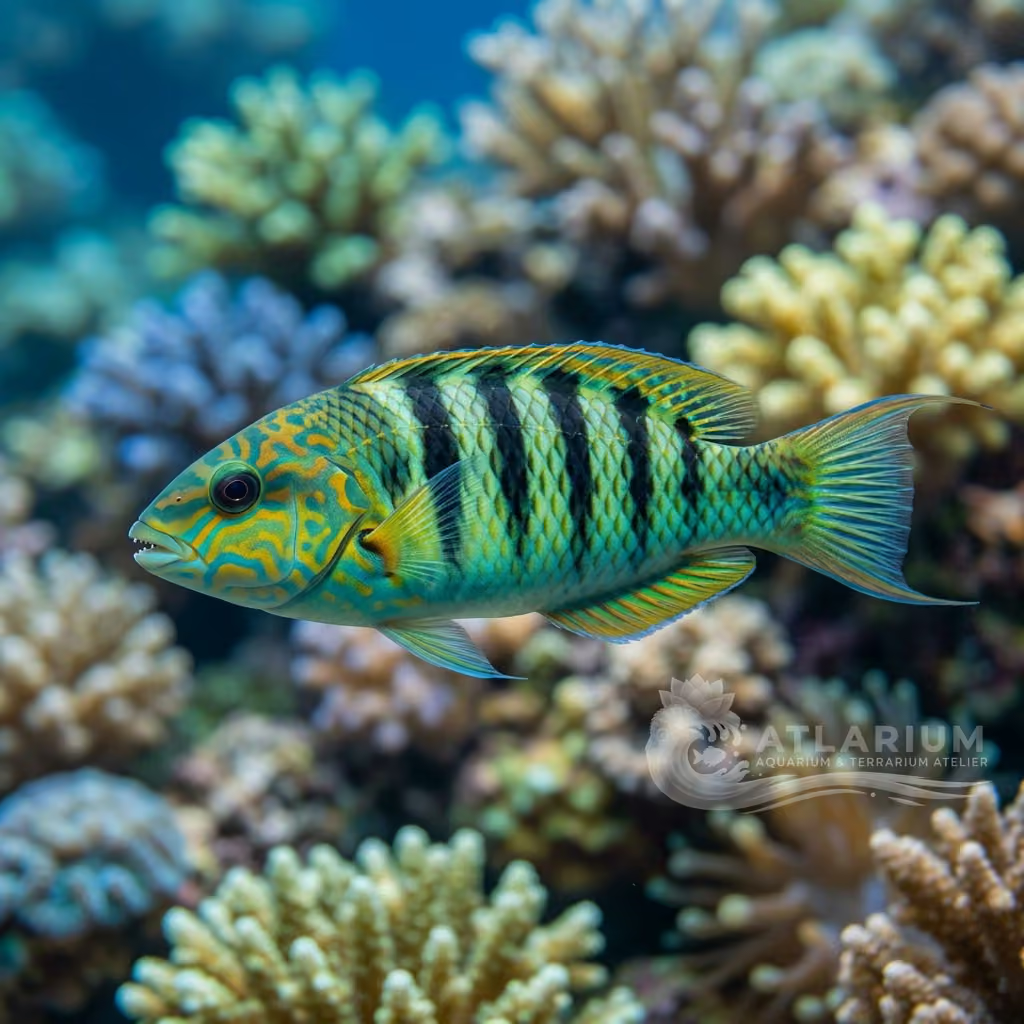
Taxonomy and Morphology: It belongs to the class Actinopterygii, order Perciformes, family Labridae, and genus Coris. It is one of the largest wrasse species in existence, with adult males capable of reaching an exceptional length of 120 centimeters (47 inches) and a substantial weight. Morphology changes drastically with age: juveniles have a slender body, while adult males develop a massive build, thick fleshy lips, and a prominent nuchal hump on their forehead.
Social Behavior: It is solitary and active exclusively during daylight hours. It is an extremely energetic and curious fish that constantly patrols the substrate in search of prey. Adults use their powerful jaws to grab, lift, and flip over rocks, coral rubble, and stones to find hidden invertebrates. It becomes highly territorial and aggressive as it grows, especially toward other wrasses or fish with a similar body shape.
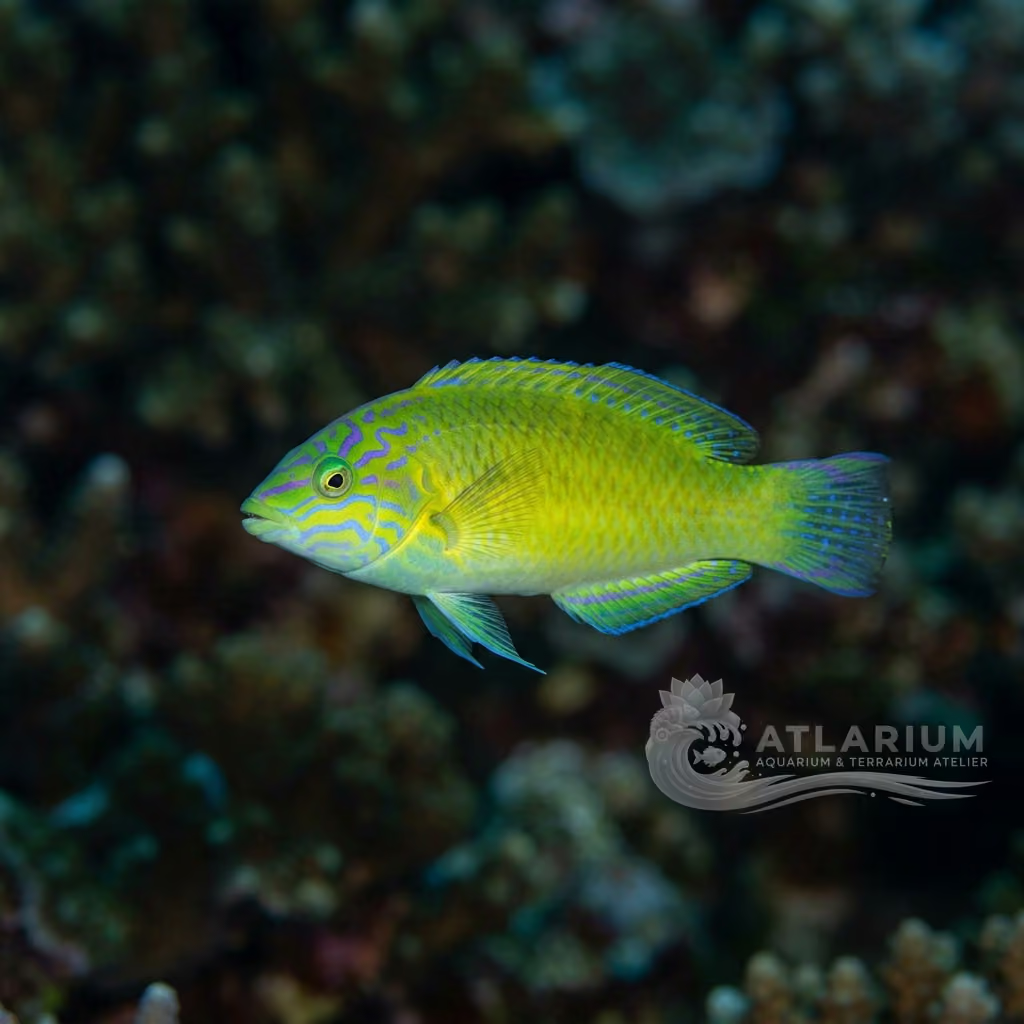
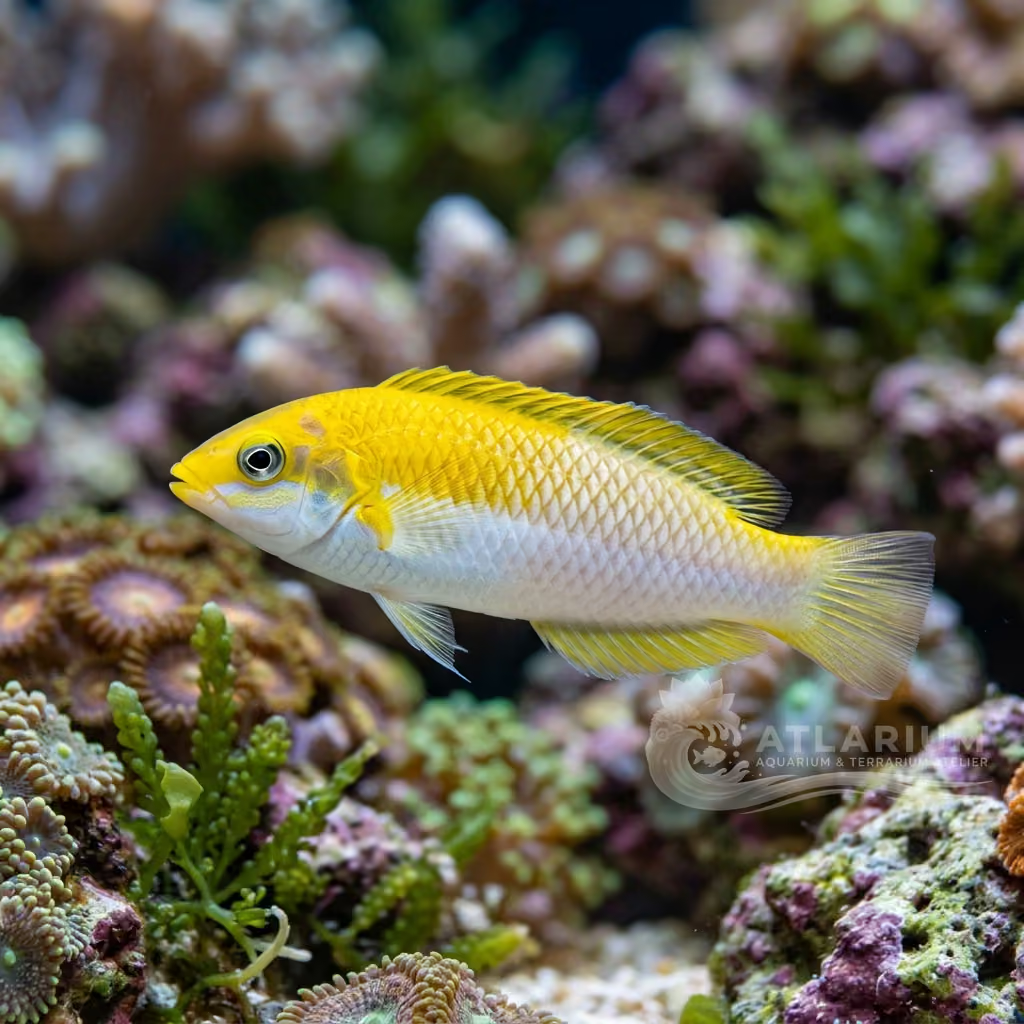
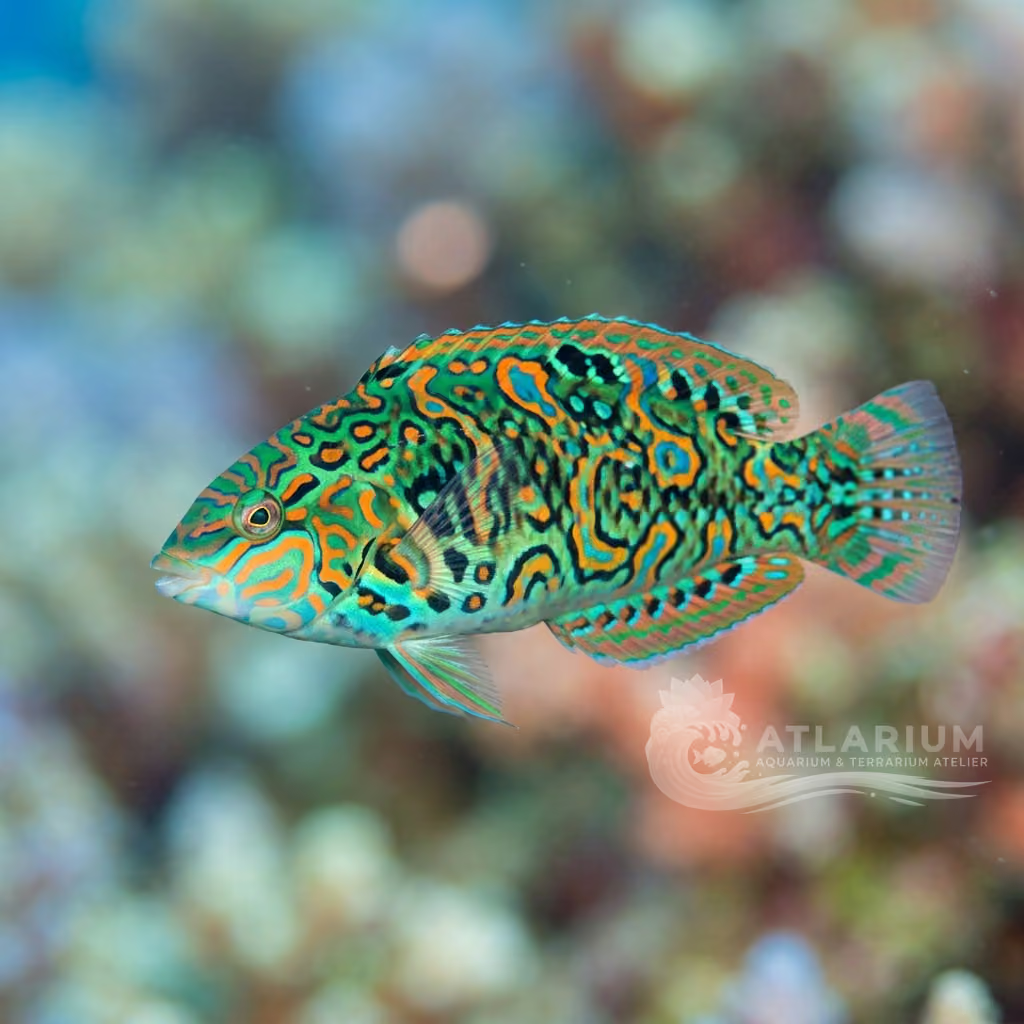
Coloration and Sexual Dimorphism: Wrasse of this species exhibit a radical chromatic metamorphosis. Juveniles are silvery-white with small black spots on the head and two large orange spots on the back, topped by black eyespots on the dorsal fin. Adults turn to a uniform dark green, slate grey, or almost black, often with one or two light green or whitish vertical bands in the middle of the body. Dominant adult males present a darker coloration, frayed fins, and the typical forehead hump.

Cuidado, criação e companheiros de tanque
Aquarium Setup: Due to the colossal size it reaches as an adult, this species requires massive aquariums, with a minimum volume of at least 1000 liters (approx. 260 gallons) for a single adult. It is absolutely mandatory to provide a deep bed of fine sand (at least 10-15 cm / 4-6 inches deep), as this fish buries itself completely in the substrate to sleep at night or when threatened. The rockwork must be extremely stable and heavy, as the fish will flip un-cemented rocks.
Diet and Feeding: It is a carnivorous predator specialized in crushing hard-shelled invertebrates. In the aquarium, it must be fed a varied and abundant diet of meaty foods: whole crabs, shrimp with shells, open clams, mussels, fish meat, squid, and large krill. Juveniles require frequent feedings of brine shrimp, mysis, and chopped seafood. The robust teeth require tough prey to be worn down naturally.
Water Quality: Requires an exceptionally powerful and oversized filtration system to handle the heavy organic load produced by such a large and voracious fish. Water parameters must be optimal and stable: temperature between 24°C and 28°C (75°F - 82°F), pH between 8.1 and 8.4, specific gravity between 1.020 and 1.025. A professional protein skimmer is essential, and nitrates must be kept low. Strong water movement and excellent oxygenation are key.
Compatibility and Cohabitation: Absolutely not reef-safe. It will quickly devour any type of crustacean (shrimp, crabs), mollusk (snails, bivalves), and sea urchin present in the tank. It can only be housed with large, robust, and semi-aggressive to aggressive fish such as large tangs, triggerfish, groupers, large angel fish, and moray eels. Avoid keeping with timid or small to medium-sized companions.
Aquarium Breeding: Breeding in home aquariums is practically impossible due to the large space required for spawning rituals and its pelagic open-water spawning behavior. In natural reefs, they are protogynous hermaphrodites: all individuals are born female, and the largest and most dominant ones change sex to become haremic males that control a territory. This process is accompanied by visible morphological changes.
Risks and Diseases: A major risk is physical trauma from colliding with tank glass or rocks if the fish is startled. It is an exceptional jumper, so the tank must be equipped with a heavy, tight-fitting lid. The lack of a proper sandy substrate or using sand that is too coarse or sharp causes severe stress, skin lesions, and secondary bacterial infections that are often fatal.

Origem e distribuição geográfica
Coris aygula, commonly known as the clown wrasse or red-blotched wrasse, is widely distributed throughout the tropical and subtropical waters of the Indo-Pacific. It is found from the Red Sea and the coasts of East Africa eastward to the Line Islands, ranging north to southern Japan and south to Lord Howe Island. It inhabits coral lagoons, seaward reef slopes, and sandy flats adjacent to reefs at depths between 2 and 30 meters. Juveniles prefer protected tide pools and very shallow coastal waters.
Origem
Oceanos tropicais e recifesÁfrica e MadagascarSul e Sudeste AsiáticoLeste Asiático

Perfil de peixe
- Temperamento
- Territorial
- This fish possesses an active, curious, and extremely strong nature, to the point of being able to lift and flip rocks or coral fragments in search of food. They require an enormous tank with a very deep layer of fine sand (minimum 10-15 cm) where they can bury themselves completely. Adults tend to become highly territorial and intolerant of conspecifics and other wrasses.
- Dieta
- Carnivore
- It is a voracious carnivorous predator equipped with strong jaws capable of crushing the shells of the hardest invertebrates. In the aquarium, its diet must include abundant fresh or frozen foods such as whole crustaceans, shrimp, crabs, sea urchins, clams, and mussels. They also accept large vitamin-enriched pellets to sustain their energy needs.
- Expectativa de vida
- 10-15 years
- Tamanho adulto
- 60 cm
- Proporção sexual
- Solitary
- Single
- Frequência de alimentação
- 2-3 times daily
- Juveniles require small, frequent meals up to 3 times daily, while adult specimens can be fed twice daily with more substantial portions. Regular feeding is essential to limit their natural propensity to actively hunt any life in the tank. It is important to avoid releasing excess food to prevent compromising the physical parameters of the water.
- Carga biológica
- Extreme
- The clown coris creates a substantial bioload, particularly as it transitions from its small juvenile phase into a massive, robust adult. They are aggressive eaters that require large amounts of meaty foods to sustain their rapid growth and high energy levels. Furthermore, their constant overturning of rocks and substrate can stir up trapped detritus, placing an extra burden on mechanical filtration. A powerful protein skimmer, strong water flow, and aggressive biological filtration are required to maintain pristine water quality.
- Fluxo
- Strong
- They prefer moderate to very strong marine currents, simulating reef-lagoon transition zones and wave-swept outer reefs. A vigorous flow supports proper oxygenation and encourages their active behavior as tireless swimmers. The setup must include powerful wavemakers capable of recreating a realistic barrier reef environment.
- Risco de salto
- Yes
- This species poses a very high jump risk, a trait common to almost all members of the wrasse family. When frightened, startled by turning lights, or harassed by other fish, their immediate instinct is to violently propel themselves upward. A heavy-duty, tightly fitted mesh lid or a solid canopy is non-negotiable for their enclosure. Given their large adult size and power, flimsy covers can easily be knocked aside, so robust securing mechanisms are necessary.
- Reprodução
- Oviparous
- They are protogynous hermaphrodites where dominant females transform into males that develop a prominent frontal hump with age. Breeding in the wild occurs through pelagic spawning in large groups or pairs, dispersing eggs into the water column. No cases of successful breeding are known in private aquariums due to the massive size of the adults.
- Compatibilidade e companheiros de tanque
- Community
- Absolutely incompatible with reef or coral aquariums due to their destructive diet regarding invertebrates. They can only coexist with monumentally sized marine fish of aggressive or semi-aggressive temperament, such as large triggerfish, groupers, moray eels, or large tangs. Small, slow, or timid fish would be quickly hunted or severely harassed.
- Nível do tanque
- Middle/Bottom
- The clown coris is highly active across the lower and middle levels of the aquarium, with a profound connection to the substrate. They spend their days constantly patrolling the rockwork and aggressively digging through the sandbed in search of buried invertebrates. At night, or when deeply frightened, they require a deep sandbed to completely bury themselves for protection and sleep. While they may swim upward during feeding time, their primary zone of activity is fundamentally tied to the bottom structure.

Modelos e parâmetros científicos
FishBase
Acesso aos dados científicos oficiais da espécie
FishBase v25.04Dados sincronizados em: 15/06/2026
- Nível trófico
- 3,7 ± 0,53 se
- Resiliência
- Muito baixa (mais de 14 anos)
- Unicidade filogenética (PD50)
- 0.5
- Relação bayesiana comprimento-peso
- a = 0.00813, b = 3.12
- VulnerabilidadeVulnerabilidade de alta a muito alta (72 / 100)

Espécies relacionadas
Recomendações agrupadas por parentes próximos, escolhas de acompanhantes e cuidados semelhantes.