Chocolate Cichlid
Hypselecara temporalis
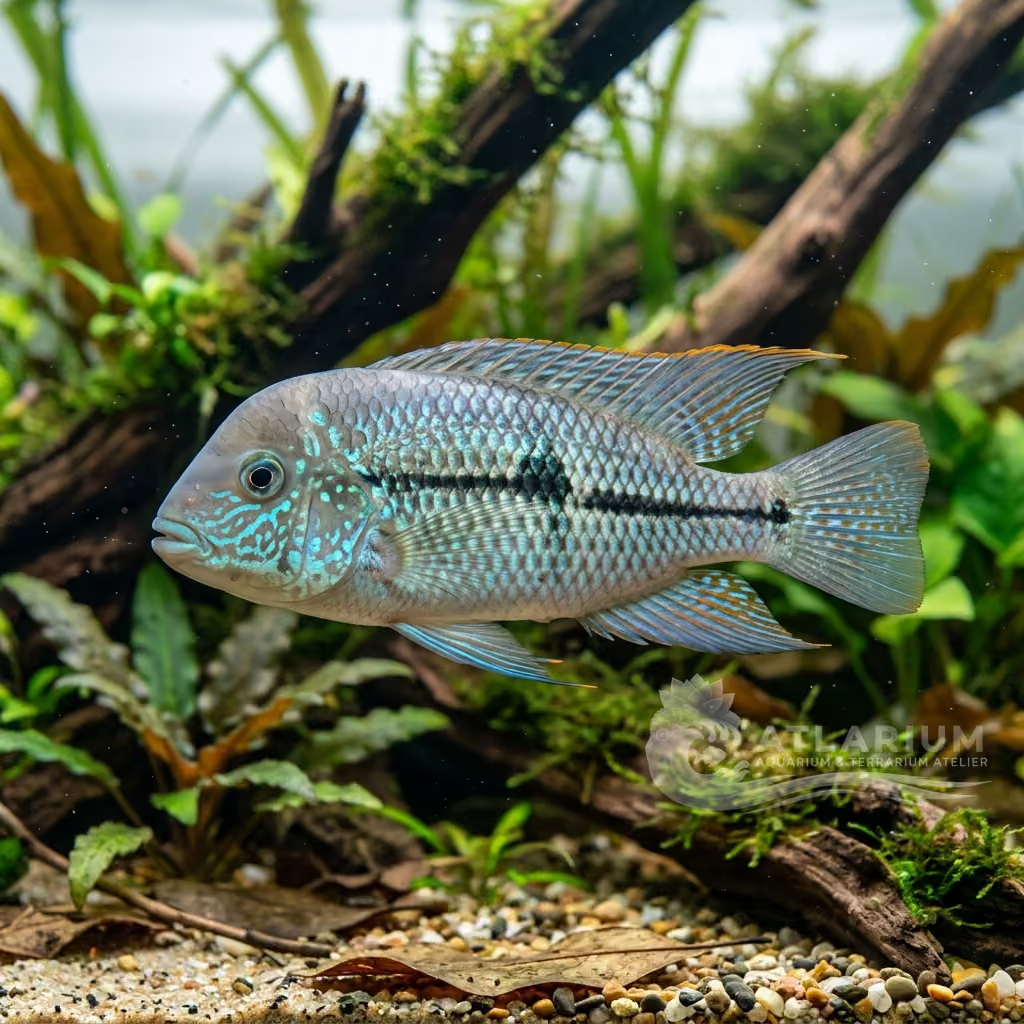
The Chocolate Cichlid (Hypselecara temporalis) is a mastodon of the Amazonian rivers, loved for its massive, rustic appearance and its placid temperament. Reaching the titanic size of 30 cm (12 inches) in length and 20 cm (8 inches) in height, adults develop a unique coloration: a dark chocolate brown or burgundy body, tinged with brick pink and golden yellow on the snout, with an impressive "nuchal hump" in old males. Its golden/dark red eye placed on top of its large head gives it a menacing appearance, which incredibly contrasts with its nature of a 'slow and gentle giant', easily becoming the aquarist's great 'pet fish'.
25 - 29 °C
5.5 - 7.5
Eau douce
Milieu
30 cm
>= 600 L
>= 1
2 - 12 dGH
1 - 6 dKH
40 - 240 ppm
63 - 375 uS/cm

Description de l'espèce

Soins, reproduction et cohabitation

Origine et répartition géographiques
Origine

Profil de poisson
- Tempérament
- Territorial
- They possess a famously relaxed, dog-like personality and often learn to interact with their owners. They are curious and slow-moving, rarely showing aggression outside of breeding periods. They quickly become the centerpiece pet of the aquarium.
- Régime alimentaire
- Omnivore
- Their omnivorous diet is heavily skewed towards animal proteins, but vegetable matter is also needed. High-quality cichlid pellets, frozen krill, earthworms, and occasional spirulina flakes form a perfect diet. Avoid feeding mammalian meats like beef heart.
- Espérance de vie
- 8-12 years
- Taille adulte
- 30 cm
- Ratio des sexes
- Group
- Mature males grow significantly larger, develop a very prominent nuchal hump, and often have longer fin extensions. Females remain smaller and have a steeper, less rounded forehead. Venting is the most accurate method for determining the sex of juveniles.
- Fréquence d'alimentation
- Twice daily
- Feed adult specimens once or twice daily with only what they can aggressively consume in a few minutes. They are eager eaters and will beg for food at the glass. Overfeeding should be strictly avoided to maintain water quality.
- Charge biologique
- High
- This chunky cichlid produces a substantial amount of waste, contributing to a high bioload. Exceptional biological and mechanical filtration is absolutely critical. Strict adherence to a routine water change schedule is necessary to prevent nitrate buildup.
- Courant
- Strong
- They originate from slow-moving rivers and flooded forests, so gentle flow is ideal. They dislike strong currents which cause them unnecessary stress. A setup with moderate turnover but diffused output is best.
- Risque de saut
- No
- Reproduction
- Oviparous
- They are biparental substrate spawners that clean a vertical or flat surface to lay hundreds of eggs. Both parents are exceptionally dedicated and will fiercely guard the territory from intruders. The fry are easily raised on newly hatched brine shrimp.
- Compatibilité et compagnons
- Verify
- They are well-known as gentle giants and make fantastic additions to large community tanks. Suitable tank mates include severums, geophagus, and large peaceful catfish. Small fish will likely be eaten, so companions must be appropriately sized.
- Niveau dans le bac
- Middle
- They navigate the middle to lower regions of the aquarium for the most part. The tank should feature large, open swimming spaces and massive driftwood pieces to act as visual barriers. They rarely damage sturdy plants.

Modèles et paramètres scientifiques
Fenêtre sur les données scientifiques officielles de l’espèce
- Niveau trophique
- 2,4 ± 0,27 se
- Résilience
- Élevée (moins de 15 mois)
- Singularité phylogénétique (PD50)
- 0.75
- Relation bayésienne longueur-poids
- a = 0.03388, b = 3.06
- VulnérabilitéVulnérabilité faible (10 / 100)

Espèces associées
Recommandations regroupées par proches parents, compagnons et soins similaires.