Banded Leporinus
Leporinus fasciatus
The 'Hare-snouted' giant. A massive, yellow-and-black striped herbivore reaching 30 cm. While stunningly beautiful, it is a ruthless aquatic bulldozer: it will devour all plants, rearrange the tank, and aggressively nip the fins of slower fish.
Température de l’eau
22 - 28 °C
Valeur du pH
6 - 7.5
Type d'eau
Eau douce
Niveau dans le bac
Fond et milieu
Taille adulte
30 cm
Volume minimal du bac
>= 300 L
Groupe minimal
>= 1
GH
2 - 15 dGH
KH
1 - 7 dKH
TDS
40 - 295 ppm
Conductivité
63 - 461 uS/cm

Description de l'espèce
Geographical Origin and Habitat: Extremely widespread across the entire Amazon and Orinoco basins. Migrates into flooded forests during the wet season to forage heavily on submerged terrestrial plants and seeds.
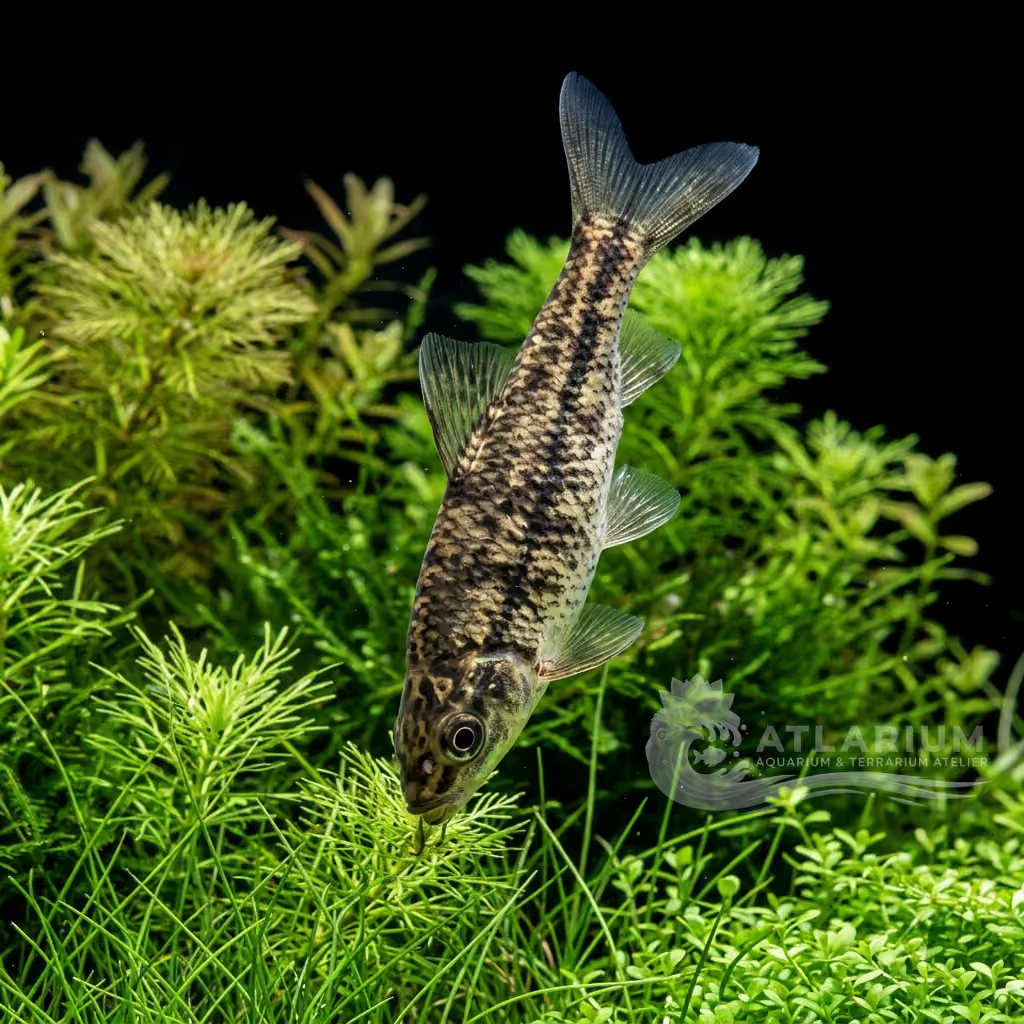
Taxonomy and Morphology: A jumbo member of the Anostomidae family (reaching up to 30 cm / 12 inches). The genus name Leporinus means 'little hare', referring to their prominent, sharp buck-teeth. These teeth are powerful shears designed to crunch through thick plant stems and woody seeds. Massive, torpedo-shaped body built for speed and power.
Social Behavior: Bold, constantly hungry, and highly active. It is an incredibly powerful swimmer. Unfortunately, it has a terrible reputation: it is a notorious fin-nipper. It will brutally bite and sever the long fins or sensory barbels of slow tankmates (like Angelfish or Gouramis). Highly hierarchical and aggressive toward its own kind.
Coloration and Sexual Dimorphism: Extremely striking, reminiscent of a bumblebee or tiger. Bright canary yellow body (often flushed with orange on the snout) crossed vertically by 9 to 11 extremely thick, solid black bands. Juveniles start with fewer bands (often 5) which split like a 'Y' as the fish grows into adulthood. No obvious sexual dimorphism.

Soins, reproduction et cohabitation
Aquarium Setup: Demands a massive footprint (MINIMUM 150-180 cm / 5-6 feet). FORGET LIVE PLANTS: they will be sheared to the gravel and eaten, including tough plants and sometimes soft plastic ones. Decorate exclusively with massive, heavy boulders, giant driftwood, and sand (they will dig). A heavy, shatter-proof lid is mandatory. A jumping 30-cm Leporinus can shatter standard glass lids and end up meters away on the floor.
Diet and Feeding: Voracious Herbivore/Omnivore. Diet MUST be primarily vegetable to prevent fatal bloat. Feed whole blanched romaine lettuce leaves, thick zucchini slices, spinach, shelled peas, and jumbo herbivore cichlid pellets. Supplement with large earthworms, whole shrimp, and jumbo bloodworms. They bite and twist violently to tear chunks off food.
Water Quality: Incredibly hardy. Adapts to almost any reasonable parameters (pH 5.5-7.5). Temp 22-28°C (72-82°F). However, because they eat massive volumes of vegetables, they produce the bioload of a large Oscar. Giant canister filters and heavy water flow (wavemakers) are required.
Compatibility and Cohabitation: Very difficult. STRICTLY FOR 'MONSTER FISH' TANKS. Never house in a standard community. They will bully and mutilate slow fish. House only with large, tough, aggressive/semi-aggressive cichlids that can defend themselves (Green Terrors, massive Geophagus, Severums, Oscars) or armored Plecos. Must be kept either as a completely SOLITARY specimen or in a massive school (8+) to disperse intraspecific aggression.
Aquarium Breeding: Unrecorded in aquaria; requires massive seasonal flood triggers.
Risks and Diseases: 1. MUTILATION: will mercilessly nip the fins off slow or peaceful tankmates. 2. Utter destruction of planted setups. 3. Smashing through tank lids due to massive jumping power. 4. Extremely long lifespan (15+ years) making them a huge long-term commitment.

Origine et répartition géographiques
Extremely widespread across the entire Amazon and Orinoco basins. Migrates into flooded forests during the wet season to forage heavily on submerged terrestrial plants and seeds.
Origine
Amazonie, Orénoque et GuyanesAmérique du Nord

Profil de poisson
- Tempérament
- Semi-aggressive
- They are active and sometimes boisterous. Aggression is mostly directed at conspecifics. A large group helps reduce targeted bullying.
- Régime alimentaire
- Omnivore
- Leporinus fasciatus is an omnivore favoring plant matter. Feed them spirulina pellets and fresh vegetables. They will also eat small meaty foods.
- Espérance de vie
- 8-12 years
- Taille adulte
- 30 cm
- Ratio des sexes
- Group
- A specific sex ratio is not critical. Keep them in groups to disperse aggression. Sexing young individuals is very difficult.
- Fréquence d'alimentation
- Twice daily
- Feed them twice a day. Offer small portions to prevent water fouling. They have a very healthy appetite.
- Charge biologique
- High
- Leporinus fasciatus is a large and active fish. It produces a substantial amount of waste. Strong filtration is absolutely required.
- Courant
- Stagnant
- They appreciate a moderate to strong water flow. Good circulation mimics their native rivers. Adequate surface agitation is also important.
- Risque de saut
- Yes
- The jump risk is incredibly high. They are powerful jumpers when startled. A heavy, tight-fitting lid is mandatory.
- Reproduction
- Oviparous
- Breeding in captivity is exceedingly rare. They do not exhibit any parental care. Commercial breeding uses hormone injections.
- Compatibilité et compagnons
- With caution
- This species can be a fin-nipper. Keep them with robust, fast-moving fish. Do not keep them with slow species.
- Niveau dans le bac
- Middle/Bottom
- Leporinus fasciatus swims primarily in the middle levels. They need a lot of open swimming space. A long aquarium is highly recommended.

Modèles et paramètres scientifiques
FishBase
Fenêtre sur les données scientifiques officielles de l’espèce
FishBase v25.04Données synchronisées le : 15/06/2026
- Niveau trophique
- 3 ± 0,34 se
- Résilience
- Moyenne (1,4 - 4,4 ans)
- Singularité phylogénétique (PD50)
- 0.5
- Relation bayésienne longueur-poids
- a = 0.01023, b = 3.08
- VulnérabilitéVulnérabilité faible à modérée (27 / 100)

Espèces associées
Recommandations regroupées par proches parents, compagnons et soins similaires.