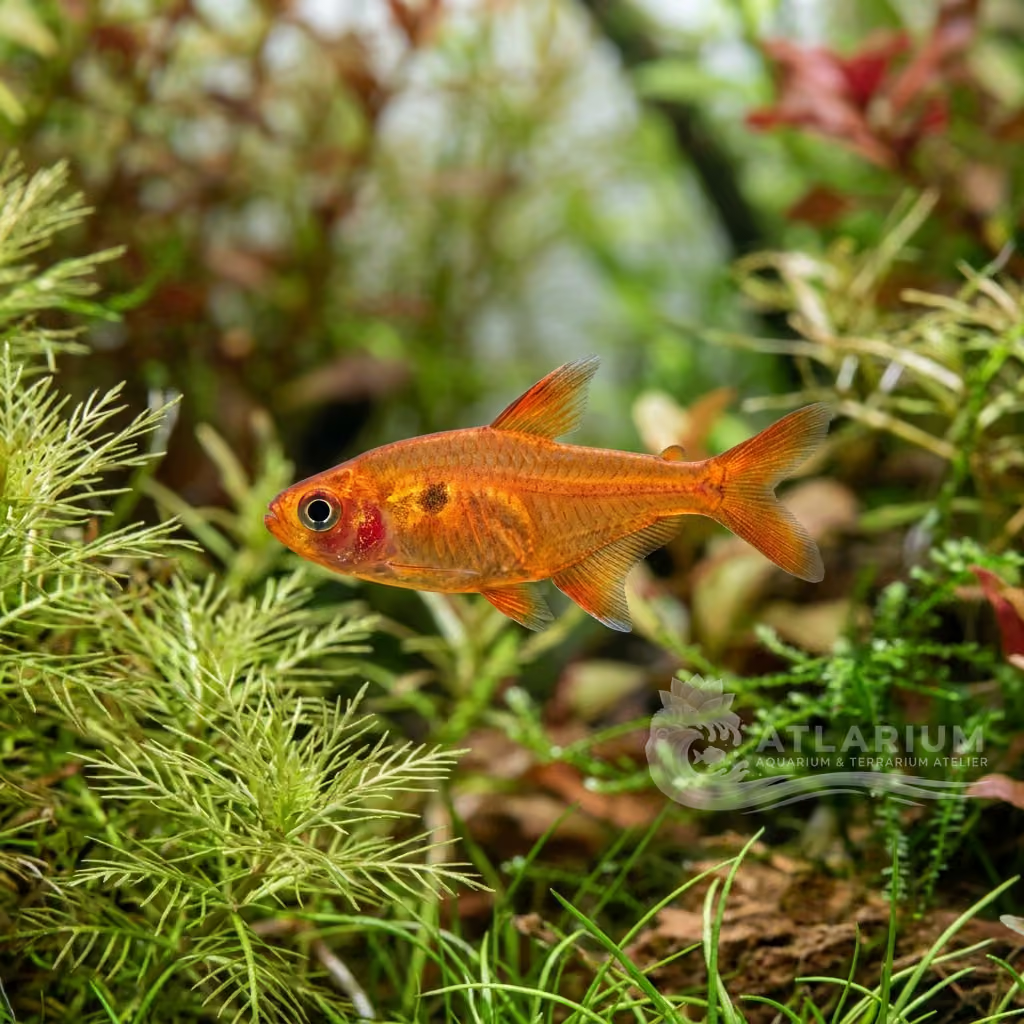
Red Eye Tetra
Bario sanctaefilomenae
The Red-eye Tetra is a hardy, active schooling fish suitable for community aquariums. Easily identified by its silver body and bright red eye, it must be kept in groups of at least six. It thrives in well-planted setups with dark substrate, peacefully coexisting with other similar-sized species.
Température de l’eau
22 - 26 °C
Valeur du pH
6 - 7.5
Type d'eau
Eau douce
Niveau dans le bac
Surface et milieu
Taille adulte
7 cm
Volume minimal du bac
>= 60 L
Groupe minimal
>= 6
GH
4 - 15 dGH
KH
2 - 7 dKH
TDS
80 - 295 ppm
Conductivité
125 - 461 uS/cm

Description de l'espèce
Geographical Origin and Habitat: River basins of Paraguay, Parana and Uruguay, in eastern South America. Ranges from clear waters in Brazil to subtropical swamps (Pantanal), tolerating strong climatic variations.
Taxonomy and Morphology: Red-eye Tetra (Bario sanctaefilomenae). Classic "battle" tetra. Has a decidedly more stocky, convex body and large scales (like its cousin pittieri) compared to thin tetras like neons.
Social Behavior: Dynamic gregariousness (shoaling). Incessantly explores every crevice of the tank. Tends to "detach" from the school if there are few specimens (minimum 6-8) annoying other inhabitants out of boredom.
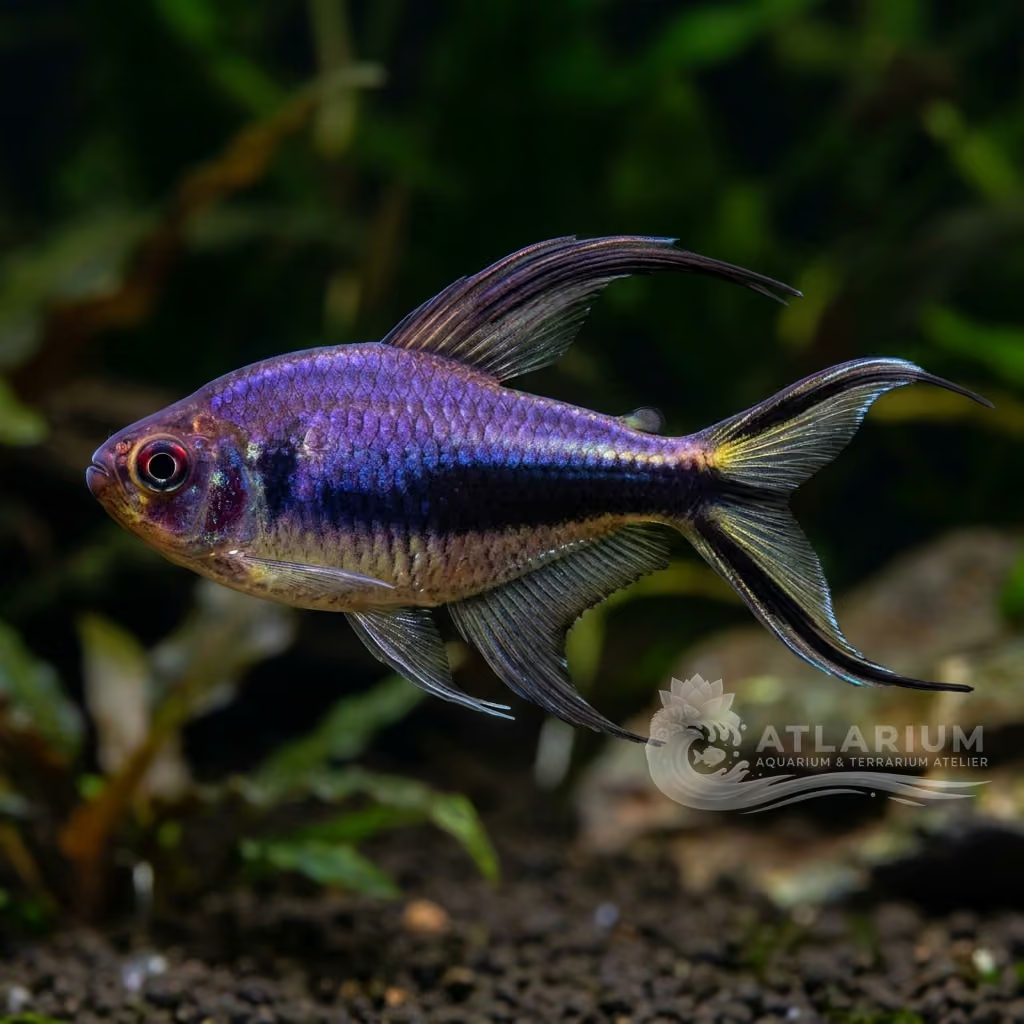
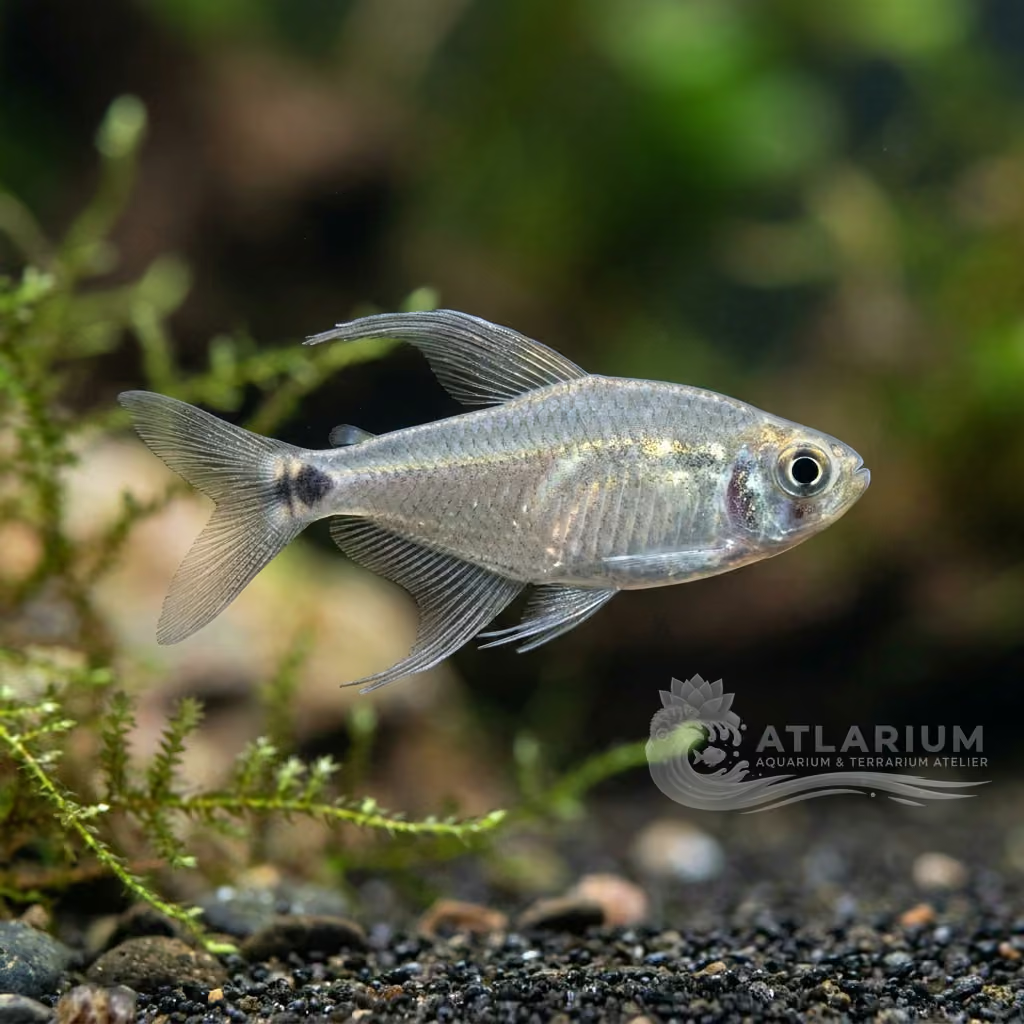
Coloration and Sexual Dimorphism: Simple but high contrast. Metallic gray/silver livery, with a large vertical black band (followed by a white one) on the base of the tail. Standout feature: the bright red semicircle on the upper area of the eye (Red Eye). Females very swollen and stocky.

Soins, reproduction et cohabitation
Aquarium Setup: Aquarium of at least 80 cm (32 inches), set up in planted river style: intricate roots and woods, leaves on the bottom and a clear frontal area for long swimming sprints. Can tear thin leaves if hungry.
Diet and Feeding: Totally unproblematic. Anything that falls into the tank: granules, flakes, frozen brine shrimp, peas. Greedy eater who will rise to "boil" on the surface at mealtime.
Water Quality: Armored fish. Among the most tolerant of South American characins, it tolerates ph from 6.0 to almost 8.0, and significant thermal swings (being of subtropical origin, it prefers water not too warm, max 25°C / 77°F).
Compatibility and Cohabitation: Watch out for long fins. Has a reputation as a "Fin-nipper". Keep away from Angelfish, Guppies or Gouramis. Ideal for robust tanks with Plecostomus, large Central American Cichlids (Thorichthys) or Barbs.
Aquarium Breeding: They release many eggs among the moss (Java Moss) at dawn, often after a massive cold water change. The eggs hatch quickly and the fry require infusoria. The breeders will avidly eat the brood.
Risks and Diseases: Dwarfism and chronic stress in cramped spaces. Frequently sold for 30-liter (8 Gallons) tanks "because it is small". If trapped, it will bite anyone to death, fade and develop bacteriosis due to excessive pollution (it has a very high metabolism).

Origine et répartition géographiques
River basins of Paraguay, Parana and Uruguay, in eastern South America. Ranges from clear waters in Brazil to subtropical swamps (Pantanal), tolerating strong climatic variations.
Origine
Amérique du Sud hors Amazonie

Profil de poisson
- Tempérament
- Semi-aggressive
- They are active, lively, and generally peaceful, but they have a slightly boisterous edge compared to smaller tetras. If their school is too small, they may become stressed and take to harassing or nipping the fins of other fish. When kept in a proper school, they are engaging and entirely suitable for a community tank.
- Régime alimentaire
- Omnivore
- These tetras are hardy omnivores that will eagerly accept almost any food offered. High-quality tropical flakes or micro-pellets form a good staple diet. Supplementing with live, frozen, or freeze-dried foods like bloodworms and brine shrimp will ensure optimal health and enhance the bright red coloration above their eyes.
- Espérance de vie
- 5 years
- Taille adulte
- 7 cm
- Ratio des sexes
- School
- Sexing is difficult, though mature females tend to be noticeably rounder and more full-bodied than the sleeker males. To minimize their occasional fin-nipping tendencies, they must be kept in a sizable school of at least six to eight individuals. A larger school disperses aggression and makes them feel secure, rendering the exact sex ratio unimportant.
- Fréquence d'alimentation
- Twice daily
- Offer small portions of food twice daily, ensuring they consume everything within two to three minutes. They are aggressive eaters that feed voraciously from the middle and upper levels of the water column. Care must be taken to ensure that slower or bottom-dwelling tank mates get their share of food.
- Charge biologique
- Low to Medium
- The Red-eye Tetra produces a low to moderate bioload depending on the size of the school. They are hardy and robust fish, but the cumulative waste of a large group requires decent filtration. Standard weekly maintenance and water changes are sufficient to keep their environment healthy.
- Courant
- Stagnant
- They are adaptable to a wide range of conditions but generally prefer moderate water movement. Originating from various river basins in South America, a decent current mimics their natural environment and keeps them active. Avoid creating whirlpool-like conditions, ensuring there are calm areas for resting.
- Risque de saut
- Yes
- There is a moderate risk of jumping, particularly when they are startled, chased, or first introduced to the aquarium. Their active nature means they can easily leap from an open tank during feeding frenzies. A secure hood or glass canopy is strongly recommended.
- Reproduction
- Oviparous
- They are prolific egg scatterers that do not exhibit any parental care. Spawning is easily induced in a separate breeding tank with soft, slightly acidic water and dense vegetation. To yield any fry, the parents must be removed immediately after spawning, or they will devour all the eggs.
- Compatibilité et compagnons
- With caution
- They are generally peaceful but can sometimes be a bit boisterous or nip fins if kept in groups that are too small. They are excellent community fish when housed with other medium-sized, active species. Avoid keeping them with very slow-moving or long-finned fish like Bettas or Angelfish, as they may become targets for nipping.
- Niveau dans le bac
- Top/Middle
- They are highly active fish that primarily utilize the upper and middle levels of the aquarium. They require ample open swimming space to exercise their schooling instincts. While they appreciate some plant cover, swimming space should not be overly restricted by dense hardscape or vegetation.

Modèles et paramètres scientifiques
FishBase
Fenêtre sur les données scientifiques officielles de l’espèce
FishBase v25.04Données synchronisées le : 15/06/2026
- Niveau trophique
- 3 ± 0,32 se
- Résilience
- Élevée (moins de 15 mois)
- Singularité phylogénétique (PD50)
- 0.5039
- Relation bayésienne longueur-poids
- a = 0.01479, b = 3.03
- VulnérabilitéVulnérabilité faible (10 / 100)

Espèces associées
Recommandations regroupées par proches parents, compagnons et soins similaires.