Penguin Tetra
Thayeria boehlkei
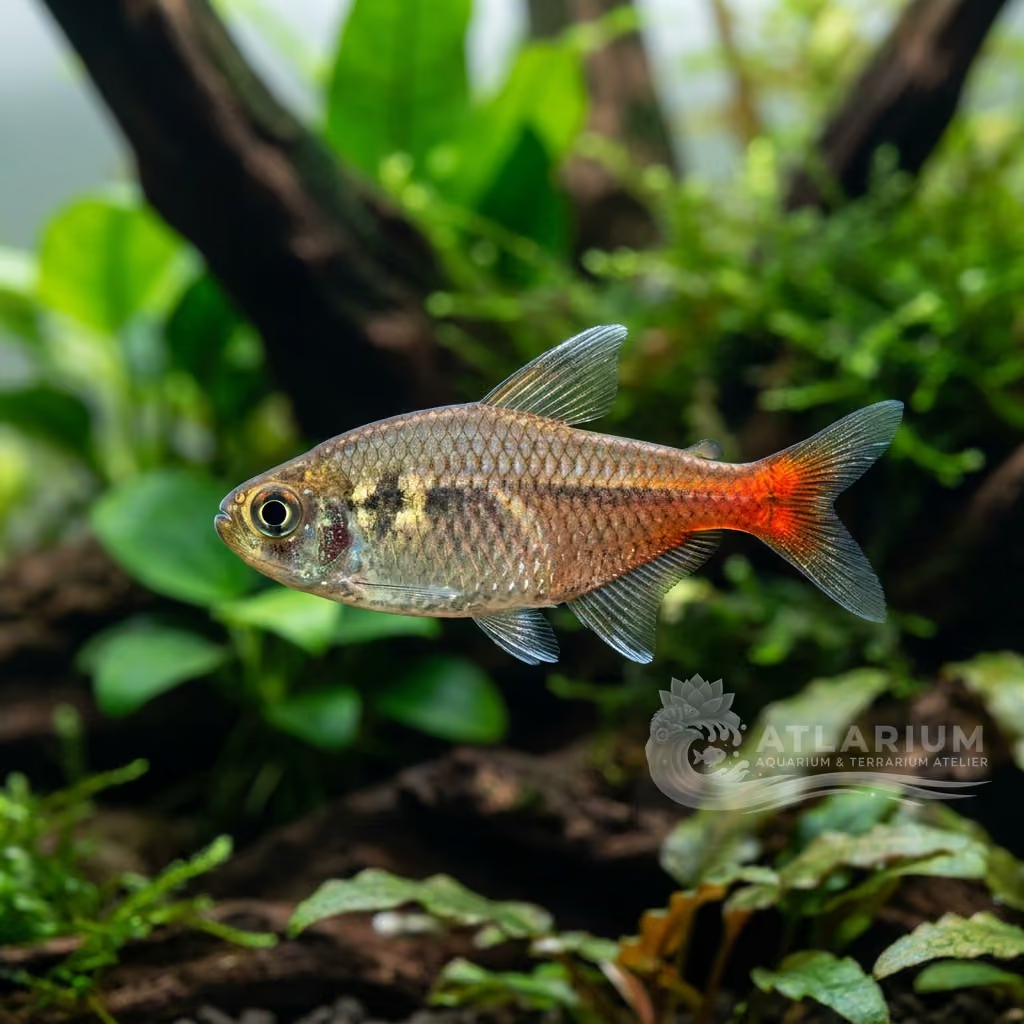
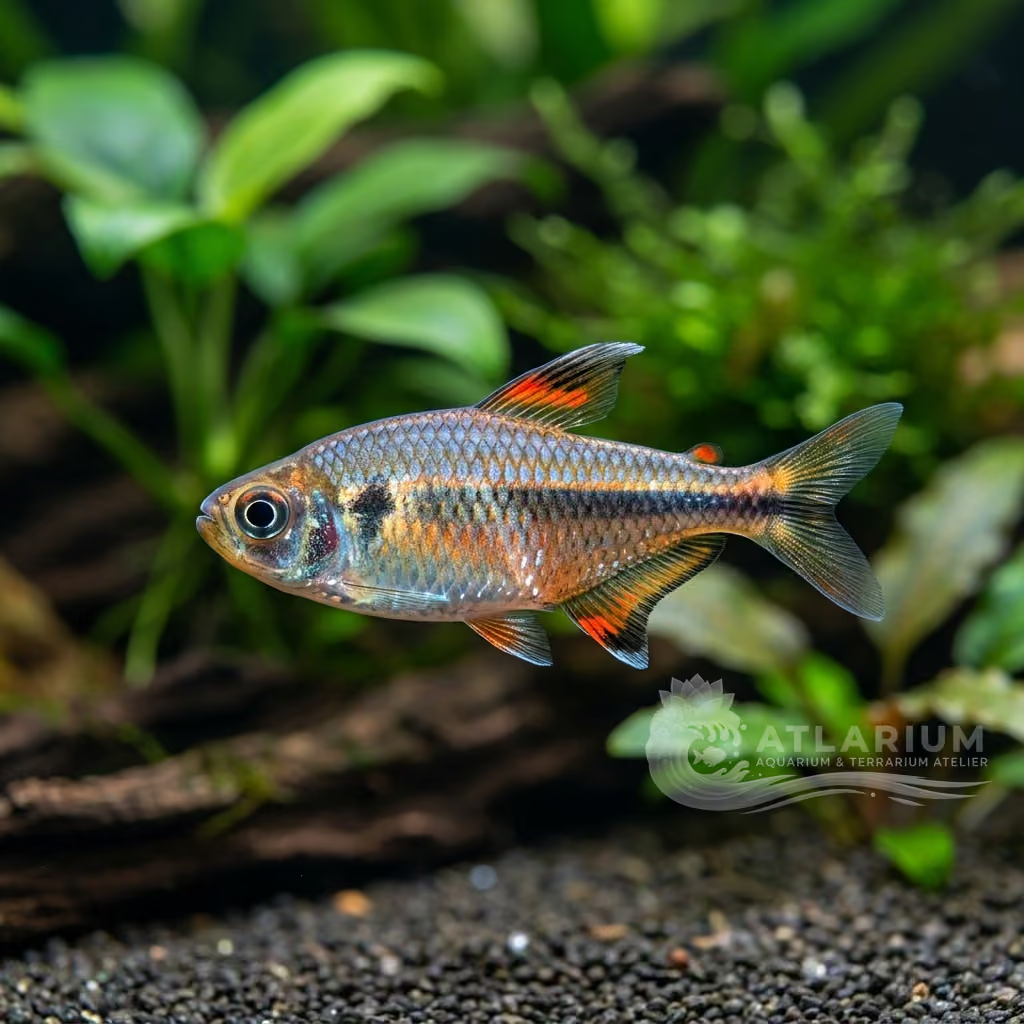
The oblique-swimming tetra. Instantly recognizable by its 'head-up' resting angle (30 degrees) and the bold black 'hockey-stick' stripe running down its body and into the lower tail fin. A very active, top-dwelling schooler.
Température de l’eau
22 - 28 °C
Valeur du pH
5.5 - 7.5
Type d'eau
Eau douce
Niveau dans le bac
Surface
Taille adulte
6 cm
Volume minimal du bac
>= 60 L
Groupe minimal
>= 6
GH
2 - 15 dGH
KH
1 - 7 dKH
TDS
40 - 295 ppm
Conductivité
63 - 461 uS/cm

Description de l'espèce
Geographical Origin and Habitat: Amazon basin in Peru and Brazil, particularly the Araguaia river. Inhabits slow-moving tributaries, swamps, and floodplains filled with submerged branches and vegetation.
Taxonomy and Morphology: Elongated Characin (5-6 cm). The lower lobe of its caudal (tail) fin is noticeably longer and more developed than the upper lobe, an evolutionary adaptation tied directly to its unique swimming style.
Social Behavior: Peculiar and fascinating. Mid-to-top dwelling schooler. Its most famous trait is its posture: when resting, it hovers in the water with its head pointing UPWARD at a 30-degree angle. This is considered camouflage to mimic drifting organic debris or twigs. They are hyper-active, fast swimmers. If kept in small numbers (under 6), they become bored and will annoy or chase tankmates.
Coloration and Sexual Dimorphism: Bright platinum/silver base. Sliced longitudinally by a thick, velvety black 'hockey-stick' stripe: it starts at the gill, runs straight down the flank, and abruptly DIPS DOWN to fill the entire elongated lower lobe of the tail fin. No obvious sexual dimorphism, though gravid females are significantly rounder in the belly.

Soins, reproduction et cohabitation
Aquarium Setup: A very strong swimmer requiring a long tank (minimum 100 cm / 40 inches). Needs plenty of open swimming space in the upper levels, combined with thick plant stands (Swords, Vallisneria) on the edges to retreat into when spooked. A tight-fitting lid is mandatory: they are frantic during feeding and easily jump out.
Diet and Feeding: Surface/mid-water omnivore. Extremely voracious (often outcompeting shy fish for food). Eats everything: flakes, floating pellets, bloodworms, daphnia, and especially small insects dropped on the surface (flightless fruit flies).
Water Quality: Very hardy and adaptable. Thrives in both soft, acidic water (pH 6.0) and moderate, slightly alkaline tap water (pH up to 7.5). Temp 23-28°C (73-82°F). Routine maintenance is all that is required.
Compatibility and Cohabitation: Excellent, BUT caution regarding their hyperactivity: their frantic swimming can deeply stress slow, shy fish like Dwarf Cichlids or Discus. Great with medium-sized peaceful cichlids (Severums, Geophagus), large armored catfish, and active Corydoras. MUST be kept in a large school (10-12+); if kept in groups of 3-4, they become nippy and aggressive out of hierarchical frustration.
Aquarium Breeding: Highly prolific egg-scatterers (laying over 1000 eggs among fine plants at dusk). In community tanks, eggs are eaten instantly. In breeding setups, parents must be removed. Fry hatch in just 24h and are microscopic, requiring infusoria.
Risks and Diseases: 1. Jumping out of open-top tanks during feeding frenzies. 2. Fin-nipping slow fish (like Angelfish) if the Penguin Tetra school is too small. 3. Ich outbreaks from sudden cold drafts.

Origine et répartition géographiques
Amazon basin in Peru and Brazil, particularly the Araguaia river. Inhabits slow-moving tributaries, swamps, and floodplains filled with submerged branches and vegetation.
Origine
Amazonie, Orénoque et Guyanes

Profil de poisson
- Tempérament
- Semi-aggressive
- They are active, hardy, and generally peaceful fish that add a lot of movement to the upper layers. While mostly well-behaved, they can be boisterous and nip fins if kept in numbers too small to form a proper school. Their unique swimming posture makes them a fascinating addition.
- Régime alimentaire
- Omnivore
- They are omnivorous micro-predators that are not picky eaters in captivity. A high-quality micro-pellet or flake food should form the staple of their diet. To ensure optimal health, supplement their diet with live or frozen foods like daphnia and bloodworms.
- Espérance de vie
- 3-5 years
- Taille adulte
- 6 cm
- Ratio des sexes
- School
- A balanced ratio of males to females is not strictly necessary, but having a mix encourages natural schooling behaviors. Keeping them in a group of at least six to ten individuals is far more important than the sex ratio. A larger group significantly reduces stress.
- Fréquence d'alimentation
- Twice daily
- They should be fed small amounts once or twice a day. Only offer what they can completely consume within two to three minutes to avoid water pollution. Because of their angled swimming posture, they easily spot and consume floating or slowly sinking foods.
- Charge biologique
- Low
- The Penguin tetra has a low bioload, making it an excellent choice for community aquariums. A standard sponge or hang-on-back filter is usually more than sufficient to handle a school of these fish. Regular weekly water changes are recommended to maintain optimal water quality.
- Courant
- Stagnant
- They appreciate a moderate water flow that mimics the slow-moving rivers and tributaries of the Amazon basin. While they enjoy some current to swim against, there should also be heavily planted areas for resting. Good surface agitation is beneficial for maintaining oxygen levels.
- Risque de saut
- Yes
- They are active swimmers and present a moderate jump risk, particularly when introduced to a new tank. A well-fitted aquarium lid is recommended to ensure they do not jump out. Floating plants can help diffuse lighting and make them feel more secure.
- Reproduction
- Oviparous
- Breeding is relatively easy, making them a good choice for beginners interested in breeding egg-scatterers. A separate, dimly lit breeding tank with fine-leaved plants or a spawning mop is required. The adults are voracious egg eaters and must be removed immediately after spawning.
- Compatibilité et compagnons
- Peaceful
- They are generally peaceful schooling fish that do well in a community setup with other similarly sized species. Excellent tank mates include other small tetras, corydoras catfish, and peaceful rasboras. However, they can be slightly nippy toward slow-moving fish with long fins.
- Niveau dans le bac
- Top
- They are mid to upper-level swimmers that are famous for their unique, oblique swimming angle. They rest and swim with their heads pointing upwards, a characteristic trait of the species. They require plenty of open swimming space in the middle of the aquarium to school together.

Modèles et paramètres scientifiques
FishBase
Fenêtre sur les données scientifiques officielles de l’espèce
FishBase v25.04Données synchronisées le : 15/06/2026
- Niveau trophique
- 3,3 ± 0,41 se
- Résilience
- Moyenne (1,4 - 4,4 ans)
- Singularité phylogénétique (PD50)
- 0.625
- Relation bayésienne longueur-poids
- a = 0.01096, b = 3.08
- VulnérabilitéVulnérabilité faible (10 / 100)

Galerie d'images
Images sous licence liées à l'espèce ou, lorsqu'elles sont indiquées, au taxon représentatif le plus proche.

Espèces associées
Recommandations regroupées par proches parents, compagnons et soins similaires.