Rainbow Tetra
Nematobrycon lacortei
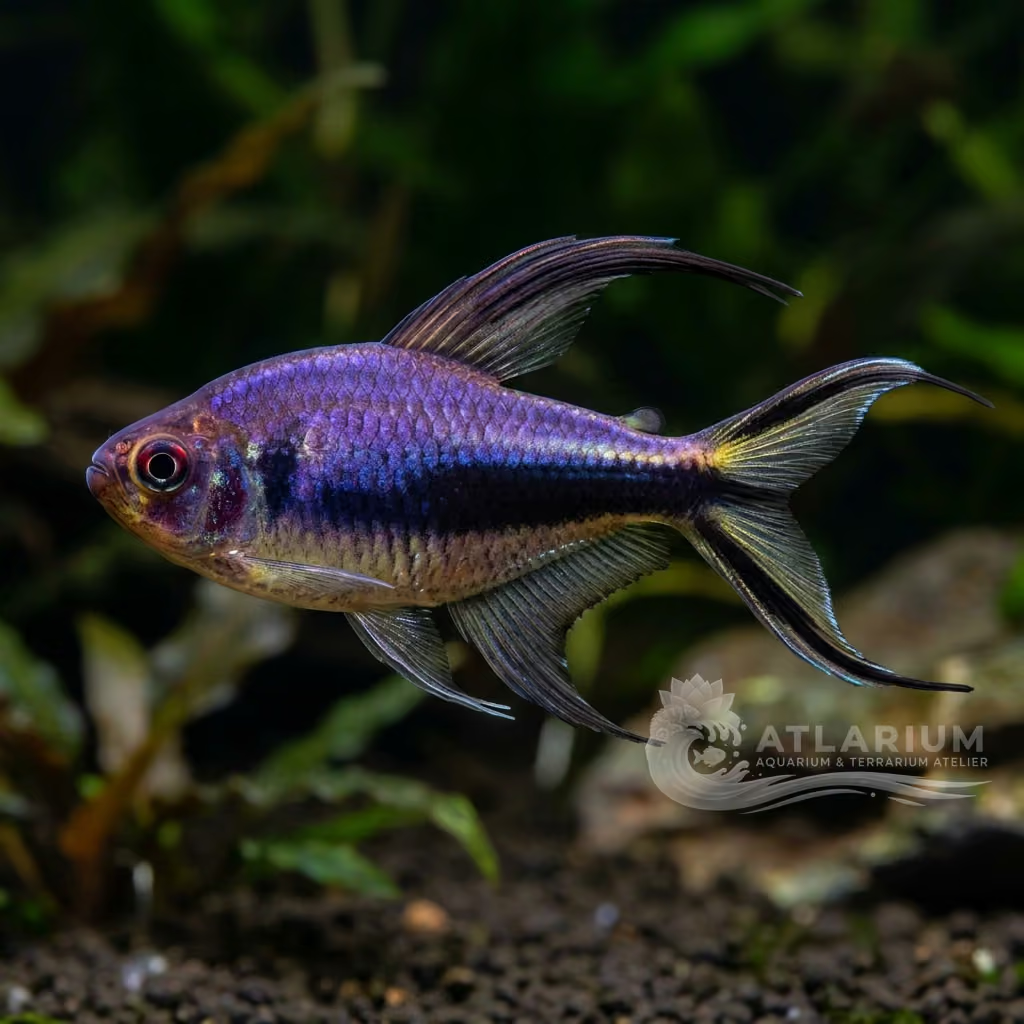
A beautiful small freshwater fish from Colombia, renowned for its iridescent coloration and bright red eyes. Males display a striking extended tail filament during impressive displays.
Température de l’eau
23 - 27 °C
Valeur du pH
6 - 7.2
Type d'eau
Eau douce
Niveau dans le bac
Milieu
Taille adulte
5 cm
Volume minimal du bac
>= 80 L
Groupe minimal
>= 6
GH
3 - 10 dGH
KH
2 - 6 dKH
TDS
65 - 210 ppm
Conductivité
102 - 328 uS/cm

Description de l'espèce
Geographical Origin and Habitat: This species is native to Western Colombia, specifically found in the San Juan River basin. It inhabits slow-moving forest streams, small tributaries, and quiet pools characterized by dense overhanging vegetation, leaf-litter substrates, and soft, slightly acidic blackwater.
Taxonomy and Morphology: Member of the Characidae family. It features a laterally compressed, slender body. The caudal fin is unique and trilobed, with the middle ray extending into a long black filament (spade-like) in adult males. Grows to a maximum length of about 4.5-5.0 centimeters.
Social Behavior: Schooling species, though males display mild territorial behavior. Dominant males establish temporary territories and engage in non-harmful sparring displays by swimming parallel with flared fins. Should be kept in groups of at least 6-8 individuals.
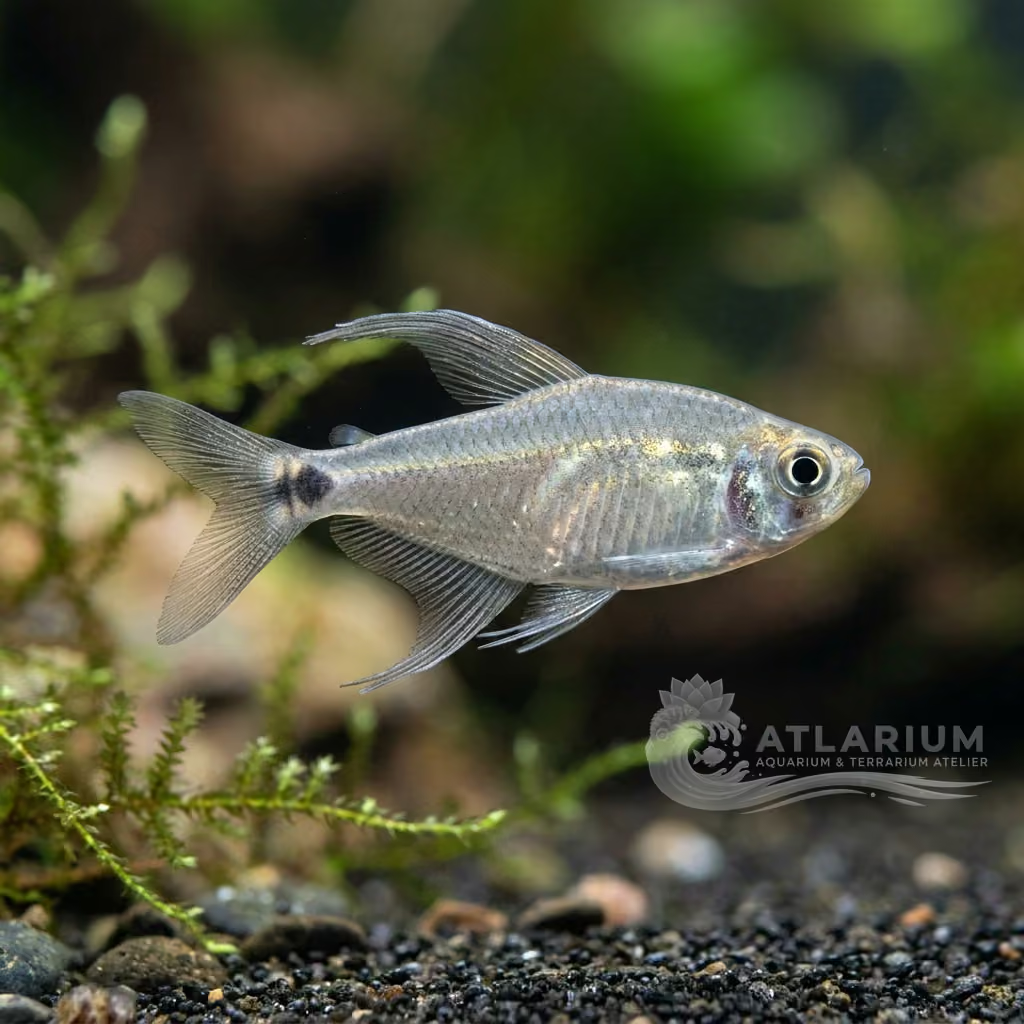
Coloration and Sexual Dimorphism: The body displays a striking iridescence with hues of pink, green, blue, and gold depending on the light. The eyes are bright red. Sexual dimorphism is clear: males are larger, have brighter red eyes, elongated dorsal and anal fins, and the prominent black caudal filament.

Soins, reproduction et cohabitation
Aquarium Setup: Requires a tank of at least 80 liters with dense lateral and background planting (e.g., Cryptocorynes and Java Moss) while leaving the center open for swimming. A dark substrate and leaf litter (such as Indian Almond leaves) will replicate their habitat and enhance their iridescent colors.
Diet and Feeding: Omnivorous. Readily accepts high-quality commercial flakes and micro-pellets. To encourage vibrant coloration and health, supplement their diet regularly with live or frozen foods such as bloodworms, daphnia, brine shrimp, and tubifex.
Water Quality: Prefers soft, acidic water conditions. Ideal parameters: temperature 22 to 28 °C, pH 6.0 to 7.2, GH 3-12, and KH 2-8. They are sensitive to elevated nitrate levels; regular partial water changes and moderate filtration with gentle water movement are necessary.
Compatibility and Cohabitation: An excellent choice for peaceful community tanks. Suitable tankmates include other tetras, dwarf cichlids, corydoras, and small loricariids. Do not house with large, hyperactive, or predatory species that might prey on them or stress them.
Aquarium Breeding: Oviparous. Spawning is relatively straightforward in a separate breeding tank filled with fine-leaved plants. Parents should be removed immediately after spawning to prevent egg predation. The fry hatch in about 36 hours and require infusoria as first food.
Risks and Diseases: Susceptible to Ich (white spot disease) and velvet if subjected to sudden temperature drops or poor water conditions. They can also contract neon tetra disease (Plistophora). Maintaining stable water quality and quarantining new fish are vital.

Origine et répartition géographiques
This species is native to Western Colombia, specifically found in the San Juan River basin. It inhabits slow-moving forest streams, small tributaries, and quiet pools characterized by dense overhanging vegetation, leaf-litter substrates, and soft, slightly acidic blackwater.
Origine
Amérique du Sud hors Amazonie

Profil de poisson
- Tempérament
- Territorial
- While generally peaceful toward other species, males display a striking, semi-aggressive territoriality towards conspecifics. They frequently engage in elaborate lateral displays and mock battles to establish dominance. Despite this internal hierarchy, they are a fascinating and relatively peaceful addition to a mixed community.
- Régime alimentaire
- Omnivore
- They are opportunistic omnivores that consume small worms, crustaceans, and plant matter in the wild. In the aquarium, they eagerly accept high-quality flakes, granules, and spirulina-based foods. Regular offerings of live or frozen bloodworms and brine shrimp are highly recommended for optimal health.
- Espérance de vie
- 3-6 years
- Taille adulte
- 5 cm
- Ratio des sexes
- Pair
- A ratio with a clear female majority (e.g., 1 male to 2 or 3 females) is strongly recommended. Males are fiercely territorial with each other and will constantly spar, occasionally leading to torn fins. A larger tank with plenty of line-of-sight breaks can accommodate multiple males.
- Fréquence d'alimentation
- Twice daily
- Feeding them small, controlled portions twice a day is the most effective approach. This schedule prevents overfeeding and ensures all fish in the hierarchy get a chance to eat. Careful observation during feeding helps confirm that the dominant males are not hoarding all the food.
- Charge biologique
- Low
- The Rainbow Emperor Tetra generates a manageable bioload typical of medium-sized tetras. As a schooling fish, a group will require a mature aquarium with robust biological filtration. Regular water changes are critical to preventing nitrate accumulation, which can negatively affect their vibrant colors.
- Courant
- Strong
- They originate from slow to moderately flowing streams in Colombia and prefer similar conditions in captivity. While they enjoy some current to swim against, they also require calm resting areas. A standard HOB or canister filter provides the appropriate water movement without exhausting them.
- Risque de saut
- Yes
- They present a moderate jump risk, particularly during feeding frenzies or when males are actively sparring. A fitted aquarium lid or cover glass is strongly recommended to keep them safely contained. Creating a secure environment with plenty of plants also minimizes flighty behavior.
- Reproduction
- Oviparous
- Breeding involves the typical egg-scattering behavior, but males are highly territorial over breeding sites. A separate breeding tank with soft, acidic water and fine-leaved plants is necessary for successful spawning. Adult fish will predate on the eggs and must be removed once spawning is completed.
- Compatibilité et compagnons
- Territorial
- They are generally peaceful but robust enough to hold their own in a moderately active community tank. Good tank mates include Corydoras, dwarf cichlids, rasboras, and other similarly sized tetras. They should not be kept with species that have long, trailing fins, as they may occasionally nip.
- Niveau dans le bac
- Middle
- They are primarily mid-water swimmers but are confident enough to explore the entire aquarium. They often establish small territories around driftwood or tall plants in the lower-middle sections. During feeding time, they will boldly approach the upper levels.

Modèles et paramètres scientifiques
FishBase
Fenêtre sur les données scientifiques officielles de l’espèce
FishBase v25.04Données synchronisées le : 15/06/2026
- Niveau trophique
- 3 ± 0,3 se
- Résilience
- Élevée (moins de 15 mois)
- Singularité phylogénétique (PD50)
- 0.75
- Relation bayésienne longueur-poids
- a = 0.01122, b = 3.04
- VulnérabilitéVulnérabilité faible (10 / 100)

Espèces associées
Recommandations regroupées par proches parents, compagnons et soins similaires.