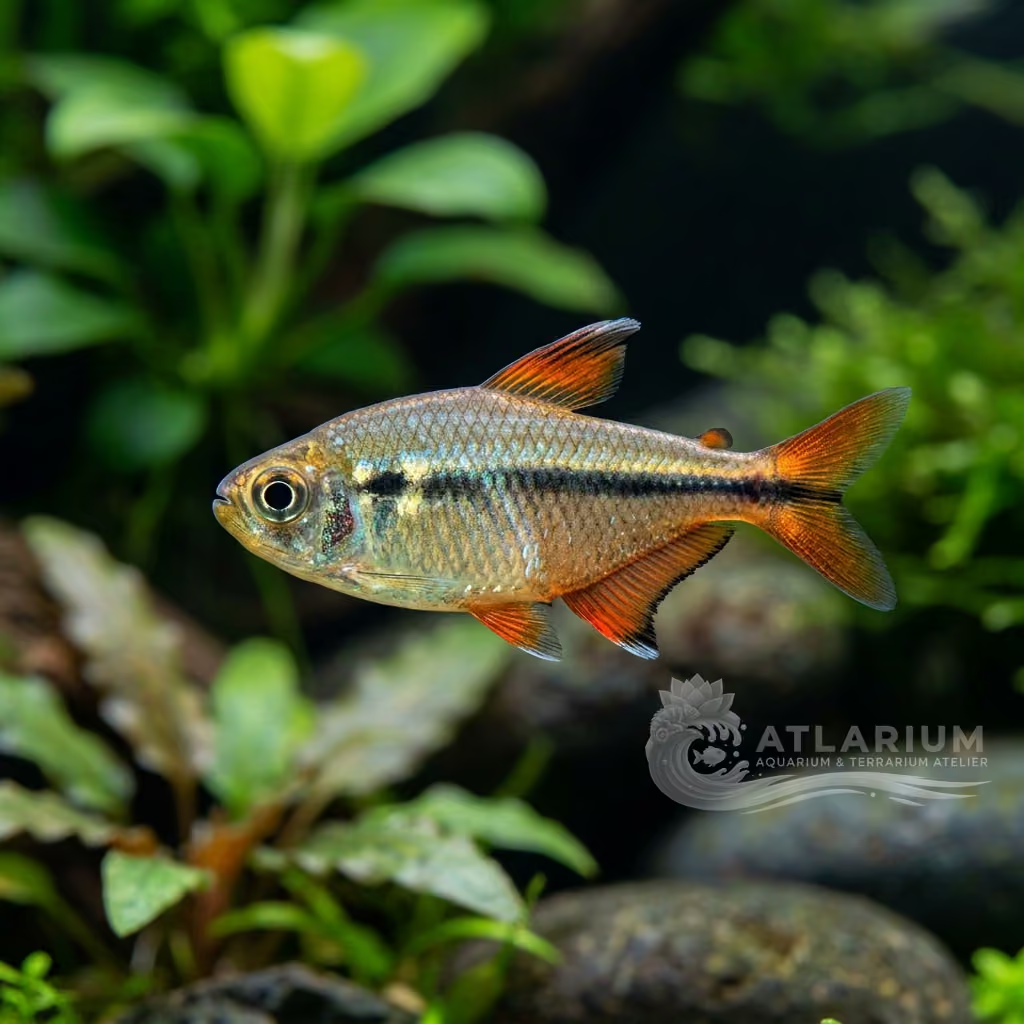
Black Phantom Tetra
Megalamphodus megalopterus
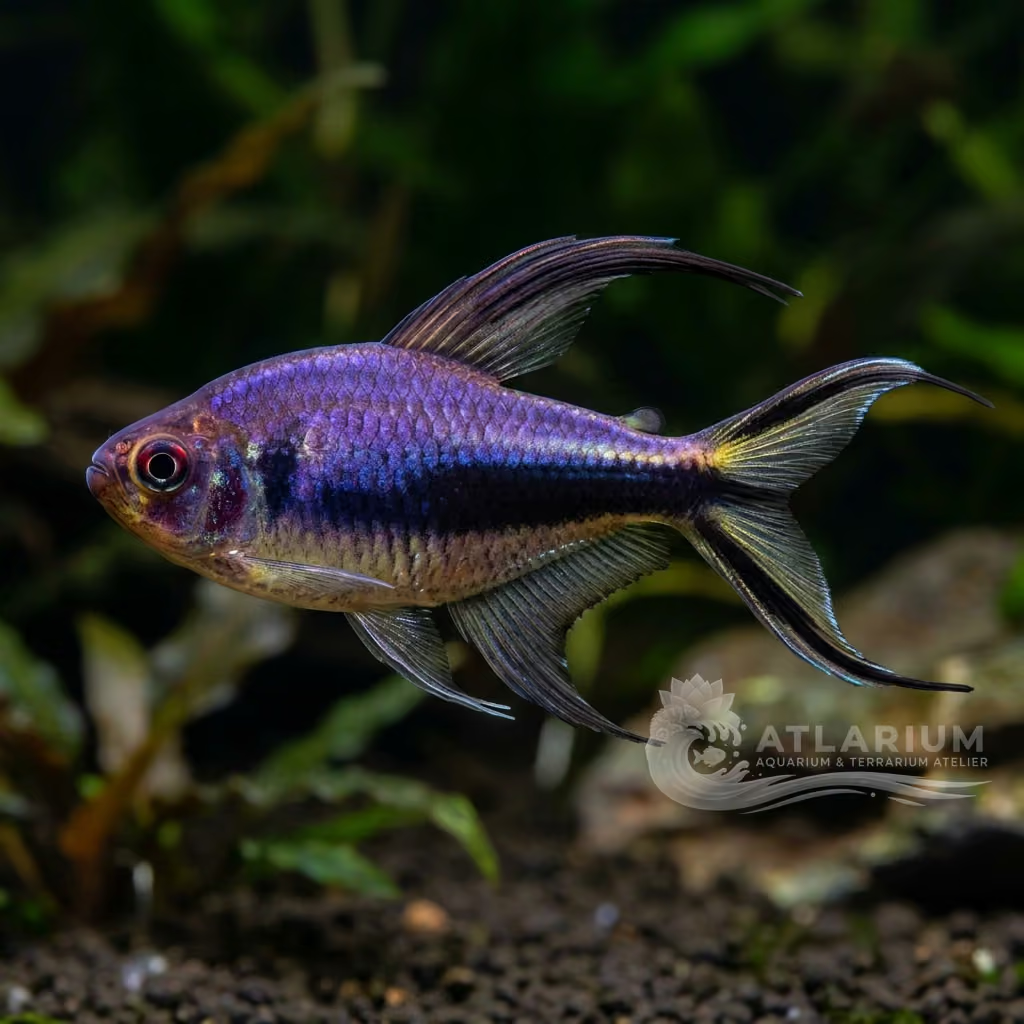
The 'dark ghost' of the aquarium. Males are a smoky grey-black with truly gigantic dorsal and anal fins used in dramatic, harmless sparring displays. Hardier than the Red Phantom and visually stunning.
Température de l’eau
22 - 28 °C
Valeur du pH
6 - 7.5
Type d'eau
Eau douce
Niveau dans le bac
Milieu
Taille adulte
4,5 cm
Volume minimal du bac
>= 60 L
Groupe minimal
>= 6
GH
2 - 15 dGH
KH
1 - 7 dKH
TDS
40 - 295 ppm
Conductivité
63 - 461 uS/cm

Description de l'espèce
Geographical Origin and Habitat: Widespread in the Pantanal and the Guaporé and Paraguay river basins (Brazil, Bolivia). Prefers swamps, clear shallow lakes, and slow-moving tributaries completely choked with aquatic vegetation and overhanging forest cover.
Taxonomy and Morphology: Its scientific name Megalopterus literally means 'large fins'. A deep-bodied, disc-like Hyphessobrycon (4-5 cm). The adult male undergoes an evolutionary hypertrophy of its fins: the dorsal, anal, and pelvic fins grow massive, sometimes standing as tall as the fish's body depth.
Social Behavior: Extremely peaceful but highly active. The primary reason to keep them is the male 'flaring' displays: two males will line up parallel, turn jet-black, and fully erect their massive sail-like fins to establish dominance and impress females. It looks like a fierce battle but involves absolutely zero physical biting.
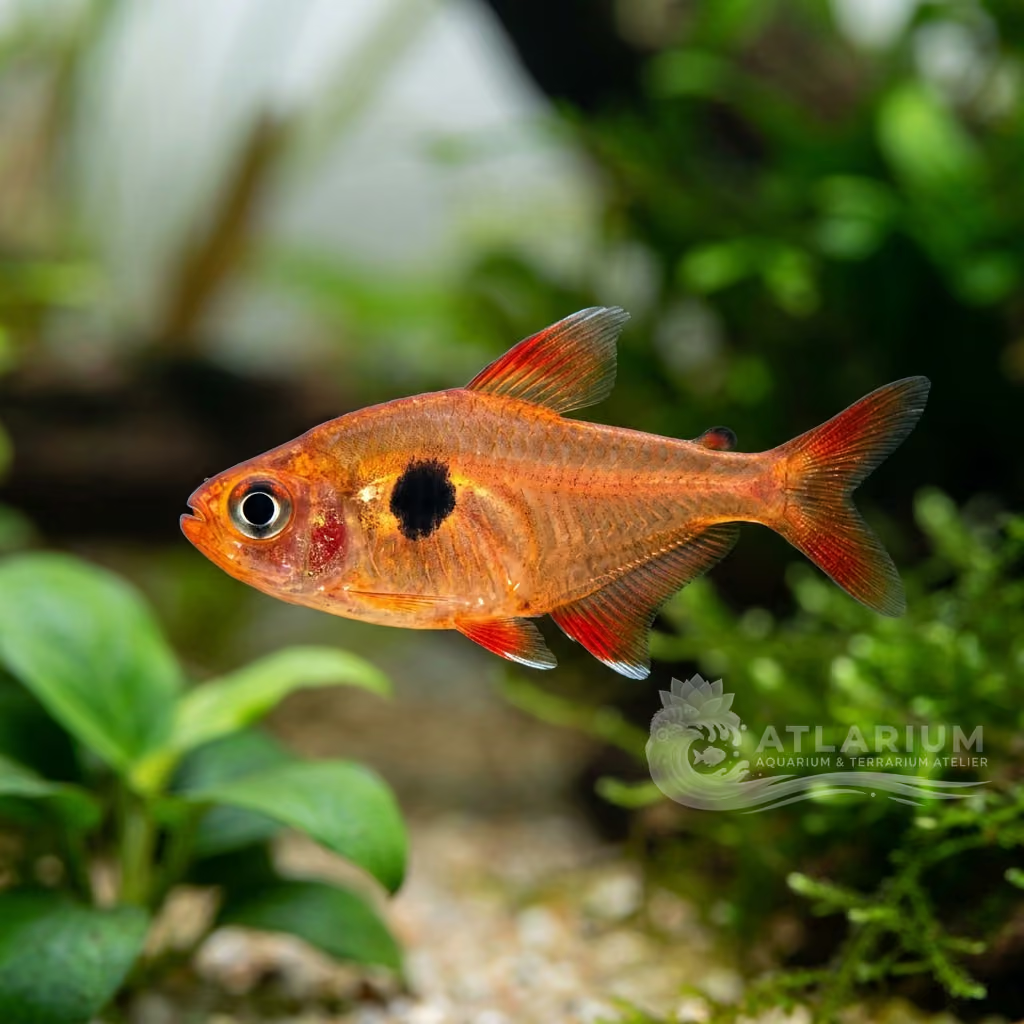
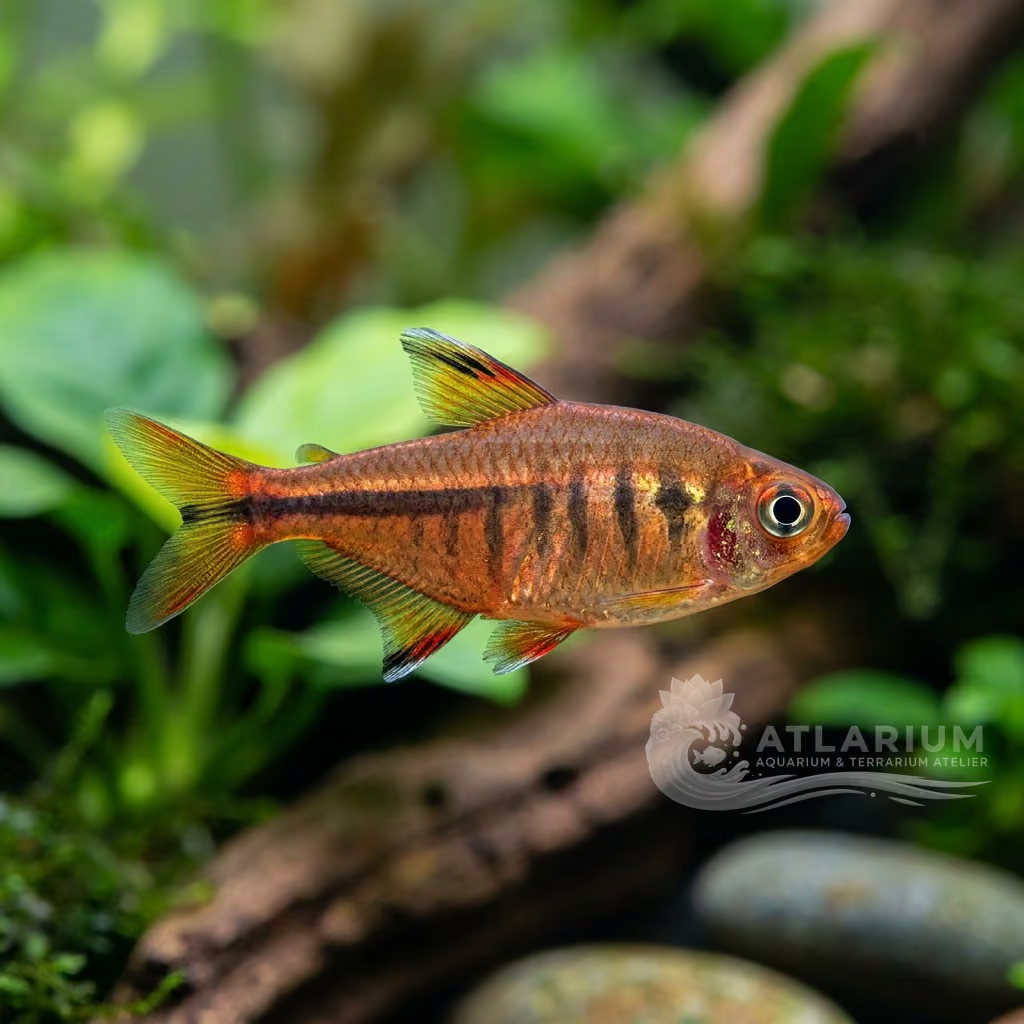
Coloration and Sexual Dimorphism: Extreme and deceptive dimorphism. MALES are smoky/translucent grey, turning deep velvet-black during displays, with a pearlescent-rimmed black spot on the flank. FEMALES, surprisingly, sport bright BLOOD-RED or rust-colored pelvic, anal, and adipose fins. A female's dorsal fin is very short and rounded. A beginner might think they are two different species.

Soins, reproduction et cohabitation
Aquarium Setup: Minimum 80 cm (30+ inches). The male's huge fins mean they despise strong water currents (avoid high-flow wavemakers). Dense edge planting and a dark sand substrate are essential. Lighting must be dim (shielded by floating plants like Frogbit); under bright LED lights, males will wash out to a terrified pale grey and never display their black velvet colors.
Diet and Feeding: Micro-omnivore. Very easy to feed. Readily takes dry flakes and pellets. However, the frequency of male sparring and the depth of their black coloration is directly tied to a protein-rich diet: feed frozen daphnia, brine shrimp, and bloodworms weekly.
Water Quality: Much hardier and more temperature-tolerant than the Red Phantom. Great for standard community tanks. pH 6.0-7.5 (adapts well to neutral tap water). Soft to moderate hardness. Temp 22-26°C (71-79°F). Adding dried leaf litter (tannins) brings out their best behavior.
Compatibility and Cohabitation: The perfect community companion for peaceful Amazonians: Dwarf Cichlids, Corydoras, Hatchetfish. ABSOLUTELY AVOID fin-nippers (Tiger Barbs, Serpae Tetras, Bettas) which will inevitably shred the males' massive, delicate fins to pieces. Keep in a group of at least 8-10.
Aquarium Breeding: Hard in a community tank but achievable in a dedicated dark spawning tank. The male performs a beautiful dance around the red-finned female, driving her into fine moss to scatter tiny amber eggs. Remove parents immediately after spawning.
Risks and Diseases: 1. Fin-nipping from aggressive tankmates destroying the males' sails. 2. Chronic color washing (remaining pale transparent grey) from bright lights and white gravel. 3. Fin rot if water changes are neglected.

Origine et répartition géographiques
Widespread in the Pantanal and the Guaporé and Paraguay river basins (Brazil, Bolivia). Prefers swamps, clear shallow lakes, and slow-moving tributaries completely choked with aquatic vegetation and overhanging forest cover.
Origine
Océans tropicaux et récifsAmérique du Sud hors Amazonie

Profil de poisson
- Tempérament
- Semi-aggressive
- The Megalamphodus megalopterus is renowned for its peaceful, albeit somewhat shy and timid, temperament. They are highly social fish that absolutely depend on the presence of a sizable school for their confidence and well-being. When kept in sufficient numbers, they exhibit a lively and inquisitive nature, gracefully exploring the aquarium. However, if kept alone or in very small groups, they will likely become withdrawn, pale, and prone to hiding constantly.
- Régime alimentaire
- Omnivore
- In its natural habitat, the Megalamphodus megalopterus is a micro-predator that primarily feeds on tiny invertebrates and zooplankton. In captivity, they eagerly accept a staple diet of high-quality crushed flakes and micro-pellets. To support their overall health and promote optimal development—such as the magnificent extended dorsal fins in males during display—their diet should be frequently supplemented with live or frozen foods like Daphnia and cyclops. A diverse nutritional profile is crucial for maintaining a robust immune system.
- Espérance de vie
- 3-5 years
- Taille adulte
- 4.5 cm
- Ratio des sexes
- School
- When establishing a school of Megalamphodus megalopterus, maintaining a relatively balanced mix of males and females is beneficial. Males generally exhibit a slimmer profile and often display their characteristic translucent grey to deep black hues more intensely compared to the plumper females. Having slightly more females than males can help dissipate any minor intra-species sparring when males display for dominance. Ultimately, keeping a large enough overall group size is more critical than the exact sex ratio.
- Fréquence d'alimentation
- Twice daily
- For optimal health, the Megalamphodus megalopterus should be fed small portions two to three times a day. Only offer an amount of food that the school can completely consume within two minutes to prevent water fouling. Overfeeding is a common issue with small characins, so strict portion control must be maintained. This frequent, small-meal approach closely mimics their continuous foraging behavior in the wild.
- Charge biologique
- Low
- The Megalamphodus megalopterus contributes a very low bioload to the aquarium ecosystem due to its small size. This makes them highly suitable for densely planted nano tanks and community setups alike. Despite their low waste production, maintaining a strict schedule of weekly water changes is highly recommended. A standard, high-quality biological filtration system will easily process the minimal waste generated by a healthy school.
- Courant
- Stagnant
- The Megalamphodus megalopterus naturally inhabits slow-moving streams and flooded forest areas, meaning they prefer gentle water flow in the aquarium. Strong currents from overpowered filters can quickly exhaust these small fish and cause chronic stress. A sponge filter or a baffled hang-on-back filter is usually the most appropriate choice to provide oxygenation without turbulent flow. Providing dense clusters of aquatic plants will also give them tranquil resting spots.
- Risque de saut
- Yes
- Like many similarly sized characins, the Megalamphodus megalopterus presents a moderate jumping risk, especially when initially introduced or startled. A secure, tight-fitting aquarium lid or a glass canopy is absolutely essential to prevent accidental losses. Employing floating plants such as Salvinia or Amazon Frogbit can provide overhead cover, which significantly reduces their skittishness. Stable water parameters and a peaceful environment will also minimize this leaping behavior.
- Reproduction
- Oviparous
- Breeding the Megalamphodus megalopterus requires a separate, dimly lit breeding tank equipped with soft, slightly acidic water. They are typical egg-scatterers that exhibit no parental care whatsoever, and they will readily consume their own eggs if left in the breeding tank. Spawning typically occurs among fine-leaved plants, after which the adults must be immediately removed. The microscopic fry require infusoria or specialized liquid foods until they are large enough to eat freshly hatched brine shrimp.
- Compatibilité et compagnons
- Peaceful
- As a peaceful schooling species, the Megalamphodus megalopterus thrives when kept in a vibrant community aquarium. They require the security of a group, so maintaining them in schools of at least eight individuals is essential. Excellent tank mates include small rasboras, Corydoras catfish, and other equally peaceful characins. Aggressive, large, or excessively boisterous fish should be strictly avoided to prevent them from becoming stressed or preyed upon.
- Niveau dans le bac
- Middle
- The Megalamphodus megalopterus is an active swimmer that primarily occupies the mid to upper levels of the aquarium water column. They deeply appreciate having a large, open swimming space in the center of the tank to school properly. They will often dart around the middle strata during the day, occasionally diving to the substrate during feeding times. Tall background plants and floating vegetation help them feel secure in these preferred swimming zones.

Modèles et paramètres scientifiques
FishBase
Fenêtre sur les données scientifiques officielles de l’espèce
FishBase v25.04Données synchronisées le : 15/06/2026
- Niveau trophique
- 3,2 ± 0,37 se
- Résilience
- Élevée (moins de 15 mois)
- Singularité phylogénétique (PD50)
- 0.5002
- Relation bayésienne longueur-poids
- a = 0.01995, b = 3.01
- VulnérabilitéVulnérabilité faible (10 / 100)

Galerie d'images
Images sous licence liées à l'espèce ou, lorsqu'elles sont indiquées, au taxon représentatif le plus proche.

Espèces associées
Recommandations regroupées par proches parents, compagnons et soins similaires.