Bumblebee Catfish
Microglanis iheringi
The Bumblebee Catfish is a minute, nocturnal predator with bold yellow-black stripes. It uses its large mouth to hunt in the dark, preferring shaded, hiding-rich tanks.
Température de l’eau
22 - 27 °C
Valeur du pH
6 - 7.5
Type d'eau
Eau douce
Niveau dans le bac
Fond
Taille adulte
7 cm
Volume minimal du bac
>= 80 L
Groupe minimal
>= 1
GH
4 - 15 dGH
KH
3 - 10 dKH
TDS
90 - 325 ppm
Conductivité
141 - 508 uS/cm

Description de l'espèce
Geographical Origin and Habitat: Orinoco and Amazon river basins (Venezuela). Benthic depth species, linked to slow streams that flow through beds of rotting leaves in continuous semi-darkness.
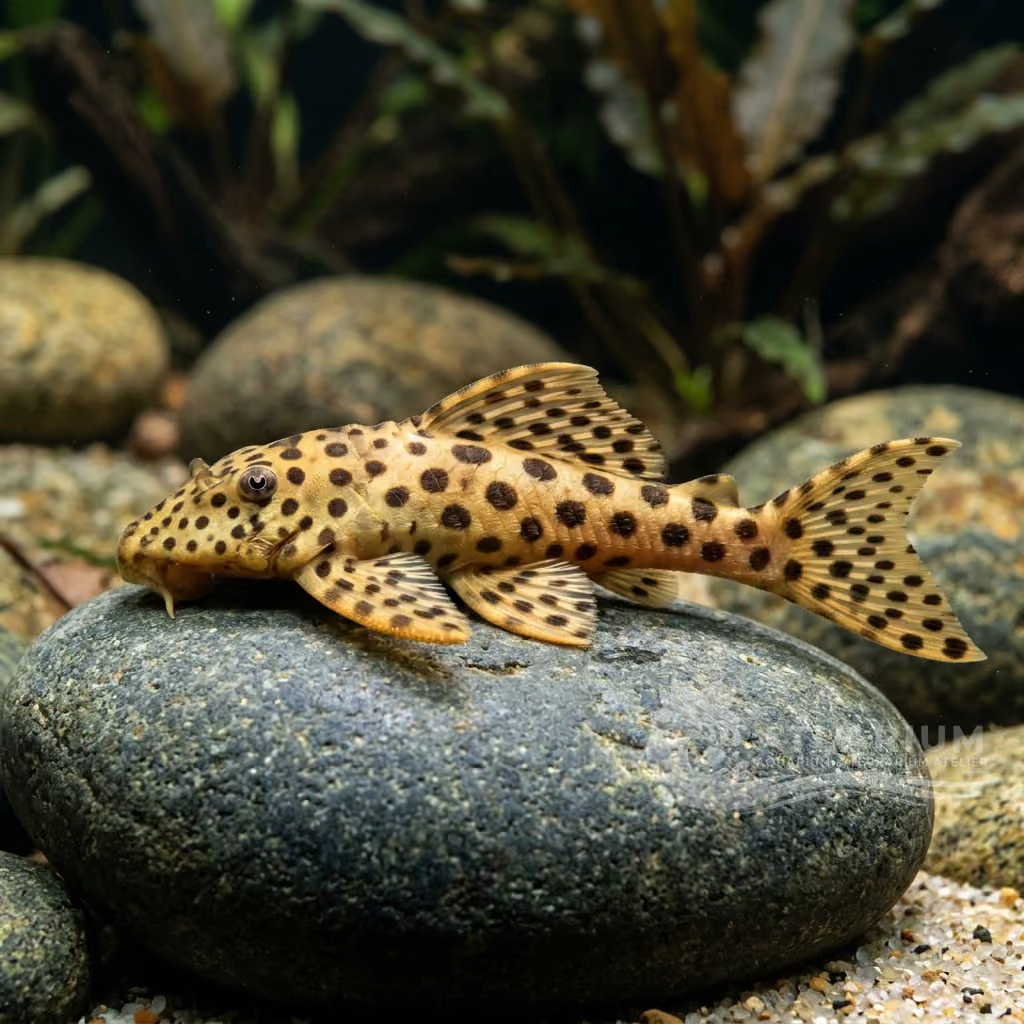
Taxonomy and Morphology: Bumblebee Catfish (Microglanis iheringi). Small siluriform belonging to the Pseudopimelodidae family. Very funny and "bulldog" appearance: huge, flattened head, gigantic mouth with sensory barbels for night hunting.
Social Behavior: Absolutely nocturnal and very lazy. It will spend 95% of its life in captivity wedged under pressure into a crack in a wood or a half coconut. Only comes out in pitch darkness to scour the bottom in search of prey.
Coloration and Sexual Dimorphism: The name (Bumblebee) derives from the large and clear transverse bands of faded orange and matte brown/black that wrap around the stocky body (to camouflage in the mud). Dimorphism absent (mature females swell laterally and appear spherical when viewed from above).

Soins, reproduction et cohabitation
Aquarium Setup: Sandy bottom, shielded lights and an overabundance of hiding places. The best choice are dark terracotta amphorae, hidden pvc pipes or hollow trunks. Prefers claustrophobic spaces where its belly touches the walls of the cave.
Diet and Feeding: Carnivorous vacuum. Although lazy, it has a boundless mouth and an equal appetite. At night it will swallow anything that moves, whether live, dead or in pellets for carnivorous bottom fish.
Water Quality: Quite accommodating, tolerates Ph swings (within reasonable limits 6-7.5) but is weak against ammonia given its nature devoid of protective scales.
Compatibility and Cohabitation: The deception of the dwarf. Measures 7 cm (2.8 inches), seems harmless and stocky, and is sold for community tanks. Result? In the dead of night it will inhale neons and small rasboras while they sleep (as long as they fit in its gigantic mouth). Keep only with tall Tetras and large Corydoras.
Aquarium Breeding: Almost non-existent in amateur domestic reports. It is suspected to require drastic chemical changes linked to the induction of artificial Amazonian rain.
Risks and Diseases: The ghost purchase. Whoever buys it will be disappointed: the very day it touches the aquarium it will disappear inside a wood and will NEVER be seen again with the lights on, only to discover months later, during a move, that it is not only alive, but doubled in size at the expense of the missing neons.

Origine et répartition géographiques
Orinoco and Amazon river basins (Venezuela). Benthic depth species, linked to slow streams that flow through beds of rotting leaves in continuous semi-darkness.
Origine
Amazonie, Orénoque et Guyanes

Profil de poisson
- Tempérament
- Semi-aggressive
- Their temperament is extremely reclusive and peaceful, provided their tank mates are not small enough to be considered prey. They spend daylight hours wedged tightly into crevices, only emerging under the cover of darkness to forage. Aquarists may go weeks without seeing them, making them a true 'hide-and-seek' fish.
- Régime alimentaire
- Carnivore
- In the wild, they are opportunistic carnivores that scavenge for insects, larvae, and smaller fish. In the aquarium, they will readily accept sinking carnivore pellets, wafers, and meaty frozen foods like bloodworms. Ensure that food reaches the bottom, as they will rarely venture out into the open water column to feed.
- Espérance de vie
- 4-6 years
- Taille adulte
- 7 cm
- Ratio des sexes
- Group
- Sexing these catfish is difficult, with adult females generally appearing slightly plumper when viewed from above. The sex ratio is not a crucial factor as they are completely peaceful toward their own kind. They can be kept solitarily or in small groups provided there are enough hiding places for everyone.
- Fréquence d'alimentation
- Twice daily
- They should be fed once a day, ideally just before or shortly after the aquarium lights are turned off. Feeding them at night caters to their natural nocturnal instincts and ensures they are not outcompeted by diurnal tank mates. Being opportunistic scavengers, they have a tendency to overeat if food is constantly available.
- Charge biologique
- Low to Medium
- The Bumblebee Catfish has a surprisingly small bioload given its somewhat chunky appearance. Because they spend the vast majority of their time hiding and are largely inactive during the day, their metabolic output is low. Standard filtration and a regular schedule of water changes will easily maintain a healthy environment for them.
- Courant
- Stagnant
- They prefer a moderate water flow that provides good oxygenation without being overly turbulent. They originate from fast-flowing rivers in South America and appreciate highly oxygenated water. Providing plenty of rocky crevices or driftwood caves where they can rest out of the direct current is essential.
- Risque de saut
- No
- Reproduction
- Oviparous
- Breeding the Bumblebee Catfish in a home aquarium is exceedingly rare and largely undocumented. They are believed to be egg layers, but specific triggers for spawning and rearing fry are not well established in the hobby. Success would likely require perfectly simulating the rainy season of their natural habitat.
- Compatibilité et compagnons
- Peaceful
- They are generally peaceful towards fish that are too large to fit into their surprisingly wide mouths. However, they are highly predatory nocturnal ambush hunters and will readily consume small tetras, rasboras, and dwarf shrimp. They are best kept with medium to large robust community fish like larger characins or peaceful cichlids.
- Niveau dans le bac
- Bottom
- They are strictly bottom dwellers that will almost never be seen in the upper levels of the aquarium. They are highly secretive and require a multitude of caves, PVC pipes, or dense driftwood tangles to feel secure. If sufficient hiding spots are not provided, they will suffer from severe chronic stress.

Modèles et paramètres scientifiques
FishBase
Fenêtre sur les données scientifiques officielles de l’espèce
FishBase v25.04Données synchronisées le : 15/06/2026
- Niveau trophique
- 3,5 ± 0,5 se
- Singularité phylogénétique (PD50)
- 0.5
- Relation bayésienne longueur-poids
- a = 0.00692, b = 3.12
- VulnérabilitéVulnérabilité faible (10 / 100)

Espèces associées
Recommandations regroupées par proches parents, compagnons et soins similaires.