Silver Arowana
Osteoglossum bicirrhosum
The 'Silver Serpent' of the Amazon (90-120 cm / 3-4 feet). The more affordable, but massively larger South American cousin to the famous Asian Dragon Fish. What starts as a cute, cheap, 4-inch ribbon in the pet store rapidly explodes into an absolute monster—a 4-foot long, snake-like metallic predator that relentlessly cruises the top of the tank. It is an Olympic jumper capable of launching feet into the air to catch bugs, requiring a colossal, bank-vault aquarium and suffering from the exact same devastating 'Drop-Eye' deformities if fed improper diets or kept in inadequate tanks.
24 - 30 °C
6 - 7.5
Eau douce
Surface
90 cm
>= 500 L
>= 1
2 - 15 dGH
1 - 7 dKH
40 - 295 ppm
63 - 461 uS/cm

Description de l'espèce

Soins, reproduction et cohabitation

Origine et répartition géographiques
Origine

Profil de poisson
- Tempérament
- Semi-aggressive
- They are powerful, solitary predators that command the surface of the tank. They are generally peaceful and majestic, gliding continuously from end to end. However, they can be easily startled, which causes them to dart aggressively and potentially injure themselves.
- Régime alimentaire
- Omnivore
- They are surface-oriented carnivores. Provide a varied diet of large floating pellets, freeze-dried krill, earthworms, and occasional feeder fish or insects. Ensuring their food floats is important to prevent 'drop-eye' syndrome.
- Espérance de vie
- 10-20 years
- Taille adulte
- 90 cm
- Ratio des sexes
- Solitary
- There are no highly reliable visual cues to distinguish males from females outside of spawning. They are highly intolerant of other Arowanas unless kept in very large groups in massive public aquariums. For home setups, they are strictly kept solitary.
- Fréquence d'alimentation
- Twice daily
- Juveniles should be fed twice a day to support their rapid growth rate. Adults only need to be fed once a day or every other day. Overfeeding adults can lead to poor water quality and obesity.
- Charge biologique
- Extreme
- The Silver Arowana produces a colossal bioload due to its massive adult size and heavy carnivorous diet. Heavy-duty, high-capacity canister filters or large sump systems are mandatory. Frequent, large-scale water changes are strictly required to prevent a build-up of toxic waste.
- Courant
- Stagnant
- They prefer moderate water flow that provides adequate oxygen without pushing them around. In extremely large tanks, gentle currents simulate the slow-moving rivers they inhabit. Strong surface agitation is good for oxygenation but shouldn't interfere with their feeding.
- Risque de saut
- Yes
- They are exceptional jumpers capable of leaping several feet out of the water to catch insects in the wild. A heavy, securely locked lid is completely non-negotiable for an Arowana tank. Many owners weigh down the lids to prevent these powerful fish from breaking through.
- Reproduction
- Oviparous
- Silver Arowanas are paternal mouthbrooders. Breeding in home aquariums is practically impossible due to the immense space required for a pair to form. They are primarily bred in large outdoor ponds in commercial facilities.
- Compatibilité et compagnons
- With caution
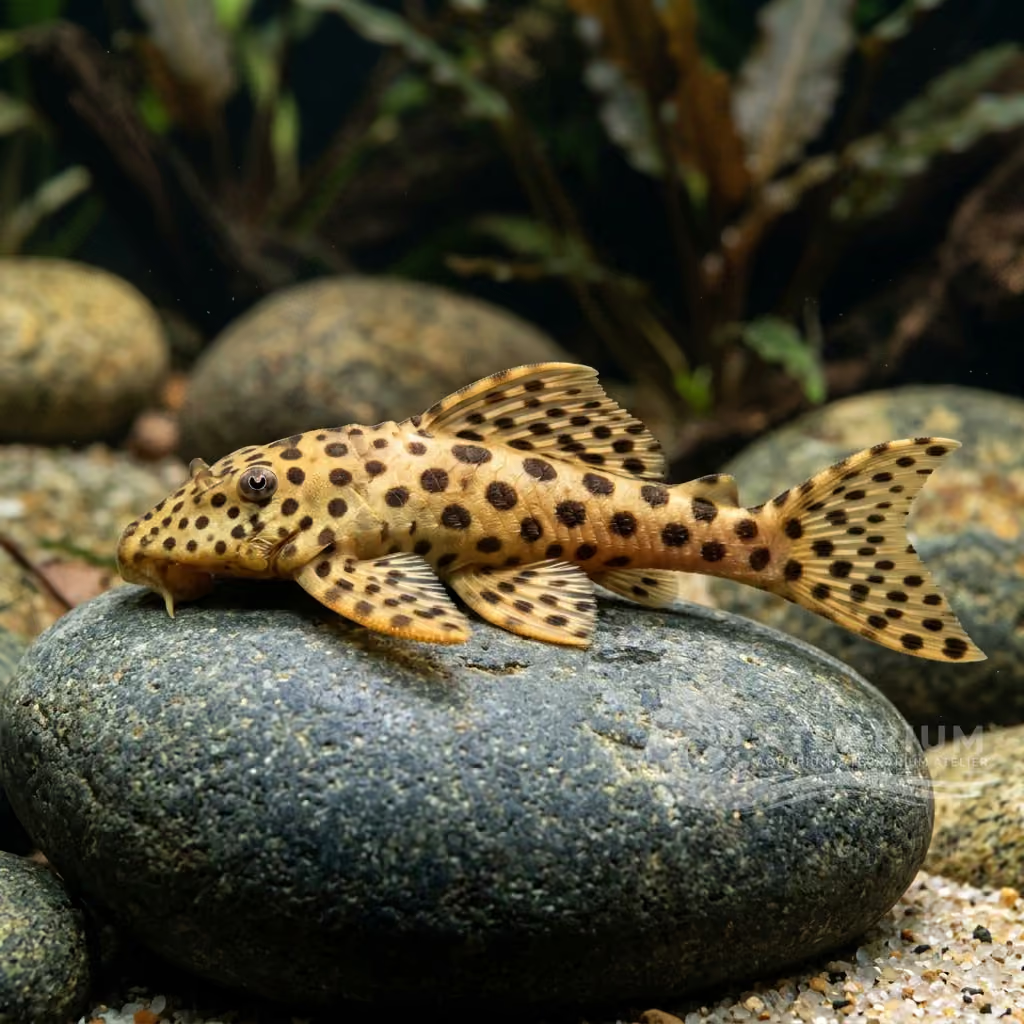
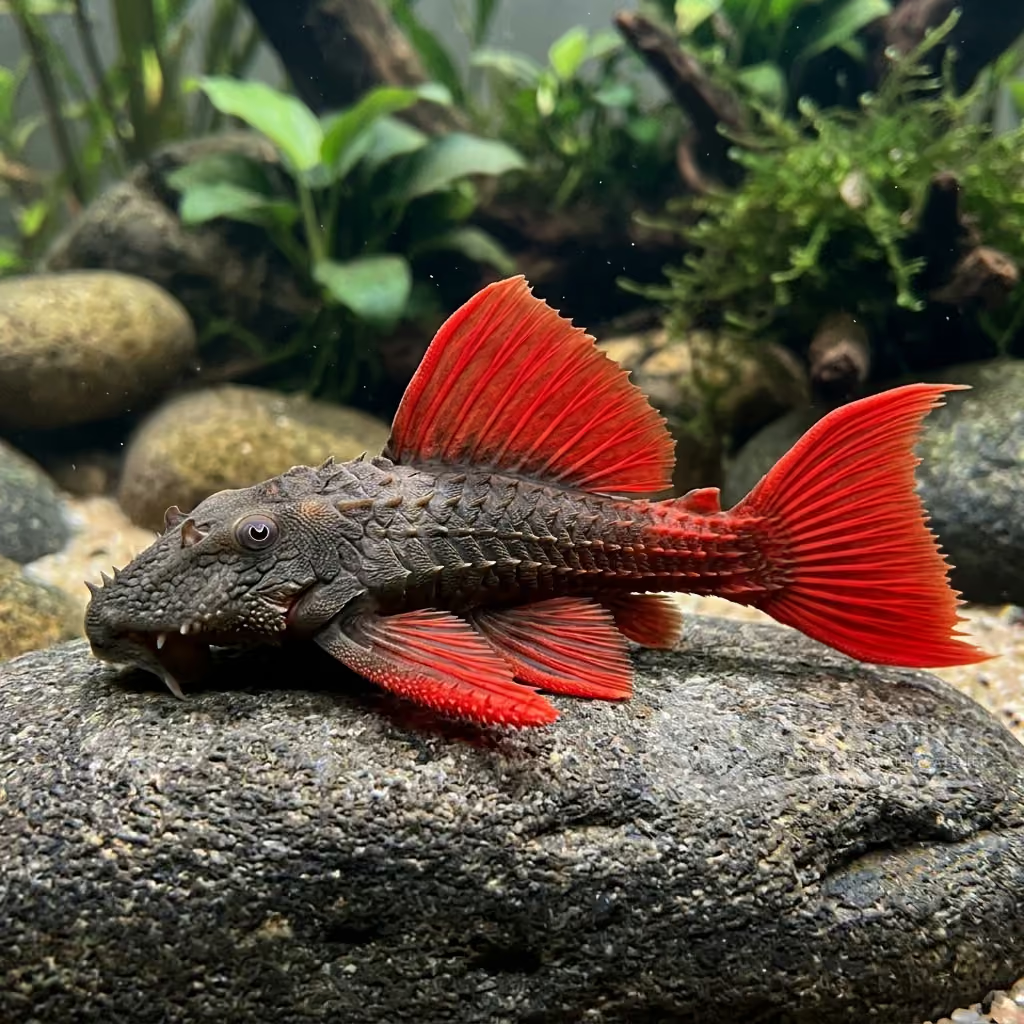
- They are predatory but generally not aggressive toward fish they cannot fit into their large mouths. Good tank mates include large plecos, datnoids, and large pacus. Avoid keeping them with small fish, which will immediately be viewed as prey.
- Niveau dans le bac
- Top
- They are surface-dwelling fish that patrol the uppermost layers of the aquarium. They require a tank with an enormous footprint, prioritizing length and width over depth. They will rarely venture to the bottom of the tank.

Modèles et paramètres scientifiques
Fenêtre sur les données scientifiques officielles de l’espèce
- Niveau trophique
- 3,4 ± 0,48 se
- Résilience
- Élevée (moins de 15 mois)
- Singularité phylogénétique (PD50)
- 0.7656
- Relation bayésienne longueur-poids
- a = 0.00417, b = 3.1
- VulnérabilitéVulnérabilité faible à modérée (31 / 100)

Espèces associées
Recommandations regroupées par proches parents, compagnons et soins similaires.