Costatus Striped Raphael
Platydoras costatus
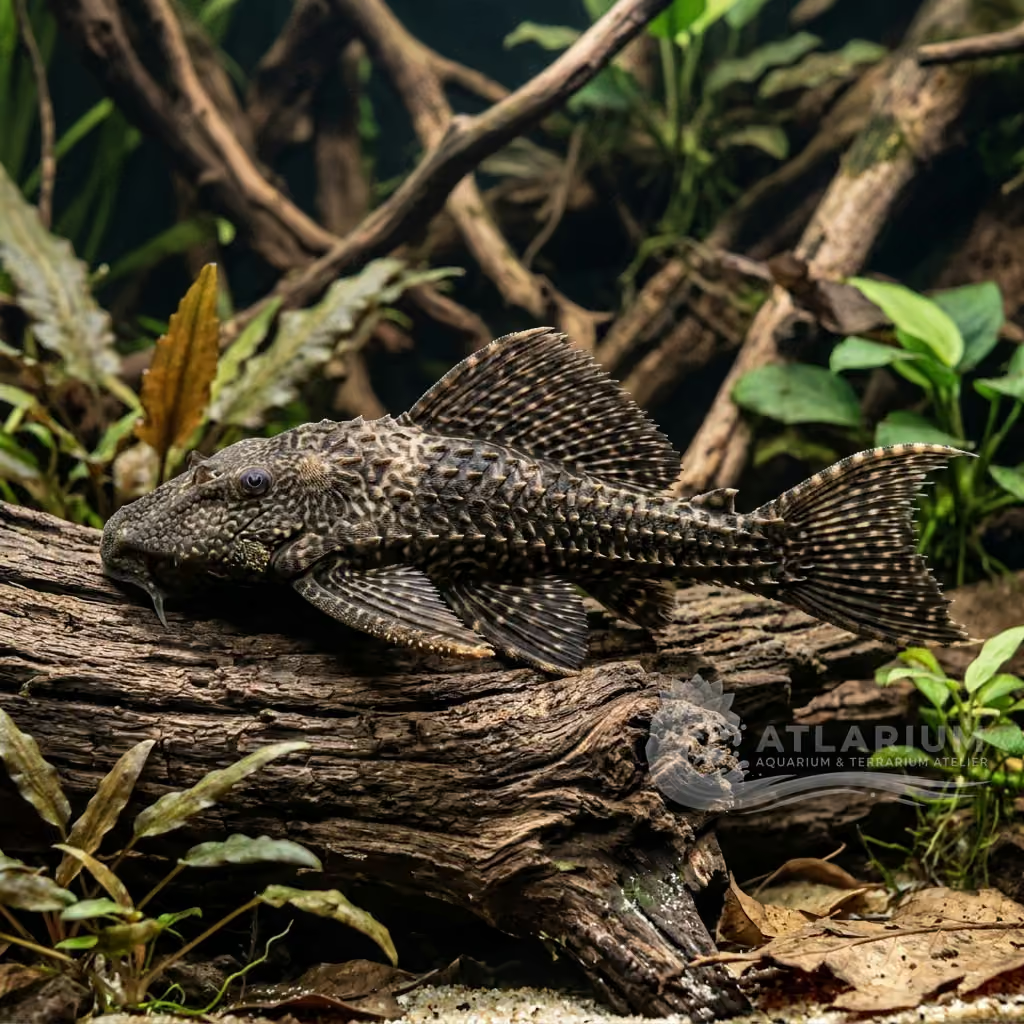
Often confused in stores with the almost identical P. armatulus, the P. costatus from Guyana has a more shaded coloration and less pronounced light bands in adulthood.
Température de l’eau
23 - 30 °C
Valeur du pH
5.8 - 7.5
Type d'eau
Eau douce
Niveau dans le bac
Fond
Taille adulte
20 cm
Volume minimal du bac
>= 200 L
Groupe minimal
>= 1
GH
2 - 20 dGH
KH
2 - 10 dKH
TDS
50 - 400 ppm
Conductivité
78 - 625 uS/cm

Description de l'espèce
Geographical Origin and Habitat: Extremely widespread throughout the Amazon, Orinoco, Paraná, and Essequibo basins. Populates indifferently large rivers, slow-flowing streams, swamps, and marginal pools hidden under intricate layers of roots.
Taxonomy and Morphology: Striped Raphael Catfish (Platydoras costatus / armatulus). Historically confused with twin species. Stocky and armored body, flanks protected by very sharp bony shields, equipped with robust barbels for searching for food on the bottom.
Social Behavior: Predominantly nocturnal. Extremely peaceful towards fish of similar size, while stationing all day holed up in a dark crevice. Notable is its ability to emit audible grunts (rubbing sounds) if frightened or annoyed.
Coloration and Sexual Dimorphism: The unmistakable livery: dark brown to deep black base body, furrowed laterally by a showy and thick creamy-white (or golden) stripe. Visual dimorphism absent, although gravid females appear exaggeratedly round.

Soins, reproduction et cohabitation
Aquarium Setup: Aquarium of at least 120 cm (48 inches). Provide a multitude of tunnel-shaped hideouts: terracotta pipes, large overturned pots, hollow logs. Strictly soft substrate (sand or smooth gravel) to protect the barbels.
Diet and Feeding: Tireless omnivorous scavenger. At night it will come out to vacuum up all the food that touches the bottom. Greedily accepts bottom fish tablets, large carnivorous pellets, chopped earthworms, and bloodworms.
Water Quality: A real "tank". Resists a very wide range of hardness (GH 2-20) and pH (5.8-7.5), proving excellent and long-lasting for beginners. Keep filtration good to avoid accumulations of mulm.
Compatibility and Cohabitation: Ideal companion for large Central/South American Cichlids (Oscars, Severum), knifefish, or robust schooling Tetras (e.g. Buenos Aires Tetra). CATCHES and swallows small fish (Neons) sleeping on the bottom.
Aquarium Breeding: Practically impossible in amateur aquarium keeping. Massive Asian reproductions occur in huge ponds through hormonal injections that force the fish to release eggs and sperm.
Risks and Diseases: Very healthy and long-lived fish (over 15 years in captivity). The greatest risk is linked to capture: its lateral spines and serrated pectoral fins will fatally get stuck in any cloth net. Use plastic cups.

Origine et répartition géographiques
Extremely widespread throughout the Amazon, Orinoco, Paraná, and Essequibo basins. Populates indifferently large rivers, slow-flowing streams, swamps, and marginal pools hidden under intricate layers of roots.
Origine
Cosmopolite ou introduitAmazonie, Orénoque et GuyanesOcéans tropicaux et récifs

Profil de poisson
- Tempérament
- Semi-aggressive
- Platydoras costatus is renowned for its incredibly peaceful and somewhat reclusive nature. They are notoriously shy during the day and will stubbornly wedge themselves into tight crevices. When handled, they can produce audible croaking or squeaking sounds by locking their pectoral fins. They will never bother tankmates that are too large to be considered food.
- Régime alimentaire
- Omnivore
- They are unfussy, nocturnal omnivores that will scavenge the bottom for leftover food. Sinking carnivore pellets, algae wafers, and frozen bloodworms make an excellent staple diet. They appreciate occasional treats of live blackworms or chopped earthworms. It is important to ensure food reaches the bottom before faster surface fish consume it all.
- Espérance de vie
- 10-15 years
- Taille adulte
- 20 cm
- Ratio des sexes
- Solitary
- Sexual dimorphism is virtually non-existent, though mature females may appear noticeably rounder when viewed from above. They can be kept singly or in groups without any territorial aggression. A group of three or more often share the same hiding spot during the day. Keeping them in groups makes them slightly more outgoing.
- Fréquence d'alimentation
- Twice daily
- Since they are strictly nocturnal, it is best to feed them just before or after the aquarium lights go out. Feeding them once a day is usually sufficient for adults, while juveniles can be fed twice. They will use their barbels to locate food in complete darkness. Overfeeding should be avoided as they are prone to becoming obese.
- Charge biologique
- High
- Platydoras costatus contributes a moderate to heavy bioload, typical of thick-bodied catfish. They are robust eaters that produce significant waste, especially as they grow larger. Strong mechanical and biological filtration is necessary to keep the substrate clean. Regular gravel vacuuming during water changes will prevent the buildup of detritus.
- Courant
- Stagnant
- They appreciate a moderate water flow that provides adequate oxygenation. While they do not need torrential river rapids, stagnant water should be avoided. The current helps distribute scents, allowing them to scavenge more effectively. A well-placed powerhead or strong canister filter output will keep them comfortable.
- Risque de saut
- No
- Reproduction
- Oviparous
- Captive breeding of this species in home aquaria is virtually unheard of. In the wild, they spawn in the wet season, scattering eggs among vegetation. Commercial breeding is often achieved using hormone injections in large aquaculture farms. There are no documented cases of spontaneous spawning in typical hobbyist setups.
- Compatibilité et compagnons
- Peaceful
- They are extremely peaceful community fish but will eat anything small enough to swallow whole. Small tetras, rasboras, or dwarf shrimp will likely disappear during the night. They do excellent with medium to large community fish like robust cichlids, larger tetras, and gouramis. Their heavily armored bodies protect them from mildly aggressive tankmates.
- Niveau dans le bac
- Bottom
- They are strictly bottom dwellers that spend the majority of their daylight hours completely hidden. They require plenty of caves, driftwood tangles, or PVC pipes to feel secure. At night, they will actively patrol the entire bottom footprint of the tank. A soft, sandy substrate is preferred to protect their sensitive barbels.

Modèles et paramètres scientifiques
FishBase
Fenêtre sur les données scientifiques officielles de l’espèce
FishBase v25.04Données synchronisées le : 15/06/2026
- Niveau trophique
- 3 ± 0,4 se
- Résilience
- Élevée (moins de 15 mois)
- Singularité phylogénétique (PD50)
- 0.5312
- Relation bayésienne longueur-poids
- a = 0.0195, b = 3.01
- VulnérabilitéVulnérabilité faible (19 / 100)

Espèces associées
Recommandations regroupées par proches parents, compagnons et soins similaires.