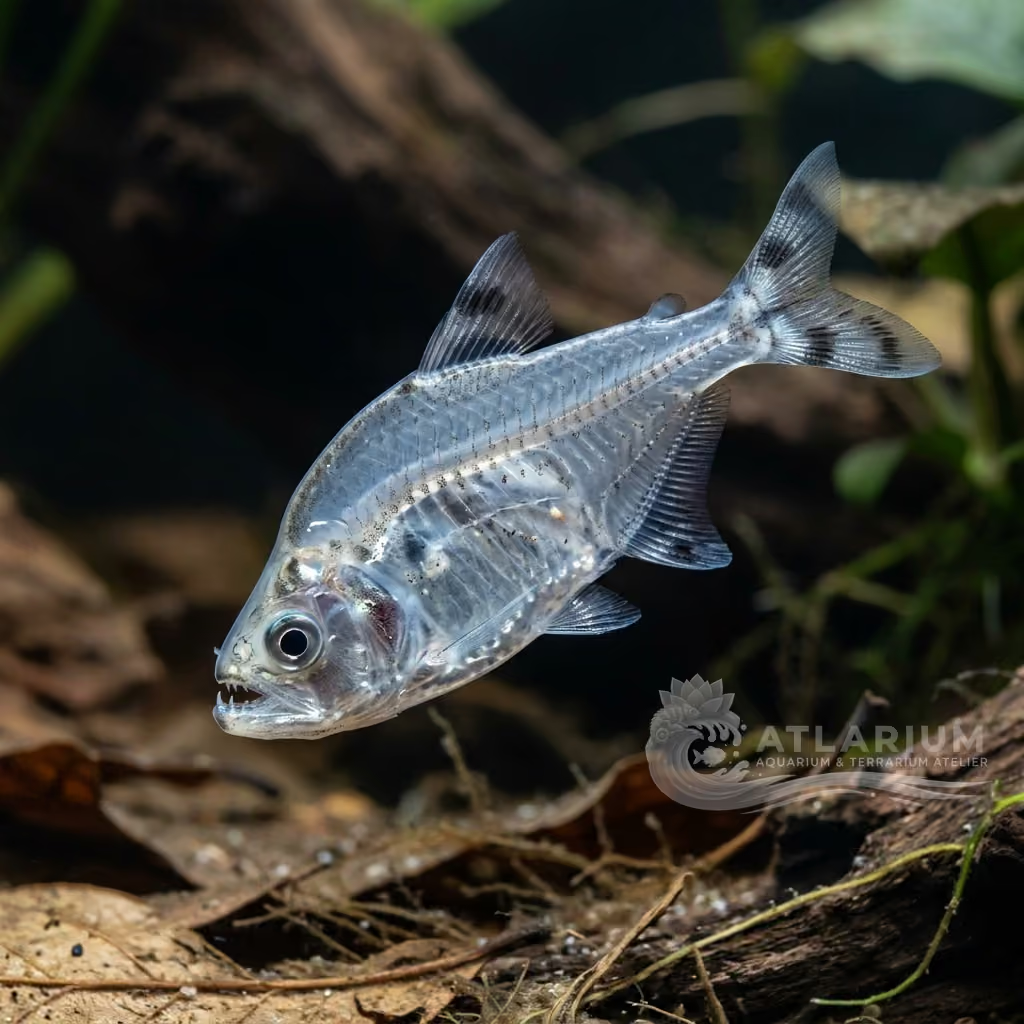
Spotted Shovelnose Catfish
Pseudoplatystoma corruscans
The Spotted Shovelnose Catfish (up to 150 cm) is a massive Pimelodid native to the Paraná and São Francisco basins in South America. Distinctive for its sleek, elongated body decorated with dark circular spots rather than stripes, it features a highly flat, shovel-like head. This large predator requires specialized setups, ideally indoor ponds or massive circular tanks of over 3,000 liters, to ensure it does not injure its delicate flat snout against the walls when startled.
Température de l’eau
22 - 28 °C
Valeur du pH
6 - 7.5
Type d'eau
Eau douce
Niveau dans le bac
Fond
Taille adulte
100 cm
Volume minimal du bac
>= 500 L
Groupe minimal
>= 1
GH
5 - 15 dGH
KH
2 - 7 dKH
TDS
95 - 295 ppm
Conductivité
148 - 461 uS/cm

Description de l'espèce
Geographical Origin and Habitat: Native to the large basins of the Paraná and São Francisco rivers in South America. They inhabit deep open waters, river bends, and sandy beds with active currents. These fish are highly migratory in the wild, traveling long distances to spawn. The environment is typically turbid, where their three pairs of sensory barbels compensate for limited vision.
Taxonomy and Morphology: A member of the Pimelodidae family, sharing the hydrodynamic structure of other Pseudoplatystoma. It is scaleless with a torpedo-shaped body and a massive, bone-like head that is vertically compressed into a shovel or spatula shape. This morphology allows it to rest on the substrate against strong currents and open its cavernous mouth to swallow whole fish.
Social Behavior: A nocturnal predator. It is sedentary during the day, resting on the flat substrate, but becomes highly active at night, patrolling the bottom levels of the tank. As an opportunistic ambush suction predator, it can quickly swallow any prey that fits into its expandable mouth. It is peaceful toward tankmates that are too large to be considered prey.
Coloration and Sexual Dimorphism: Features a lead-gray, silver, or light purplish dorsal color densely covered with distinct, circular black spots (polka dots). The belly is white. There is no externally visible sexual dimorphism.

Soins, reproduction et cohabitation
Aquarium Setup: An indoor pond or exceptionally large custom tank is mandatory for adults. Due to their large size, they require circular enclosures or tanks at least 300 to 400 cm in length (minimum 3,000 liters). The swimming area must be completely free of decorative obstacles like driftwood or rocks, which could cause facial fractures during panic-induced swimming. Soft silica sand is required to protect their sensitive bellies.
Diet and Feeding: A large carnivorous predator. They feed on whole pieces of white fish, squid, and large whole shrimp with shells, which provide beneficial pigments. They also accept sinking carnivore pellets. Avoid feeding mammal meat (such as beef heart) or diseased live feeder fish, as these can cause fatal liver necrosis or parasitic infections.
Water Quality: High-capacity filtration is necessary to handle the large bioload. They thrive at slightly cooler temperatures than typical Amazonian species, between 22 and 26°C. They tolerate a wide pH range of 6.0 to 7.5. Strong water movement is required to simulate their native river current and maintain muscle tone, while a robust sump or bead filter manages waste.
Compatibility and Cohabitation: Peaceful, but anything that fits into its mouth will be consumed at night. It should only be housed with very large, robust tankmates such as adult Pacu, Silver Arowana, and large freshwater stingrays. Smaller tankmates under 30 cm will eventually be preyed upon.
Aquarium Breeding: Breeding is not possible in home aquariums. Spawning is only achieved in large aquaculture pools using hormone injections to induce spawning. In commercial aquaculture, they are sometimes cross-bred with the Tiger Shovelnose (Pseudoplatystoma fasciatum) to produce fast-growing hybrids for food.
Risks and Diseases: 1. Snout Fractures: If kept in small tanks, the fish may panic when startled and collide with the glass, fracturing its delicate spatula-like snout. This deformity prevents feeding and is fatal. 2. Gravel Impaction: Keeping them on gravel is dangerous as they may ingest rocks while feeding, causing fatal intestinal blockage. Soft sand must be used. 3. Chemical Sensitivity: As scaleless fish, they are highly sensitive to copper-based medications, malachite green, or high salinity, which can cause severe skin burns and chemical ulcerations.

Origine et répartition géographiques
Native to the large basins of the Paraná and São Francisco rivers in South America. They inhabit deep open waters, river bends, and sandy beds with active currents. These fish are highly migratory in the wild, traveling long distances to spawn. The environment is typically turbid, where their three pairs of sensory barbels compensate for limited vision.
Origine
Océans tropicaux et récifsAmérique du Sud hors Amazonie

Profil de poisson
- Tempérament
- Semi-aggressive
- They are nocturnal predators that are generally peaceful towards anything they cannot swallow. However, their predatory instinct is extremely strong. They are powerful and can be destructive to tank decor.
- Régime alimentaire
- Omnivore
- They are obligate carnivores that require substantial meaty foods. Feed them whole fish, shrimp, and large earthworms. Avoid feeding them mammalian meat as it causes digestive issues.
- Espérance de vie
- 20-30 years
- Taille adulte
- 100 cm
- Ratio des sexes
- Solitary
- Sex ratio is irrelevant in the home aquarium as keeping even one is a massive undertaking. Intraspecific aggression can be fierce if kept together. They are best kept as solitary showpieces.
- Fréquence d'alimentation
- Twice daily
- Juveniles should be fed daily to support rapid growth. Adults only need to be fed a large meal once or twice a week. Overfeeding adults can lead to severe health problems.
- Charge biologique
- Extreme
- This massive catfish produces an incredibly high bioload. Huge filtration systems and massive water changes are absolutely necessary. They require gigantic custom aquariums or indoor ponds.
- Courant
- Stagnant
- They originate from large, flowing rivers and appreciate strong currents. Powerful water movement helps keep the tank clean and oxygenated. Heavy-duty powerheads are highly recommended.
- Risque de saut
- Yes
- Due to their size and power, they have a high jump risk. A heavy, securely clamped lid is mandatory to prevent them from escaping. They can easily shatter standard glass tops.
- Reproduction
- Oviparous
- Captive breeding in home aquariums is entirely impossible due to their massive size. They migrate huge distances to spawn in the wild. Breeding is restricted to large-scale commercial aquaculture.
- Compatibilité et compagnons
- With caution
- They are highly predatory and will eat any fish that fits in their enormous mouths. They should be kept alone or with similarly massive, robust species. Small or medium tank mates will be quickly consumed.
- Niveau dans le bac
- Bottom
- They predominantly inhabit the lower levels of the aquarium. They spend the day resting on the bottom substrate. At night, they actively patrol the entire tank looking for food.

Modèles et paramètres scientifiques
FishBase
Fenêtre sur les données scientifiques officielles de l’espèce
FishBase v25.04Données synchronisées le : 15/06/2026
- Niveau trophique
- 4,5 ± 0,8 se
- Résilience
- Faible (4,5 - 14 ans)
- Temps de génération
- 10 ans
- Singularité phylogénétique (PD50)
- 0.5039
- Relation bayésienne longueur-poids
- a = 0.00776, b = 3.08
- VulnérabilitéVulnérabilité élevée à très élevée (75 / 100)

Espèces associées
Recommandations regroupées par proches parents, compagnons et soins similaires.