Prionotos Cory
Scleromystax prionotos
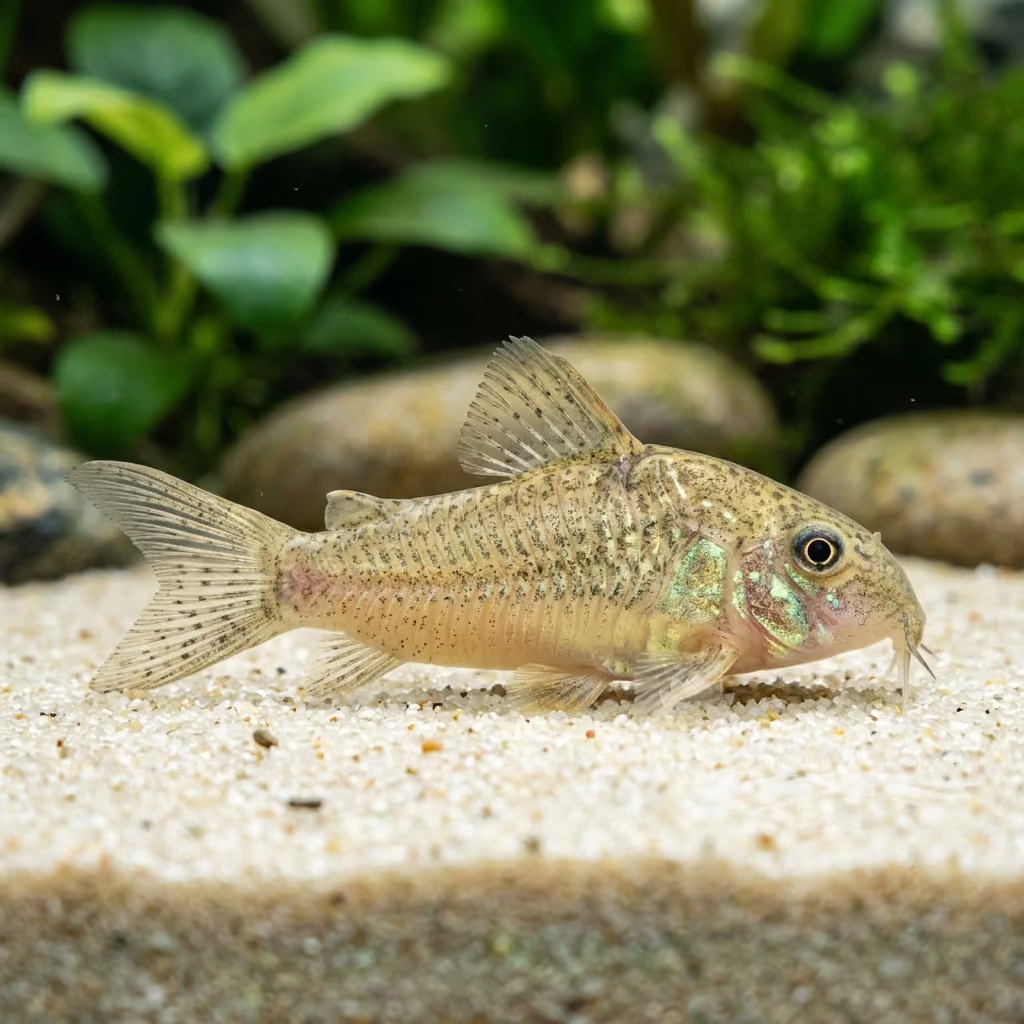
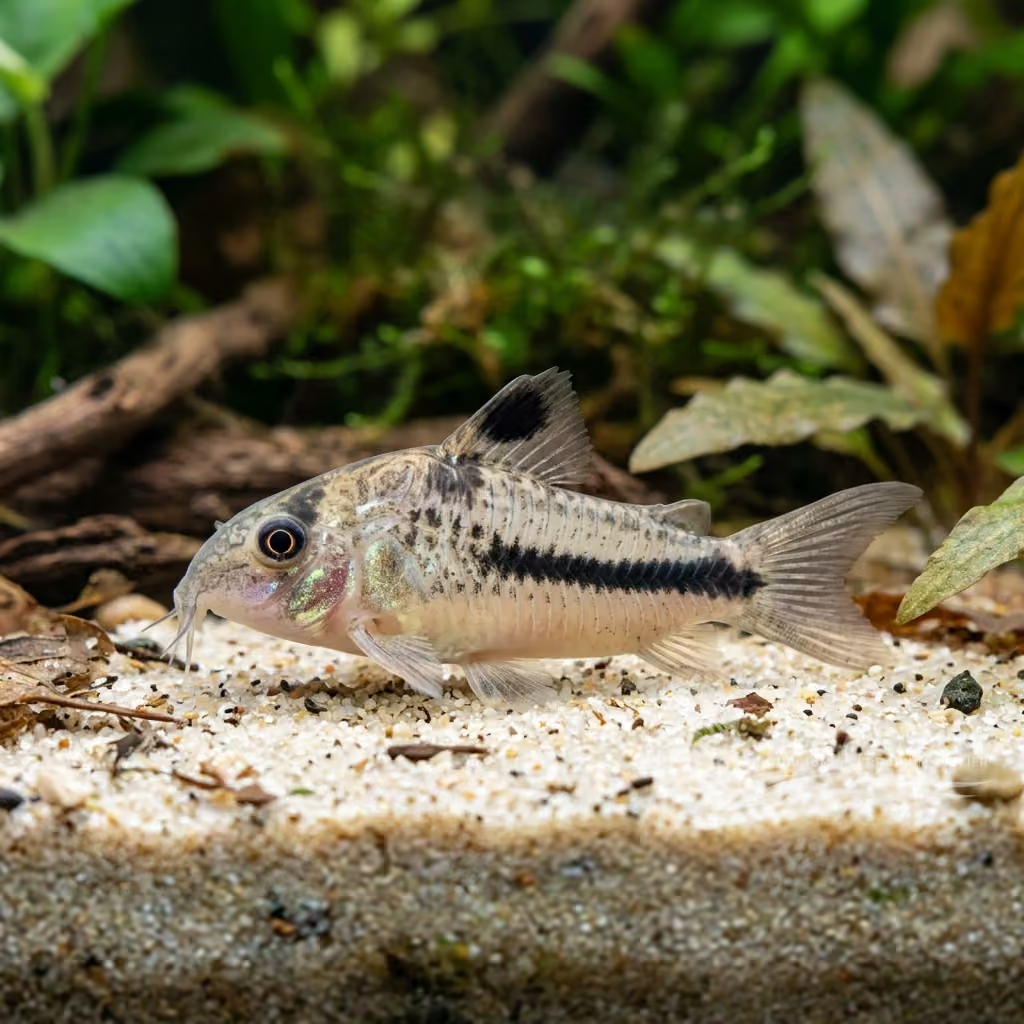
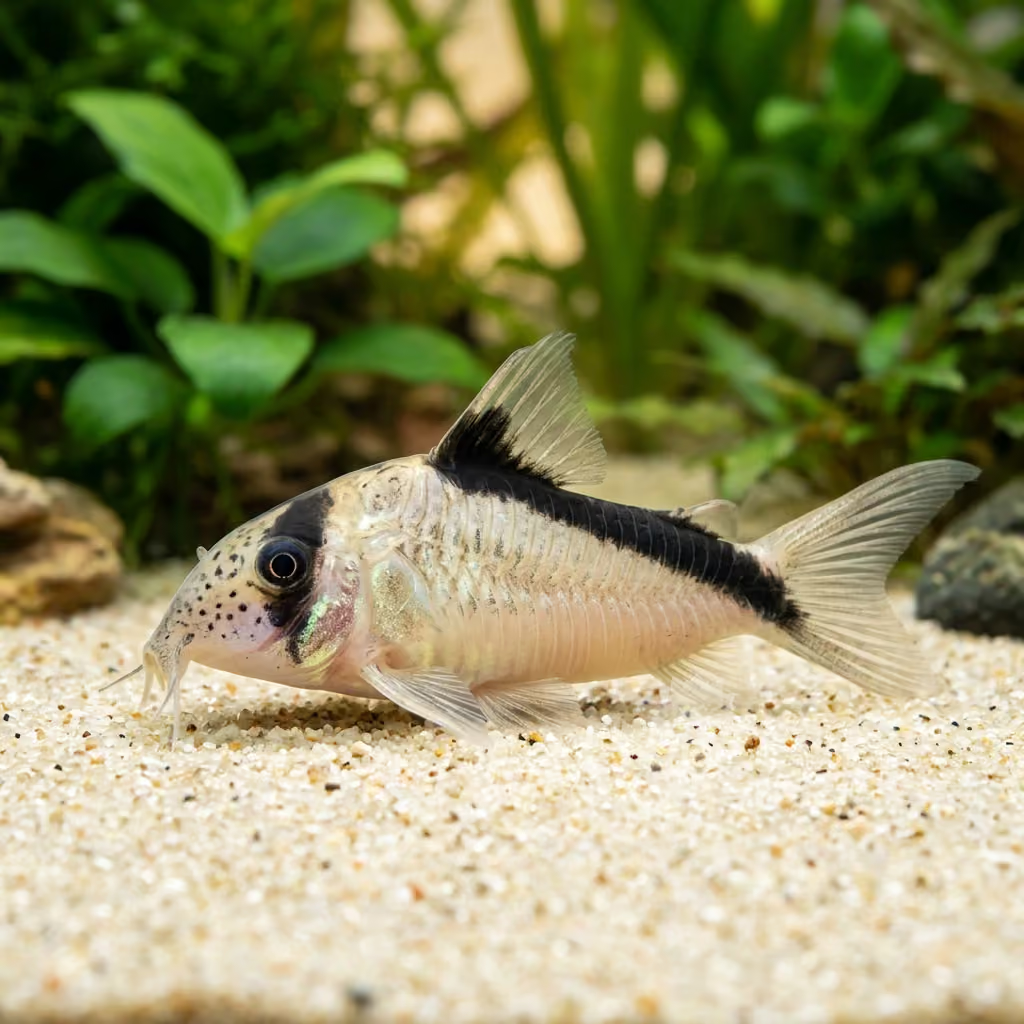
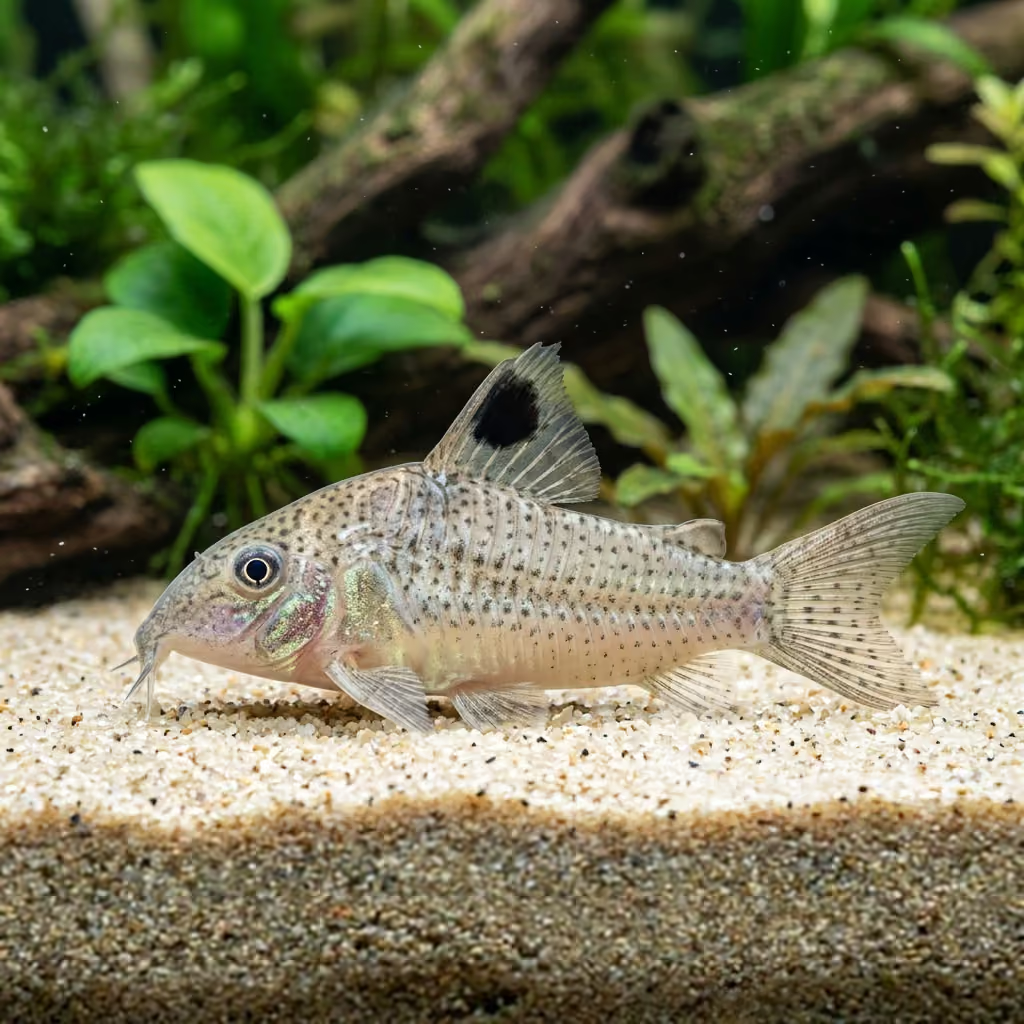
A beautiful armored catfish exhibiting a chocolate-brown livery spotted with gold, featuring a sharp snout and shaggy cheeks in mature males.
Température de l’eau
20 - 25 °C
Valeur du pH
6 - 7.2
Type d'eau
Eau douce
Niveau dans le bac
Fond
Taille adulte
6,5 cm
Volume minimal du bac
>= 100 L
Groupe minimal
>= 6
GH
2 - 12 dGH
KH
3 - 10 dKH
TDS
60 - 280 ppm
Conductivité
94 - 438 uS/cm

Description de l'espèce
Geographical Origin and Habitat: Species endemic to southeastern Brazil, found in mountainous river systems flowing into the Atlantic. Frequents rapids, streams with mixed sandy and pebbly substrate, shaded by the jungle and refreshed by strong and turbulent currents rich in oxygen.
Taxonomy and Morphology: Closely related to but distinct from Corydoras, ascribed to the Scleromystax genus. Shows the elegant "scleromystax" conformation: slender body shape, touches 6.5 cm (2.5 inches), boasts a moderate snout and decisively elongated masculine dorsal fin (although not aberrant like macropterus).
Social Behavior: Fundamental schooling needs (6-8 specimens) to reassure it. Males set up delicate hierarchical disputes without injuring themselves or violently chasing each other. Less active in daytime searching, loves to stop for long stretches on round pebbles oriented upstream.
Coloration and Sexual Dimorphism: Clear and irrefutable dimorphism. Metallic sand-colored male with scales densely marbled with molten black, yellow belly, a marked dorsal extension, and expanded opercular facial lobes. Female extremely stocky, short, with stubby fins and a rather dull brown coloration.

Soins, reproduction et cohabitation
Aquarium Setup: Moving river biotope: essential insertion of additional circulation pumps (River-manifold). Build terraces of large smooth river stones sunk in dense inert sand. Rejects visual isolation without large protective green fronds.
Diet and Feeding: Benthic hunter. Offer sinking meals (crumbled bottom tablets). Prefers fresh/frozen over dry baits: feed it regularly in the evening and morning with large rations of mysis, tubifex, and giant, crunchy bloodworms.
Water Quality: Not a true tropical fish. Likes constantly mitigated subtropical water (temperature 20-25°C / 68-77°F). Slowly suffocates and loses vitality over 26°C (79°F). The weakly acidic or neutral pH fluctuates around 6.0 - 7.2, associated with medium/low hardness and drastic water changes (no ammonia).
Compatibility and Cohabitation: Being a peaceful creature, it lives gracefully with small South American dither fish (Aphyocharax, Black Widow Tetras). Defenseless victim not to be combined under any circumstances with large Ancistrus, Loaches, and dominant Cichlids that are frantic devourers of food from the ground.
Aquarium Breeding: Is triggered, similarly to Corydoras, by sudden drops in temperature induced by decisive water changes with cool RO. Rapid T-crossings lead to the spawning in full current of large tenacious eggs sealed to the glass. Very high degree of parental cannibalism.
Risks and Diseases: Asphyxiation due to warm tanks (27+ °C) causes lethal stress or parasitic collapses. Faces deadly atrophy and necrosis of the whiskers in case of abrasive bottoms (non-ceramized quartz). Suspend/avoid Copper and Malachite treatments (lethal hypersensitivity).

Origine et répartition géographiques
Species endemic to southeastern Brazil, found in mountainous river systems flowing into the Atlantic. Frequents rapids, streams with mixed sandy and pebbly substrate, shaded by the jungle and refreshed by strong and turbulent currents rich in oxygen.
Origine
Océans tropicaux et récifsAmérique du Sud hors Amazonie

Profil de poisson
- Tempérament
- Semi-aggressive
- They are exceedingly peaceful and somewhat timid by nature. Keeping them in a school of at least six is highly recommended to bring out their natural behaviors. They thrive in aquariums with plenty of shaded areas and hiding spots.
- Régime alimentaire
- Omnivore
- As omnivorous scavengers, they require a varied diet to remain healthy. High-quality sinking pellets, granules, and occasional feedings of frozen bloodworms or tubifex worms are ideal. They will also continuously forage for leftover food in the substrate.
- Espérance de vie
- 5-8 years
- Taille adulte
- 6.5 cm
- Ratio des sexes
- Group
- A ratio featuring more males than females is ideal for breeding purposes, such as two males per female. In a display tank, any mixed group of six or more individuals is suitable. Males may occasionally display towards each other without aggressive intent.
- Fréquence d'alimentation
- Twice daily
- Feeding them once or twice daily is highly recommended. It is important to drop food after the tank lights go out if other fish are too greedy. Only feed what they can consume within a few minutes to prevent water fouling.
- Charge biologique
- Low to Medium
- The bioload for this species is relatively low to moderate. They produce small amounts of waste, meaning standard filtration is generally sufficient. Nonetheless, consistent weekly water changes are necessary to keep the water parameters stable.
- Courant
- Stagnant
- They originate from flowing streams and appreciate a moderate water current. A powerhead or an appropriately sized canister filter will provide the flow they enjoy. Well-oxygenated water is absolutely vital to their long-term health.
- Risque de saut
- Yes
- Jumping out of the aquarium is very rare for this bottom-dwelling species. They tend to stay glued to the substrate unless darting to the surface for a quick gulp of air. Covering the tank is still good practice to prevent evaporation and keep out dust.
- Reproduction
- Oviparous
- They can be bred by providing cold water changes and high-quality live foods. The female will stick the fertilized eggs to the glass, plants, or rocks. Breeding tanks should have the adults removed post-spawning to save the eggs from being eaten.
- Compatibilité et compagnons
- Community
- This is a very peaceful community fish that does not bother others. Suitable tank mates include small characins, peaceful cyprinids, and dwarf cichlids. Aggressive or heavily boisterous fish should be avoided as they will cause stress.
- Niveau dans le bac
- Bottom
- They are bottom feeders that spend almost all their time navigating the substrate. It is crucial to provide a soft sand bed to prevent their delicate barbels from wearing away. They will rest on the bottom or on flat stones when not actively foraging.

Modèles et paramètres scientifiques
FishBase
Fenêtre sur les données scientifiques officielles de l’espèce
FishBase v25.04Données synchronisées le : 15/06/2026
- Niveau trophique
- 3 ± 0,3 se
- Résilience
- Élevée (moins de 15 mois)
- Singularité phylogénétique (PD50)
- 0.5078
- Relation bayésienne longueur-poids
- a = 0.01778, b = 3.02
- VulnérabilitéVulnérabilité faible (10 / 100)

Espèces associées
Recommandations regroupées par proches parents, compagnons et soins similaires.