Orinoco Flag Cichlid
Mesonauta insignis
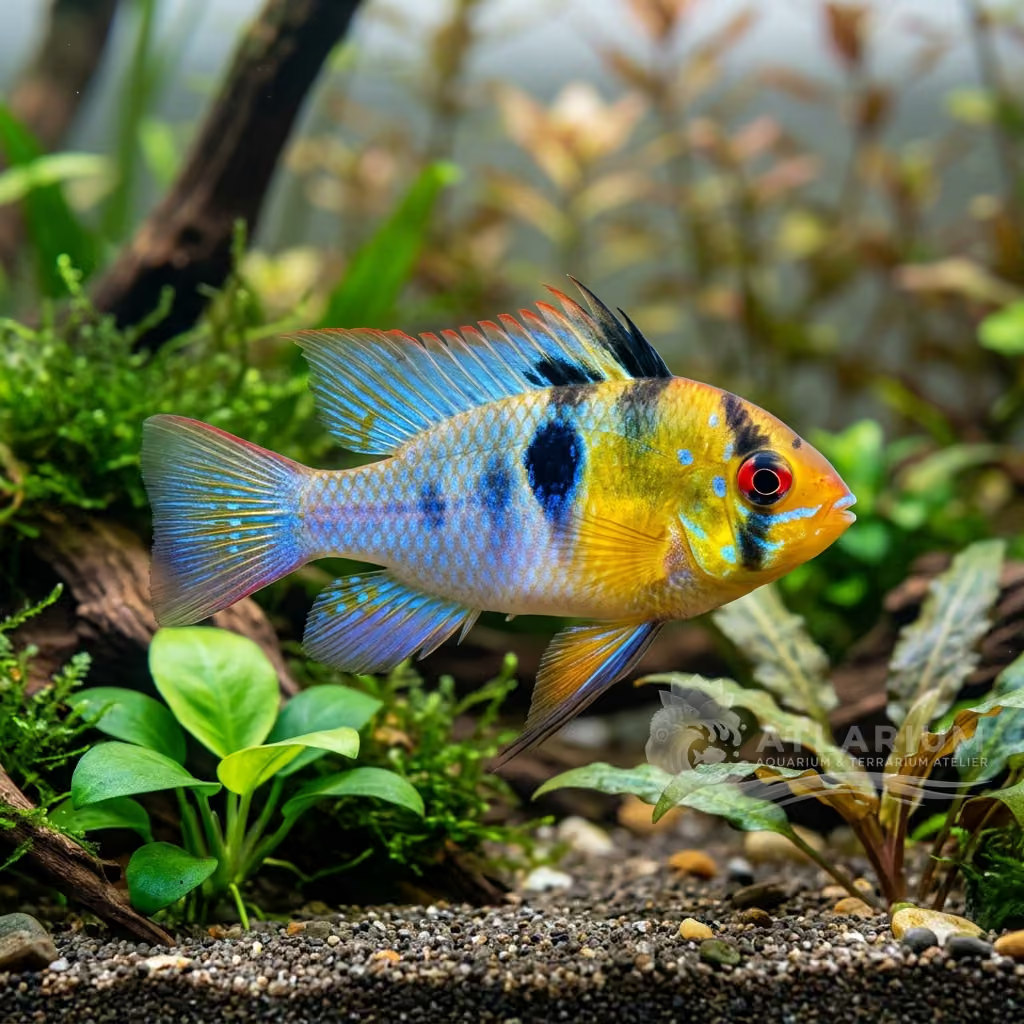
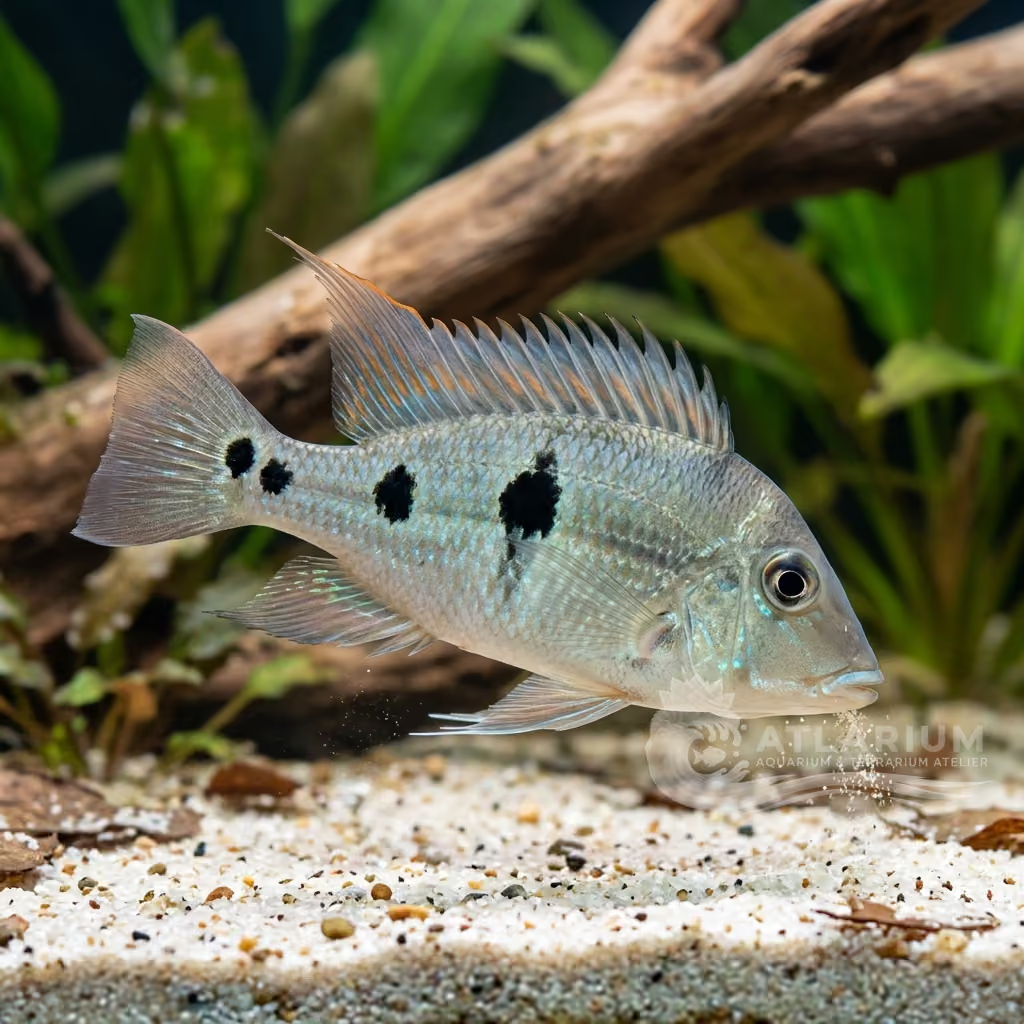
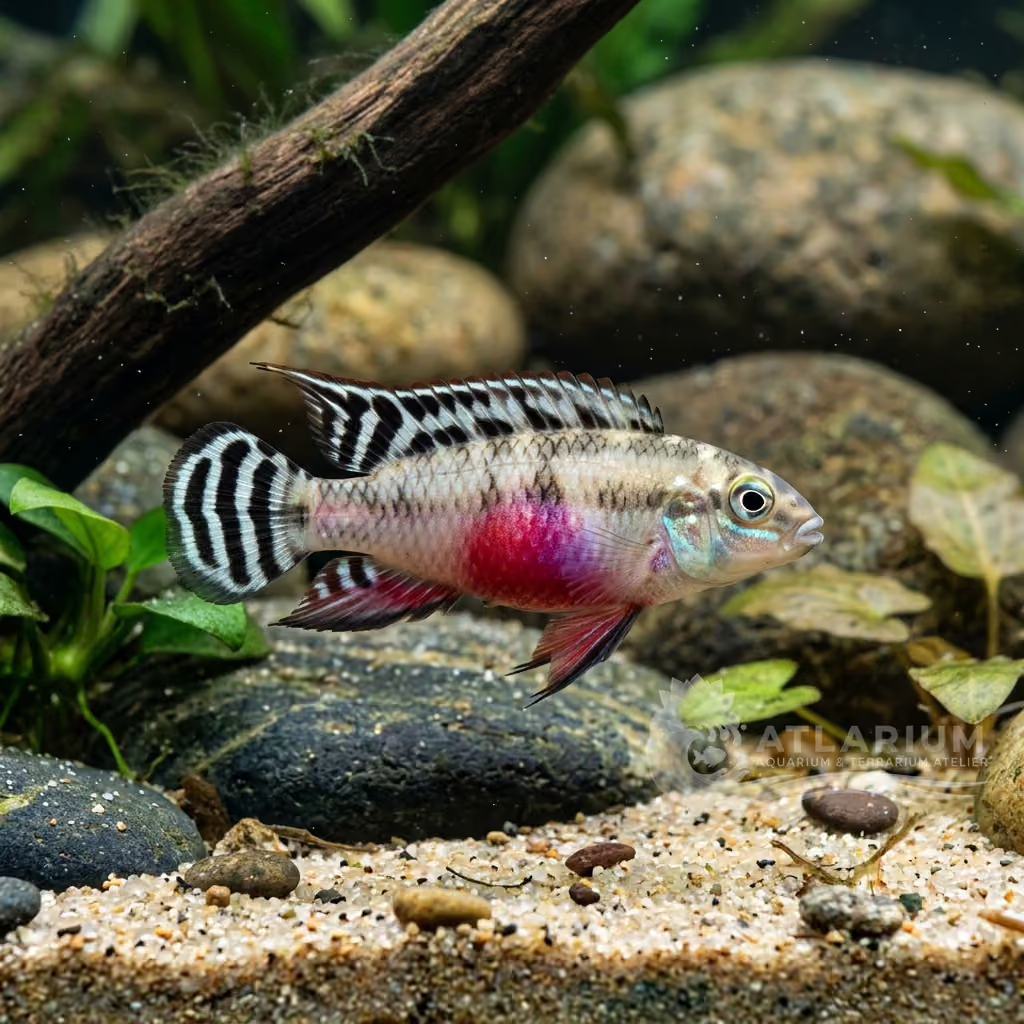
The reticulated 'Orinoco Flag Cichlid' (10-15 cm). Very often confused in the trade with M. festivus, the Mesonauta insignis represents its Orinoco/Rio Negro variant. It shares the magnificent pointed discoid anatomy and the pelagic surface habits. Shy and elegant, it exhibits a dense dark reticulation on the dorsal scales. Ideal in a group, it is a fantastic inhabitant of the aquatic canopy of Blackwater style planted aquariums.
Température de l’eau
25 - 30 °C
Valeur du pH
5.5 - 7
Type d'eau
Eau douce
Niveau dans le bac
Surface et milieu
Taille adulte
15 cm
Volume minimal du bac
>= 180 L
Groupe minimal
>= 1
GH
1 - 8 dGH
KH
1 - 4 dKH
TDS
25 - 160 ppm
Conductivité
39 - 250 uS/cm

Description de l'espèce
Geographical Origin and Habitat: Upper Orinoco and Rio Negro basin (Colombia, Venezuela, Brazil). Typical species of the true "Blackwaters", where it inhabits flooded forests and banks dense with fallen branches and lianas.
Taxonomy and Morphology: Orinoco Festivum (Mesonauta insignis). Very similar to festivus. Features the same compressed triangular morphology and filiform pelvic receptors. Often incorrectly sold under the name "M. festivus".
Social Behavior: Timid gregarious. Spends much of its time suspended motionless obliquely among the roots (camouflage), ready to dart to catch small insects. Has a cautious and exploratory swimming style.
Coloration and Sexual Dimorphism: Differs from festivus by the dorsal pattern: M. insignis has strongly marked/reticulated dorsal scales ("net" pattern visible above the diagonal black stripe). The overall livery is more yellow/brown, typical of blackwater fish.

Soins, reproduction et cohabitation
Aquarium Setup: Orinoco biotope tank. Minimum 120 cm (48 inches). Very dim light or obscured by thick floating plants (Limnobium). Fine sand substrate covered with oak or catappa leaves. Dry manzanita branches inserted from above.
Diet and Feeding: Surface/mid-water omnivore. Excellent eater of mosquito larvae, drosophila (fruit flies thrown on the surface), protein flakes and occasionally pieces of blanched zucchini.
Water Quality: More demanding than festivus. Requires decidedly warm water (26-29°C / 79-84°F), very soft (very low GH) and strictly acidic (Ph 5.5-6.5). Amber water rich in humic acids is almost vital for its reproduction and long-term health.
Compatibility and Cohabitation: Peaceful and delicate cichlid. Perfect roommate for Symphysodon (Discus), Pterophyllum altum (Altum Angelfish), Uaru and schools of Cardinals or Rummy-nose (if not too small). Avoid any snappy fish.
Aquarium Breeding: Difficult, as it requires perfect water chemistry. The pair spawns on woods or roots near the surface. Parents scrupulously care for the fry for weeks, guiding them in a group through the vegetation.
Risks and Diseases: Lateral Line Infections (HITH). Very prone to "Hole in the Head" disease if kept in hard waters or with poor hygiene (nitrate accumulation). Lack of minerals or adequate filtration will cause fatal craters on the head.

Origine et répartition géographiques
Upper Orinoco and Rio Negro basin (Colombia, Venezuela, Brazil). Typical species of the true "Blackwaters", where it inhabits flooded forests and banks dense with fallen branches and lianas.
Origine
Amazonie, Orénoque et Guyanes

Profil de poisson
- Tempérament
- Semi-aggressive
- They are generally peaceful and shy. They can become territorial during spawning. They behave very well in community setups.
- Régime alimentaire
- Omnivore
- They are naturally omnivorous. They prefer plant matter and small invertebrates. Spirulina flakes and frozen foods are excellent choices.
- Espérance de vie
- 7-12 years
- Taille adulte
- 15 cm
- Ratio des sexes
- Pair
- They are best kept in established pairs. Groups require very large aquariums. Sexing juveniles is notably difficult.
- Fréquence d'alimentation
- Twice daily
- Feed them once or twice daily. They are careful and deliberate eaters. Ensure fast fish don't outcompete them.
- Charge biologique
- Medium
- They produce a typical moderate bioload. Efficient filtration easily handles their waste. Regular maintenance keeps the environment pristine.
- Courant
- Stagnant
- They prefer gentle water flow. Avoid excessively strong currents. Calm surfaces provide an ideal, stress-free environment.
- Risque de saut
- Yes
- They pose a low jump risk. A secure lid is always recommended. Startling noises can occasionally trigger jumping.
- Reproduction
- Oviparous
- They are monogamous substrate spawners. They lay eggs on flat broad leaves. Both parents actively guard the fry.
- Compatibilité et compagnons
- Community
- They are peaceful community cichlids. Suitable tank mates include tetras and corydoras. Avoid very small fish that fit their mouths.
- Niveau dans le bac
- Top/Middle
- They occupy the middle and upper levels. They appreciate tall plants for hiding. They often rest near floating vegetation.

Modèles et paramètres scientifiques
FishBase
Fenêtre sur les données scientifiques officielles de l’espèce
FishBase v25.04Données synchronisées le : 15/06/2026
- Niveau trophique
- 3,4 ± 0,51 se
- Résilience
- Élevée (moins de 15 mois)
- Singularité phylogénétique (PD50)
- 0.5078
- Relation bayésienne longueur-poids
- a = 0.02951, b = 3.02
- VulnérabilitéVulnérabilité faible (10 / 100)

Espèces associées
Recommandations regroupées par proches parents, compagnons et soins similaires.