Eau douceIntermédiaire
©AI Generated·Proprietary
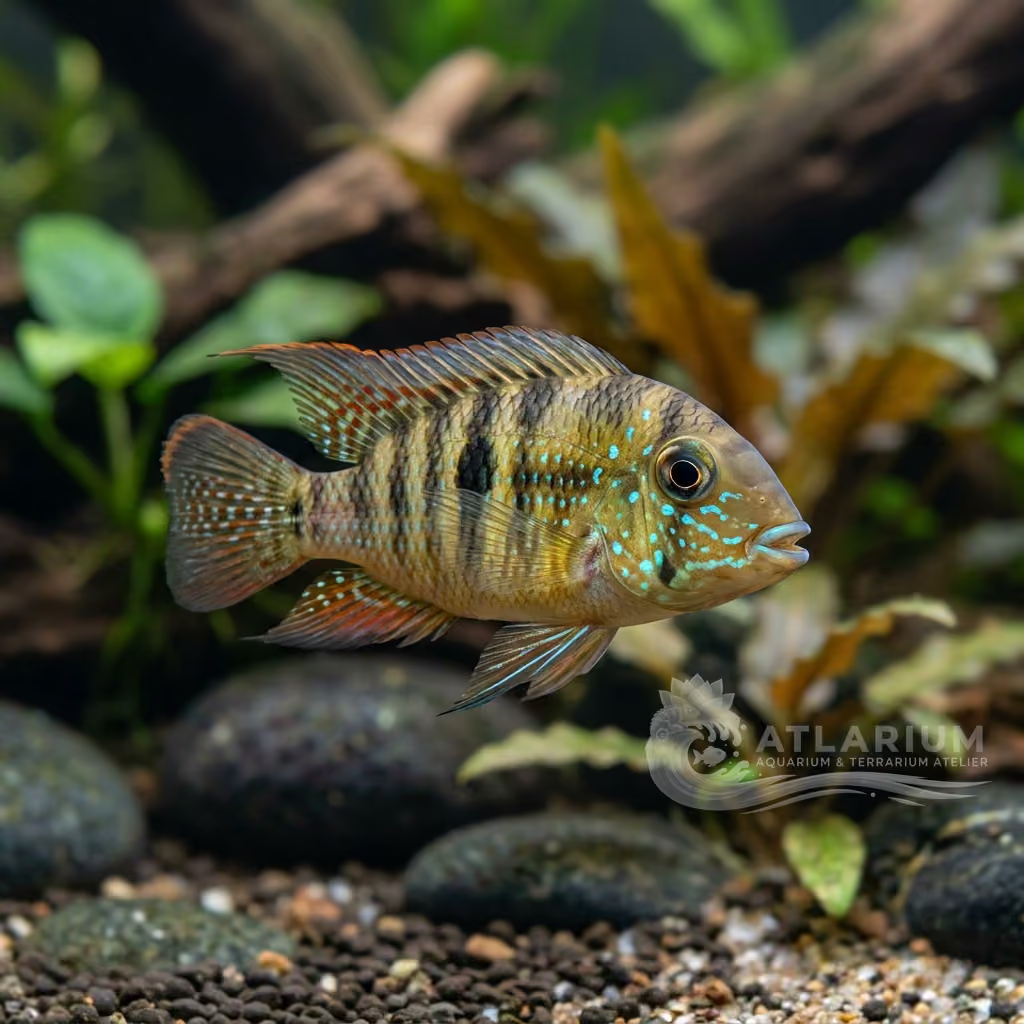
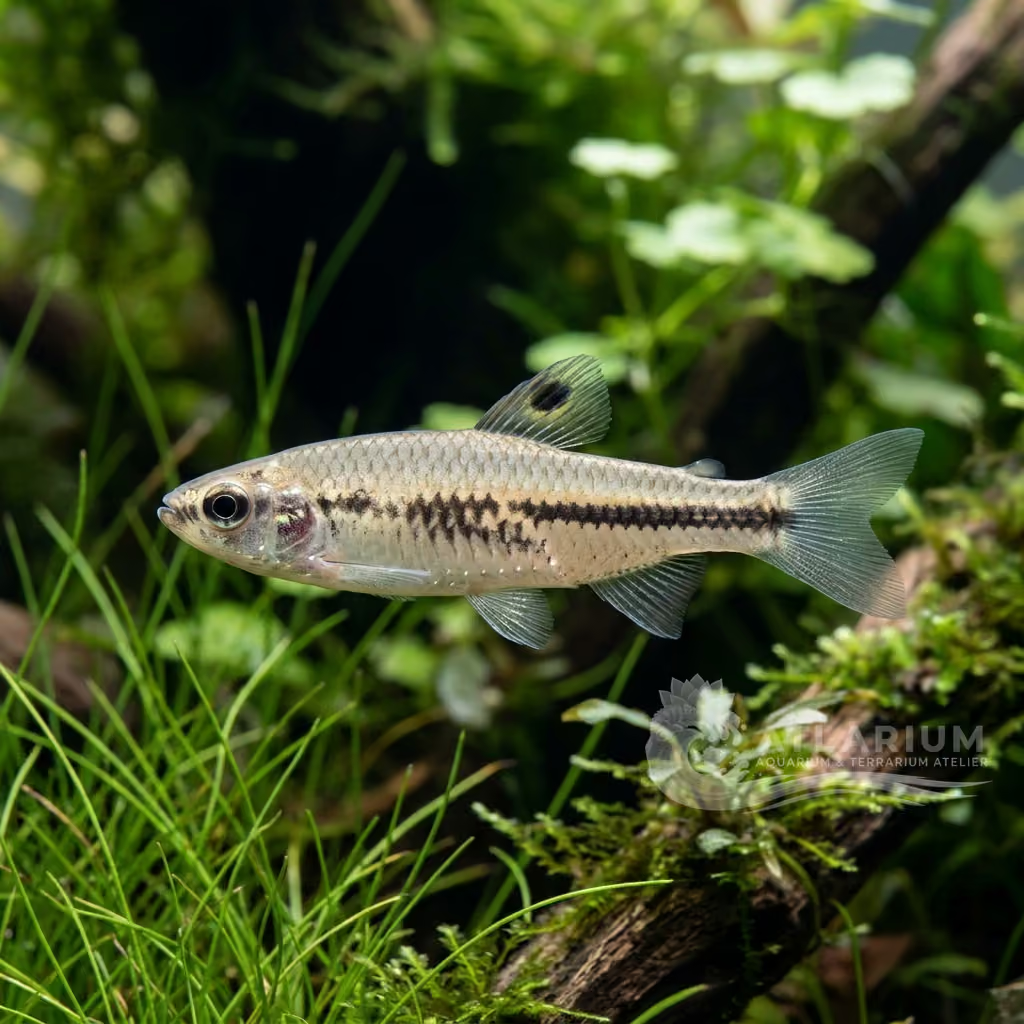
Pelvicachromis taeniatus — Striped Kribensis

Striped Kribensis

Pelvicachromis taeniatus

The Jungle Jewel of West Africa (7 cm / 3 inches). Vastly different from the brutal, rock-dwelling killer cichlids of the great lakes. It lives in slow-moving, dark jungle streams. The females are the true show-stoppers, flaunting insanely swollen bellies in glowing neon-magenta or deep plum-cherry when mating. They are peaceful, form incredible lifelong bonds, and require acidic, dark, leafy forest setups rather than rocks.

Température de l’eau

24 - 27 °C

Valeur du pH

6 - 7

Type d'eau

Eau douce

Niveau dans le bac

Fond

Taille adulte

8 cm

Volume minimal du bac

>= 100 L

Groupe minimal

>= 1

GH

2 - 10 dGH

KH

1 - 5 dKH

TDS

40 - 200 ppm

Conductivité

63 - 313 uS/cm

Description de l'espèce

Geographical Origin and Habitat: West Africa (Nigeria, Cameroon regions). Forget everything you know about African Cichlids. This fish does NOT live in the massive, rocky, alkaline Great Lakes (like Malawi). Instead, it lives exclusively in the shallow, slow-moving rainforest rivers and jungle swamps under the equatorial canopy, heavily shaded by trees and filled with sunken leaf-litter and rotting driftwood.
Taxonomy and Morphology: An absolutely stunning member of the West African 'Dwarf Cichlid' group. A smaller, vastly more refined and elongated cousin of the common Kribensis (P. pulcher). Males only hit around 7-8 cm (3 inches), while females stay tiny at 5-6 cm. It is torpedo-shaped, perfectly evolved to weave through tangles of sunken tree roots. The name taeniatus literally refers to the distinct, bold horizontal stripe running straight across the mid-line of their bodies.
Social Behavior: Peaceful, highly secretive, and deeply monogamous. The complete opposite of a rampaging Mbuna. They spend their days hovering nervously inches above the sand, sifting around fallen leaves for bugs. They are famously 'Pair-Bonding' fish: a male and female will pick a sunken coconut shell or dark cave, aggressively excavate the sand out of the entrance with their mouths, and guard it together as an inseparable team. They are wonderful community fish and only show true aggression when defending their immediate nesting cave from curious noses.
Coloration and Sexual Dimorphism: REVERSE DIMORPHISM (The female steals the show). Highly Polymorphic based on exactly which African river they were caught in (famous variants include 'Moliwe', 'Nigeria Red', 'Lobe'). The male is beautiful: pastel yellows, olive greens, and bronze, featuring gorgeous spade-shaped tails often stamped with multiple bright yellow 'eye-spots' (ocelli). BUT THE FEMALE IS JAW-DROPPING: When ready to mate, her belly swells like a balloon and explodes in a blinding, iridescent NEON CHERRY-RED, fuchsia, or deep dark Plum/Purple. Her sides glow gold and turquoise. It is one of the most stunning female fish in the entire freshwater hobby.

Soins, reproduction et cohabitation

Aquarium Setup: The 'Blackwater River' aesthetic. A 80 cm (30-inch / 20-30 gallon) tank is huge for a bonded pair. NO LIMESTONE ROCKWORK ALLOWED. You must set the tank up like an Amazonian river: The floor MUST be very fine, soft sand (they dig heavily). The tank should be utterly stuffed with massive tangles of spider wood, bogwood, and sunken roots. YOU MUST PROVIDE CAVES: Half-coconut shells with a small door cut in them are their absolute favorite. Dim the LED lights heavily. Use floating plants to block light, and litter the sandy bottom with sunken dried Catappa (Indian Almond) or Oak leaves.
Diet and Feeding: Micro-Benthic Omnivore. They have tiny mouths and pick small crustaceans out of the leaf litter. Feed ultra-premium, slow-sinking micro-pellets. To trigger breeding and explode the female's magenta belly color, you MUST heavily feed live or frozen foods: massive helpings of frozen bloodworms, Daphnia, Mysis, and live baby brine shrimp. They are shy eaters and will often be starved out if housed with massive, fast surface-feeders.
Water Quality: THE AFRICAN EXCEPTION: THEY NEED SOFT, ACIDIC WATER. Do not put them in hard Rift-Lake water. They require jungle chemistry: pH ideally between 5.5 and 7.0. Very soft water (GH 2-8). Warm temps (25-28°C / 77-82°F). They thrive when the water is 'tea-stained' brown by the tannins released from the driftwood and Indian Almond leaves. Poor, dirty water will lead to hole-in-the-head disease and fin rot rapidly.
Compatibility and Cohabitation: THE ULTIMATE COMMUNITY CICHLID. They are fantastic centerpieces for a peaceful planted community tank. Best housed with schools of upper-water, fast-moving African tetras (Congo Tetras), small killifish, or even Amazonian tetras (Cardinals/Neons) and Corydoras catfish. ABSOLUTE DEATH SENTENCE: NEVER put them in a tank with standard 'African Cichlids' from the Great Lakes (Malawi/Tanganyika). The massive, brutal, alkaline-loving lake cichlids will hunt the tiny Kribensis down and slaughter them in a matter of hours.
Aquarium Breeding: Perfect Parents ('Cave-Spawners', not mouthbrooders). The swollen magenta female bends her body into a vibrating 'U' shape in front of the male to seduce him. They retreat into the total darkness of the upside-down coconut shell. She glues dozens of sticky eggs to the ceiling of the cave. She guards them inside for 3-5 days in complete darkness while the male aggressively patrols outside. Suddenly, a cloud of 40 tiny fry will emerge. The parents are spectacular: they act like sheep-dogs, slowly herding the cloud of babies around the tank to find food, violently biting the fins of any giant fish that dares look at their children.
Risks and Diseases: 1. ALKALINE POISONING: Beginners buy them because they are labeled 'African Cichlids' and throw them into high pH, rock-hard water with crushed coral. They will stress, fade to grey, and slowly die of organ failure. 2. Murder of rival males: Two males in a 20-gallon tank without enough hiding places will result in the weaker one being hunted to death. 3. Loss of fry to nocturnal giant catfish (like Synodontis or large Plecos) raiding the coconut shell while the parents sleep.

Origine et répartition géographiques

West Africa (Nigeria, Cameroon regions). Forget everything you know about African Cichlids. This fish does NOT live in the massive, rocky, alkaline Great Lakes (like Malawi). Instead, it lives exclusively in the shallow, slow-moving rainforest rivers and jungle swamps under the equatorial canopy, heavily shaded by trees and filled with sunken leaf-litter and rotting driftwood.

Origine

Océans tropicaux et récifsAfrique et Madagascar

Profil de poisson

Tempérament
Semi-aggressive
Peaceful towards different species but moderately aggressive towards conspecifics. They exhibit classic cichlid territorial behavior when defending a breeding site. Otherwise, they are shy and reclusive if sufficient hiding spots are not provided.
Régime alimentaire
Omnivore
Omnivorous with a preference for benthic invertebrates. Needs a varied diet including high-quality sinking pellets, frozen or live bloodworms, and daphnia. Spirulina or vegetable matter should occasionally be offered for balanced nutrition.
Espérance de vie
4-6 years
Taille adulte
8 cm
Ratio des sexes
Harem
Best kept as a bonded male and female pair. Keeping multiple males in the same tank can lead to severe aggression unless the aquarium is very large. If keeping a group, a ratio of one male to multiple females is not typically necessary if a strong pair forms.
Fréquence d'alimentation
Twice daily
Should be fed small amounts once or twice a day. Provide only what they can consume within a couple of minutes to prevent water fouling. Overfeeding should be strictly avoided to maintain their health.
Charge biologique
Low to Medium
Modest bioload. Produce a relatively low amount of waste compared to larger cichlids. Requires standard biological and mechanical filtration. Regular water changes are sufficient to maintain water quality.
Courant
Stagnant
Prefers gentle to moderate water flow simulating slow-moving West African rivers. Strong currents can exhaust them, as they spend most of their time hovering near the substrate. Diffused filter outlets or spray bars are ideal.
Risque de saut
Yes
Low jump risk, as they are bottom to mid-level dwellers. However, a secure lid is always recommended to prevent accidental escapes. They typically only dart upwards when extremely startled or harassed.
Reproduction
Oviparous
Cave spawners that form strong monogamous pairs. They require small caves or overturned flower pots to lay their eggs. Both parents exhibit excellent brood care, fiercely guarding the fry until they are free-swimming.
Compatibilité et compagnons
With caution
Generally peaceful but can become highly territorial during breeding. Best kept in a community tank with robust upper-level dwelling fish. Avoid keeping with other bottom-dwelling cichlids to prevent territorial disputes.
Niveau dans le bac
Bottom
Primarily inhabit the lower levels of the aquarium. They will frequently explore the substrate, caves, and densely planted areas. They rarely venture to the upper third of the water column unless feeding.

Modèles et paramètres scientifiques

FishBase

Fenêtre sur les données scientifiques officielles de l’espèce

FishBase v25.04Données synchronisées le : 15/06/2026
Niveau trophique
3,3 ± 0,4 se
Résilience
Élevée (moins de 15 mois)
Singularité phylogénétique (PD50)
0.5039
Relation bayésienne longueur-poids
a = 0.01445, b = 2.99
VulnérabilitéVulnérabilité faible (10 / 100)