Stergios' cichlid
Guianacara stergiosi
A robust benthic cichlid from Venezuela's clear waters. It sifts fine sand for food, showcasing a golden body with blue reflections. Requires spacious setups with secure rocks and clean water.
Température de l’eau
24 - 28 °C
Valeur du pH
5.5 - 7
Type d'eau
Eau douce
Niveau dans le bac
Fond
Taille adulte
12 cm
Volume minimal du bac
>= 200 L
Groupe minimal
>= 5
GH
2 - 10 dGH
KH
1 - 5 dKH
TDS
40 - 200 ppm
Conductivité
63 - 313 uS/cm

Description de l'espèce
Geographical Origin and Habitat:
This cichlid primarily inhabits the Caroní River basin and other Orinoco River tributaries in Venezuela. It lives in clear or slightly amber waters with moderate currents and sandy bottoms rich in rocks and roots.
Taxonomy and Morphology:
Belongs to the Cichlidae family, subfamily Geophaginae. Features a deep, laterally compressed body with a rounded forehead and large eyes. Males reach a maximum length of about 10-12 cm, while females remain smaller.
Social Behavior:
A relatively peaceful and social cichlid, but defends its nest and territory strongly during breeding. Lives in stable pairs and enjoys sifting through the surface sand for food, helping clean the tank bottom.
Coloration and Sexual Dimorphism:
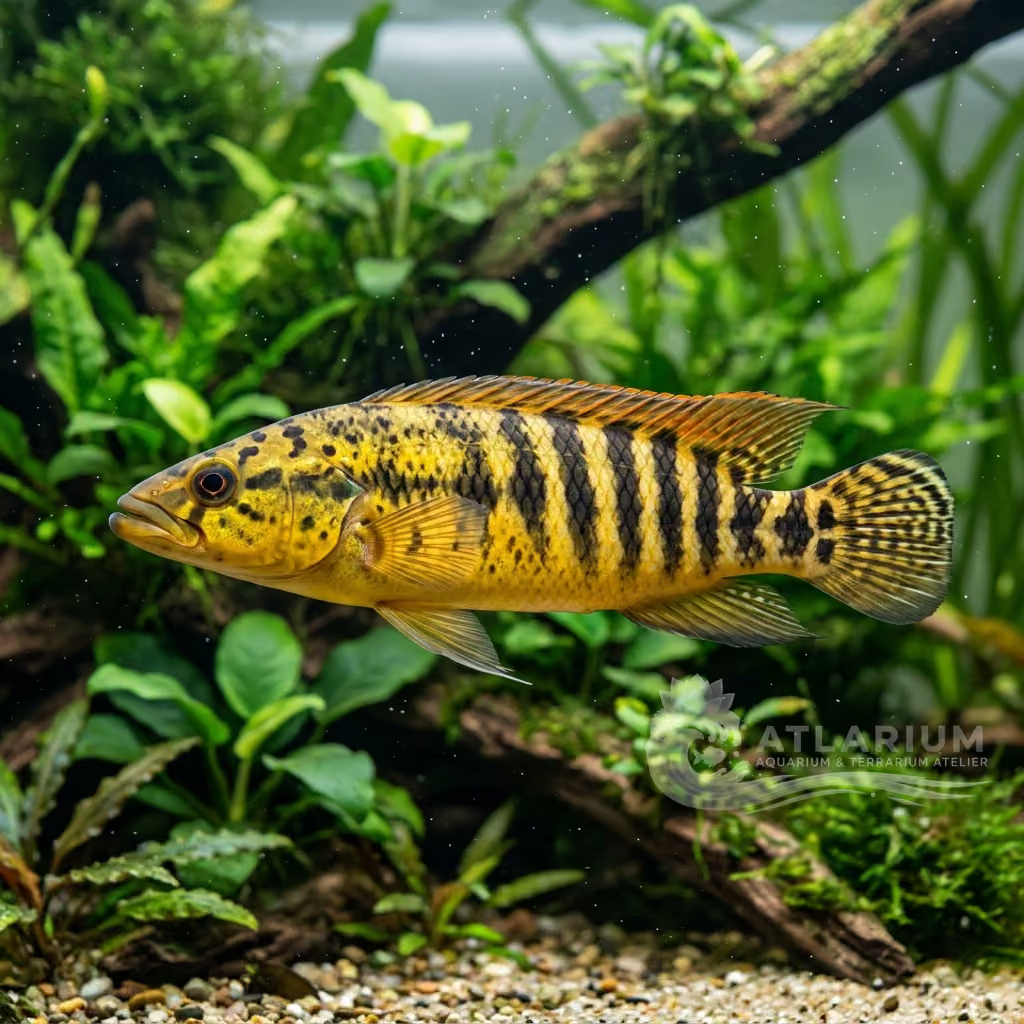
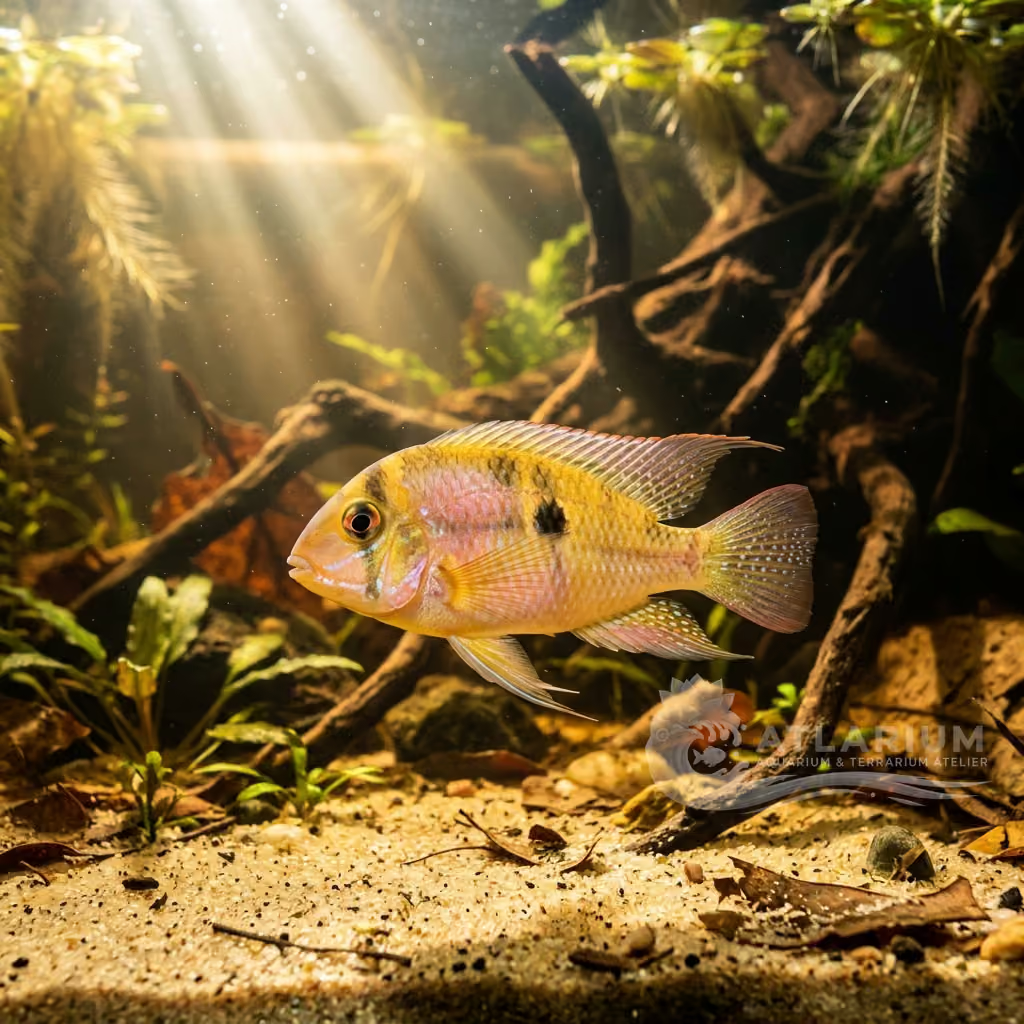
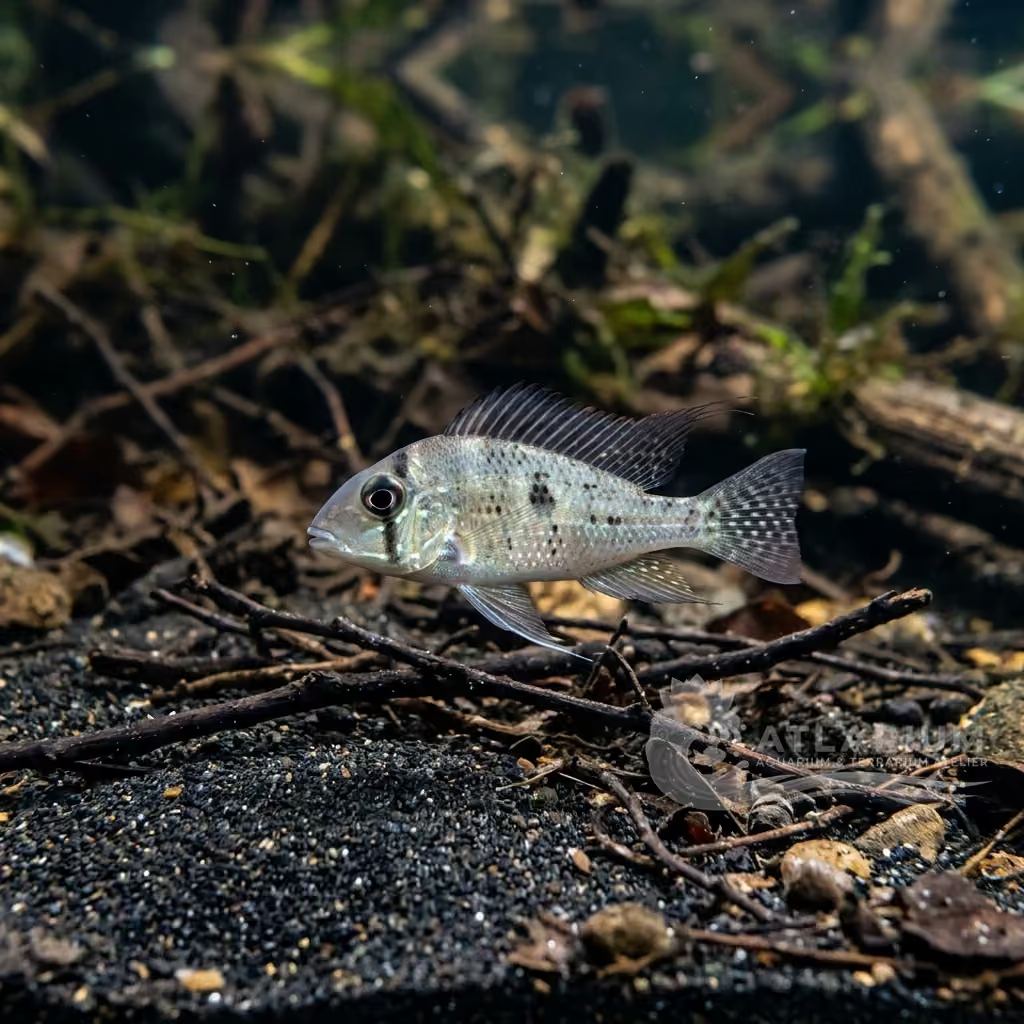
The body color is golden-beige with metallic blue and turquoise reflections on the fins. Displays a vertical black bar running through the eye and a prominent circular black spot on the mid-lateral flank.

Soins, reproduction et cohabitation
Aquarium Setup:
Requires a tank of at least 150-200 liters for a pair. Use fine sand and place rocks securely on the bottom to prevent collapses caused by constant digging.
Diet and Feeding:
Benthic omnivorous species. In the aquarium, it accepts high-quality sinking pellets, frozen bloodworms, mysis, and brine shrimp. A varied diet keeps colors bright.
Water Quality:
Requires efficient filtration and clean water. Maintain temperature 24-28 °C, pH 6.0-7.2, and GH 3-12 dGH. Conduct regular partial water changes.
Compatibility and Cohabitation:
Coexists with peaceful, medium-sized schooling fish like South American tetras, corydoras, and loricariid catfish. Avoid large, aggressive cichlids.
Aquarium Breeding:
Spawns in caves or rocky crevices. The female lays up to 200-300 adhesive eggs. Both parents actively guard the eggs and care for the swimming fry.
Risks and Diseases:
Susceptible to hole-in-the-head disease if nitrates are high. Use only fine sand to prevent infectious mouth injuries during digging activities.

Origine et répartition géographiques
This cichlid primarily inhabits the Caroní River basin and other Orinoco River tributaries in Venezuela. It lives in clear or slightly amber waters with moderate currents and sandy bottoms rich in rocks and roots.
Origine
Amazonie, Orénoque et Guyanes

Profil de poisson
- Tempérament
- Peaceful but territorial
- For a cichlid, Guianacara stergiosi has a remarkably mild temperament, relying on display rather than violence. They possess an inquisitive and bold personality, often learning to recognize their keepers during feeding time. However, their temperament changes drastically during breeding, when they become highly intolerant of intruders near their chosen cave.
- Régime alimentaire
- Omnivore
- As natural eartheaters, Guianacara stergiosi requires a varied omnivorous diet mimicking their foraging habits. High-quality sinking cichlid pellets should form the staple, supplemented heavily with frozen bloodworms, brine shrimp, and daphnia. Fine sand is mandatory, as they feed by scooping up mouthfuls of substrate and filtering out edible morsels.
- Espérance de vie
- 5-8 years
- Taille adulte
- 12 cm
- Ratio des sexes
- Solitary
- It is highly recommended to purchase a group of six juveniles and allow them to naturally form compatible pairs. Once a pair bonds, the remaining conspecifics may need to be removed to prevent severe harassment in smaller tanks. In a massive display aquarium, a large group can coexist, forming fascinating social hierarchies.
- Fréquence d'alimentation
- Twice daily
- Adult Guianacara stergiosi should be fed one to two times daily, offering portions they can consume in a few minutes. Juvenile specimens will benefit from three smaller feedings per day to support their rapid growth rate. Providing a varied feeding schedule enhances their naturally subtle but beautiful pearlescent coloration.
- Charge biologique
- Low to Medium
- Guianacara stergiosi produces a moderate to high bioload, typical of similarly sized South American cichlids. Their constant substrate-sifting behavior tends to stir up detritus, requiring strong mechanical and biological filtration. Frequent water changes are absolutely essential to maintain low nitrate levels and ensure long-term health.
- Courant
- Moderate
- They prefer gentle to moderate water flow that emulates the calm river bends and slow tributaries of the Orinoco basin. While they appreciate well-oxygenated water, turbulent currents will make it difficult for them to forage comfortably. Strategically placed driftwood can create ideal low-flow resting areas for these cichlids.
- Risque de saut
- No
- Reproduction
- Oviparous
- Guianacara stergiosi are biparental cave spawners, laying their eggs inside enclosed crevices or submerged clay pots. Both parents fiercely defend the fry and will exhibit intense territorial aggression toward all other tank mates during this period. The fry are easily raised on newly hatched brine shrimp once they become free-swimming.
- Compatibilité et compagnons
- Peaceful
- This cichlid is relatively peaceful outside of spawning, making it suitable for larger South American community setups. Guianacara stergiosi can be housed with larger tetras, peaceful catfish, and other mild-mannered eartheaters. However, they should not be kept with very small fish that could fit in their mouths or overly aggressive cichlids.
- Niveau dans le bac
- Bottom
- These eartheaters are dedicated bottom to mid-level dwellers, rarely showing interest in the upper water column. Guianacara stergiosi spends the vast majority of its waking hours relentlessly sifting through the sandy substrate. They will often rearrange the sandbed entirely, especially when digging pits for spawning purposes.

Modèles et paramètres scientifiques
FishBase
Fenêtre sur les données scientifiques officielles de l’espèce
FishBase v25.04Données synchronisées le : 15/06/2026
- Niveau trophique
- 3,3 ± 0,5 se
- Résilience
- Élevée (moins de 15 mois)
- Singularité phylogénétique (PD50)
- 0.5078
- Relation bayésienne longueur-poids
- a = 0.01995, b = 3.01
- VulnérabilitéVulnérabilité faible (10 / 100)

Espèces associées
Recommandations regroupées par proches parents, compagnons et soins similaires.